Hello! Welcome to your next lesson in the "Electricity Supplier Operations" module.
In our last lesson, we examined the electricity billing process, from collecting meter data to generating and validating the final bill. We saw how crucial it is for suppliers to get this right. Once that accurate bill is in the customer's hands, the final step in the cycle is payment.
Today, we'll focus on exactly that. Our learning outcome is to describe the different payment processing methods and systems used by electricity suppliers. We'll look at the common ways customers pay for their energy and the underlying financial systems that make these transactions possible.
We will cover three main areas:
- Credit Meter Payments: How customers with traditional or smart meters pay after they've used energy.
- Prepayment Meter Payments: The 'pay-as-you-go' model where customers pay before they use energy.
- The Systems Behind the Payments: A look at the key technologies, like BACS, that handle the flow of money.
1. Credit Meter Payment Methods
Most customers in the UK are on a 'credit' tariff. This means they use electricity first and pay for it later, based on a bill. There are two main ways these customers pay their bills.
To get an overview of these methods, please read the following article from UKPower. It clearly explains the most common payment options.
How To Pay Your Energy Bill | Bill Payment Methods | UKPower
This article, 'How To Pay Your Energy Bill', outlines the main payment methods available to UK energy customers. It provides a good foundation for understanding how suppliers collect revenue.
Please read the sections titled 'Monthly Direct Debit', 'Quarterly Direct Debit', and 'Payment on receipt of bill'. Focus on how each method works and the key differences between them.
Let's break down what you've just read.
Direct Debit
As the article highlights, Direct Debit is the most common and preferred payment method for both customers and suppliers.
- How it works: You give your supplier permission to automatically take an agreed amount of money from your bank account on a regular basis (usually monthly).
- Estimates and Smoothing: The monthly payment is typically an estimate based on your annual usage, divided by 12. This "smooths" your costs over the year. You build up credit in the summer when you use less energy, and this credit helps cover the higher bills in winter. Your supplier will periodically review your payments to ensure they align with your actual usage, adjusting them up or down as needed.
- Why Suppliers Like It: It guarantees a predictable and regular cash flow, reducing the administrative work of chasing payments. To encourage customers to use it, suppliers almost always offer their cheapest tariffs to those paying by Direct Debit.
Payment on Receipt of Bill
This is the more traditional alternative to Direct Debit.
- How it works: You receive a bill (usually every quarter) and are responsible for actively making a payment to settle the full amount by the due date.
- Payment Channels: This payment can be made through several channels:
- An online payment portal on the supplier's website (using a debit or credit card).
- A bank transfer.
- Over the phone with a customer service agent.
- In person at a bank or Post Office.
- Why It's Less Common: It creates more uncertainty for the supplier's cash flow and requires more effort from the customer. As a result, tariffs for this payment method are almost always more expensive than Direct Debit tariffs.
The System Behind Direct Debit: BACS
When you set up a Direct Debit, you are using a powerful, long-standing UK payment system called BACS (Bankers' Automated Clearing System).
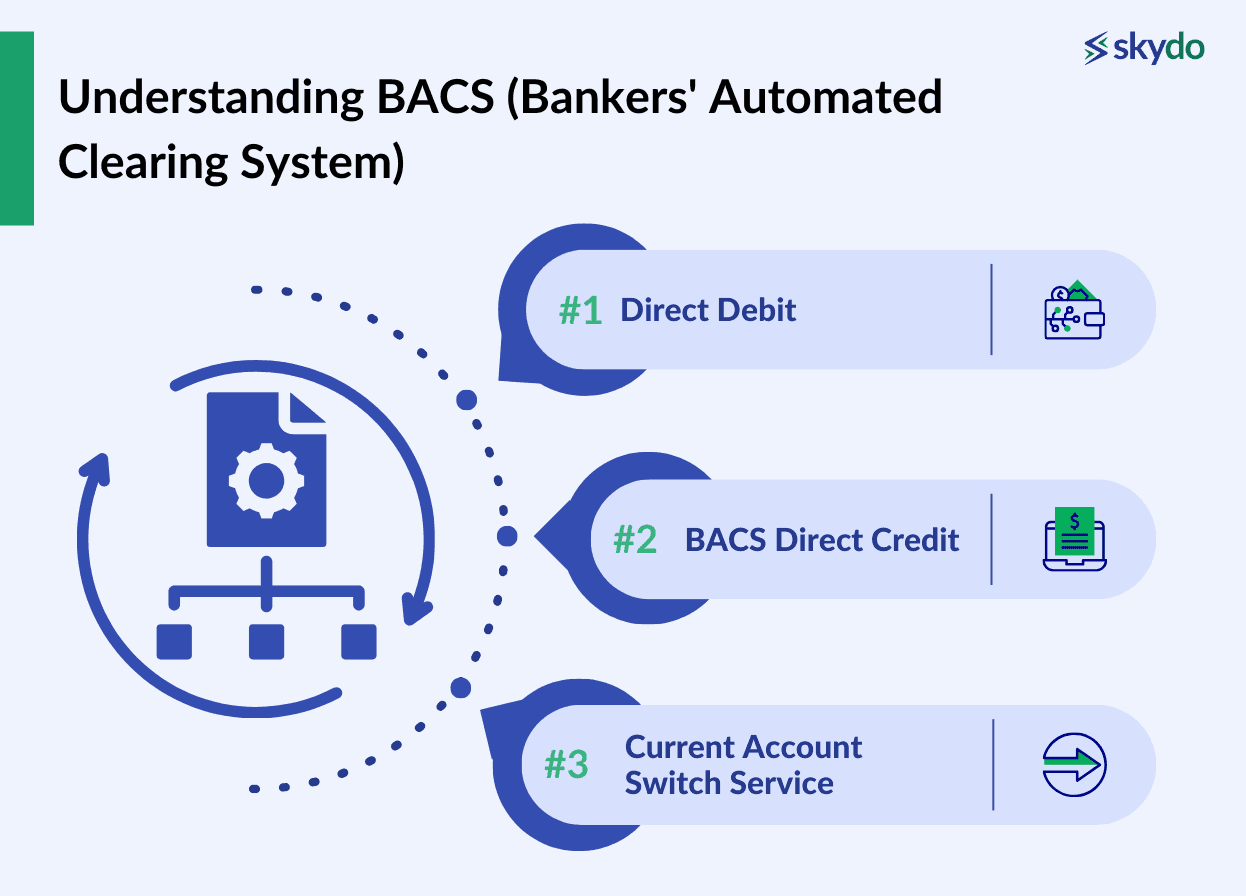
BACS is an electronic system that processes financial transactions. It's the backbone for Direct Debits, allowing suppliers to "pull" payments from millions of customer accounts in a secure and automated way. It also handles BACS Direct Credits, which are payments made from a business to a person, such as when an energy supplier issues a refund to a customer who is in credit when they close their account.
2. Prepayment Meter Payments
A completely different model is the prepayment or 'Pay-As-You-Go' (PAYG) system. Here, customers pay for their energy before they use it. This method is often used by customers who want to closely manage their budget or by landlords to prevent tenants from leaving unpaid bills.
Historically, prepayment was seen as inconvenient and expensive, but the rollout of smart meters and recent regulatory changes are changing this perception.
To understand prepayment in more detail, let's turn to an excellent guide from Energy Comparison.
Prepayment Meters - Energy Comparison
This guide, 'Prepayment Meters', provides a comprehensive look at how these meters work, the different types, and their pros and cons. It is a very thorough resource.
Please read the sections 'How do prepayment meters work?', 'Types of prepayment meters', and 'Prepayment meters vs credit meters'. This will explain the operational details and the key differences from the credit meters we've already discussed.
How Prepayment Works
As the article explains, there are three main types of prepayment meters in use:
- Key Meters (Legacy): You take a plastic key to a shop with a PayPoint or Payzone terminal, add credit, and then insert the key into your meter at home to transfer the funds.
- Smart Card Meters (Legacy): Similar to key meters, but use a credit-card-style smart card instead.
- Smart Prepayment Meters: These are the modern equivalent. You can top up your meter remotely using a smartphone app, a website, or sometimes over the phone. This eliminates the need for trips to the shop.

Key Features of Prepayment
The resource you read mentions two important safety nets built into prepayment systems:
- Emergency Credit: A small amount of credit (£5-£15) that you can access if your balance runs out, giving you time to top up before your supply is disconnected. This must be paid back with your next top-up.
- Friendly Credit: A feature that prevents your supply from being disconnected during specific times (e.g., overnight, on weekends, or bank holidays) even if you've run out of credit. This ensures you aren't left without power when the shops are closed.
Test your understanding!
A customer has a traditional (non-smart) prepayment meter and runs out of credit at 8 pm on a Saturday. They cannot get to the shop to top up until Monday morning. What features of their meter would likely prevent them from losing power over the weekend?
Show answer
Two features would help:
- They could first activate their Emergency Credit to keep the power on.
- Once that runs out, the Friendly Credit feature would likely activate, as it is a weekend. This would prevent disconnection until a time on Monday when they would be expected to be able to top up. The cost of all the energy used during this period would be added as debt to be repaid on their next top-up.
3. Summary of Payment Systems
Let's tie this all together by looking at the systems suppliers use to process these different payment types. These systems form the financial plumbing of the retail energy market.
| Payment Method | Key Enabling System(s) | How it Works |
|---|---|---|
| Monthly Direct Debit | BACS | Supplier's system sends an automated instruction via BACS to the customer's bank to pull the agreed payment. |
| Online Bill Payment | Online Payment Gateway (e.g., Worldpay, Stripe) | The supplier's website or app uses a gateway to securely process a customer's credit/debit card details for a one-off payment. |
| Prepayment Top-up (in-person) | PayPoint / Payzone Network | The shop's terminal connects to the PayPoint/Payzone network, which communicates with the supplier's system to validate the top-up and update the customer's account. |
| Prepayment Top-up (smart meter) | Online Payment Gateway | Similar to paying a bill online, the supplier's app or website uses a gateway to process the payment, then sends a secure signal over the smart meter network to credit the meter. |
Crucially, all payment information, regardless of the method, must be fed back into the supplier's main Customer Relationship Management (CRM) and billing system. This ensures that when a payment is made, the customer's account is updated to reflect that their bill has been paid or their prepayment balance has increased, closing the loop that began with the meter reading.
Conclusion
Today we've explored how electricity suppliers get paid. We've seen that the methods offered to customers have a significant impact on convenience, cost, and risk for both parties.
Key Takeaways:
- Customers with credit meters typically pay after use, either via automated Direct Debit (the cheapest and most common method) or by Payment on Receipt of Bill.
- Customers with prepayment meters pay for energy before use by topping up a key, card, or smart meter account.
- Key systems underpin these methods: BACS for Direct Debits, Payment Gateways for online card payments, and the PayPoint/Payzone network for in-person payments.
- Suppliers incentivise Direct Debit because it provides them with stable and predictable revenue.
Preview of the next lesson:
We have now covered how a customer is brought on board, how they are billed, and how they pay. But what happens when a customer is unhappy or finds a better deal elsewhere? In our next and final lesson of this module, we will explore the topic: "Describe the switching process and the systems that enable customers to change suppliers."