Hello! Welcome to the final lesson of the "Electricity Supplier Operations" module.
In our previous lessons, we've followed the customer journey from onboarding to billing and payment. We've seen how suppliers manage customer relationships and their finances. Now, we'll address a crucial aspect of the competitive UK energy market: what happens when a customer decides to leave their current supplier for a new one.
Today's lesson will focus on this very topic. Our learning outcome is to describe the switching process and the systems that enable customers to change suppliers. This process is a cornerstone of the deregulated market, allowing competition to thrive and giving customers choice.
We will cover:
- The old vs. the new, faster switching process.
- The key IT system at the heart of modern switching: the Central Switching Service (CSS).
- A step-by-step guide to how a customer switches supplier, from their perspective.
1. The UK's Competitive Energy Market
In the UK, the supply of electricity to homes and businesses is a competitive market. Unlike the network companies (who own and operate the wires), suppliers compete for customers. This competition is intended to drive down prices and improve service.
To get a sense of this competitive landscape, have a look at the logos of just some of the suppliers operating in the UK.
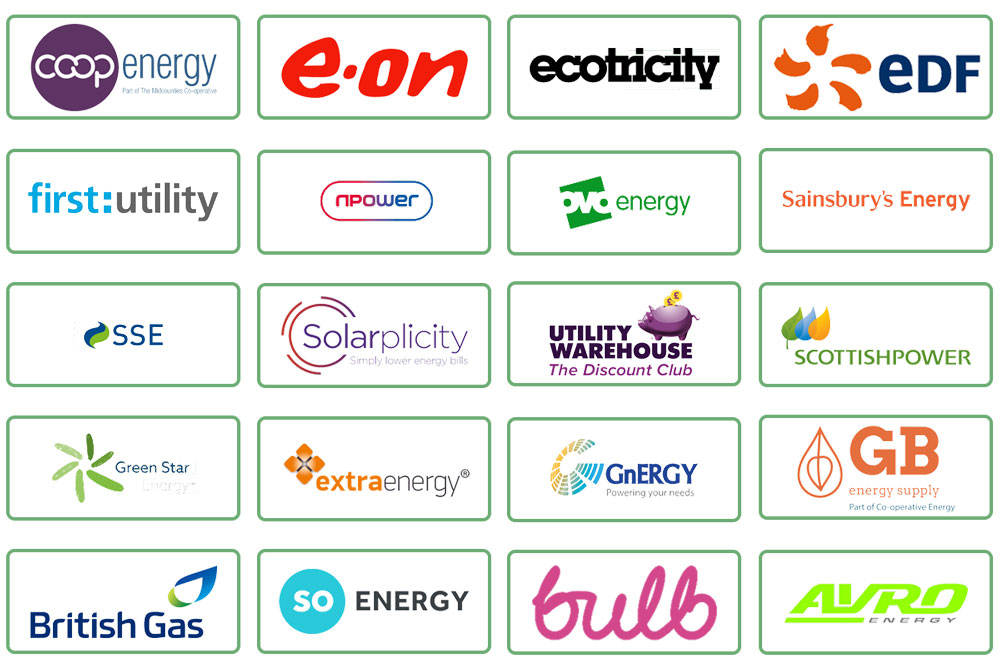
The primary way customers exercise this choice is by "switching" – moving their account from one supplier to another. For this market to work effectively, the switching process needs to be simple, fast, and reliable. However, this wasn't always the case.
2. A New Era for Switching
For many years, the process for switching was slow and based on outdated systems designed in the 1990s. To understand the problems and the solution, please read the following article.
Ofgem's faster energy switching program
This article, 'Ofgem’s faster energy switching program' from AquaSwitch, explains why the old switching process was problematic and introduces the modern system that replaced it.
Please read the sections 'What is the Ofgem switching program?', 'What was wrong with the old energy-switching process?', and 'How does the Ofgem switching program work?'. Pay attention to the old switching time, the new target, and the name of the new central system.
As you've just read, the old process was criticised for being:
- Slow: Typically taking 21 days.
- Unreliable: The process could fail, leaving customers in limbo.
- Confusing: A 2019 survey found 40% of people found it confusing.
In July 2022, a new system was launched to fix these issues, with a new target of completing a switch within five working days. This has a significant impact, allowing customers to react more quickly to better deals, especially in a volatile market. The scale of this activity is considerable.

3. The Central Switching Service (CSS)
The key innovation that enables faster, more reliable switching is the Central Switching Service (CSS).
As the AquaSwitch article mentioned, the CSS is a centralised IT system that sits at the heart of the market. Instead of every supplier having to build and maintain individual communication links with every other supplier, they all connect to the CSS.
Here’s how it works conceptually:
- A Single Source of Truth: The CSS maintains a master record of every single meter point in Great Britain and which supplier is currently responsible for it.
- Coordination Hub: When a customer agrees to switch, their new supplier registers the request with the CSS.
- Data Exchange: The CSS then acts as a go-between, orchestrating the secure transfer of the customer's data (like their meter details and final readings) from the old supplier to the new supplier.
- Confirmation: Once the transfer is complete and validated, the CSS updates its master record to show that the new supplier is now responsible for the meter point. The switch is complete.
This move from a complex web of point-to-point connections to a "hub-and-spoke" model makes the whole process vastly more efficient and less prone to error. To connect their own internal systems (like their billing and CRM software) to this central hub, suppliers use a standardised interface called the CSS Gateway.
4. The Customer's Switching Journey
Now that we understand the system behind the scenes, let's walk through the process from the customer's point of view. The following guide from Citizens Advice provides a comprehensive overview of the steps a customer takes.
Switch energy supplier or tariff
This guide from Citizens Advice, 'Switch energy supplier or tariff', details the entire switching process from a customer's perspective. It covers everything from checking eligibility to finalising the switch.
Please read the sections 'Check if you can switch', 'How to switch', 'If you want to cancel your switch', and 'If there’s a delay with switching suppliers'. This will give you a clear, step-by-step understanding of the customer experience.
Based on what you've read, let's consolidate the customer journey into distinct steps:
Step 1: Check Eligibility and Find a New Deal
Before switching, a customer needs to check if they are able to. If they are on a fixed-term tariff, they may have to pay an exit fee to leave early (unless they are in the last 49 days of their contract). They also generally cannot switch if they have significant debt with their current supplier. They can then use price comparison websites to find the best tariff for their needs.
Step 2: Initiate the Switch
The customer contacts their chosen new supplier to start the process. A key point is that the customer does not need to contact their old supplier. The new supplier handles all the communication on their behalf, using the Central Switching Service.
Step 3: The Cooling-Off Period
Once the customer agrees to the contract, a 14-day cooling-off period begins. During this time, the customer can cancel the switch without any penalty.
Step 4: The Switchover
The switch itself should happen within 5 working days. On the day of the switch, the customer is asked to take a meter reading and give it to their new supplier. This ensures their final bill from the old supplier and their first bill from the new supplier are both accurate.
Step 5: Final Bill and Settlement
The old supplier must send a final bill within six weeks. If the customer's account was in credit, the old supplier must refund the money within 10 working days of sending the final bill.
Step 6: Handling Delays
As the Citizens Advice article highlights, there are clear rules and compensation in place. If a switch is delayed beyond the 5 working day target due to the supplier's error, the customer is automatically entitled to £40 compensation.
Test your understanding!
A customer is on a fixed tariff that ends on 30th November. They find a great deal with a new supplier on 25th October and sign up immediately. The new supplier initiates the switch. However, on 1st November, the customer changes their mind and decides to stay with their old supplier. What should they do, and are they allowed to?
Show answer
Yes, they are allowed to cancel. They are still within the 14-day cooling-off period, which began the day after they agreed to the contract (26th October). They should contact the new supplier (the one they were switching to) immediately and inform them they wish to cancel the switch. The new supplier will then stop the process, and the customer will remain with their old supplier.
Conclusion
Today, we've explored the process that allows customers to move between electricity suppliers—a vital function in the UK's competitive retail market.
Key Takeaways:
- The UK's deregulated energy market relies on customers being able to switch suppliers easily.
- The old switching process was slow (21 days) and unreliable. The modern system, implemented in 2022, aims to complete switches in 5 working days.
- The new process is powered by the Central Switching Service (CSS), a centralised IT platform that coordinates the transfer of data between the old and new suppliers.
- From a customer's perspective, the process is simple: they only need to contact their new supplier, who manages the entire switch. A 14-day cooling-off period and automatic compensation for delays protect the consumer.
This lesson concludes our module on Electricity Supplier Operations. We've covered the entire lifecycle, from customer onboarding and billing to payments and, finally, switching.
Preview of the next module:
We will now shift our focus from the retail and operational side back to the physical grid. In the next module, "System Inefficiencies: Network Constraints," we will begin to explore some of the major technical and economic challenges facing the UK's electricity network as it adapts to a future with more renewable energy. Our first topic will be network congestion and the system of constraint payments.