Hello! Welcome to the final lesson in our module on system inefficiencies.
In the past two lessons, we've explored specific challenges facing the UK's energy transition. We looked at the barriers holding back grid-scale energy storage and the difficulties in implementing effective Demand-Side Response. These are critical pieces of the puzzle, but they are symptoms of wider, more fundamental issues.
Today, we will zoom out to examine these overarching challenges. This lesson addresses the key market and regulatory barriers that stand in the way of building a fully decarbonized grid. We will focus on three interconnected themes:
- Misaligned Incentives: How the rules of the electricity market can produce outcomes that work against decarbonization.
- Planning Processes: The bureaucratic and logistical hurdles that delay the construction of essential green infrastructure.
- Investment Signals: How the regulatory framework can either encourage or discourage the massive investment needed for the transition.
Understanding these barriers is essential. Today, the biggest obstacles to a clean grid are often not technological but are found in spreadsheets, policy documents, and regulatory codes.
Barrier 1: Misaligned Incentives in the Wholesale Market
A core problem is that the UK's wholesale electricity market was designed for a world of large, predictable fossil fuel power stations. It is not well-suited for a system dominated by variable, zero-marginal-cost renewables like wind and solar.
A key example of this misalignment is the marginal pricing system. Let's watch a short video that explains this concept brilliantly using a cocktail analogy.
How Britain broke its electrical grid (and how to fix it)
In this video, 'How Britain broke its electrical grid', Simon Clark explains the concept of marginal pricing and why it results in high electricity prices, even when there are lots of cheap renewables on the system.
Please watch from 02:11 to 07:23. Focus on: The cocktail analogy used to explain marginal pricing. Why the price of gas so often sets the price for all electricity. Why this system is a poor fit for a grid with lots of intermittent renewables.
As the video explains, the most expensive generator needed to meet demand (usually a gas plant) sets the price for everyone. This creates several barriers:
- Poor Price Signals for Consumers: Consumers don't see the benefit of cheap renewable energy on their bills, as prices remain stubbornly linked to the volatile international gas market. This erodes public support for the transition.
- Distorted Investment Incentives: While it does incentivize the cheapest generators to run first, the system can struggle to provide clear, long-term investment signals for the flexible technologies (like batteries) needed to support a renewable-heavy grid.
- Consumer-Side Disincentives: This misalignment also extends to how energy is priced for end-users. As another expert points out, the fact that electricity is priced much higher than gas per unit of energy discourages people from switching to electric heating (like heat pumps), which is a crucial step in decarbonizing homes.
This fundamental market structure is a primary focus of the government's Review of Electricity Market Arrangements (REMA), which is exploring alternative systems that are better suited for a decarbonized future.
Barrier 2: The Planning and Connection Logjam
Imagine you have secured funding and land to build a new solar farm. You have the technology and the will to proceed. However, you are told you cannot connect to the grid until 2037. This is the reality for many developers in the UK today.
This "quiet bureaucratic crisis" is one of the single biggest barriers to decarbonization.
Fixing the UK’s grid connection backlog with Charles Deacon (Eclipse Power Solutions)
This video, 'Fixing the UK’s grid connection backlog', provides an excellent overview of the problem from the perspective of an industry expert who helps developers navigate this process.
Please watch the introduction from 00:01 to 02:22, and then the detailed discussion on connections reform from 06:19 to 12:10. Pay attention to: The scale of the problem and the 'bottleneck' it creates. The evolution from 'first come, first served' to 'first ready, first connected'. Why, despite reforms, the process is still plagued by delays and a lack of confidence.
This connection queue is a complex problem. An authoritative report from the National Engineering Policy Centre provides a high-level summary of the issue.
Rapid decarbonisation of the GB electricity system
This report, 'Rapid decarbonisation of the GB electricity system', was written to advise the government on accelerating the energy transition. It puts the connection delay issue into sharp focus.
Please read the section 'Grasping the nettles: planning and consenting, and connection delay' (found in the 'Key messages' summary near the beginning) and the section 'The transmission system and connections' (part of section 2.3.1). Focus on: The description of connection delays as a major constraint. The typical lead times for building transmission infrastructure. The problem with the 'first-come-first-served' system and 'zombie projects'.
As these resources highlight, the key issues with planning and connections are:
- A Massive Queue: Hundreds of gigawatts of projects are waiting to connect, far more than the grid needs or can handle.
- Long Timelines: It can take over a decade to plan and build new high-voltage transmission lines.
- "Zombie Projects": The old "first-come, first-served" system allowed speculative projects with no realistic chance of being built to clog up the queue, blocking viable projects behind them.
- Uncertainty: The new "first ready" system is an improvement, but as the video explained, the long waits for connection offers still create huge uncertainty for investors, making it difficult to commit hundreds of millions of pounds to projects.
Barrier 3: An Outdated Regulatory Framework
The first two barriers are symptoms of a wider, more fundamental problem: the entire regulatory philosophy that has governed the UK grid for decades is now a barrier itself.
For a long time, the primary role of the regulator, Ofgem, was to protect consumers from the costs of unnecessary investment by the monopoly network companies. The philosophy was to avoid building new infrastructure until it was absolutely proven to be necessary. This is no longer fit for purpose.
Rapid decarbonisation of the GB electricity system
Let's return to the National Engineering Policy Centre report, which explains this shift in thinking very clearly.
Please read section 1.4, 'Cost, risk, and procurement', and section 2.3.2, 'Distribution'. Notice how the report describes the old approach and why it needs to change. Focus on why the old risk-averse approach is 'no longer fit for purpose'. Understand the concept of 'anticipatory investment' and why it is now necessary. Note how the price control mechanism for Distribution Networks is not set up to enable this kind of investment.
To build a decarbonized grid capable of supporting millions of electric vehicles and heat pumps, network companies now need to engage in anticipatory investment—building capacity ahead of demand. This is a complete reversal of the old regulatory model.
Ofgem, the regulator, is aware of this and is trying to adapt. Their price control frameworks (known as RIIO) are being updated to try and enable this forward-looking investment.
Ofgem decarbonisation programme action plan
This action plan from Ofgem outlines their strategy for enabling decarbonization. It shows how the regulator is attempting to shift its approach.
Please read the short sections 'Our actions' (page 6), 'Preparing the networks to drive changes' (page 16), and 'Adaptive Regulation' (page 26). You don't need to absorb all the detail, but focus on the key concepts: The regulator's stated intent to encourage 'anticipatory investment'. The use of price controls (RIIO) and 'net zero reopeners' to add flexibility. The overall shift towards 'adaptive regulation' to cope with uncertainty.
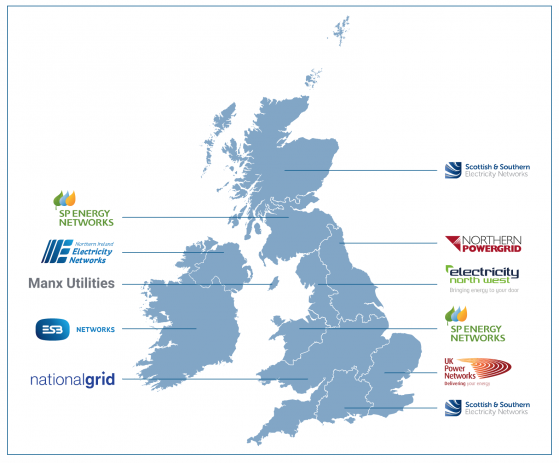
This transition to a new regulatory philosophy is a massive undertaking. It involves changing not just the rules, but the entire culture of a multi-billion-pound industry. This challenge is compounded by the fragmented ownership structure of the UK's networks.
Test your understanding!
A new government policy aims to rapidly increase the number of electric vehicles on the road. A Distribution Network Operator (DNO) knows this will require major upgrades to its local grid in the next few years.
Based on what you've learned, why might the DNO be hesitant to start building the new infrastructure immediately under the traditional regulatory model?
Show answer
Under the traditional regulatory model, the DNO would be hesitant because the investment might not be approved by the regulator, Ofgem. The old model was designed to prevent "over-investment" and protect current bill payers. Ofgem would require the DNO to prove the demand was already there before approving the spending. Investing before the EVs arrive would be seen as a financial risk for the company. This is why the shift to allowing and encouraging "anticipatory investment" is such a critical regulatory barrier to overcome.
Conclusion
In this lesson, we have seen that the path to a decarbonized grid is blocked by significant market and regulatory barriers that are, in many ways, more challenging than the technology itself.
Key Takeaways:
- Misaligned Incentives: The wholesale market's marginal pricing system, designed for fossil fuels, masks the low cost of renewables and creates poor investment signals.
- Flawed Planning Processes: The grid connection queue is a critical bottleneck, with projects facing decade-long delays that stifle investment and jeopardize climate targets.
- Outdated Regulatory Frameworks: The regulatory culture is slowly shifting from one that discourages risk and upfront spending to one that must enable anticipatory investment, but this is a slow and complex process.
Preview of the next lesson:
Having spent this module diagnosing the problems and inefficiencies in the system, we will now pivot to focus on the solutions. In the next module, "Opportunities for System Improvement," we will explore how digitalization, smart grid technologies, and new management platforms can help overcome these barriers and accelerate the transition to a clean, efficient, and reliable electricity system.