Welcome to your fourth lesson. In our previous session, we established the legal basis of being a Nepali by examining the different types of citizenship. Now that we understand who is a citizen, we can explore the most profound benefit of that status: the fundamental rights guaranteed by the Constitution.
This lesson delves into Part 3 of the Constitution of Nepal, which is the bedrock of individual liberty and justice in the country. We will focus on the core civil and political rights that form the foundation of a democratic society. By the end of this lesson, you will be able to explain the fundamental rights related to liberty, equality, and justice, which are essential topics for both the objective and subjective sections of your Loksewa exams.
The Charter of Liberties: What are Fundamental Rights?
Fundamental Rights (मौलिक हक - Maulik Hak) are a set of entitlements guaranteed by the Constitution to every person or citizen, protecting them from the arbitrary exercise of state power and ensuring their ability to live a full, dignified life. These are not mere suggestions; they are legally enforceable. If the state infringes upon these rights, a citizen can seek justice directly from the courts.
The Constitution of Nepal, 2015, contains 31 fundamental rights, listed in Articles 16 through 46. They cover a wide spectrum of human needs and freedoms.

Today, we will concentrate on the foundational rights that underpin all others: the rights to dignity, freedom, equality, and justice.
1. Right to Live with Dignity (Article 16)
The very first fundamental right sets the tone for all others. It establishes the intrinsic worth of every individual.
This article from the blog 'Susmita's Diary' provides a clear and direct presentation of the constitutional articles on fundamental rights.
Please read the two short clauses under the heading Article 16.
As you've just read, this right has two crucial components:
- The Right to a Dignified Life: This is broader than the mere right to exist. It implies a life free from humiliation and degradation, with access to the basic necessities that uphold human value. The Supreme Court of Nepal has interpreted this to include aspects like a clean environment and basic health.
- Abolition of the Death Penalty: This is a definitive and progressive feature of the Nepali constitution. It explicitly forbids the state from making any law that allows capital punishment, affirming the sanctity of life.
Notice that Article 16 applies to "every person," not just "every citizen." This means this fundamental protection extends to anyone within the territory of Nepal, regardless of their nationality.
2. Right to Freedom (Article 17)
This article is a cornerstone of democratic life, granting citizens the freedoms necessary for political, social, and personal expression. However, these freedoms are not absolute.
Let's continue with the same resource to understand the specific freedoms and, just as importantly, their limitations.
Read the section for Article 17, "Right to Freedom." First, focus on the list of six freedoms granted to every citizen. Then, carefully read the "Provided that" clauses that follow. These clauses explain the concept of reasonable restrictions.
Let's break down what you've studied. Article 17 grants six key freedoms to citizens:
- Freedom of opinion and expression: The right to hold and share one's views.
- Freedom to assemble peaceably and without arms: The right to gather for protests, meetings, etc.
- Freedom to form political parties: The foundation of a multi-party democracy.
- Freedom to form unions and associations: For collective bargaining and social organization.
- Freedom to move and reside anywhere in Nepal: Ensures national unity and personal mobility.
- Freedom to practice any profession or occupation: Guarantees economic liberty.
The Concept of Reasonable Restrictions
The "Provided that" clauses are critical for your exams. They establish that no freedom is absolute. The state can enact laws to impose "reasonable restrictions" on these freedoms to protect larger public interests. Common grounds for these restrictions include:
- Protecting the sovereignty, territorial integrity, and nationality of Nepal.
- Maintaining public peace and order.
- Preventing incitement to crime or contempt of court.
- Upholding public decency and morality.
For your exams, you don't need to memorize every single restriction for each freedom. Instead, understand the principle: Fundamental freedoms can be limited by law, but those limitations must be reasonable and serve a legitimate public purpose.
3. Right to Equality (Article 18)
This right ensures that all citizens are treated equally by the law and are protected from discrimination.
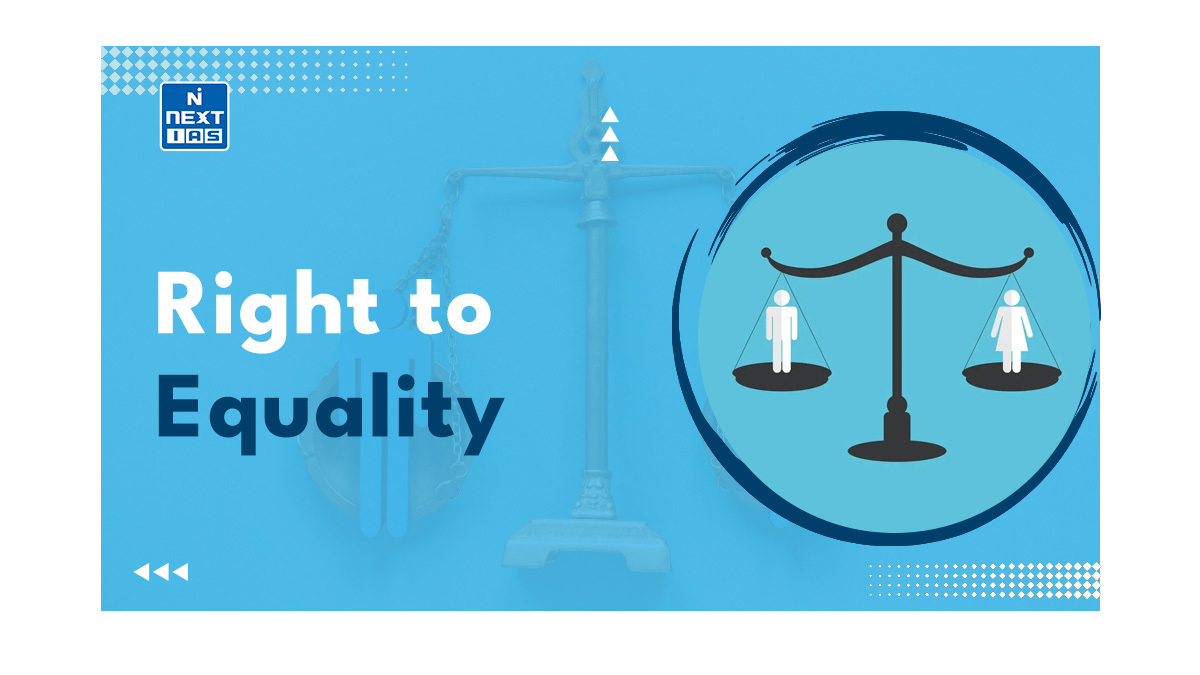
Now, let's examine Article 18 in the same document.
Please read the entire section under Article 18. Pay special attention to the main clauses about non-discrimination and the long "Provided that" clause at the end.
The Right to Equality operates on two levels:
A. General Equality and Non-Discrimination:
- Equality before the law: No one, from the Prime Minister to an ordinary citizen, is above the law.
- Equal protection of the laws: The law should be applied equally to all individuals in similar circumstances.
- Prohibition of discrimination: The state cannot discriminate against any citizen on grounds like origin, religion, caste, gender, economic condition, or ideological belief.
B. Positive Discrimination (Affirmative Action):
The proviso (the "Provided that" clause) is one of the most important aspects of this article. It allows the state to make special provisions for the protection, empowerment, or development of disadvantaged groups. This is the constitutional basis for Nepal's policy of inclusion and reservation in areas like civil service, education, and politics.
This concept, known as positive discrimination or substantive equality, recognizes that treating unequal groups equally does not produce an equal outcome. Therefore, the constitution permits special measures to uplift historically marginalized communities like women, Dalits, indigenous nationalities, Madhesis, and people from backward regions.
4. Rights Related to Justice (Article 20)
This article provides crucial safeguards to protect individuals from abuse by the legal and administrative systems. It ensures procedural fairness when a person is accused of a crime.
This article is lengthy, so we will focus on its core principles.
Read the section for Article 20, "Right to Justice." Focus on understanding the rights guaranteed to a person who is detained or accused of an offense, such as the ten key protections.
Article 20 guarantees a fair judicial process. Key protections include:
- Right to be informed of the reason for arrest.
- Right to consult a legal practitioner of one's choice.
- Right to be produced before a judicial authority within 24 hours of arrest.
- Protection from double jeopardy (cannot be prosecuted or punished for the same offense twice).
- Protection against self-incrimination (an accused person cannot be forced to testify against themselves).
- Presumption of innocence (a person is considered innocent until proven guilty).
- Right to a fair trial by an independent court.
These rights are essential checks on the power of the police and the state, ensuring that liberty is not taken away without due process of law.
The Inviolable Core
The importance of these rights is underscored by the fact that many of them cannot be suspended, even during a State of Emergency. This makes them truly fundamental.
Nepal 2015 (rev. 2016) Constitution - Constitute
This excerpt from the full constitution highlights which rights are non-suspendable.
Find Part 30, "Emergency Powers," and read the "Provided that" clause within Article 273. Note how many of the rights we just discussed, such as those in Articles 16, 18, and 20, are on this protected list.
This provision shows that the rights to dignity, equality, justice, and others are considered absolute and non-negotiable foundations of the Nepali state.
Conclusion
In this lesson, we have examined the foundational civil and political rights that form the core of the relationship between the Nepali state and its people. These rights are not abstract ideals but concrete, enforceable guarantees.
Here are the main takeaways:
- Right to Live with Dignity (Art. 16): Guarantees the right to a dignified existence and prohibits the death penalty.
- Right to Freedom (Art. 17): Provides key freedoms of expression, assembly, and movement, but these are subject to "reasonable restrictions" by law.
- Right to Equality (Art. 18): Ensures equality before the law and prohibits discrimination, while also allowing for "positive discrimination" (special provisions) to promote social justice for disadvantaged groups.
- Rights Related to Justice (Art. 20): Establishes procedural safeguards for accused individuals, such as the right to counsel and protection against self-incrimination, to ensure a fair trial.
You now have a solid understanding of the fundamental rights that protect individual liberty and ensure justice. In our next lesson, we will build upon this foundation by exploring another set of crucial entitlements: the fundamental rights related to social, economic, and developmental justice, including the specific rights of women, Dalits, and children, as well as the rights to health and education.