Welcome to your third lesson. In our previous session, we explored the fundamental principles like federalism, secularism, and republicanism that define the Nepali state. Now that we understand the nature of the state, we will turn our attention to its most important component: its people.
Today's lesson focuses on a cornerstone of your relationship with the state: Nepali citizenship. We will examine the different ways a person can be recognized as a citizen of Nepal, as laid out in the Constitution. Understanding these provisions is critical, as citizenship is the gateway to all other rights, duties, and opportunities provided by the state, including the very public service roles you aspire to. By the end of this lesson, you will be able to describe the main types of Nepali citizenship and the key conditions for acquiring each.
The Foundation of Rights: What is Citizenship?
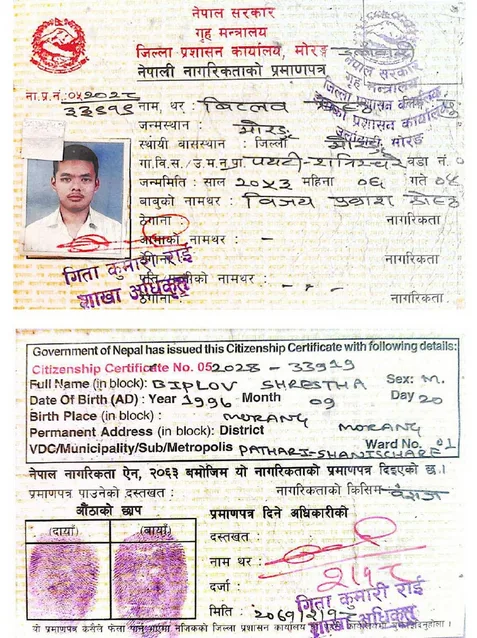
At its core, citizenship (नागरिकता) is the legal status that formally recognizes an individual as a member of a state. This status grants the person certain rights (like the right to vote and hold public office) and imposes certain duties (like paying taxes and abiding by the law). In Nepal, the primary evidence of this status is the Citizenship Certificate (नागरिकताको प्रमाणपत्र).
This certificate is arguably the most important personal document in Nepal, required for everything from opening a bank account and registering property to applying for a passport or, indeed, a Loksewa exam.
The rules governing citizenship are not arbitrary; they are clearly defined in Nepal's highest law, the Constitution, and are further detailed in specific acts.
Nepali Citizenship - Types And Application Process 2026 - Union Nepal
This practical guide from Union Nepal clearly outlines the legal framework for citizenship.
Please read the section "What Is A Nepal Citizenship Certificate?". Focus on the three bullet points that list the governing laws. This will give you a clear map of the legal sources we will be referring to.
As you've noted, the primary sources are Part 2 (Articles 10-15) of the Constitution of Nepal and the Nepal Citizenship Act, 2006 (2063 B.S.). The Constitution establishes the fundamental principles, while the Act provides the detailed procedures.
The Constitutional Guarantee of Citizenship
Before diving into the different types, it's important to recognize a key principle enshrined in the Constitution itself. Citizenship is treated as a fundamental right, not a privilege granted at the discretion of the state.
Salient Features of the Constitution of Nepal 2015 (2072) – Bipin Adhikari
In this article by constitutional expert Bipin Adhikari, we find a concise statement of this principle.
Under the heading "‘Key Features’ of the Fundamental Rights", please read the first bullet point that begins with "No Nepali citizen...".
This provision from Article 10 ensures that once a person meets the legal criteria, the state cannot arbitrarily deny them citizenship. It also introduces the concept of a single federal citizenship, meaning that although you may have an identity linked to a specific province, your citizenship is singular and national.
Types of Nepali Citizenship
The Constitution and the Citizenship Act provide for four main pathways to acquiring Nepali citizenship. Understanding the distinctions between them is crucial for both objective and subjective questions in your exams.
We will now examine each type, drawing from the clear explanations in the "Nepali Citizenship - Complete Guide".
Nepali Citizenship - Types And Application Process 2026 - Union Nepal
This resource provides an excellent breakdown of the four types of citizenship.
Please read the section titled "Types Of Citizenship In Nepal". Pay close attention to the conditions for each of the four categories: the four types.
Let's consolidate what you've just read and highlight the most important points for your Loksewa preparation.
1. Citizenship by Descent (वंशज - Vamshaja)
This is the most common form of citizenship in Nepal.
- Core Principle: A person acquires citizenship by descent if either their father or mother was a Nepali citizen at the time of their birth. The applicant must be at least 16 years old.
- Key Update (Citizenship Amendment Act): A significant and recent development allows a person to acquire citizenship through their mother's name if the father's identity cannot be established. This requires a self-declaration (स्वघोषणा - swaghoshana) from both the mother and the applicant. This provision is a landmark change aimed at addressing historical discrimination and is a very probable topic for exam questions.
2. Citizenship by Birth (जन्मसिद्ध - Janma Siddha)
This is a historical, one-time provision and is often a point of confusion.
- Who it applies to: It was granted to individuals born within Nepal before a specific cutoff date (the end of Chaitra, 2046 B.S.) who had been permanently residing in Nepal.
- Important Distinction: This category is not open to new applicants born after that date. A child of a citizen by birth will acquire citizenship by descent, not by birth.
3. Naturalized Citizenship (अंगीकृत - Angikrit)
This type is for foreign nationals who acquire Nepali citizenship through specific legal processes. The most common scenarios are:
- Marriage: A foreign woman married to a Nepali male citizen can apply for naturalized citizenship. A key condition is that she must provide evidence of having initiated the process to renounce her original citizenship.
- Child of a Nepali Mother and Foreign Father: A person born to a Nepali mother and a foreign father, who is permanently residing in Nepal and has not acquired foreign citizenship, can obtain naturalized citizenship.
- Special Contribution: In rare cases, the government can grant naturalized citizenship to individuals who have made outstanding contributions to Nepal, subject to conditions like a long-term residency of at least 15 years.
4. Honorary Citizenship (सम्मानार्थ - Sammanartha)
This is a ceremonial form of citizenship.
- How it's granted: It is conferred by the Government of Nepal upon distinguished foreign nationals who have made extraordinary contributions to the nation's prestige.
- Rights: It does not grant political rights, such as the right to vote or hold public office. It is a mark of high honour, not a path to full civic participation.
Constitutional Articles in Focus
To solidify your understanding directly from the source, let's briefly look at how Article 11 of the Constitution frames these provisions. The language is more formal and legalistic, but you will now recognize the principles we've just discussed.
Salient Features of the Constitution of Nepal 2015 (2072) – Bipin Adhikari
Let's return to Bipin Adhikari's analysis to see a summary of the constitutional text itself.
Read the paragraph that starts with "Article 11 deals...". As you read, try to match each clause mentioned to the four types of citizenship we have just covered. For example, which clause relates to a foreign woman married to a Nepali citizen?
This reading reinforces that the practical guide aligns perfectly with the constitutional text, giving you confidence in the material.
Conclusion
In this lesson, we have moved from the abstract concept of the state to the tangible status of being one of its citizens. We've established that citizenship is a fundamental right in Nepal, governed by the Constitution and the Citizenship Act.
Here are the key takeaways:
- Four Types: Nepali citizenship is primarily granted in four ways: by Descent (the most common, based on parentage), by Birth (a historical category), Naturalized (for foreigners meeting specific conditions, like marriage), and Honorary (a ceremonial honour).
- Citizenship by Descent: The core requirement is having a Nepali parent at birth. The provision allowing citizenship through the mother's name is a crucial recent amendment.
- Legal Basis: The foundation for these rules is laid out in Part 2 of the Constitution of Nepal, particularly Article 11.
Now that you have a firm grasp of who a citizen is, we are perfectly positioned for our next lesson. We will explore the core Fundamental Rights that the constitution guarantees to every Nepali citizen, such as the Right to Live with Dignity, the Right to Freedom, and the Right to Equality.