In our previous lesson, we established a foundational toolkit for literary analysis by defining the five core elements of narrative: plot, character, setting, point of view, and theme. Now, we will use that toolkit to define our first major literary movement. This lesson will define literary realism and situate it historically within 19th-century Europe. Our objective is to understand not only what realism is, but also when and why it emerged as a dominant force in art and literature.
As we proceed, you will notice that this shift in artistic expression was not merely a matter of taste; it was driven by profound changes in the social, technological, and philosophical landscape of Europe. Given your interest in philosophy, you will find the connections between the empiricist thought of the Enlightenment and the realist's commitment to objective observation particularly relevant.
What is Literary Realism?
At its core, realism is a literary movement that aims to represent life truthfully and accurately, without idealization or artistic embellishment. It emerged in the mid-19th century as a direct reaction against Romanticism, the dominant movement that preceded it.
To begin, let's watch a very brief video that introduces this fundamental opposition.
Realism in Literature : A Detailed Analysis #englishliterature
This short video from Essay Academy, "Realism in Literature," provides a concise definition of the movement as a response to Romanticism and places it within its historical context.
Please watch from the beginning to the end of the introduction. Pay close attention to the keywords used to contrast the two movements: "idealized" and "emotion" for Romanticism, versus "ordinary," "everyday," and "authenticity" for Realism.
The video highlights that realism was a deliberate turn away from the "fantastical elements" of Romanticism. To make this contrast more concrete, consider these two famous paintings of Napoleon crossing the Alps.

David's painting is a work of heroic propaganda. Napoleon is depicted on a magnificent, rearing stallion, his cloak billowing heroically as he points toward victory. The image is idealized, dramatic, and emotionally charged—it seeks to inspire awe. This is the essence of Romanticism.
Delaroche's version, painted half a century later when the realist sensibility was taking hold, offers a starkly different vision. Here, Napoleon is slumped and weary, dressed in a plain coat, and mounted on a mule, which is a far more plausible mode of transport for crossing the Alps. The conditions are harsh and the mood is somber. Delaroche is not interested in the idea of a hero; he is interested in the plausible reality of a man undertaking a difficult journey. This commitment to the unvarnished, the plausible, and the everyday is the hallmark of Realism.
The Historical Context: A Movement Born of Change
Literary realism did not emerge in a vacuum. It was the product of a specific moment in European history, taking root most firmly in France around the 1850s before spreading across the continent. This period was marked by immense social and technological transformation. The Industrial Revolution had created sprawling cities, a new and increasingly powerful middle class (the bourgeoisie), and stark social inequalities.
To understand how realism became an organized artistic program, let's look at its formal beginnings.
Realism - Novels, Literature, 19th Century | Britannica
This article from Britannica provides a clear and concise overview of how realism coalesced into a conscious movement in France.
Please read the entire first paragraph, from the introduction to the Goncourts. Notice the key figures and dates: Balzac as a "precursor," the painter Gustave Courbet and the critic Champfleury providing an "aesthetic stance" and a "manifesto" in the 1850s, and Flaubert's Madame Bovary (1857) as the "principal masterpiece" that established the movement.
As the article states, the realist project was ambitious. Balzac sought to create an "encyclopaedic portrait" of French society. Champfleury asserted that the hero should be an "ordinary man." This was a radical departure from the kings, knights, and poets who populated earlier literature. The focus shifted to the world that people saw around them: the world of business, class struggle, urban life, and the complex inner lives of ordinary individuals.
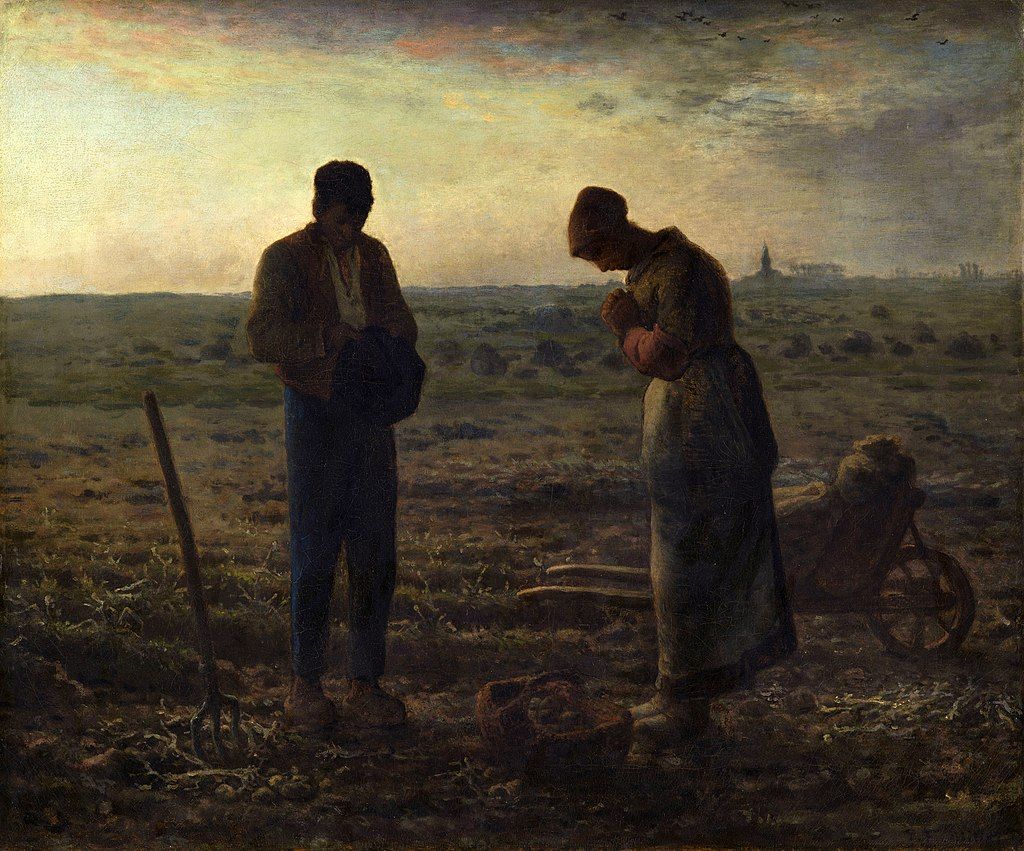
This new focus is well-represented in the art of the period, which turned its gaze toward the common person.
The Philosophical Underpinnings of Realism
The shift toward realism was more than just a change in subject matter; it reflected a fundamental change in how 19th-century thinkers and artists understood truth and reality. This is where the movement's connection to philosophy becomes clear.
Realism can be seen as the literary manifestation of empiricism and positivism. These philosophical systems, which gained prominence throughout the 19th century, argue that knowledge comes from sensory experience and that the scientific method is the best way to understand the world. Realist authors sought to become objective observers and analysts of society, much like a scientist conducting an experiment.
The following text delves into these philosophical roots, tracing modern realism back to the Enlightenment.
Realism and Naturalism in Europe and America
This section of the article "Realism and Naturalism in Europe and America" connects literary realism to its philosophical origins, particularly the thought of Descartes and Locke. It contrasts the modern realist focus on the particular with the medieval focus on universals.
Please read the section that begins with the heading "Realism is not a new phenomenon". Focus on this key idea: modern realism begins from the position that "truth can be discovered by the individual through his senses." Note the contrast drawn between medieval realism (where particulars point to universal, divine truths) and modern realism (which values the particular, concrete object for its own sake).
This is a crucial point. For the realist, a peasant in a field is not a symbol of a universal moral truth; he is a specific individual whose life is shaped by tangible social and economic forces. The goal of the novelist is to observe and record these tangible realities with precision and objectivity. The invention of photography in 1839, mentioned in the text, is not a coincidence; both photography and the realist novel shared the ambition to "reproduce reality" with scientific accuracy.
Defining Characteristics
So, how did realist authors translate this philosophical and historical impulse into literary technique? Drawing on the narrative elements we discussed in the last lesson, we can identify several defining characteristics. A video from the channel Tristan and the Classics provides an excellent, practical breakdown of these aspects. We will use it as a guide, supplemented by more formal definitions.
WHAT IS LITERARY REALISM? 7 ASPECTS OF REALIST NOVELS!
This video, "WHAT IS LITERARY REALISM?", breaks down the movement into seven distinct aspects. We will focus on four of the most important ones.
As we discuss each characteristic below, please watch the corresponding segment of the video for a detailed explanation with examples.
1. Verisimilitude and a Focus on the Ordinary
The primary goal of realism is verisimilitude: the quality of appearing true or real. Realist novels strive to create a world that is believable and whose events feel like they could happen to anyone.
- Watch: The segment on verisimilitude in the video, from
the beginning of the first aspect . - Focus: The video contrasts the wild, improbable plot of The Count of Monte Cristo with a more mundane scenario of a fight in a tenement building. This illustrates the realist preference for the "humdrum," the "quotidian," and the "everyday."
This commitment to the ordinary extends to the characters. Instead of heroes and aristocrats, realism turns its attention to the middle and lower classes.
- Watch: The segment on social class, from
the beginning of the third aspect . - Focus: The video explains that realism concerns itself with the middle and lower classes because "that's real life for most people." This choice of subject matter was a significant and often political statement.
2. Detailed Observation and Authorial Detachment
To achieve verisimilitude, realists employed meticulous, often extensive, detail. The setting is rendered with geographic and historical accuracy. The characters' appearances, jobs, homes, and financial situations are described with a precision that borders on the documentary.
- Watch: The segment on detail and detachment, from
the beginning of the second aspect . - Focus: The video notes how realists favor accurate, factual description over evocative but subjective metaphors and similes. The ideal is to present "things as they are," without the author's personality coloring the lens. This is the principle of authorial impersonality, most famously championed by Gustave Flaubert.
3. The Omniscient but Objective Narrator (Point of View)
The preferred point of view for many 19th-century realists was the third-person omniscient narrator. This narrator has access to the thoughts and feelings of all characters, allowing for deep psychological exploration. However, the ideal realist narrator uses this power not to judge, but to report.
- Watch: The segment on the omniscient narrator, from
the beginning of the seventh aspect . - Focus: The narrator explains how omniscience allows the author to build a "very, very real world" by showing us everything, including the internal lives of characters. This allows for the creation of psychologically complex, round characters whose motivations we can understand, even if we don't approve of their actions.
These characteristics are summarized well in our first reading.
Realism and Naturalism in Europe and America
This text provides a formal list of the strategies employed by realist authors.
Please re-read the first paragraph, focusing on the bulleted-style list of strategies, from this list of techniques. You will see how they correspond directly to the aspects we have just discussed.
Conclusion
In this lesson, we have moved from a general understanding of narrative to a specific definition of literary realism. We've established that realism was a major European literary movement of the mid-to-late 19th century that defined itself in opposition to Romanticism.
Here are the key takeaways:
- Definition: Realism is the attempt to represent reality truthfully and objectively, focusing on contemporary life and ordinary people.
- Historical Context: It arose in the mid-19th century, particularly in France, driven by industrialization, urbanization, and the rise of a new middle class.
- Philosophical Roots: It is the literary expression of empiricism and positivism, valuing direct observation and sensory experience as the path to truth.
- Key Characteristics: It achieves its effect through verisimilitude, meticulous detail, a focus on the middle and lower classes, deep psychological analysis, and an objective, often omniscient, narrative voice.
You are now equipped with a clear definition and a set of criteria for identifying realism. In our next lesson, we will apply this framework to our first novel: Honoré de Balzac's Père Goriot. We will examine how Balzac, a key precursor to the movement, used realist techniques to construct a vast and detailed social world, effectively putting all of Paris into a single novel.