Welcome to our fourth lesson. So far, we have defined realism, placed it in its historical context, and, in our last lesson, examined the massive social and economic transformations that created the world realist authors sought to depict. We've understood the what and the where; now we turn to the how.
Today's lesson addresses the intellectual framework that guided the realist project. Given your interest in philosophy, this should be a particularly engaging topic. We will explore the philosophical underpinnings of the movement: empiricism, positivism, and materialism. These are not just abstract concepts; they formed the very lens through which realist writers viewed the world and the method they used to analyze it. Think of them as the operating system for the realist mind, processing the raw data of an industrialized, bourgeois society into literature.
Empiricism: The Primacy of Sensory Experience
The foundational philosophical shift that enabled realism was the triumph of empiricism. In its simplest form, empiricism is the theory that all knowledge is derived from sense-experience. This stood in stark contrast to the Romantic emphasis on intuition, emotion, and innate ideas. For an empiricist, truth is not discovered by looking inward or upward, but by looking outward and observing the world carefully.
This intellectual allegiance to sensory data is the philosophical bedrock of realism. The realist author’s primary commitment is to representing the world as it can be seen, heard, touched, and experienced.
Realism and Naturalism in Europe and America
This article from Literariness directly connects modern literary realism to the empiricist tradition in philosophy.
Please read the first paragraph of the article. Focus on the core statement that defines modern realism through its philosophical origins in thinkers like Descartes and Locke, emphasizing that truth is discovered by the individual through the senses.
This empiricist worldview was not just a literary preference; it was part of a much broader cultural shift towards a scientific understanding of the universe. The 19th century was an age that placed immense faith in the scientific method. The lecture below provides an excellent overview of 19th-century empiricism, framing it as an attempt to apply a universal scientific methodology to all areas of human knowledge.
A History of Philosophy | 73 19th Century Empiricism
This lecture from Dr. Arthur Holmes at Wheaton College details how the scientific method was extended beyond the natural sciences.
First, watch the section from the beginning of the second point on the extension of the scientific method to the human sciences, such as psychology, sociology, and ethics. This desire to create a "science of society" is a core ambition of realism. Then, continue to the next section from the discussion on phenomenalism. This is a key consequence of radical empiricism. The idea that we can only truly know phenomena (things as they appear to our senses) and not some underlying metaphysical "reality" is crucial. Pay close attention to John Stuart Mill's definitions of mind and matter as "permanent possibilities" of sensation and reflection. This is a rigorous attempt to strip away metaphysical speculation and define reality in purely experiential terms—a project that runs parallel to the realist novel.
The extension of the scientific method to human affairs, a concept often called "scientism," gave realist authors their mandate. They could see themselves as researchers and their novels as studies, examining characters and social structures with the detached objectivity of a scientist.
Positivism: A Science of Society
If empiricism provided the raw principle, positivism provided the system. Positivism is a philosophical system developed by the French thinker Auguste Comte, which holds that the only authentic knowledge is scientific knowledge. Comte argued that societies, like the natural world, are governed by laws, and that these laws can be discovered through observation and classification.
He famously proposed a "law of three stages" through which all human knowledge develops:
- Theological Stage: Phenomena are explained by the action of supernatural beings.
- Metaphysical Stage: Phenomena are explained by abstract philosophical principles.
- Positive Stage: Phenomena are explained by scientific laws discovered through observation and experiment.
For Comte and his followers, 19th-century Europe had entered the "Positive Stage." The task was now to build a true science of society, which he named sociology.
19th Century Literary Movements : Realism and Naturalism
This article gives a concise and clear explanation of Comte's positivism and its place within the intellectual landscape of the 19th century.
In the section "The scientific revolution," find the part that introduces Auguste Comte. Read the four paragraphs that explain his theory, beginning with his "law of three stages".
The influence of this thinking on realist literature is immense. It framed the novelist's work as a scientific endeavor: to observe social facts, identify causal relationships, and present them without recourse to theological or metaphysical explanations. The diagram below neatly summarises the philosophical stance of positivism.

Materialism: The Substance of Reality
The final pillar is materialism. In a philosophical sense, materialism is the belief that all that exists is matter and its movements and modifications. It posits that consciousness, thought, and even history are not products of some immaterial spirit or divine plan, but are the results of material conditions.
For a realist writer, a materialist worldview means focusing on the concrete, physical realities that shape characters' lives: their economic status, their biological drives, their environment, their heredity. This is a direct rejection of the idealist notion that history is driven by "great ideas" or that human beings are defined by an ethereal soul.
Fundamentals of Marx: Idealism vs. Materialism
This video offers a clear, modern definition of philosophical materialism by contrasting it with its opposite, idealism.
Watch the introductory segment from the definition of materialism to understand the philosophical meaning of the term, distinct from its everyday usage. Next, watch from the explanation of idealism vs. materialism. This will clarify how materialists view ideas as being shaped by the environment, rather than the other way around. Finally, watch the segment from the discussion on how idealist thinking persists. The examples given—rejecting "great people" theories of history and arguments about a universal "human nature"—are directly relevant to literary realism, which similarly focuses on social conditions and ordinary individuals.
This materialist perspective is vividly captured not just in literature, but in the visual arts of the period.
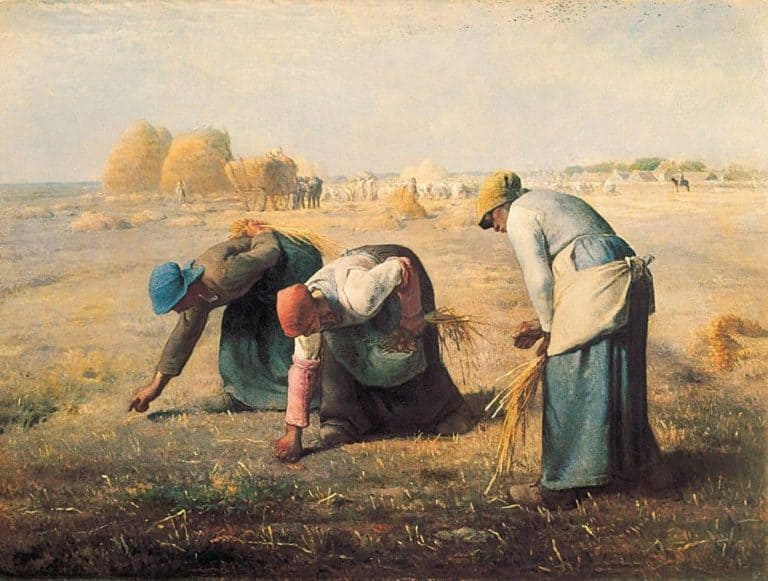
When taken to its logical extreme, this materialist viewpoint develops into literary Naturalism, a movement we will study later with Émile Zola. Naturalists saw human beings as completely determined by heredity and environment, with little to no free will, effectively turning the novel into a scientific experiment on human specimens.
Conclusion
In this lesson, we have assembled the intellectual toolkit of the 19th-century realist. These philosophical principles provided not only a view of the world but also a method for representing it.
Here are the key takeaways:
- Empiricism provided the core epistemological principle: knowledge comes from objective, sensory observation.
- Positivism, particularly through Auguste Comte, systematized this principle, framing the study of society as a science and giving the novelist the role of a sociologist.
- Materialism provided the ontological assumption: reality is fundamentally physical, and human life is shaped by concrete, material conditions like economy, biology, and environment.
Together, these ideas empowered writers to turn away from the romanticized and the ideal, and to embrace the world of concrete facts, social laws, and material realities. They could now aim to create a "true history" of their time.
In our next lesson, we will synthesize these ideas and those from previous lessons to create a concrete list of the defining characteristics of realist fiction. This will give us a practical checklist to use as we finally begin our analysis of the novels, starting with Balzac's Père Goriot.