Hello! Welcome to your second lesson.
In our first lesson, we established the foundation for any irrigation design by learning how to measure the water source's static pressure and available flow rate. This told us the maximum capacity of our supply—how much water we have.
Today, we shift our focus from the water supply to the landscape itself. We will explore the fundamental principle of hydrozoning. This is the first and most critical step in determining how much water the landscape needs. As a landscape architect, you already group plants for aesthetic and horticultural reasons; hydrozoning adds a layer of water management to this process.
By the end of this lesson, you will be able to define hydrozoning and explain its crucial importance for creating water-efficient, healthy, and sustainable landscapes. This concept will form the basis for how we organize every irrigation system we design in this course.
1. What is Hydrozoning?
At its core, hydrozoning is the practice of grouping plants together based on similar water needs. Instead of treating an entire landscape as one single watering area, we intelligently divide it into smaller, manageable zones where every plant in that zone requires roughly the same amount of water to thrive.
To get a formal definition and understand the core strategy, let's start with a short reading.
How To Hydrozone Landscape Plants For Water Savings
This article from Turf Magazine provides a professional overview of hydrozoning. It introduces the concept from a landscape design perspective, which will align well with your background.
Please read the first few paragraphs, from the start of the article down to just before the subheading 'Defining The Zones'. Focus on the core definition and the basic goal of the practice.
As the article explains, the goal is to allow all plants within a zone to receive "just the right amount of water." This simple idea prevents a common problem in poorly designed landscapes: where one plant is overwatered to keep its neighbor alive, or another is left too dry.
Correctly implementing hydrozoning can reduce landscape water use by 20% to 50%, making it one of the most effective water conservation strategies in landscape management.
2. The Importance and Benefits of Hydrozoning
Why is this practice so fundamental? Grouping plants by water needs goes far beyond just saving water. It leads to healthier plants, lower maintenance, and more resilient landscapes.
For a clear, structured list of these benefits, please review the following resource.
This article from Lawn Love, titled '9 Benefits of Hydrozoning', clearly breaks down the advantages of this approach. It provides a strong argument for why hydrozoning is a best practice.
Read the section titled '9 benefits of hydrozoning'. You don't need to memorize all nine, but pay attention to the main categories of benefits: financial, horticultural, and environmental.
From a professional standpoint, these benefits translate into significant value for both you and your client:
- Improved Plant Health: This is arguably the most important outcome for a landscape designer. By eliminating over- and under-watering, plants are less stressed and less susceptible to pests and diseases. This results in a landscape that looks better and thrives long-term.
- Water Conservation and Cost Savings: By delivering water precisely where it's needed, you drastically reduce waste. This translates directly into lower water bills for the client—a powerful selling point.
- Simplified Irrigation System Design: This is key for our work in this course. Each hydrozone you create on your plan will correspond to a single irrigation zone controlled by one valve. This makes designing the pipe layout and programming the irrigation controller logical and straightforward.
- Environmental Protection: Efficient watering minimizes nutrient leaching and chemical runoff into groundwater, contributing to a more sustainable and environmentally friendly project.
Test your understanding!
A client shows you a flower bed where their lavender plants (low water need) are yellowing and dying, while the impatiens (high water need) planted right next to them look healthy. They are both watered by the same sprinkler system.
Based on the principles of hydrozoning, what is the most likely cause of the problem?
Show answer
The most likely cause is a failure to hydrozone. The lavender plants are receiving too much water because they are being irrigated on the same schedule as the high-water-need impatiens. This leads to root rot and poor plant health. The solution would be to place these two plant types in separate hydrozones with different irrigation schedules.
3. Key Factors for Defining Hydrozones
Creating hydrozones involves more than just looking at plant water labels. As a landscape architect, you're already accustomed to site analysis, and those same skills apply here.
Let's return to the Turf Magazine article to explore the factors you must consider.
How To Hydrozone Landscape Plants For Water Savings
This section of the article moves from the 'what' to the 'how', discussing the practical factors that influence a plant's water use and therefore the boundaries of a hydrozone.
Read the sections 'Defining The Zones' and 'Zone Sizes & Valves'. Focus on the different factors listed (sun, wind, soil, existing trees) and the critical link between hydrozones and irrigation valves.
Based on the reading, here are the primary factors that define a hydrozone's boundaries:
-
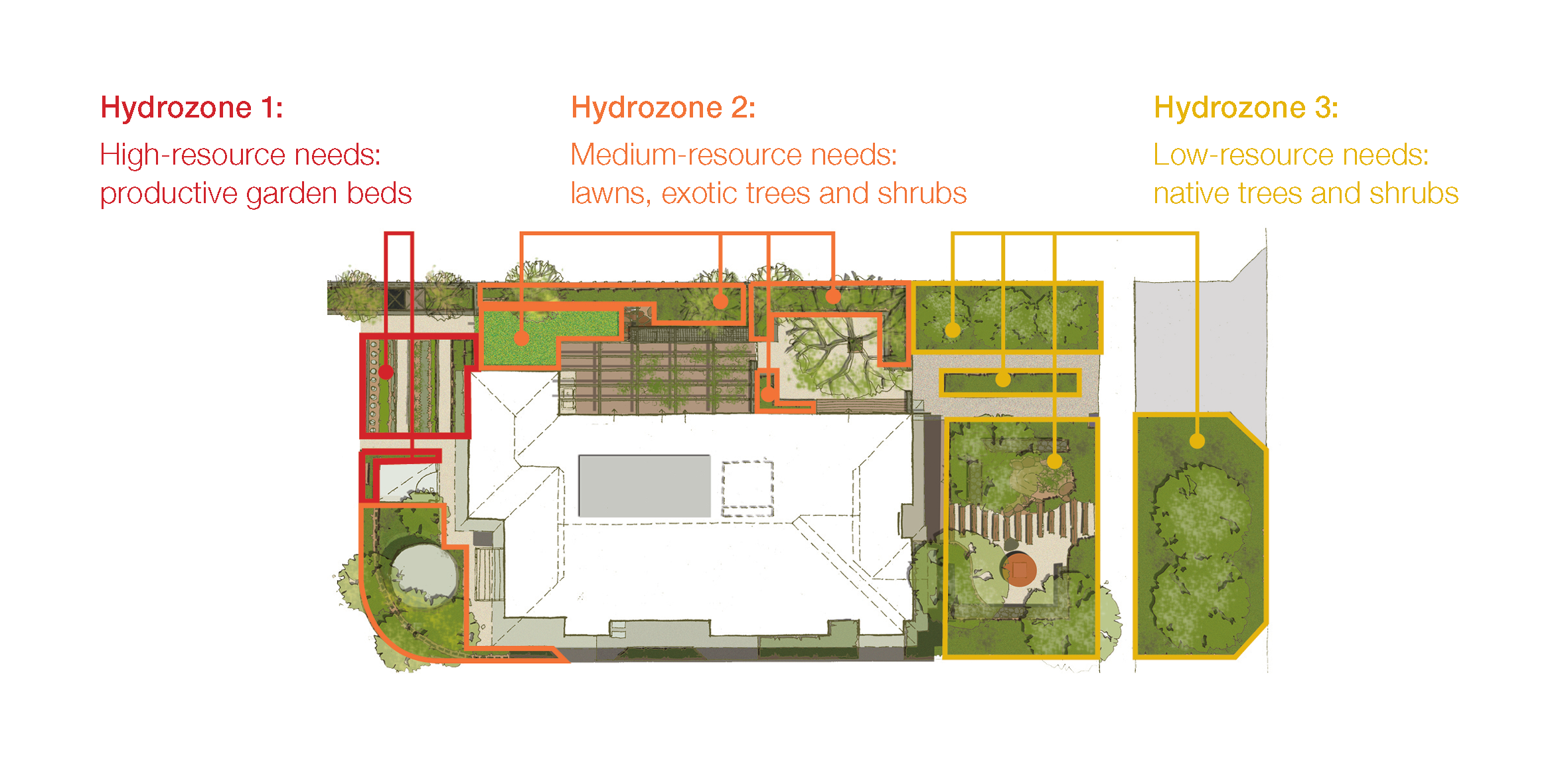
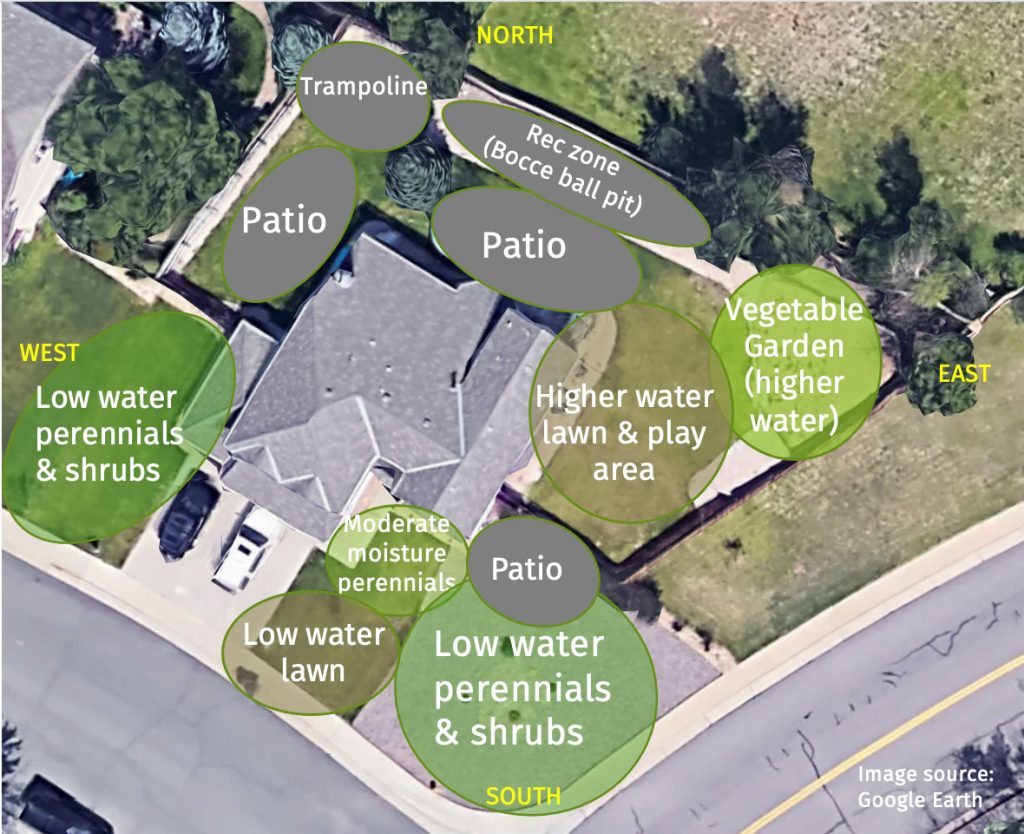
Plant Water Requirement: This is the main factor. Plants are typically categorized as having high, moderate, low, or very low water needs.
- High: Lawns, vegetable gardens, some annual flowers.
- Moderate: Many common shrubs and ornamental perennials.
- Low: Drought-tolerant species, established native plants.
-
Sun and Wind Exposure (Microclimate): A group of plants on a hot, windy, south-facing slope will need more water than the exact same plants in a sheltered, shady corner. Your site analysis should identify these different microclimates.
-
Plant Type & Root Depth: Trees, shrubs, and turfgrass have vastly different root structures and should not be on the same irrigation zone, even if their general water needs seem similar. Trees require deep, infrequent watering, while turf requires more frequent, shallow watering.
-
Irrigation Method: This is a non-negotiable rule in system design. You cannot mix different types of irrigation heads on the same valve. Therefore, an area irrigated with spray sprinklers must be a separate hydrozone from an area irrigated with drip lines, even if the plants have the same water requirement.
The following images show how these principles are applied to real site plans. Notice how the landscape is broken up into logical areas based on plant type and use.
Conclusion
In this lesson, we established the "what" and "why" of hydrozoning. It is a foundational design strategy that goes hand-in-hand with your work as a landscape architect, ensuring the long-term health, beauty, and sustainability of your projects.
Key Takeaways:
- Definition: Hydrozoning is the practice of grouping plants with similar water, sun, and soil needs into distinct irrigation zones.
- Importance: It is essential for water efficiency, cost savings, improved plant health, and simplified irrigation system operation.
- Core Principle: Each hydrozone is irrigated independently with its own control valve, allowing for a customized watering schedule that matches the specific needs of that zone.
- Defining Factors: Hydrozone boundaries are determined by plant water needs, microclimate (sun/wind), plant type (roots), and the chosen irrigation method.
Next Steps
Now that you understand the concept of hydrozoning, the next logical step is to apply it. In our next lesson, "Analyze plant water needs for lawns, shrubs, and trees to establish hydrozone boundaries," we will move from theory to practice. You will learn how to look at a list of plants for a project, research their specific water needs, and begin sketching the boundaries of your hydrozones on a site plan.