Hello! Welcome back.
In our last lesson, we focused on influencing decisions and direction, even when you don't have formal authority. Today, we'll shift our focus to another critical form of leadership that top companies look for in senior engineers: influencing people's growth and development. This is the art of being a "force multiplier"—someone who makes the entire team better.
Your goal for this lesson is to learn how to identify and present compelling examples of how you have mentored and grown other engineers. As a senior engineer with 10 years of experience, you've certainly played this role, perhaps without even labeling it as "mentoring." Today, we'll give that experience a structure that will stand out in an interview.
1. What "Mentoring" Really Means in an Engineering Context
The term "mentoring" can feel formal, but most of it happens organically in our day-to-day work. To build a strong interview story, it's helpful to first recognize the different forms of mentoring you've likely already practiced.
Developers mentoring other developers: practices I've seen work well
The article 'Developers mentoring other developers' from the Pragmatic Engineer blog is an excellent resource for understanding what mentorship looks like on the ground in a software team.
Please read the first three sections: 'What is mentoring?', 'Informal mentorship: it's happening everywhere', and 'Formal mentorship: more effort, more focus, more growth'. As you read, reflect on your own experiences. Have you mentored informally through code reviews or project collaboration? Have you participated in or led more formal mentoring relationships?
As the article points out, mentorship is a learning relationship. It can be informal (like giving insightful feedback in a code review) or formal (like a structured program). Recognizing both types will give you a wider pool of experiences to draw from for your interview stories.
The image below offers a useful mental model for distinguishing mentoring from similar activities like coaching.

In an interview, a strong mentoring story often shows a blend of both mentoring and coaching—you provide guidance and answers, but you also empower the person to find solutions on their own.
2. Crafting an Interesting and Impactful Mentoring Story
Interviewers aren't looking for a simple story like, "I helped a junior engineer fix a bug." They want to see your ability to handle complex, "messy" human situations and facilitate real growth.
Let's watch a video from an ex-Google Engineering Manager that discusses what interviewers are looking for in leadership stories.
Leadership & Behavioral interviews for Engineers: FOLLOW THESE TIPS from ex-Google EM
This video, 'Leadership & Behavioral interviews for Engineers,' provides valuable insight into the interviewer's mindset.
Please watch two key segments: 22:42 - 24:43: Pay close attention to the distinction between a 'transactional' story and an 'interesting' one. The example of dealing with an underperforming team member is a classic mentoring scenario. It shows how a good story involves persistence, understanding, and coaching over time. 37:20 - 39:08: This part discusses 'skill set' questions like 'how do you deal with underperformers?' This is directly asking about your principles and approaches to growing engineers. Your stories are the proof behind your stated approach.
A strong mentoring story demonstrates that you can:
- Identify a need or potential for growth in a colleague.
- Provide support and create psychological safety, making it okay for them to ask questions and make mistakes.
- Empower them to solve their own problems, rather than just giving them the answers.
- Persevere through challenges when the person's growth isn't linear.
- Achieve a positive outcome for the person, the team, and the project.
3. Structuring Your Story with the STAR Method
You're already familiar with frameworks like CARL for structuring narratives. For behavioral questions, the STAR method is the industry standard. It's concise, effective, and ensures you hit all the key points an interviewer is listening for.
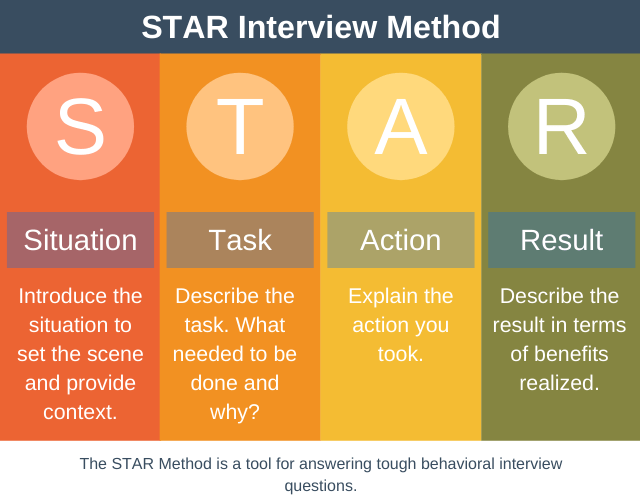
Let's break down how to apply STAR to a mentoring story. For this, we'll draw on some common mentoring scenarios discussed in another great video.
Engineering Manager Interview: 10 Most Common Questions, and How to CRUSH Them!
The video 'Engineering Manager Interview: 10 Most Common Questions' covers several topics directly related to mentoring, such as motivation, performance management, and delegation. While you aren't interviewing for a manager role, these are all activities expected of senior ICs.
Watch the segments on 'How do you motivate your team?' (04:50 - 07:01), 'Walk me through your experience with delegating tasks' (10:32 - 13:09), and 'How do you measure your success as a leader?' (16:20 - 17:55). Notice how each of these topics is framed around employee growth and development. These are excellent sources of inspiration for your own mentoring stories.
Now, let's map these ideas onto the STAR framework:
-
S - Situation: Set the scene. Who did you mentor? What was their experience level and what was the project context?
Example: "We onboarded a new junior engineer who had strong academic credentials but no professional experience with large-scale distributed systems. The team was under pressure to deliver a new service within the quarter."
-
T - Task: What was your specific goal as a mentor? What did the mentee need to accomplish?
Example: "My task was to help her become a productive member of the team and take ownership of a moderately complex feature—a new notification-dispatching component—by the end of the quarter."
-
A - Action: This is the core of your story. Describe the specific steps you took to mentor the person. This is where you showcase your leadership philosophy.
- Listen and build trust: "I started with a 1-on-1 to understand her career goals and anxieties, and shared some of my own struggles when I was starting out to create a safe environment."
- Provide structure and resources: "I helped her break down the feature into small, manageable tasks. Instead of just giving her the answers, I pointed her to our internal documentation, relevant design docs, and introduced her to a subject matter expert on another team."
- Empower through delegation: "I delegated the first task, which was to add a new metric. This was a low-risk way for her to learn our deployment process and build confidence before tackling the core logic." (This directly applies the principle from the video on delegation).
- Coach through challenges: "During a code review, I noticed she was struggling with our concurrency patterns. We did a 30-minute whiteboarding session where I explained the concepts and we worked through the problem together. I focused on asking questions to guide her to the solution."
-
R - Result: What was the outcome? Quantify the impact on the mentee, the team, and the business.
Example: "She successfully delivered the notification component ahead of schedule. More importantly, she became the go-to person for that part of the service, and her confidence grew immensely. She started actively contributing in our design meetings. This also freed me up to focus on the overall system architecture, increasing the team's total output."
4. A Real-World Example
To see how this all comes together, let's analyze a story from a mock interview with a FAANG engineer.
Interview with a FAANG engineer.
This transcript from Interviewing.io provides a great, unscripted example of a strong answer to a mentoring question.
Read the interviewee's story about mentoring an intern. As you read, try to identify the S, T, A, and R components. Notice how the 'Action' section includes creating comfort, providing resources, and helping the intern build confidence. The 'Result' is clear and impactful: the intern performed well and was converted to a full-time hire.
5. Exercise: Draft Your Mentoring Story
Now it's your turn. Think back over your career. Choose one situation where you helped another engineer grow. This could be an intern, a new hire, or a peer who was new to a technology you knew well.
Use the STAR framework to outline your story.
- Situation: Who was the person and what was the context?
- Task: What was the goal for their development or for the project?
- Action: What specific, deliberate steps did you take? Use the ideas from the resources in this lesson (e.g., listening, asking guiding questions, delegating, providing resources, creating psychological safety).
- Result: What was the final outcome? How did the person grow? What was the benefit to the team or the company?
Take 15-20 minutes to write down the bullet points for your story. Don't worry about perfect prose; focus on capturing the key details for each part of the framework.
Conclusion
Being a mentor is a hallmark of a senior engineer. It shows that you're not just concerned with your own code, but with the health and growth of your entire team. By structuring your experiences using the STAR method, you can turn your past contributions into powerful narratives that demonstrate your leadership potential.
Key Takeaways:
- Mentoring is a key leadership skill that turns you into a "force multiplier."
- You have likely acted as a mentor many times, even informally through code reviews and collaboration.
- A strong mentoring story goes beyond a simple transaction; it shows empathy, empowerment, and perseverance through challenges.
- Use the STAR framework to structure your story clearly, focusing on your specific actions and the quantifiable results.
Next Lesson Preview:
In our next lesson, we'll tackle another complex leadership scenario: "Explain how you handled disagreements with stakeholders or team members." We'll explore how to navigate constructive conflict to arrive at better technical and business outcomes.