Hello! Welcome to your third lesson in our journey into the consumer brain.
In our last session, we explored the "two minds" we think with: the fast, intuitive System 1 and the slow, deliberate System 2. We saw how System 1 handles most of our daily decisions automatically, while System 2 steps in for more complex, effortful tasks.
Today, we're going to zoom in and look at the physical mechanism that underlies learning, memory, and habit—the very processes that System 1 and System 2 manage. The goal for this lesson is to describe how neurons form connections to create brand associations and learned behaviors. This is where the psychology of marketing meets the biology of the brain, and understanding this connection is fundamental to your goal of mastering and communicating this science.
The Brain's Wiring: A Quick Primer
Before we can understand how connections are made, we need to know what's being connected. The brain's communication network is built from billions of specialized cells called neurons. Think of them as tiny biological messengers.
A neuron sends a signal to another neuron across a microscopic gap called a synapse. It does this by releasing chemical messengers called neurotransmitters.

This process of one neuron stimulating another is the foundation of every thought, feeling, and action you have. It's the "firing" of a neuron.
"Neurons That Fire Together, Wire Together"
So, how does the brain learn? How does seeing a brand's logo repeatedly create a feeling or memory? The key principle was proposed by a Canadian neuropsychologist named Donald Hebb in 1949. His theory is often summarized in a simple, powerful phrase: "Neurons that fire together, wire together."
Let's watch a short video that explains this idea, known as Hebbian Theory.
The video 'Hebb's Theory Explained' from Explified Labs provides a concise definition of this crucial principle and uses simple, everyday examples like learning to drive to illustrate how it works.
Please watch from the beginning until the 2:13 mark. Focus on the core idea: how repeated stimulation of one neuron by another increases the efficiency of their connection.
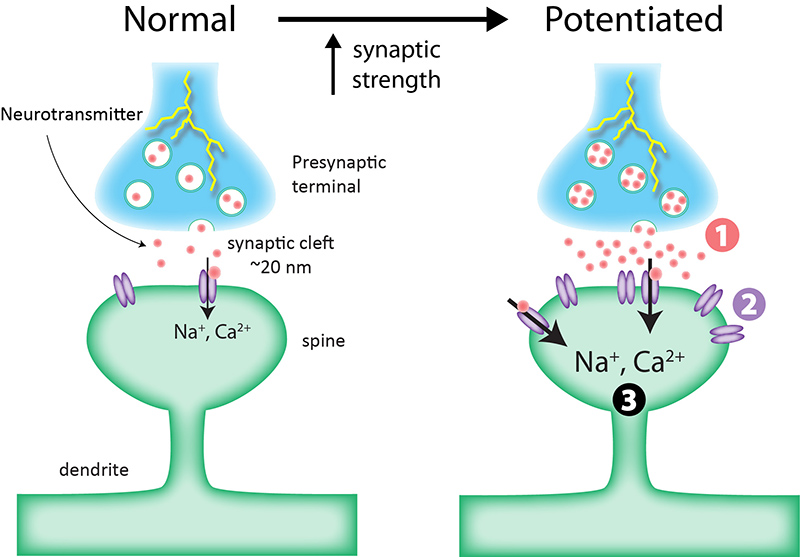
As the video explained, when one neuron repeatedly helps to fire another, the connection, or synapse, between them gets stronger. This process is called Long-Term Potentiation (LTP).
What does a "stronger" connection actually mean?
- The sending neuron might release more neurotransmitters.
- The receiving neuron might become more sensitive, creating more receptors.
- The overall structure of the synapse can change to make transmission more efficient.
Essentially, the pathway becomes more reliable and easier to activate in the future.
From Neural Pathways to Brand Associations
Now, let's connect this biological process directly to marketing. The core of branding is to build strong, positive brand associations—the mental links between a brand and a concept, feeling, or idea. Hebb's rule is the neurological engine that builds these associations.
This article does a great job of connecting the dots between Hebb's theory and branding.
What is a Brand Association? A deep dive with examples
The article 'What is a Brand Association?' from the Brand Marketing Blog clearly defines brand associations and then explicitly explains their neurological basis using Hebb's rule.
Please read the introduction and the section titled 'Neurons That Fire Together, Wire Together.' This will directly link the neuroscience concept we just discussed to the marketing practice of building a brand.
Let's break down the example from the article with a marketing lens:
- Initial State: Your brain has a neuron (or a network of them) that represents "Nike" and another network that represents "athletic excellence" or "winning." Initially, these two networks have a weak or non-existent connection.
- Marketing Stimulus: Nike runs an ad campaign featuring Serena Williams, a globally recognized symbol of athletic excellence, wearing their gear.
- Firing Together: When you see the ad, the "Nike" neurons and the "athletic excellence" neurons fire at the same time.
- Wiring Together: Because they fired together, the synaptic connections between these two neural networks are slightly strengthened.
- Repetition: Nike repeats this association thousands of times across different ads, sponsorships (LeBron James, Cristiano Ronaldo), and store designs. With each repetition, the pathway gets stronger and more efficient.
- Learned Association: Eventually, the connection becomes so strong that simply seeing the Nike "swoosh" (activating the "Nike" neurons) is enough to instantly and automatically trigger the concepts of "performance" and "winning" (activating the "athletic excellence" neurons).
This brand association is not just an abstract idea; it is a physical, biological reality—a well-worn path in the brain's neural circuitry.
To solidify this, let's read a bit more about how the brain is constantly learning these patterns.
The article 'The Neuroscience of Branding' describes the brand itself as a 'pattern of connectivity' in the brain. It introduces the idea of 'statistical learning'—how the brain picks up on patterns and regularities in the environment.
Please read the sections 'The neuroscience of brand associations' and 'The neuroscience of the emotional brand.' Notice how it describes both factual (semantic) and emotional associations being built through the same mechanism in the temporal lobe.
From Associations to Automatic Behaviors
This same principle of "wiring together" extends beyond mental associations to create learned behaviors, or habits.
Think back to the example of learning to drive.
- Initially (System 2): Every action is conscious. "Press clutch," "move gear stick," "check mirror." Each step requires deliberate thought, activating large areas of your prefrontal cortex.
- With Practice: As you repeat the sequence, the specific neurons responsible for each action fire together in the same order, over and over. The pathways connecting them become incredibly strong and efficient.
- Eventually (System 1): The entire sequence becomes a single, fluid "chunk" of behavior. It runs automatically, without conscious oversight. It has become a habit, managed by the effortless System 1.
In marketing, this is the Holy Grail: brand loyalty as a habit. When a consumer automatically reaches for the same brand of coffee, toothpaste, or software subscription without consciously considering alternatives, they are executing a learned behavior. The neural pathway for that choice has become so strong that it's the brain's path of least resistance. Marketers build this through consistent product performance, easy availability, and rewarding experiences, all of which strengthen that specific behavioral pathway.
Test your understanding!
Volvo has spent decades building an association with the concept of "safety." Using the principle of "neurons that fire together, wire together," describe the steps a marketer at Volvo would take to create and strengthen this brand association in a consumer's brain.
Show answer
- Identify the Neurons: The goal is to connect the "Volvo" neuron network with the "safety" neuron network.
- Create Simultaneous Firing: The marketer would create ads showing Volvo cars performing exceptionally well in crash tests, or families being protected in accidents. They would use language like "safety," "protection," and "security" repeatedly in all communications. This ensures that whenever a consumer thinks of Volvo, the concept of safety is also present and active.
- Repetition is Key: This message wouldn't be a one-time campaign. It would be a consistent theme for decades across TV ads, print, online content, and dealership messaging. Each exposure is another repetition that strengthens the synaptic connections between "Volvo" and "safety."
- Leverage Emotional Content: To make the connection even stronger, they would show emotional scenes—a child safe in a car seat, a parent's relief after a near-miss. Emotion acts as a catalyst for memory formation, making the "wiring" process more robust.
- Result: After years of this consistent strategy, the neural pathway is so strong that for many consumers, thinking "I need a safe car" automatically triggers the thought of "Volvo." The brand association is physically encoded.
Conclusion
Today we went from the abstract idea of a "brand" down to the cellular level. We've seen how marketing isn't just about catchy slogans; it's about physically changing the structure of consumers' brains.
Here are the key takeaways:
- The brain's basic communication happens when neurons "fire" and send signals across synapses.
- Hebb's Rule ("Neurons that fire together, wire together") is the fundamental mechanism of learning. Repetitive, simultaneous activation of neurons strengthens their connection.
- Brand associations are the tangible result of this process. They are neural pathways linking a brand to a concept, emotion, or idea, forged through repeated exposure.
- Learned behaviors (habits) are complex sequences of these reinforced pathways that have become so strong they can run automatically as System 1 processes.
In our next lesson, we will build directly on this idea. We've seen how connections are formed and strengthened, but what about the brain's ability to change and adapt? We'll explore the concept of neuroplasticity and its relevance to changing consumer habits and building brand memories. This will show us that the brain's wiring isn't fixed, which has profound implications for how brands can grow, evolve, and even recover from a negative image.