Hello! Welcome to our next lesson on sensory marketing.
In our previous session, we explored how the structural characteristics of music—like tempo and volume—can influence a consumer's arousal level and, consequently, their pace and spending in a retail environment. We saw that sound isn't just background noise; it's a tool for managing customer behavior.
Today, we're shifting our focus from the general ambiance of music to its role in creating a unique brand identity. This lesson will address the learning outcome: Explain the principles of sonic branding and the function of an effective audio logo (jingle). We'll uncover how brands like Netflix, Intel, and McDonald's have created sounds that are as recognizable as their visual logos, and we'll explore the science that makes these sounds so powerful.
1. What is Sonic Branding? The Sound of a Brand
At its core, sonic branding (or audio branding) is the strategic use of sound and music to build a brand's identity, making it more recognizable and emotionally resonant. It's about creating a unique "acoustic identity" for a brand.
To start, let's watch a short clip that introduces this concept.
The Psychology Behind Sounds in Marketing: Sonic Branding
This video, 'The Psychology Behind Sounds in Marketing,' provides a great introduction to the idea of an 'acoustic identity' and how sound shapes our perception of a product's personality and values.
Please watch from the beginning of the video until 01:48. Focus on the definition of sonic branding and how it creates an 'acoustic identity' that impacts perception.
Sonic branding is much more than just a jingle at the end of a commercial. It's a complete ecosystem of sound that should be consistent across all customer touchpoints.

As you can see, a sonic logo is just one component of a much larger strategy. So, why is this strategy so effective? The answer lies in how our brains are wired.
The Science of Sonic Branding: How Sound Shapes Consumer Memory and Business Success
The article 'The Science of Sonic Branding' offers a compelling look at the neuroscience that makes sound such a potent marketing tool. It explains why we remember sounds better than visuals.
Please read the section titled 'The Neuroscience Behind Sonic Branding.' Pay close attention to the speed of audio recognition and the different brain regions that are activated by sound to form strong memories.
The key takeaways from this reading are crucial for understanding the "why" behind sonic branding:
- Speed: Our brain recognizes sound in just 0.146 seconds, almost three times faster than it recognizes visuals. This means a brand's sound can make an impression before we even consciously process it.
- Memory & Emotion: Sound activates multiple brain regions simultaneously, including the limbic system (emotion) and the hippocampus (long-term memory). This multi-layered activation creates deeper, more durable memories than visuals alone. It’s why you can probably still hum jingles from your childhood.
2. The Audio Logo: A Brand's Signature Sound
The most famous component of sonic branding is the audio logo (also called a sonic logo or jingle). This is a short, distinctive melody or sound that functions as the auditory equivalent of a visual logo. Think of Intel's "bong" or Netflix's "ta-dum."
The function of an audio logo is twofold: to build brand associations and to trigger them at key moments. A brilliant way to conceptualize this comes from the neuroscience firm Neuro-Insight.
The report 'Tuning in to sound' introduces a simple but powerful analogy called the 'Brand Room' to explain how our brains store brand associations and how sound interacts with them.
Please read the section titled 'The Brand Room and how sound contributes to it' (the first three pages of the PDF). Focus on the difference between sound 'decorating the room' (building equity) and acting as a 'light switch' (triggering equity).
The "Brand Room" analogy is an excellent tool for explaining this concept to others, a key part of your goal. Let's break it down:
- Decorating the Room (Building Equity): This is the long-term process of building brand associations. A brand uses storytelling, music, and imagery in its advertising to "furnish" its room in our minds with positive feelings and ideas. John Lewis's emotional Christmas ads, with their unique cover songs, are a prime example of this.
- Flipping the Light Switch (Triggering Equity): The audio logo acts as a shortcut. Once the room is furnished, the brief sound instantly "switches on the light," activating all the stored emotions and associations connected to the brand. The Intel chime is the classic example. You hear those few notes, and the entire network of associations with Intel (reliability, speed, technology) is immediately brought to mind.
The research on Intel mentioned in the reading powerfully demonstrates this. The presence of the chime didn't just make people remember the sound itself; it also significantly increased their memory of the written brand name, proving it acts as a powerful trigger for the entire brand concept.
3. What Makes an Audio Logo Effective?
An effective audio logo isn't created by accident. It's a carefully crafted asset designed to be memorable, unique, and aligned with the brand's personality. To understand what goes into one, it helps to have a basic vocabulary for the elements of music.
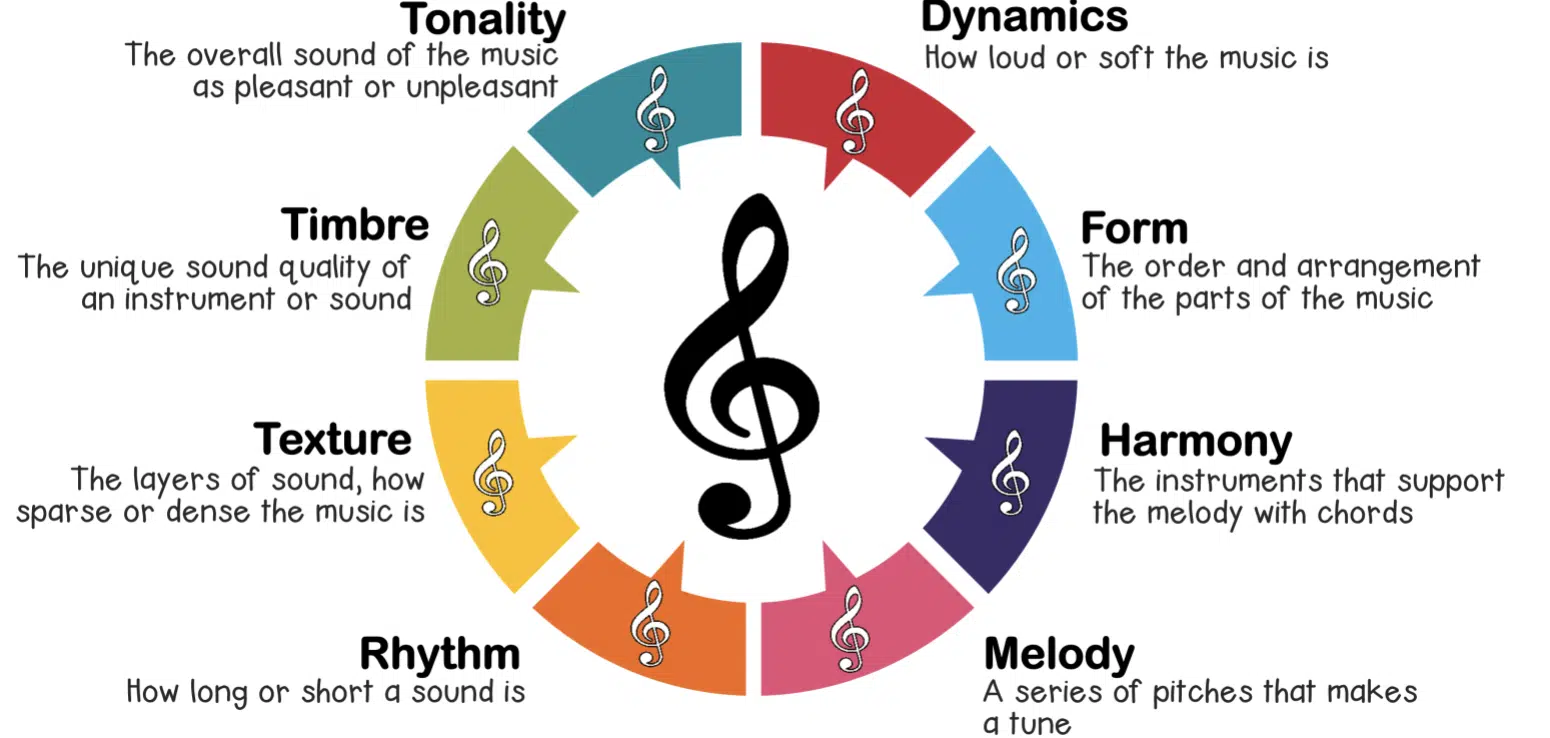
An effective audio logo typically excels in these areas:
- It's Simple and Memorable: A few notes are often all it takes. The simplicity makes it easy to recall.
- It's Unique: It must be distinct from competitors to avoid confusion.
- It Evokes the Right Emotion: The sound must match the brand's personality. A bank's sonic logo should sound secure and trustworthy, while a snack food's should sound fun and joyful.
This next video provides a fantastic case study of how Tostitos built their audio logo from the ground up, keeping these principles in mind.
How Tostitos' Iconic Audio Logo Is Made
This video, 'How Tostitos' Iconic Audio Logo Is Made,' gives you a behind-the-scenes look at the entire creative process, from capturing raw sounds to composing the final jingle.
Please watch the following segments: 00:55 - 03:52: Observe how the producers use the product itself to create the sound palette and compose a full piece of music before selecting the final logo. 03:52 - 04:36: Note the business impact—a 38% increase in brand recall. 05:56 - 06:47: Focus on the connection between sound, emotion, and memory.
The Tostitos example shows the process in action: starting with sounds that are authentic to the brand (the crunch of a chip), crafting a melody that feels "joyful" and "warm," and ensuring it evokes an emotional response. And the results speak for themselves—not just in recall, but in building trust. As MasterCard found, 77% of consumers said their sonic brand made the company more trustworthy.
Test your understanding!
A luxury electric car company wants to develop a sonic logo. Their brand values are innovation, sustainability, and serene power. They are considering two options:
- Option A: A fast-paced, high-energy electronic beat with a complex melody.
- Option B: A smooth, rising synth tone with a simple, clean, three-note chime at the end.
Which option would you recommend and why? Connect your reasoning to the principles of sonic branding we've discussed.
Show answer
I would strongly recommend Option B.
Here's the reasoning:
- Alignment with Brand Values: Option B's "smooth, rising synth tone" directly reflects the concepts of innovation and serene power. The "clean, three-note chime" suggests simplicity, precision, and a touch of elegance, all of which align with a luxury brand.
- Emotional Resonance: The sound described in Option B is more likely to evoke feelings of calmness, sophistication, and forward-thinking technology, which is what a customer for a luxury electric car is likely seeking.
- Contrast with Competitors: Option A's "fast-paced, high-energy beat" might be more suitable for a sports drink or a youth-focused tech gadget. For a luxury car, it could feel jarring and misaligned, failing to create the desired emotional connection of serene power and sustainability. Option B is more unique and fitting for the category.
Conclusion
Today, we've explored the world of sonic branding, moving beyond background music to see how sound can be a core part of a brand's identity.
Key Takeaways:
- Sonic Branding is the strategic use of sound to build a consistent and recognizable brand identity.
- The brain processes sound faster than visuals and links it directly to emotion and long-term memory centers, making it a powerful tool for marketers.
- An audio logo (jingle) serves as a brand's sound signature. Its primary function is to act as a "light switch" that instantly triggers all the memories and emotions associated with the brand (the "Brand Room" analogy).
- An effective audio logo is simple, unique, and emotionally aligned with the brand's personality. Its success is measured in concrete business metrics like brand recall and consumer trust.
Preview of the Next Lesson:
We have now covered the impact of sound and music in detail. In our next and final lesson for this module, we will engage another crucial, yet often overlooked, sense: touch. We will explore the learning outcome: Describe the role of haptic perception (touch) in product evaluation, including how texture and weight influence perceived quality.