Hello! Welcome to your third lesson in the "Corporate Governance and Fiduciary Duties" module.
In our last lesson, we defined the two pillars of a director's legal responsibility: the duty of care and the duty of loyalty. We established that the first governs the process of decision-making, while the second governs the motivation behind those decisions.
Today, we will dive deeper into this crucial distinction. Our learning outcome is to distinguish between the duty of care and the duty of loyalty owed by directors and officers. This isn't just an academic exercise; understanding the difference is fundamental to corporate litigation. The way a legal claim is framed—as a breach of care versus a breach of loyalty—has profound consequences for whether a director can be held personally liable.
1. The Core Distinction: Process vs. Motivation
As a refresher, the fiduciary duty requires a director to act in the best interests of the corporation. This broad obligation splits into two distinct requirements.
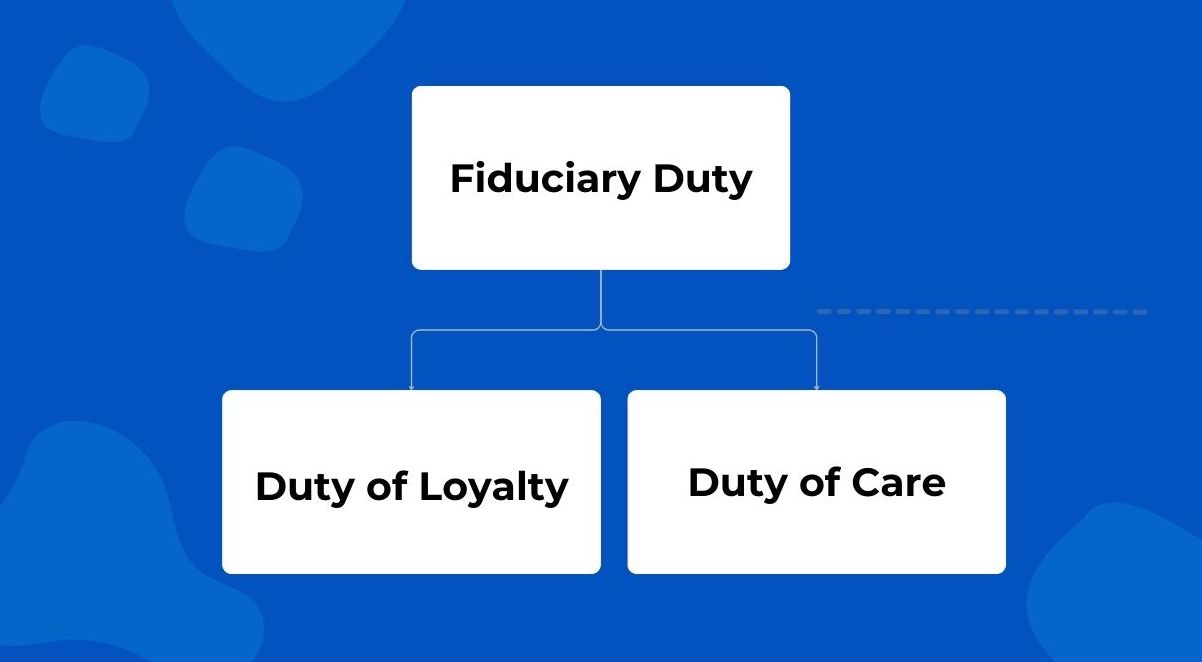
Let's refine our understanding of what separates them.
- The Duty of Care is about competence. It asks: How did the director make the decision? It focuses on the process: Were they diligent? Did they review the relevant information? Did they act with the prudence of a reasonable person in their position?
- The Duty of Loyalty is about integrity. It asks: Why did the director make the decision? It focuses on motivation: Were they acting in the corporation's best interest, or were they tainted by a personal conflict of interest or acting in bad faith?
To explore these two duties in more detail, let's turn to a comprehensive video that breaks down the specific actions associated with each.
Corporate Law Fiduciary Duties of Directors (Review)
The video 'Corporate Law Fiduciary Duties of Directors (Review)' provides an excellent, detailed breakdown of the components of both loyalty and care, drawing from foundational legal principles.
Please watch from 10:14 to 13:06. First, focus on the section explaining the Duty of Loyalty (10:14 - 12:11), noting the prohibitions against self-dealing and competition. Then, watch the section on the Duty of Care (12:11 - 13:06), paying attention to the standard of 'care, competence, and diligence.'
Based on the video and our previous lesson, we can summarize the distinction in a table.
| Feature | Duty of Care | Duty of Loyalty |
|---|---|---|
| Core Question | Did the director act with appropriate diligence and on an informed basis? (The "How") | Did the director act in good faith for the corporation's benefit, free of self-interest? (The "Why") |
| Focus | Process, Prudence, Information | Motivation, Good Faith, Conflict of Interest |
| Breach Type | Negligence, inattention, poor process (e.g., failing to read reports before a major vote). | Self-dealing, usurping a corporate opportunity, acting in bad faith (e.g., approving a deal with a family member). |
| Analogy | A surgeon who carelessly uses the wrong instrument during an operation. The process was flawed. | A surgeon who intentionally injures a patient to benefit from a subsequent, more expensive procedure. The motive was corrupt. |
2. Common Breaches in Practice
Understanding the theoretical distinction is the first step. Now, let's see how these breaches manifest in the real world. A failure to uphold these duties is not just a theoretical misstep; it can lead to serious legal consequences.
Corporate Officer & Director Duties: Care, Loyalty Guide
This article, 'Corporate Officer & Director Duties: Care, Loyalty Guide' from Hopkins Centrich Law, provides a clear summary of common breaches for each duty.
Please read the sections 'Core Fiduciary Duties Explained' and 'Common Breaches and Their Implications'. Focus on the examples given for neglecting due diligence (a care issue) versus engaging in conflicts of interest (a loyalty issue).
As the article highlights:
- A classic breach of the duty of care involves omission or neglect—failing to monitor company activities, ignoring warning signs, or making poorly documented, uninformed decisions.
- A classic breach of the duty of loyalty involves conflicted action—prioritizing personal financial interests over the company's, such as in the WeWork case study mentioned in the resource where leadership made self-serving decisions.
Test your understanding!
A pharmaceutical company's board must decide whether to build a new research facility for $500 million.
- Scenario 1: Director Smith votes in favor of the project. The land for the facility is owned by Director Smith's spouse, and the price is significantly above market value. Director Smith never discloses this relationship to the board.
- Scenario 2: Director Jones votes in favor of the project. Before the meeting, she was sent a 200-page geological survey report indicating a high risk of seismic activity on the proposed site, making it unsuitable for sensitive lab equipment. She never opened the report.
Which duty was most likely breached in each scenario, and why?
Show answer
- Scenario 1 is a breach of the Duty of Loyalty. The issue is a clear conflict of interest. Director Smith stands to benefit personally (through their spouse) from the transaction. Their loyalty is divided, and they failed to act with the corporation's best interest as their sole motivation.
- Scenario 2 is a breach of the Duty of Care. The issue is a failure of process. Director Jones failed to act on an informed basis. A prudent director would have reviewed the critical safety information before voting on a half-billion-dollar project. The decision itself may or may not have been wrong, but the process was negligent.
3. The Decisive Difference: Legal Liability and Exculpation
Here we arrive at the most critical distinction for a corporate lawyer. The law, particularly in the influential state of Delaware, treats breaches of these two duties very differently when it comes to a director's personal liability.
Corporations are permitted to include a provision in their articles of incorporation that shields directors from personal monetary liability for breaches of the duty of care. This is known as an exculpation clause, authorized by Section 102(b)(7) of the Delaware General Corporation Law (DGCL). The rationale is that directors should be encouraged to take calculated business risks without fearing personal ruin if a well-intentioned decision turns out poorly.
However, this protection has firm limits. An exculpation clause cannot protect a director from liability for:
- Breaches of the duty of loyalty.
- Acts or omissions not in good faith.
- Any transaction from which the director derived an improper personal benefit.
This is the legal system's way of saying that while honest mistakes (failures of care) can be forgiven, disloyalty and bad faith cannot.
Corporate Law Fiduciary Duties of Directors (Review)
Let's return to the 'Corporate Law Fiduciary Duties of Directors (Review)' video. This segment explicitly discusses exculpation clauses and what they do—and do not—cover.
Please watch from 28:29 to 30:04. Pay close attention to the list of things an exculpation clause does not cover. This directly highlights the more serious nature of a loyalty breach.
Why "Bad Faith" Matters
You'll notice that "bad faith" is listed alongside the duty of loyalty as something that cannot be exculpated. The courts have established that a lack of good faith is itself a form of a loyalty breach. This is a sophisticated but vital point of law.
Because duty of care claims can be dismissed if a company has an exculpation clause, plaintiffs bringing lawsuits against directors have a strong incentive to argue that a director's actions were so egregious that they constitute "bad faith," thereby framing the issue as an unprotectable breach of loyalty.
Has a Director's Duty of Loyalty Been Expanded?
For a deeper look into this legal strategy, let's examine a client alert from the law firm Chapman and Cutler. It explains why a failure of oversight, which might seem like a care issue, is often argued as a loyalty issue.
Read the section titled 'Expansion or Narrowing of the “Duty of Loyalty”'. Focus on the reasoning for why plaintiffs attempt to frame claims as a breach of the duty of loyalty and the role of the 'bad faith' standard.
This brings our distinction into sharp focus: the duty of care sets a floor for competence, while the duty of loyalty sets a high bar for integrity. The legal system provides an escape hatch for honest failures of the former but holds the line firmly on the latter.
Conclusion
In this lesson, we moved from defining the two core fiduciary duties to distinguishing between them on theoretical, practical, and legal grounds.
Key Takeaways:
- The Duty of Care concerns the process of decision-making ("How?") and is breached by negligence.
- The Duty of Loyalty concerns the motivation of the director ("Why?") and is breached by self-interest and bad faith.
- This distinction is paramount in litigation because of exculpation clauses (like DGCL § 102(b)(7)), which can shield directors from monetary liability for breaches of the duty of care, but not for breaches of the duty of loyalty.
- An allegation of bad faith is a way to elevate a claim into the realm of a loyalty breach, thereby bypassing the protection of an exculpation clause.
Now that we understand the standards directors are held to, a natural question arises: how do courts evaluate their decisions in practice? Do they second-guess every business judgment? The answer is no, thanks to a powerful legal doctrine we will explore in our next lesson: the business judgment rule. This rule creates a presumption that directors have met their duty of care, and we will analyze what it takes for a plaintiff to overcome it.