Introduction
In our previous lessons, we established two key data points for your respiratory baseline using maximal effort tests: the Stange test (inspiratory hold) and the Genchi test (expiratory hold). These assessed your body's response to extreme states of hypoxia and hypercapnia. Today, we add the third and final piece to this assessment: the Control Pause, more widely known as the BOLT (Body Oxygen Level Test) score.
This lesson will guide you through performing the BOLT test and interpreting your score using clinical data and normative values. Unlike the maximal holds you've practiced, the BOLT score is a sub-maximal test that measures the comfortable duration of a breath hold after a normal exhalation, up to the first definite desire to breathe. This subtle but crucial distinction makes it a powerful and practical measure of your functional carbon dioxide tolerance in a resting state, which is a cornerstone of methods like Buteyko and a key parameter for tracking breathwork progress.
The BOLT Score vs. Maximal Holds
Before we proceed, it's essential to distinguish the BOLT score from the Stange and Genchi tests. While all are breath-hold tests, their objectives and protocols differ fundamentally.
- Maximal Holds (Stange/Genchi): You hold your breath for as long as physically and mentally possible, pushing through significant discomfort until the break point is forced. These tests reveal your system's absolute limits under induced stress.
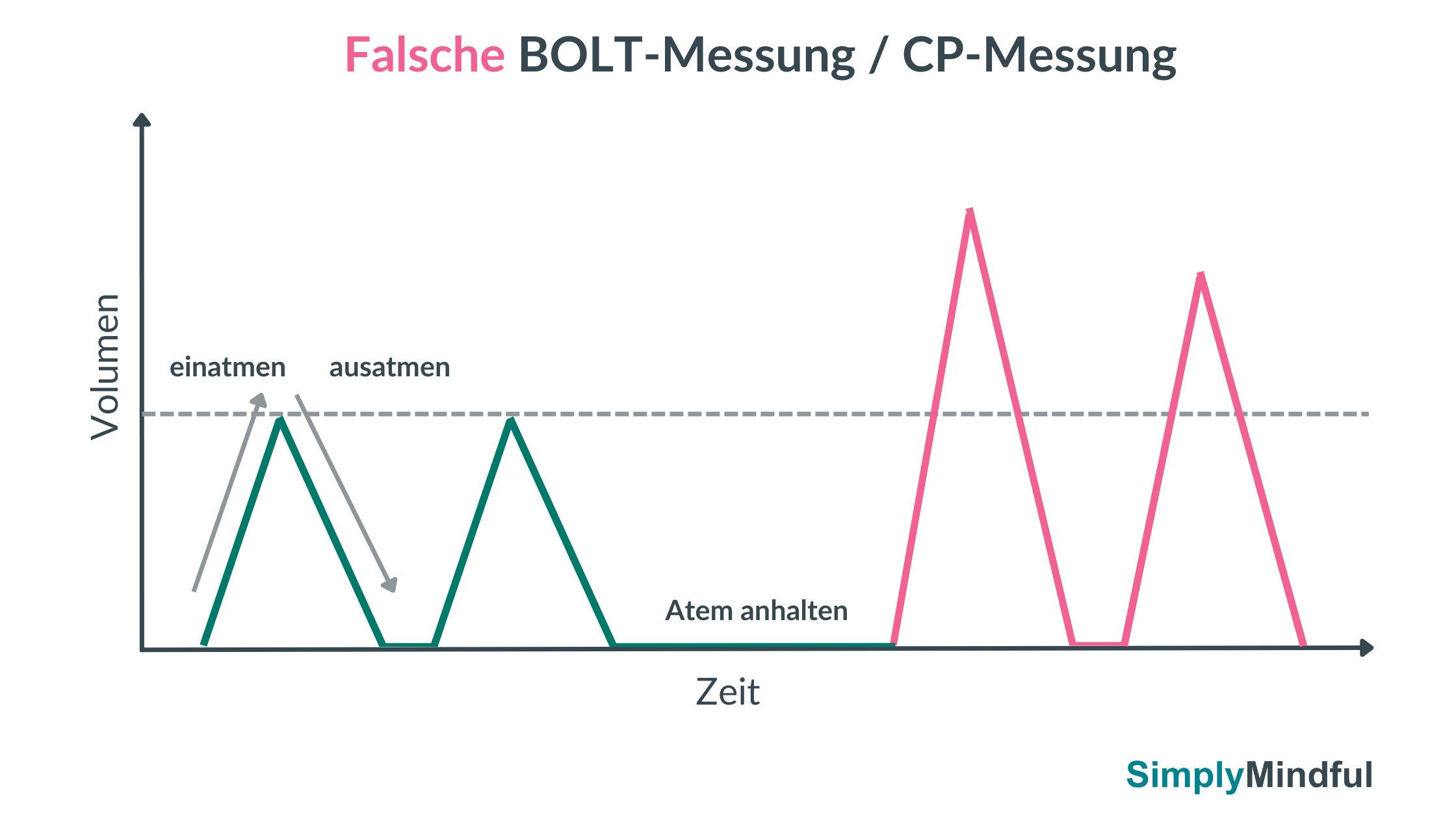
- Control Pause (BOLT Score): You hold your breath only until the first sign that your body wants to breathe again. There is no struggle. The breath you take immediately following the hold should be as calm and quiet as the breath before it. If you need to gasp or take a large breath, you've held for too long, and the measurement is invalid.
This difference is critical. The BOLT score isn't a measure of willpower; it's a precise measure of your chemoreceptors' sensitivity to the buildup of carbon dioxide ().
How to Perform the BOLT Score (Control Pause)
To ensure an accurate and repeatable score, the protocol must be followed precisely. We will use the instructions articulated by Patrick McKeown, who popularized the BOLT score as part of the Oxygen Advantage program.
Nasal Breathing Test “The Bolt Score”
This video features Patrick McKeown, a leading figure in the Buteyko and Oxygen Advantage methods, explaining how to perform the BOLT score. It provides a clear and authoritative demonstration of the correct technique.
Watch the first minute of the video for a complete walkthrough. Pay close attention to these key details: Preparation: Resting for five minutes with normal breathing beforehand. The Sequence: Normal breath in, normal breath out, pinch the nose. The End Point: The measurement stops at the first definite desire to breathe or the first involuntary movement of your breathing muscles. The Recovery: Your breathing should be fairly normal when you let go.
To solidify the instructions, let's also consult a research paper on the topic which refers to the test as both BOLT and Control Pause (CP).
[PDF] Body Oxygen Level Test (BOLT) Therapy: A Potent Solution for ...
This paper provides a detailed, step-by-step procedure for the BOLT test, reinforcing the instructions from the video.
Read the sections detailing the five steps of the test and the subsequent important points. This text explicitly states, "BOLT is not a determination of how long you are able to pause your breathing but how long before you feel the hunger of air." This distinction is the core of the test.
Based on these resources, here is your consolidated protocol:
- Preparation: Sit upright and rest quietly for 3-5 minutes, breathing normally and gently through your nose.
- Execution: Take a normal, silent breath in through your nose and allow a normal, silent breath out through your nose. At the end of that gentle exhalation, pinch your nose closed with your fingers to prevent air from entering your lungs.
- Timing: Start your stopwatch the moment you pinch your nose.
- Observation: Hold the breath and count the seconds until you feel the very first distinct sign that your body wants to breathe. This could be a slight swallowing sensation, a flutter in your diaphragm, or a faint tickle in your throat.
- Conclusion: At that first sign, release your nose, stop the timer, and resume breathing.
- Validation: Your first breath back should be calm and normal. If you feel the need to take a large, deep, or audible breath, you held on for too long. Rest for a few minutes and try again, stopping the timer earlier.
- Measurement: The number of seconds on the stopwatch is your BOLT score. Take the test 2-3 times (with several minutes of normal breathing in between) and use the average value.

Interpreting Your Score: The Science of CO₂ Tolerance
Your BOLT score is a direct proxy for your body's chemosensitivity to carbon dioxide. A low score signifies a high sensitivity, meaning your respiratory centers trigger the urge to breathe at a lower concentration of arterial . A high score signifies a lower sensitivity (or higher tolerance), allowing for a greater accumulation of before the urge to breathe becomes compelling.
This is a fundamental concept in breathwork. As explained in the "BOLT Therapy" paper:
[PDF] Body Oxygen Level Test (BOLT) Therapy: A Potent Solution for ...
This section of the paper details the physiological mechanism behind the BOLT score.
Please read the paragraph labeled "BOLT Explanation". It clearly states that the breath-hold duration is determined by your tolerance to CO₂, which is the primary driver of respiration.
A low BOLT score is often correlated with dysfunctional breathing patterns, such as habitual over-breathing (chronic hidden hyperventilation), mouth breathing, and upper chest breathing. These patterns keep the body in a state where it is constantly "blowing off" excess , training the chemoreceptors to become intolerant to its presence.
We can quantify this relationship. A 2023 study in the Physiotherapy Review investigated the link between BOLT scores and resting respiratory rate.
[PDF] Assessment of breathing patterns in the context of physical ...
This study provides valuable statistical data correlating BOLT scores with breathing frequency. As a statistician, you will appreciate the direct, quantitative evidence.
Examine the paragraph that begins "Individuals with shorter BOLT times...". Note the statistically significant (p=0.000) inverse relationship between BOLT duration and breathing frequency.
The study's findings provide a clear data-driven framework:
- BOLT ≤ 15 seconds: Correlated with an average respiratory rate of 17.5 breaths/minute and a high prevalence of upper-costal, mouth breathing.
- BOLT 16-25 seconds: Correlated with an average rate of 13.8 breaths/minute.
- BOLT > 25 seconds: Correlated with an average rate of 12.5 breaths/minute.
Furthermore, research by Professor Kinesel, mentioned in the PJFPerformance video, found that a BOLT score above 25 seconds gives you an 89% chance that dysfunctional breathing is not present. This provides a strong clinical benchmark.
For a more detailed interpretation, we can refer back to the "BOLT Therapy" paper, which provides qualitative descriptions for various scores.
[PDF] Body Oxygen Level Test (BOLT) Therapy: A Potent Solution for ...
This part of the paper provides a practical guide to what different BOLT scores signify in terms of daily breathing patterns and overall health.
Read the descriptions provided for BOLT values of 10, 20, 30, and 40 seconds. The paper sets the ideal goal at 40 seconds, which corresponds to a very calm respiratory rate of 6-10 breaths per minute.
To summarize the interpretation framework:
- < 15 seconds: Suggests significant CO₂ sensitivity, likely accompanied by a high resting respiratory rate (>15 breaths/min), mouth breathing, and noticeable breathlessness during exertion.
- 15 - 25 seconds: A typical range for many adults. Breathing is functional but has clear room for improvement in efficiency.
- 25 - 35 seconds: Indicates good CO₂ tolerance and efficient breathing patterns.
- > 40 seconds: Considered the optimal target. Reflects excellent CO₂ tolerance, slow and calm nasal breathing at rest, and high respiratory resilience.
Conclusion
You have now completed the third and final measurement for your respiratory baseline. The BOLT score provides a nuanced, functional assessment of your resting CO₂ tolerance, which is distinct from the maximal-effort capacity measured by the Stange and Genchi tests. Understanding this score is crucial, as improving it is a primary objective of many breathwork systems, particularly the Buteyko method.
Key Takeaways:
- The BOLT score (or Control Pause) measures the time from the end of a normal exhalation to the first definite desire to breathe.
- It is a direct measure of your body's chemosensitivity to carbon dioxide (), not a test of maximal breath-hold time or willpower.
- Lower scores (<25s) are correlated with higher resting respiratory rates and less efficient breathing patterns.
- A score of 40 seconds is considered an optimal target, reflecting high CO₂ tolerance and excellent respiratory control.
In our next and final lesson of this module, we will synthesize the data from your Stange, Genchi, and BOLT tests. We will consolidate these three numbers into a personal baseline dashboard, discuss what the relationships between them signify, and establish a clear, quantitative framework for tracking your progress as you begin exploring specific breathwork techniques.