Welcome back. In our last session, we learned the practical execution of Tummo breathing, deconstructing it into its somatic ("vase breath") and neurocognitive (visualization) components. We saw initial evidence from the Kozhevnikov study suggesting the breathing itself generates heat, while the meditation sustains it.
Today, we will delve deeper into the how and the why. Our focus is twofold: first, to explain the specific physiological mechanisms proposed to drive Tummo's remarkable thermogenesis, and second, to conduct a rigorous comparison between Tummo and the Wim Hof Method. This comparative analysis is a critical step toward your goal of building a comprehensive framework for understanding and combining different breathwork styles.
The Mechanisms of Inner Fire
While the previous lesson established that Tummo works, this one explores how it works. The generation of heat, or thermogenesis, is not a mystical process but a physiological one. Research points to several key mechanisms that likely work in concert.
1. Thermogenesis from Somatic Work
The most direct source of heat is the intense physical effort of the breathing technique itself. The "vase breath" involves forceful, repetitive contractions of the diaphragm, intercostals, abdominal, and pelvic floor muscles. This is not passive breathing; it is a form of isometric exercise.
A fascinating study on Wim Hof (who, as we will see, uses a technique he describes as being based on Tummo) provides a powerful clue. Researchers at Maastricht University studied Wim and his monozygotic twin brother to isolate the effects of his lifestyle. They used PET scans with a radioactive glucose tracer ([18F]FDG) to see which tissues were metabolically active during cold exposure while the twins performed their breathing technique.
Frequent Extreme Cold Exposure and Brown Fat and Cold-Induced ...
This 2014 study published in PLOS One offers a unique window into the thermogenic effects of a g-Tummo-like breathing practice, thanks to its monozygotic twin design.
Begin with the Abstract to get a high-level summary of the findings. Note the conclusion regarding Brown Adipose Tissue (BAT) and the role of the breathing technique. Next, read the section of the Results titled Cold-induced thermogenesis and [18F]FDG-uptake. Pay close attention to the measured Cold-Induced Thermogenesis (CIT) values and where the PET scans showed increased glucose uptake. Finally, read the Discussion section, particularly the paragraph that begins An interesting observation. This paragraph directly interprets the high heat production and links it to the metabolic activity of the respiratory muscles.
The study's conclusion is striking: a significant portion of the high heat production wasn't from the expected sources, but from the respiratory muscles themselves, which showed a four-fold increase in glucose uptake during the breathing practice. The "vase breath" of Tummo is even more forceful and isometric than the WHM breathing, suggesting this mechanism is a primary driver of its thermogenic effect. It is, in essence, a form of internal "shivering" using the muscles of respiration under voluntary control.
2. Brown Adipose Tissue (BAT) Activation
Another key player in thermogenesis is Brown Adipose Tissue (BAT). Unlike white fat which stores energy, BAT is specialized for burning fuel to generate heat. It is dense with mitochondria containing Uncoupling Protein 1 (UCP-1), which effectively "short-circuits" the process of ATP production, releasing the energy directly as heat instead.
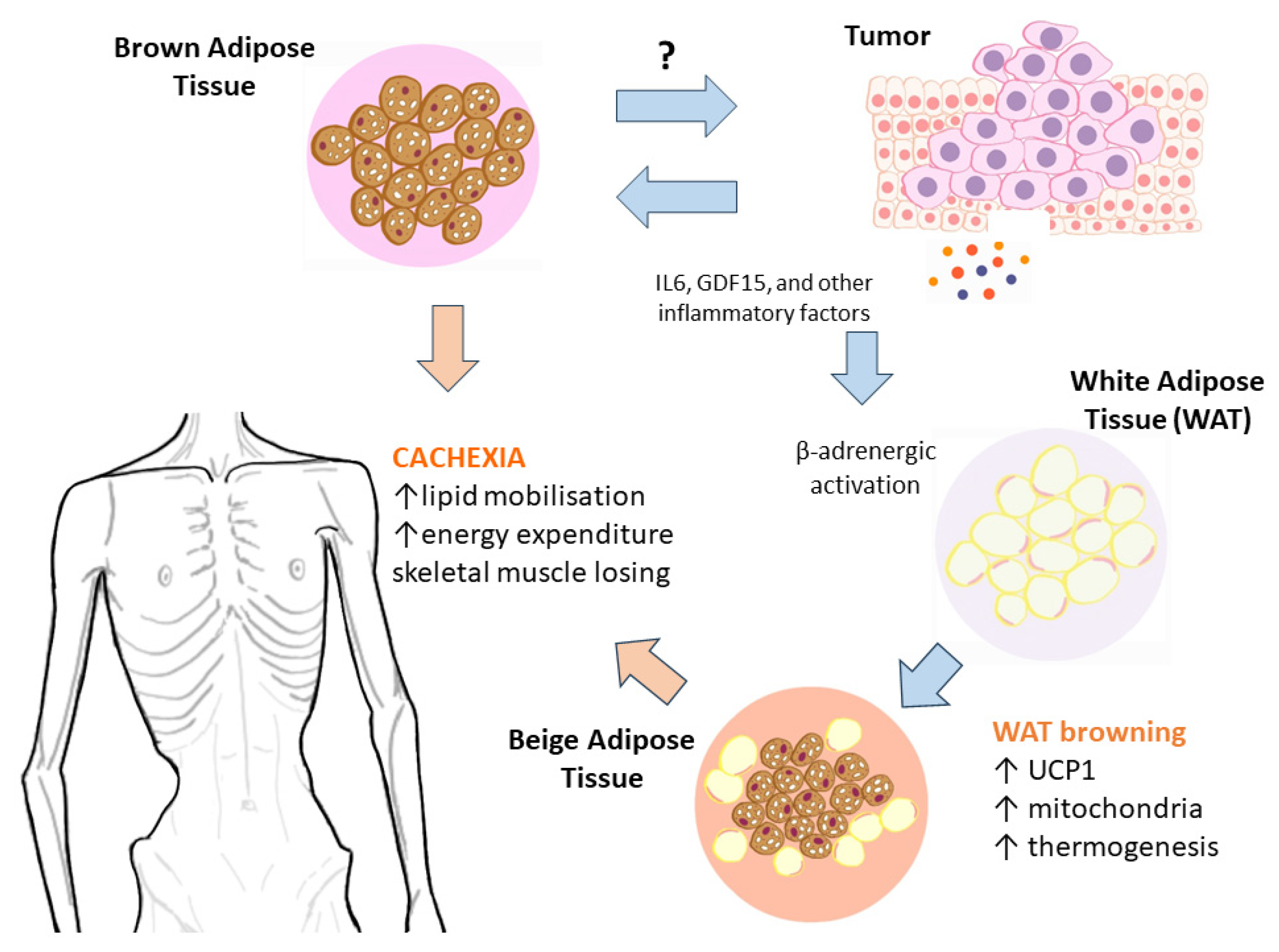
Cold exposure is a known activator of BAT. It's plausible that Tummo, by creating intense internal sensations of heat and cold, and potentially through sympathetic nervous system activation, also stimulates this tissue. However, the Vosselman twin study found that Wim Hof's BAT activity, while present, was not unusually high compared to other adults. This suggests that while BAT may contribute, it might not be the dominant mechanism, at least in the context of the g-Tummo-like technique used in that study. The intense work of the respiratory muscles appears to be a more significant factor.
3. Neurocognitive Modulation of Heat Loss
This brings us back to the role of visualization. The Kozhevnikov study, which you reviewed in the last lesson, provided statistical evidence for this component's importance. It found that while apnea duration (a proxy for somatic effort) correlated with the rate of temperature increase, alpha brainwave power (a proxy for meditative visualization) correlated with the rise time—how long the temperature could be sustained before plateauing.
The proposed mechanism is that focused visualization allows the practitioner to consciously override the body's automatic heat-loss responses (thermoregulation). As core temperature rises, the body would normally try to cool itself through vasodilation (sending warm blood to the skin) and sweating. The meditative component seems to dampen or inhibit these signals, allowing the core temperature to continue rising into the fever range, far beyond what the breathing alone can achieve. It's a powerful example of top-down regulation, where the brain's executive functions modulate brainstem-level autonomic processes.
Tummo vs. Wim Hof Method: A Comparative Analysis
While the Wim Hof Method draws inspiration from Tummo, they are distinct practices with different mechanics, goals, and physiological signatures. Your analytical skills in parsing study designs will be useful in appreciating these distinctions.
A core conceptual difference is articulated well by journalist and author Scott Carney, who has trained extensively in both.
Wim Hof Method vs Tummo ... What's the difference?
In this video, Scott Carney clearly lays out the fundamental philosophical and practical differences between the two methods.
Watch the section from the initial explanation, where he describes WHM as an interaction with the environment and Tummo as an internal generation. Then, watch the segment from the final comparison, which reinforces this key distinction: Wim Hof needs an external stimulus to control his response, while Tummo practitioners can generate the state internally.
Carney's point is crucial: WHM is fundamentally reactive, while Tummo is generative. Let's break this down further in a comparative table.
| Feature | g-Tummo (Forceful Breath) | Wim Hof Method (WHM) |
|---|---|---|
| Primary Goal | Traditional: Spiritual enlightenment. Studied: Thermogenesis. | Health benefits, mental resilience, anti-inflammatory effects. |
| Breathing Mechanics | 5-9 forceful nasal inhales & oral exhales. Inspiratory hold ("vase breath") with intense muscular contraction (abdominal/pelvic). | ~30 deep, circular breaths (mouth or nose). Expiratory hold (passive, on empty lungs), followed by a short recovery inspiratory hold. |
| Key Physiological State | High internal pressure, isometric contraction. Focus is on generating and containing "inner fire". Apnea is under tension. | Respiratory alkalosis, deep hypoxia during the hold. Focus is on altering blood chemistry. Apnea is relaxed. |
| Thermogenic Driver | Primary: Work of respiratory muscles (proven via "vase breath"). Modulated by neurocognitive control to sustain heat. | Primary: Shivering/non-shivering thermogenesis from cold exposure. Secondary: Metabolic heat from respiratory muscles during hyperventilation. |
| Locus of Control | Internal. Can raise core body temperature without an external cold stimulus through visualization and breath. | External. Requires an environmental stimulus (cold water, endotoxin) to generate a physiological response that is then consciously modulated. |
| Evidence Base | Kozhevnikov et al. (2013): Proved CBT increase into fever range (up to 38.3°C) via combined somatic & neurocognitive components. | Kox et al. (2014): Proved ability to suppress innate immune response to endotoxin via epinephrine spike. Vosselman et al. (2014): Showed high CIT from g-Tummo-like breathing. |
This table highlights that while both are "high-intensity," they operate on different principles. WHM manipulates blood gases dramatically to trigger a massive sympathetic response. Tummo uses muscular force and mental focus to generate and contain metabolic heat.

The state of a WHM breath-hold is one of profound hypocapnia (low CO₂) and hypoxia (low O₂). In contrast, the "vase breath" hold in Tummo is on a full inhalation and under muscular tension, creating high intrathoracic and intra-abdominal pressure. This state would not produce the same extreme drops in CO₂ and O₂ saturation; its purpose is mechanical and metabolic, not primarily chemoreceptive.
Conclusion
Today we have moved from the "what" to the "how," dissecting the mechanisms of Tummo and setting it in stark contrast to the Wim Hof Method. You are now equipped with a much more nuanced understanding of these powerful techniques.
Key Takeaways:
- Tummo's thermogenesis is driven by at least three mechanisms: the metabolic work of respiratory muscles during "vase breath," the activation of Brown Adipose Tissue (BAT), and neurocognitive control that inhibits the body's natural heat-loss mechanisms.
- The Wim Hof Method and Tummo, despite some superficial similarities, are fundamentally different. WHM is a reactive practice for modulating autonomic responses to external stressors, while Tummo is a generative practice for creating an internal state of heat.
- Their mechanics are distinct: WHM uses an expiratory hold from a state of respiratory alkalosis, whereas Tummo uses a tense inspiratory hold to generate pressure and heat.
We have now explored two powerful, intense techniques, one aimed at immune modulation and the other at thermogenesis. However, some breathwork systems use high intensity for a very different purpose: psychological exploration and catharsis. In our next lesson, we will examine Holotropic Breathwork and analyze the clinical evidence for its psychological effects.