Welcome to our final module. In our previous lessons, we developed a framework for evaluating AI's impact across the software development lifecycle, moving from identifying high-ROI use cases to performing rigorous trade-off analysis. You learned to think like a system-level architect, understanding how AI shifts bottlenecks from code creation to validation and review.
Now, we will synthesize this knowledge to set a clear, strategic direction. This lesson is about making a crucial choice for your capstone project and your future work: selecting a primary focus area for AI integration. Will you concentrate on transforming how your organization builds software by enhancing its platform engineering capabilities, or will you focus on revolutionizing what software you build by designing new AI-native application architectures?
Your task is to select one of these paths and define a set of strategic goals. This decision will not only shape your capstone project but will also equip you with a coherent vision for leading AI initiatives in a senior technical role.
The Two Strategic Arenas: Platform vs. Application Architecture
As an architect, your strategic influence can be directed in two primary ways when it comes to AI: internally, by improving the machinery of software production, or externally, by creating new value in the products themselves.
- AI in Platform Engineering: This is an inward-facing strategy focused on leveraging AI to build a more intelligent and efficient Internal Developer Platform (IDP). The goal is to amplify developer productivity, increase system reliability, and accelerate delivery by automating toil and providing smarter tools.
- AI in Software Architecture: This is an outward-facing strategy focused on designing and building applications with AI and agents as core, value-delivering components. The goal is to create novel user experiences, solve complex business problems, and unlock new product capabilities that were previously infeasible.
Let's explore each of these focus areas in detail.
Focus 1: AI in Platform Engineering
Choosing this path means you see the most significant leverage point in improving the underlying engine of your engineering organization. Your interest in how businesses work and system design is particularly relevant here, as this focus has a strong and direct return on investment (ROI) case.
Within platform engineering, there's a crucial distinction to make. An excellent article from PlatformEngineering.org frames this as "AI-powered platforms vs. platforms for AI."
This article clearly distinguishes the two primary ways AI intersects with platform engineering, which is the first strategic choice to make if you select this focus area.
Please read the section starting from AI-powered platforms vs. platforms for AI. This distinction between enhancing the platform itself versus enabling others to build AI applications is fundamental.
This gives us two sub-strategies for platform engineering:
A) Building the "AI-Powered Platform"
Here, the strategic objective is to embed AI directly into the IDP to "turbocharge" its benefits. The platform becomes a smart assistant for developers, reducing cognitive load and automating complex tasks.
The business case for this approach is compelling. An HTC Global Services whitepaper details the link between these technical capabilities and measurable business outcomes.
[PDF] The-Strategic-Business-Value-of AI-Driven-Platform ...
This whitepaper details the 'why' behind investing in an AI-powered platform, linking technical capabilities directly to business outcomes.
First, read the section Defining AI-Driven Platform Engineering to see concrete examples of AI capabilities embedded within a platform. Then, read the section on Key Business Benefits to understand the powerful value proposition in terms of cost, productivity, and speed.
Based on this, your strategic goals for an AI-powered platform might include:
- Reduce Developer Toil by 30%: By implementing a natural-language interface for infrastructure queries and automating the generation of boilerplate configuration (e.g., IaC, CI/CD pipelines).
- Improve System Reliability: By integrating AIOps for predictive anomaly detection, aiming to decrease Mean Time to Detection (MTTD) for production incidents by 50%.
- Optimize Cloud Spend: By deploying AI-driven tools that continuously analyze resource utilization and automatically right-size or shut down idle services, targeting a 15% reduction in infrastructure costs.
B) Building the "Platform for AI"
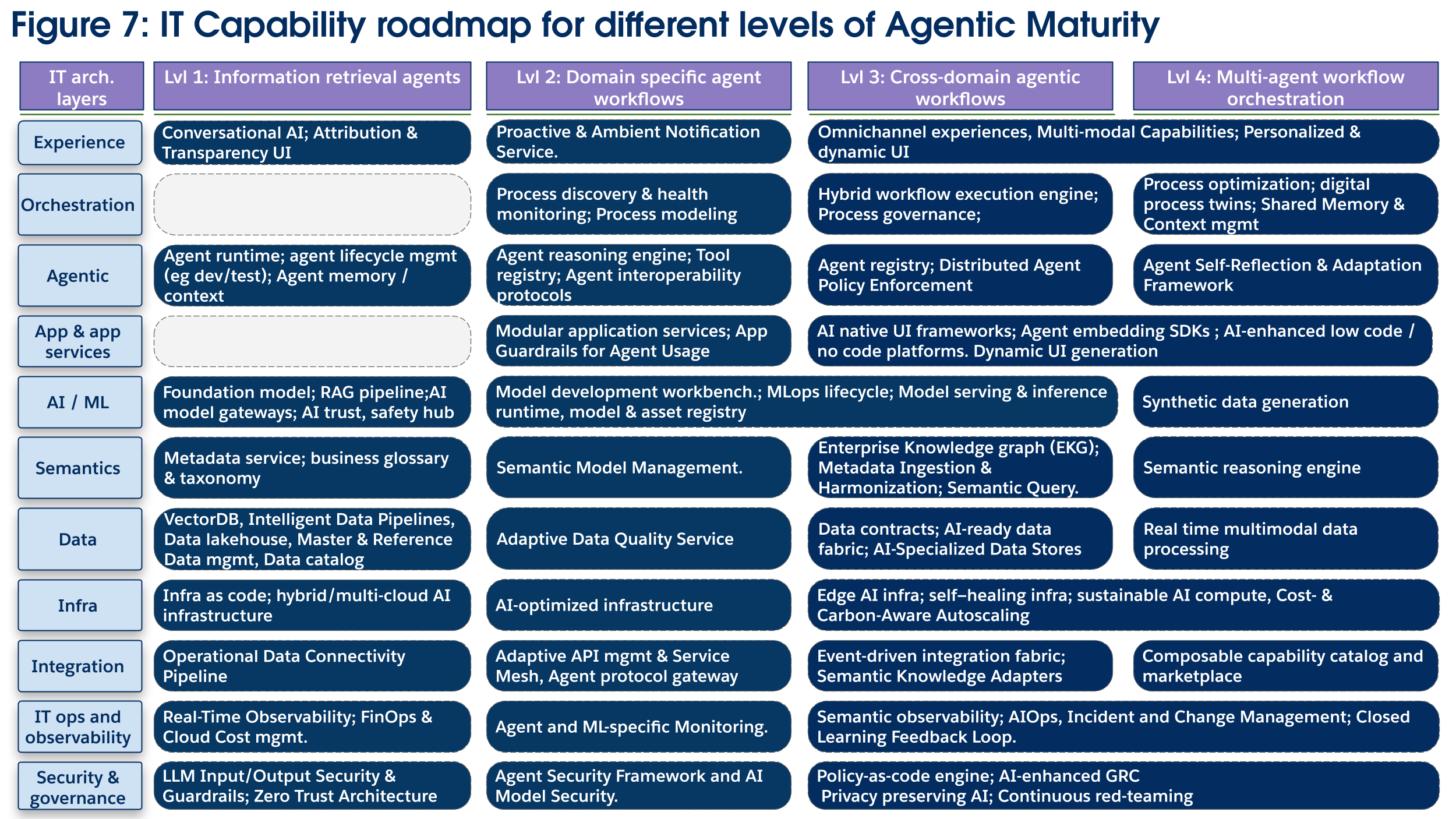
Alternatively, your strategy could be to build the foundational platform that enables other teams to develop, deploy, and operate their own AI/ML models and applications securely and efficiently. This positions the platform team as a critical enabler for the entire organization's AI ambitions.
This involves providing a specialized, managed ecosystem of tools and infrastructure.
Patrick Debois, a central figure in the DevOps movement, provides a wonderfully practical checklist of the services such a platform should offer.
AI Platform Engineering: Patrick Debois
Patrick Debois outlines the concrete services an AI platform team should provide. This serves as a practical blueprint for defining strategic goals for a "platform for AI."
Watch the segment from platform services. As you watch, note the list of services he mentions, such as standardized model access, vector databases, observability for prompts, and caching. Each of these can be framed as a strategic objective.
Drawing from this, your strategic goals for a "platform for AI" could be:
- Accelerate AI Application Development: By providing a "golden path" for AI development that includes self-service access to curated models, vector databases, and data connectors, reducing the time-to-market for new AI features.
- Ensure Governance and Cost Control: By implementing a centralized AI gateway that handles authentication, rate limiting, observability, and caching, providing visibility and control over model usage across the organization.
- Standardize AI Operations (MLOps/LLMOps): By building a managed platform for model versioning, continuous evaluation, and monitoring for data/prompt drift, ensuring the reliability and quality of AI applications in production.
Focus 2: AI in Software Architecture
If you choose this path, you are drawn to the frontier of application design. This focus is less about internal efficiency and more about external innovation. Your goal is to architect systems where AI is not just an add-on but a fundamental part of the product's core logic and value.
The central architectural challenge here, as software luminary Martin Fowler discusses, is the shift from deterministic to non-deterministic systems. Your expertise in system design is critical for navigating this new paradigm.
How AI will change software engineering – with Martin Fowler
In this interview, Martin Fowler shares his perspective on how AI fundamentally alters software engineering, starting with the core challenge of non-determinism.
First, watch the opening clip from the shift to non-determinism. This sets the stage for the new architectural mindset required. Then, jump to the segment from the challenge of non-determinism, where he draws parallels to other engineering disciplines and the concept of tolerances.
This paradigm shift forces architects to think differently about reliability, testing, and user interaction. The strategic goals in this area revolve around harnessing the power of non-determinism while mitigating its risks.
Fowler also identifies immediate high-value areas where AI can transform architectural work.
How AI will change software engineering – with Martin Fowler
Fowler points to specific, high-impact workflows that are ripe for AI-driven architectural intervention.
Watch the segment on new workflows, where he highlights rapid prototyping and, importantly, understanding legacy systems as major opportunities. Then, watch the discussion on refactoring from refactoring, as cleaning up AI-generated code will become an increasingly critical architectural concern.
Based on these insights, your strategic goals for AI in software architecture might look like this:
- Accelerate Legacy Modernization: By pioneering the use of LLMs (with RAG over the codebase) to analyze and document critical legacy systems, creating a strategic plan to refactor or rewrite the top three business-critical services.
- Establish a Framework for Safe AI Integration: By designing and documenting architectural patterns (e.g., AI Gateway, Agentic Sidecar, Human-in-the-Loop) for safely incorporating non-deterministic components into production systems, complete with guidance on testing, monitoring, and fallback mechanisms.
- Drive Innovation through Agentic Architectures: By designing and piloting a multi-agent system to automate a complex business process (e.g., incident response triage, dynamic resource allocation, personalized customer support), demonstrating the potential for new, adaptive product capabilities.
Making Your Selection
The choice between focusing on Platform Engineering or Software Architecture depends on your organization's context and your own interests.
- If your organization's primary bottleneck is developer productivity, infrastructure complexity, or a slow time-to-market, an AI in Platform Engineering strategy offers a clear path to high-impact improvements.
- If your organization is looking to create disruptive new products, unlock value from its data in novel ways, or tackle complex, unsolved business problems, an AI in Software Architecture strategy will place you at the forefront of that innovation.
Consider which path aligns better with the challenges you see in your own work and which set of goals excites you more as a builder and a strategist. This choice will be the starting point for your capstone project.
Conclusion
In this lesson, we have outlined two distinct strategic paths for integrating AI at an architectural level. You can either focus inward, revolutionizing how software is built by creating an AI-enabled platform, or focus outward, designing the next generation of AI-native applications.
Key Takeaways:
- AI in Platform Engineering splits into two sub-strategies: building an AI-powered platform to enhance developer productivity and reliability, or building a platform for AI to enable the entire organization to ship AI features safely and efficiently. Strategic goals here are often tied to ROI, cost savings, and risk reduction.
- AI in Software Architecture focuses on designing applications with AI as a core component. The primary challenges are managing non-determinism and developing new patterns. Strategic goals are tied to innovation, legacy modernization, and creating new product capabilities.
- The choice of focus area depends on your organization's needs and your personal interests. This decision will define the direction of your capstone project.
Preview of the Next Lesson:
Once you have selected your focus area and defined your high-level strategic goals, the next step is to translate that vision into an actionable plan. In our next lesson, we will focus on developing a phased implementation plan for a high-impact AI opportunity, complete with milestones, risk mitigation strategies, and the outline of an executive summary to build support for your vision.