Introduction
In our last lesson, we established a comprehensive scorecard for measuring platform success, using frameworks like DORA and SPACE to define both quantitative and qualitative metrics. We now know how to measure things like developer satisfaction, deployment frequency, and adoption rates. However, metrics alone don't secure budget or convince leadership. To justify a significant platform initiative, you must translate these engineering data points into the language of business: financial return.
This lesson directly addresses the learning outcome: Construct a business case for a platform initiative by forecasting its Return on Investment (ROI). This is where your interest in economics and business operations intersects directly with your architectural expertise. We will move from measurement to monetization, building a quantitative model that forecasts the financial impact of your platform. You will learn to construct a narrative that doesn't just present data but tells a compelling story about value, efficiency, and competitive advantage.
The Systematic Approach to ROI
Calculating the ROI for a platform isn't guesswork; it's a systematic process of evaluation. Much like a well-designed system, a good business case is logical and evidence-based. The ROI Institute's methodology provides a high-level view of this process.
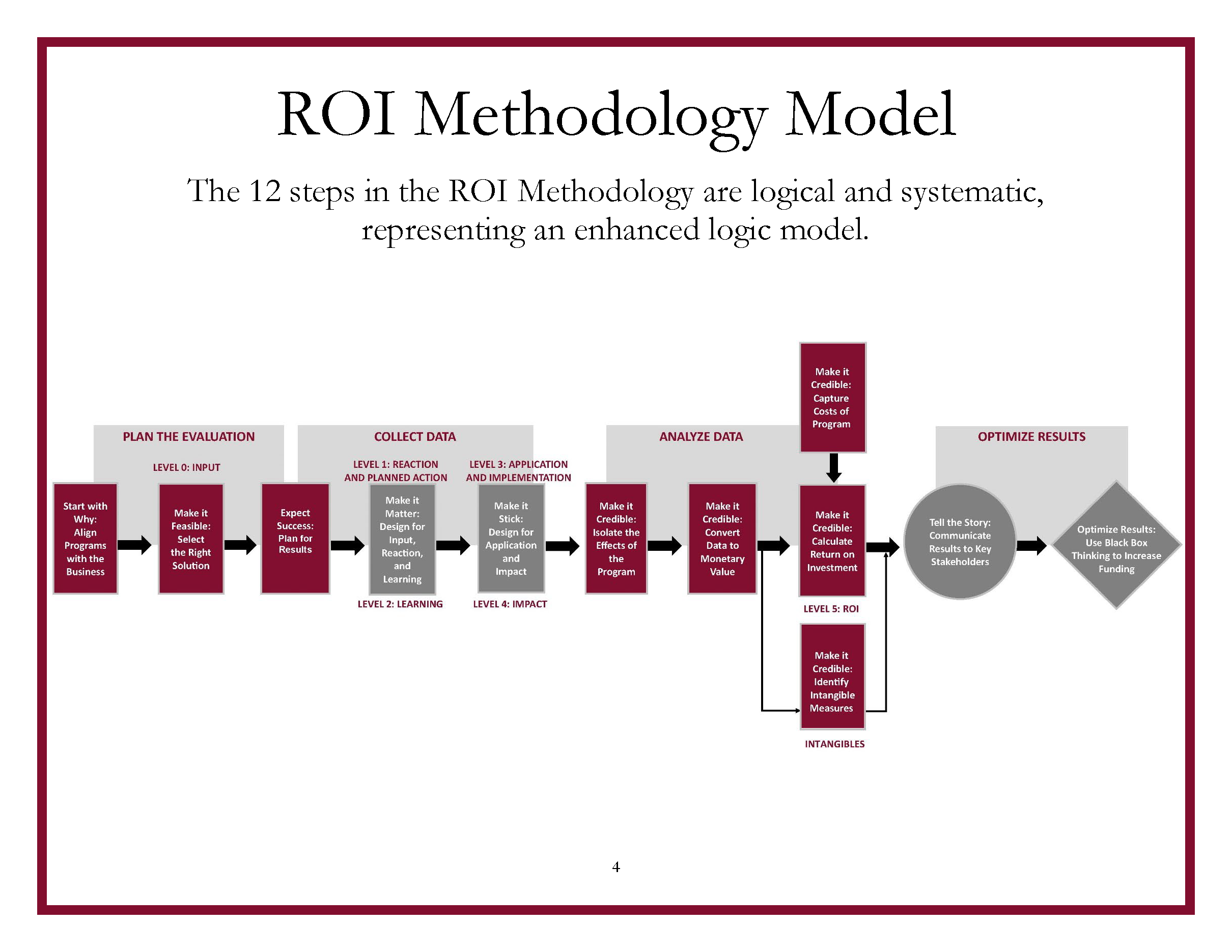
At its core, the ROI formula is straightforward:
Our task is to rigorously define and quantify the terms in this equation.
Part 1: Quantifying the Investment (The "I" in ROI)
Before calculating returns, you must have a clear and honest accounting of the costs. A credible business case acknowledges the full investment required.
The primary costs of a platform initiative include:
- People Costs: This is the most significant expense. It's not just salaries but the fully-loaded cost of the platform team (engineers, PMs, etc.), which includes benefits, taxes, and overhead, often estimated at 1.4-1.8x the base salary.
- Technology Costs: This includes software licenses for vendor tools (e.g., observability platforms, managed Backstage), as well as the cloud infrastructure costs required to run the platform itself.
- Implementation and Transition Costs: This can include temporary consulting fees or a planned, temporary dip in productivity as teams adapt to new tools and workflows.
One of the first strategic decisions is whether to build a platform from scratch or use managed services. As you'll see in the following reading, this choice has a dramatic impact on the initial and ongoing investment.
This forum post from 10x.pub gives a pragmatic, real-world perspective on justifying platform spend. The authors cut straight to the financial realities.
Start by reading the introduction and the sections The $2M Question and The DIY vs. Managed Cost Model. This will ground you in the typical costs and the critical build-vs-buy decision that shapes your initial investment calculation.
Part 2: Forecasting the Return (The "R" in ROI)
The return on a platform investment manifests in three primary categories. We will use these as the pillars of our business case.
The ROI of Operational Platform Excellence
This whitepaper provides a structured, quantitative framework for calculating platform ROI. It's the blueprint for turning engineering metrics into a financial forecast.
First, read the Executive Summary to understand the three core dimensions of ROI. Then, dive deep into the section Measuring the Business Impact. For each metric (e.g., Development Cycle Time, MTTR, Resource Utilization), pay close attention to the "Impact" description and the "Measurement Example." This is the key to connecting your DORA and SPACE metrics to dollars.
As the whitepaper outlines, we can quantify returns across:
- Developer Productivity Enhancement
- Infrastructure and Operational Cost Optimization
- Business Velocity Gains
Let's break down how to calculate each.
1. Developer Productivity Gains
This is often the largest component of your ROI. The fundamental calculation is converting saved developer time into its monetary value.
The formula is:
Where does "Time Saved" come from? It comes directly from the efficiency and flow metrics we discussed in the last lesson:
- Reduced Toil: Time no longer spent on manual environment setup, CI/CD pipeline configuration, or navigating complex cloud provider interfaces.
- Example: If a platform saves 200 developers an average of 2 hours per week, and the fully-loaded cost per engineer is $100/hour: annually.
- Faster Onboarding: Reducing the time for a new engineer to become productive from weeks to days has a direct cost saving.
- Improved Flow State: While harder to quantify, a better DevEx reduces context switching and cognitive load, leading to more effective time spent on core work. This is where your qualitative survey data becomes important supporting evidence.
2. Cost Optimization
This category represents direct, hard-dollar savings that are highly compelling to a CFO.
- Infrastructure Cost Reduction: A well-designed platform improves resource utilization through right-sizing, auto-scaling, and eliminating orphaned resources.
- Calculation: . The whitepaper suggests a 30-50% improvement is achievable.
- Reduced Downtime Costs: Improved reliability from standardized tooling and automated recovery (better MTTR) directly prevents lost revenue.
- Calculation: . For a business generating $250k/hour, avoiding just 10 hours of downtime a year is a $2.5M return.
- Reduced Turnover Costs: This is a powerful, often overlooked metric. Developer frustration is a key driver of turnover. As research shows, a good DevEx is "retention insurance."
Transforming Developer Experience: A Tale of Recovery & Innovation • Michaela Greiler • GOTO 2024
In this GOTO 2024 talk, Dr. Michaela Greiler presents compelling research linking developer experience directly to business outcomes, including retention.
Watch the segment from the beginning of her findings to see the numbers connecting DevEx to productivity, innovation, and reduced tech debt. Then, pay close attention to the consequences of bad DevEx from the list of negative outcomes, culminating in "leaving their jobs" and the clear statement that "for management...those numbers are really important."
The cost to replace an engineer is estimated to be 1.5-2x their annual salary. By showing how platform investment improves DevEx (using your satisfaction surveys), you can build a credible case for reducing turnover and realizing those savings.
- Example: If a 100-person engineering team has a 15% attrition rate, and a platform initiative is projected to reduce that by 5 percentage points (saving 5 engineers from leaving), at an average replacement cost of $250k per engineer, the return is .
3. Business Velocity Gains
This category connects the platform to top-line growth and strategic advantage. While harder to forecast precisely, it's a critical part of the story.
- Faster Time-to-Market: By removing infrastructure bottlenecks, you enable the business to launch products and features faster, capturing market share and revenue sooner.
- Increased Feature Delivery: Accelerating the development cycle means more features can be shipped per quarter, directly responding to customer needs and out-pacing competitors.
- Risk Mitigation: In regulated industries, a platform that enforces compliance and security controls isn't just an efficiency tool; it's a mechanism for avoiding multi-million dollar fines and reputational damage. This can be one of the most persuasive arguments.
Part 3: Assembling and Presenting the Business Case
A spreadsheet full of numbers is not a business case. The final step is to weave these numbers into a compelling narrative for your stakeholders. Your audience (CFO, CTO) thinks in terms of risk, leverage, and scalability. You must speak their language.
The Strategic Narrative
The most effective frame is not about "making developers happy." It's about leverage and scalability.
Starting and Scaling a Platform Engineering Team - Camille Fournier & Ian Nowland
In this talk, platform engineering leader Camille Fournier discusses the core goals of a platform team and the importance of communicating its value.
First, listen to her define the goals of platform engineering at creating leverage. This concept of "doing more with fewer people" is the central economic argument. Then, watch the segment on communicating with stakeholders, where she emphasizes translating your work into terms that budget holders can appreciate. Finally, listen to the wrap-up at the four key questions, which reinforce the need to operate critical systems and communicate effectively to secure resources.
The narrative that resonates is: "Platform investment scales engineering productivity without scaling headcount." This frames the platform as a force multiplier, an investment that increases the output of every engineer in the organization.
The "Cost of Inaction"
A powerful rhetorical tool is to flip the argument: what is the cost of not investing? This is the "compounding inefficiency tax." Without a platform, the toil, coordination overhead, and infrastructure complexity don't just stay constant; they grow with the organization, actively slowing it down.
Let's return to the 10x.pub forum post to see how to frame this counter-argument.
Read the sections The Cost of NOT Investing and The Counter-Factual. Notice how they project the growing cost of inefficiency year over year. This creates a sense of urgency that a simple ROI number might not.
The CFO-Friendly Presentation
Your final deliverable should be a concise, clear summary of your findings. Don't lead with technical jargon. Lead with the financial summary. A simple, four-part structure works well:
- Investment Summary: What is the total ask? (Team costs, tooling, etc.)
- Measurable Returns: Present your ROI calculation, broken down by productivity gains, cost savings, and business velocity. Show the payback period (e.g., "This investment breaks even in 18 months and delivers a 2.5x return over 3 years").
- Risk Mitigation: Summarize how the platform reduces operational, security, and compliance risk. Quantify this where possible (e.g., "Avoided cost of one major security breach, estimated at $4M").
- Leading Indicators & Metrics: Briefly show the key metrics (DORA, SPACE, NPS) you will use to track progress. This demonstrates accountability and shows you have a plan to measure success post-investment.
This structure directly answers the question, "What are we getting for this investment?" in a language that financial stakeholders understand and respect.
Conclusion
Constructing a business case is a core competency for any modern technical leader. It is the bridge between identifying an engineering problem and securing the organizational resources to solve it at scale. By translating technical metrics into a financial forecast, you transform a "nice-to-have" engineering initiative into a strategic business investment.
Key Takeaways:
- Start with Costs: A credible business case begins with a full accounting of the investment in people, technology, and implementation.
- Quantify Returns Across Three Dimensions: Structure your forecast around Developer Productivity, Cost Optimization, and Business Velocity.
- Translate Metrics to Money: Convert time saved into labor cost savings, improved MTTR into avoided revenue loss, and better DevEx into reduced turnover costs.
- Build a Strategic Narrative: Frame your case around leverage and scalability—how the platform allows the organization to do more without proportionally increasing headcount.
- Highlight the Cost of Inaction: Use the concept of the "compounding inefficiency tax" to create urgency and show that not investing is also a costly decision.
- Communicate Clearly: Structure your final presentation for a financial audience, leading with the ROI summary and supporting it with your data.
Preview of the Next Lesson:
Securing funding is a major milestone, but it's not the end of the journey. A platform's value is only realized if it is adopted and embraced by developers. In our next lesson, we will address the challenge of "Diagnose common causes of low platform adoption and developer disengagement." We will explore the organizational and technical dynamics that can hinder adoption and develop strategies to ensure your platform delivers on its promised value.