Introduction
In our last lesson, we examined "shadow IT," framing it not as a simple breach of policy, but as a crucial organizational signal. We saw that it emerges when official platforms create more friction than they remove, pushing developers to find their own solutions. This naturally leads to the question: if mandates and rigid control don't work, what does? How do we build a platform that developers choose to use, effectively turning shadow IT from a threat into a valuable source of feedback?
This lesson directly addresses that question, focusing on the learning outcome: Propose strategies to increase platform adoption through collaboration and incentives rather than mandates. We will explore a fundamental shift in thinking—from viewing the platform as a cost center or an infrastructure project to treating it as an internal product with developers as its customers. For someone with your experience in system design and interest in business dynamics, this "Platform as a Product" (PaaP) approach provides a powerful sociotechnical framework for driving voluntary adoption and maximizing the return on your platform investment.
The Core Strategy: Shifting to a Product Mindset
The single most effective strategy for increasing platform adoption is to stop treating it like a mandatory project and start treating it like a product that must compete for its users' attention. This "Platform as a Product" (PaaP) approach reframes the entire dynamic. Instead of a captive audience forced to use a tool, your developers become customers who need to be attracted and retained through the platform's quality, usability, and value.
An excellent academic paper, "How Turning Internal Platform Solutions into a Product Increases the Engagement," provides the theoretical underpinnings for this shift. It connects the PaaP model to core sociotechnical concepts that will be familiar from your experience with large-scale systems.
[PDF] How Turning Internal Platform Solutions into a Product Increases the ...
This paper explains why the product approach is so effective by linking it to established theories. It provides the "why" behind the strategies we will discuss.
First, read the introduction and the section on sociotechnical theories. Pay close attention to how PaaP acts as a "reverse Conway maneuver" and how it aims to reduce extraneous cognitive load—a concept central to developer productivity. Next, focus on Table 1, which masterfully contrasts the two mindsets. This table is a concise summary of the entire strategic shift. Notice the differences in how users are perceived and how success is measured.
As the paper details, the product mindset fundamentally changes the platform team's objectives.
- The goal is no longer just "centralizing infrastructure" but "increasing developer productivity and satisfaction."
- Success is not measured by uptime and SLAs alone, but by adoption rates, developer satisfaction (often using Net Promoter Score - NPS), and improvements in DORA metrics.
- The team evolves from a reactive, ticket-driven operations group to a proactive, roadmap-driven product team, often including roles like Product Managers and UX Designers.
This shift turns the platform from a cost center that must be justified into a value center that demonstrates clear ROI.
Collaborative Strategies: From Mandate to Magnet
Treating developers as customers means you must understand their needs, speak their language, and build a relationship based on trust and empathy. Mandates become unnecessary when the platform is genuinely the best tool for the job. This requires a set of collaborative, not coercive, strategies.
1. Understand Your Users: The Principle of "Dubito"
A successful product team starts with doubt, or dubito, as philosopher René Descartes originally wrote. You cannot assume you know what developers need. In his GOTO conference talk, "Some Principles From Real World Internal Developer Platform Engineering," Russ Miles argues that platform leaders must act like detectives, gathering information and following the signals their users provide.
Some Principles From Real World Internal Developer Platform Engineering • Russ Miles • GOTO 2024
This talk is a masterclass in the human side of platform engineering. Russ Miles uses powerful metaphors and personal experience to explain how to build platforms people love.
Watch these three key segments on collaborative investigation: The principle of doubt: Miles explains why you are not the expert on your users' needs. Follow the chaos: He reframes support queues and user "mistakes" as a gold mine of feedback. Go to Gemba: This section advocates for going to the "actual place" where work happens to experience user pain firsthand.
These principles translate into concrete collaborative actions:
- Follow the Chaos: Every instance of shadow IT, every support ticket, every frustrated question in a chat channel is a signal. It's user research happening organically. Instead of punishing this behavior, analyze it. Why did a team choose to use a different CI/CD tool? What friction in the official logging system led them to build their own?
- Go to Gemba: This Japanese term, meaning "the actual place," is a lean manufacturing principle. For platform teams, it means embedding with development teams. Sit in on their planning meetings. Pair-program with them. Experience their daily stand-ups. This is the only way to truly understand their pain points and build empathy.
- Listen to Their Stories: Quantitative data is useful, but qualitative stories are what build true understanding. When a developer tells you a story about spending a whole day wrestling with a deployment pipeline, you gain a level of insight that no metric can provide.
2. Speak Three Languages: Aligning Stakeholders
A platform initiative doesn't just involve the platform team and developers. It requires buy-in from executives who fund it and security/operations teams who are accountable for stability and compliance. A key collaborative strategy is to act as a translator, framing the platform's value in the language that each stakeholder understands.
The article "Creating a shared platform vision" provides an excellent guide for this.
Creating a shared platform vision: How platform leaders align teams
This article focuses on the political and organizational dynamics of platform engineering, which are often more critical than the technical aspects.
Read the section "Speaking three languages." It gives specific examples of how to communicate the platform's benefits to different audiences.
- For Executives: Frame the platform in terms of business outcomes. Don't say "We automated Terraform provisioning." Say "We reduced the time-to-market for new features by 40%." Use quantified ROI, tying platform work directly to cost savings, risk reduction, and developer retention.
- For Developers: Speak the language of flow and reduced cognitive load. Emphasize how the platform eliminates toil, automates frustrating tasks, and gives them self-service capabilities so they can focus on writing code.
- For Operations/Security: Highlight how the platform enhances reliability, security, and compliance. Show them how guardrails are embedded by default, reducing the risk of misconfiguration and ensuring that security policies are consistently applied without manual oversight.
By aligning these disparate groups around a shared vision, you build a powerful coalition that supports platform adoption.
Incentive-Based Strategies: Building an Irresistible Platform
Collaboration builds trust, but ultimately, developers will adopt the platform because it offers them compelling incentives. The goal is to make the "paved road" so smooth and efficient that taking an off-road shortcut (i.e., shadow IT) feels like more work, not less.
1. Provide "Golden Paths" with "Escape Hatches"
One of the most powerful incentives is a well-defined "golden path" (or paved path). This is a standardized, supported, and optimized workflow for a common task, like creating a new microservice, setting up a CI/CD pipeline, or provisioning a database. It offloads immense cognitive load from developers.
Alex Bikfalvi's GOTO talk on building an internal developer platform at Vinted provides a fantastic real-world example of this strategy in action.
Achieving High Performance with an Internal Developer Platform • Alex Bikfalvi • GOTO 2022
This presentation details the practical journey of building an IDP at a large, complex organization. It's full of concrete examples of how to create value for developers.
First, watch the explanation of golden paths and escape hatches. This highlights the critical balance between providing a default, easy path while still allowing flexibility for teams with unique needs. Next, watch the segment detailing the logging provider migration. This is a powerful, real-world case study demonstrating the massive ROI for developers who are on the golden path.
The Vinted example is the perfect illustration of an incentive. The platform team migrated 250 services to a new logging provider in a few weeks. The teams not on the platform had to do all that work themselves, involving over 40 developers and 180 pull requests. After an event like that, the value proposition of the golden path becomes undeniable. It's not a mandate; it's a massive productivity boost. The "escape hatch" is equally important—it assures teams that if the golden path doesn't fit their needs, they won't be trapped. This prevents the platform from being perceived as a rigid constraint.
2. Build a Habitat that Lifts People Up
The ultimate incentive is to create a platform that makes developers feel more powerful, productive, and confident. Russ Miles calls this creating a "habitat that lifts people up."
Some Principles From Real World Internal Developer Platform Engineering • Russ Miles • GOTO 2024
Returning to Russ Miles' talk, let's focus on the aspirational goals of a platform and how to structure them.
Watch the section where he explains that a habitat lifts people up, making them feel smarter and more creative. Then, watch his adaptation of Maslow's hierarchy of needs for a platform product.
This hierarchy provides a brilliant framework for thinking about incentives:
- Base Needs (Identification, Reliability): Can developers even find the platform? Is it stable? These are table stakes.
- Psychological Needs (Freedom to Create, Quality, Contribution): Does the platform allow creativity? Does it enable teams to contribute back? Does it respect that not all services need the same level of resilience?
- Self-Fulfilment Needs (Freedom of Expression): Can teams share their work and learn from each other through the platform?
A platform that meets these needs doesn't require mandates. It becomes an environment where developers thrive.
3. Measure and Market Your Success
Finally, you must make the value of the platform visible. This serves as both a feedback loop for the platform team and a marketing tool to drive further adoption.
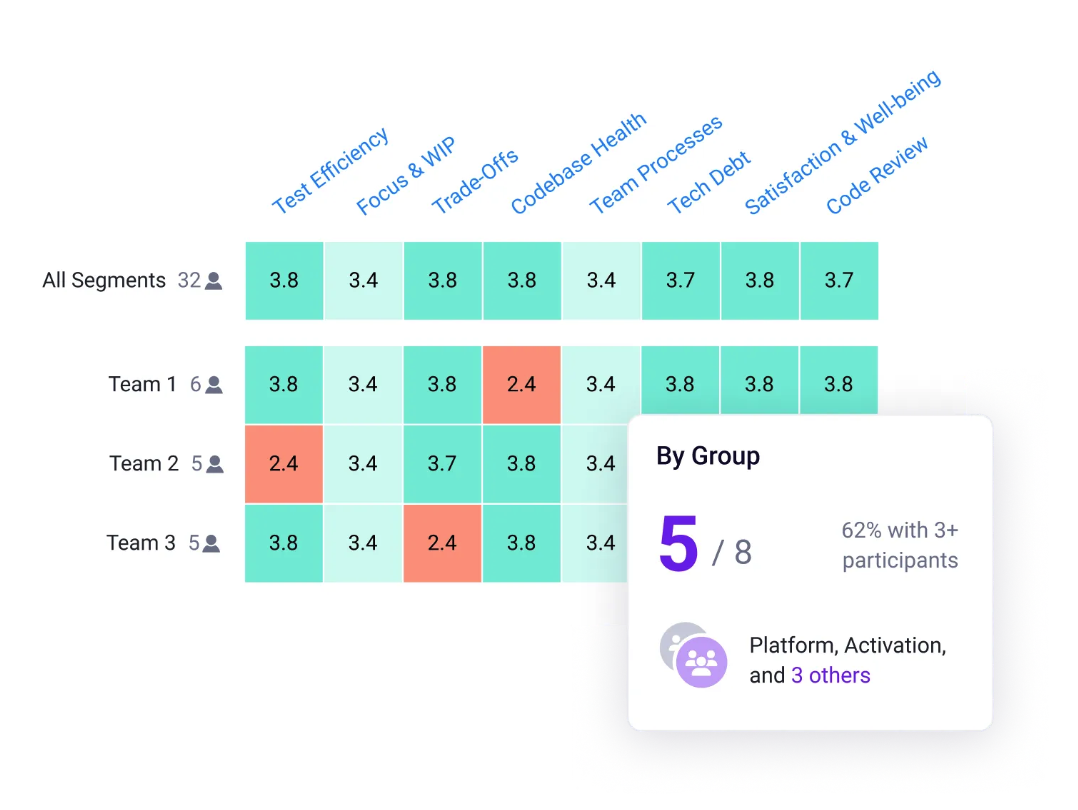
Leading tech companies have mastered this. The academic paper on PaaP includes case studies from Spotify and Netflix that show how they quantify their platform's impact.
[PDF] How Turning Internal Platform Solutions into a Product Increases the ...
This section provides compelling evidence of the PaaP model's success.
Read the section on empirical validation, which details the results at Spotify (onboarding time cut from weeks to days) and Netflix (saving >280,000 developer hours per year). Then, review Table 3, which lists common cultural and strategic barriers and, crucially, proposes mitigation strategies.
When you can go to a development team or an executive and say, "Teams using our platform onboard new engineers in 3 days instead of 3 weeks," or "Our automated build system saved the engineering department 5,000 hours last quarter," you create a powerful pull. This data transforms the conversation from one about cost and control to one about value and velocity.
Conclusion
Driving platform adoption without mandates is not about finding a magic technical solution. It is a sociotechnical strategy centered on treating your platform as a product and your developers as customers. This requires a profound shift in mindset, backed by concrete strategies.
Key Takeaways:
- Adopt a Product Mindset: The "Platform as a Product" (PaaP) approach is the foundation. Shift from a cost center to a value center, and from a captive audience to customers you must win over.
- Collaborate and Empathize: You cannot build what developers need without understanding them. Practice "dubito" (doubt), follow the chaos of their daily work, and go to "gemba" to experience their pain firsthand.
- Create Compelling Incentives: Build an irresistible "golden path" that is demonstrably better than the alternatives, but always provide "escape hatches" for flexibility.
- Build a Habitat, Not a Cage: The ultimate goal is to create an environment that lifts developers up, making them feel smarter, faster, and more creative.
- Measure and Communicate Value: Translate platform improvements into quantifiable business outcomes (time, money, risk) and communicate this value relentlessly to all stakeholders.
Preview of the Next Lesson:
We have now established the high-level strategies for increasing platform adoption through collaboration and incentives. In the next lesson, we will get more tactical. The learning outcome is to outline a practical action plan to foster collaboration between a platform team and application developers. We will take the principles from today and structure them into a concrete plan you could present to your CTO, addressing scenarios like low engagement and the emergence of shadow IT.