Introduction
In our last lesson, we explored the strategies for driving platform adoption by treating developers as customers, focusing on collaboration and incentives rather than top-down mandates. We established that the "Platform as a Product" mindset is the philosophical core of a successful platform initiative. Now, we will translate that strategy into a concrete, tactical blueprint.
This lesson is designed to help you outline a practical action plan to foster collaboration between a platform team and application developers. We will construct a step-by-step plan that you could use to either launch a new platform initiative or reboot a stalled one by building trust and demonstrating value from day one. Given your interest in the business and systems side of software, this plan integrates organizational strategy with engineering execution, providing a framework for leading a successful platform effort.
The Goal of the Plan: Enabling Effective Interaction
Before diving into the plan itself, it's crucial to define what successful collaboration looks like. A platform's primary function is to provide capabilities as a service, reducing the cognitive load on stream-aligned teams. However, building a platform that developers want to use requires more than just a service-based interaction.
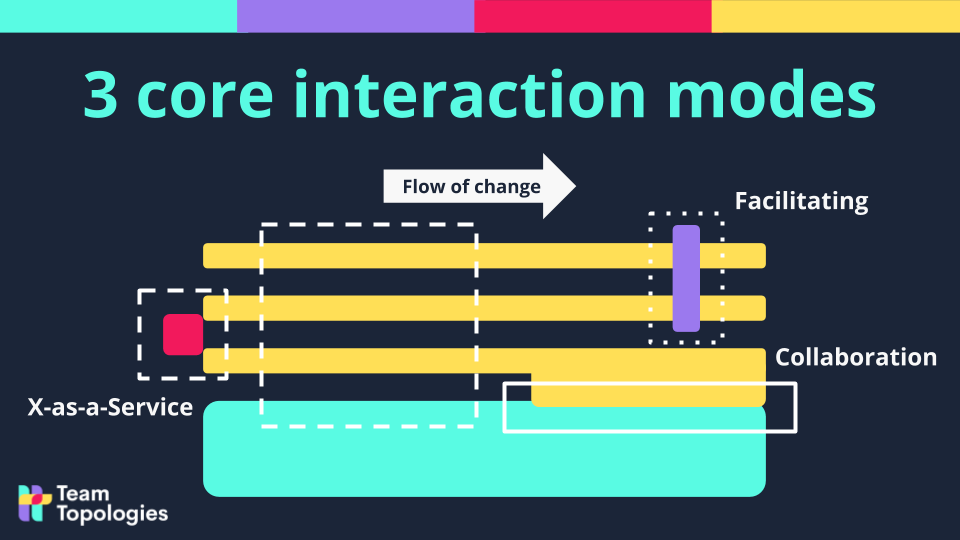
Your action plan is fundamentally about creating the organizational routines and feedback loops that enable deep collaboration and facilitation, which in turn lead to a better platform-as-a-service. The primary failure mode for platforms is sociotechnical—a failure of adoption, not technology. As one report notes, over 45% of platform teams struggle with developer adoption, often because there is no shared vision or dedicated product management. Our plan will address these human challenges head-on.
The 90-Day Action Plan: From Concept to First Win
A powerful way to structure this is through a 90-day action plan. This approach, detailed in "A Pragmatic Guide to Platform Engineering Team Structure," is designed to build momentum, secure buy-in, and deliver a tangible win quickly, proving the platform's value before organizational inertia can set in.
A Pragmatic Guide to Platform Engineering Team Structure
This article provides a battle-tested, phased blueprint for launching a platform team. It's pragmatic and focuses on building political capital through early, tangible wins.
Read the section titled "Your 90-Day Action Plan." This breaks the critical first three months into three distinct phases. We will use this structure as the backbone of our lesson.
Let's break down each phase and enrich it with tactical advice from our other resources.
Phase 1: Days 1-30 (Focus, Politics, and Empathy)
The first month is not about writing code. It's about laying the political and social groundwork for success.
- Action 1: Secure the Business Case and Sponsorship. Your first step is to get executive sponsorship by framing the platform in terms of business outcomes. In their talk on scaling platform teams, Camille Fournier emphasizes the need to communicate with stakeholders in the language they care about.
Starting and Scaling a Platform Engineering Team - Camille Fournier & Ian Nowland
Camille Fournier, a seasoned engineering leader, explains the critical non-technical aspects of running a platform team.
Watch the segment where she discusses communicating with stakeholders. Notice her distinction between customers (developers) and stakeholders (their managers, heads of product, budget-holders). The business case must speak to the latter group's priorities: accelerating feature delivery, reducing risk, or cutting costs.
-
Action 2: Appoint the Platform Product Manager (PPM). As the guide states, this role is non-negotiable. The PPM is the designated hub for collaboration, acting as the "voice of the developer." Their primary job is to practice what we discussed in the last lesson: doubt (dubito), listen to user stories, and translate developer pain into a prioritized backlog.
-
Action 3: Find "Customer Zero." This is your most important collaborative act. You need to find a single, friendly development team that is feeling acute pain and partner with them. How do you find them? By following the chaos.
How to Drive Internal Platform Adoption Developers Love - Harness
This article offers excellent tactical advice on how to get started with adoption.
Read the section "Choose The First Workflow." It provides a clear, data-driven method: analyze your support queues and request logs for the most frequent, time-consuming, and frustrating tasks. This is where you'll find your ideal "Customer Zero."
Partnering with this first team turns them into a co-creator, not just a consumer. This builds deep trust and ensures your first platform component solves a real, validated problem.
Phase 2: Days 31-60 (Define, Build, and Pilot)
With a customer and a mandate, you now shift to delivering a small, high-impact solution.
- Action 4: Define the Minimum Viable Platform (MVP). The goal here is not to build a comprehensive platform. It is to solve one problem perfectly for "Customer Zero." As Ian Nowland explains in his DataDog case study, their successful platform reset came when they stopped trying to build a generic future-platform and instead focused on solving very specific, immediate pain points.
Starting and Scaling a Platform Engineering Team - Camille Fournier & Ian Nowland
Ian Nowland walks through the real-world story of DataDog's data platform team, detailing their failures and eventual success.
Watch the section explaining their successful reset with product thinking. He notes that they identified a specific need (a combined Redis/Elasticsearch/Postgres offering) and partnered with a key business initiative. This narrow focus was key to their success.
-
Action 5: Co-create the Golden Path. The MVP will manifest as a "golden path." The key to collaboration is to build this path with your pilot team. It must have two key features:
- Guardrails: The path should embed best practices (security, observability, compliance) by default, making the right way the easy way.
- Escape Hatches: The path should not be a prison. Developers must have the option to opt-out if they have a legitimate edge case. This builds trust and prevents the platform from being seen as a rigid constraint.
-
Action 6: Pilot and Benchmark. With your pilot team, establish a clear, measurable goal for the MVP. For example, "Reduce environment provisioning tickets for Team X by 80%." Track the "before" state (e.g., ticket counts, wait times) so you have a baseline to measure against. This transforms the collaboration from a vague effort into a goal-oriented partnership.
Phase 3: Days 61-90 (Deliver, Measure, and Broadcast)
The final month of the initial plan is about executing, proving the value, and turning your first success into organizational momentum.
- Action 7: Deliver the MVP and Measure the Impact. Once the MVP is live for your pilot team, obsessively track the metrics you defined. Did you reduce manual steps? Cut deployment time? Quantify it. The guide from Harness provides a great list of initial metrics.
How to Drive Internal Platform Adoption Developers Love - Harness
This resource details specific, actionable metrics to prove your platform's value.
Focus on the section on metrics. The "Workflow ROI" metrics are perfect for this phase: ticket reduction, manual steps eliminated, and developer time saved. Also, note the "Sentiment Metrics"—a simple thumbs-up/down poll can be a powerful and lightweight feedback mechanism.
-
Action 8: Market Your Success. Good technology does not sell itself, even inside your own company. You must broadcast the win. Write an internal blog post with the metrics. Present a demo at the engineering all-hands. Most powerfully, get a testimonial from the lead of "Customer Zero" and have them present their success story. Peer-to-peer advocacy is far more convincing than any announcement from the platform team.
-
Action 9: Establish Continuous Feedback Loops. Collaboration can't stop after the MVP launch. Formalize channels for ongoing input. This includes:
- Office Hours: Regular, open sessions where developers can ask questions or provide feedback.
- Developer Surveys: Lightweight polls (like NPS or DSAT) to gauge satisfaction.
- RFCs (Request for Comments): A process for proposing and discussing new platform features.
- Go to Gemba: As Russ Miles advocates, platform engineers should regularly "go to the actual place" by embedding with development teams to experience their daily work and pain points firsthand.
Sustaining Collaboration as You Scale
This 90-day plan gets you started, but how do you sustain collaboration as the platform grows? Your organizational structure must evolve.
The "Pragmatic Guide" article (LINK) describes a Federated or Embedded Model, where platform engineers are placed directly within stream-aligned teams. These "platform ambassadors" become permanent bridges between the central platform team and its customers. They help teams adopt the platform, build domain-specific extensions, and, most importantly, funnel real-world feedback back to the core team. This model institutionalizes the collaborative practices you established with "Customer Zero."
Conclusion
Creating a practical action plan to foster collaboration is about moving from abstract principles to a concrete, time-boxed series of actions. It's a sociotechnical blueprint that prioritizes building trust and demonstrating value over building technology in a vacuum.
Key Takeaways:
- Structure Your Plan: A 90-day plan, broken into phases of (1) Securing Sponsorship and Finding a Customer, (2) Defining and Piloting an MVP, and (3) Delivering and Broadcasting the Win, is a proven model.
- Start with "Customer Zero": Your first collaborative act is to find one friendly team with a real, painful problem. Their success will become your most powerful marketing tool.
- Solve One Problem Perfectly: The goal of the MVP is not to be comprehensive but to be overwhelmingly valuable for a specific, narrow use case.
- Measure and Market: Quantify the "before and after" and broadcast the success story. Data and peer testimonials are your best tools for building momentum and encouraging broader collaboration.
- Institutionalize Feedback: Collaboration must be continuous. Use office hours, surveys, and embedded platform engineers to ensure the feedback loop never closes.
Preview of the Next Lesson:
We have now concluded our deep dive into platform engineering. In the next module, we will turn our attention to the architectural challenges and opportunities presented by Artificial Intelligence. Our first lesson will cover the fundamentals: categorizing AI capabilities, understanding the unique challenges of integrating non-deterministic components into deterministic systems, and identifying the new non-functional requirements that AI brings to the table.