Hello! Welcome to your new lesson.
In our last session, you mastered how to form clear questions to gather information and seek clarification. This is a vital skill for any conversation. Now, we will shift from asking for information to giving it in a structured way.
This lesson is the first step in Module 3: Giving Structured Professional Updates. Our goal today is to master the opening of any professional update. You will learn to use standard phrases to introduce yourself, your role, and the topic of your update. For a technical consultant, starting a meeting or presentation with confidence and clarity is essential for establishing credibility and ensuring everyone understands the purpose of your talk.
1. The Three Parts of a Strong Opening
Every effective update or presentation begins with a clear opening. Think of it as having three simple parts:
- Greeting: A polite welcome to your audience.
- Self-Introduction: Stating your name and your role.
- Topic Introduction: Explaining what you are going to talk about.
This structure helps your listeners quickly understand who you are and why you are speaking.
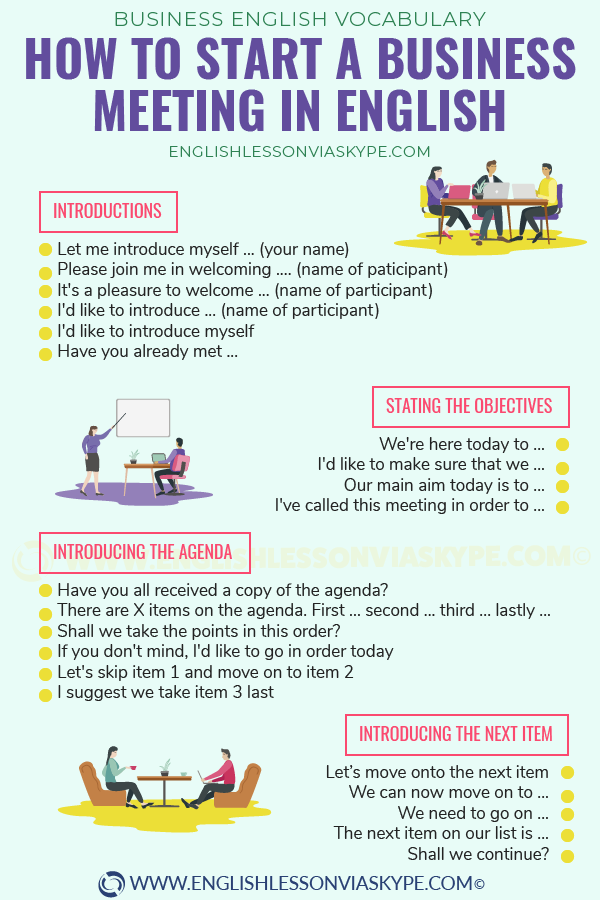
To hear these phrases in action, watch the first part of the following video. It gives clear, simple examples of a standard opening.
40 Phrases For Presenting In English - Business English (FREE PDF)
The video '40 Phrases For Presenting In English' demonstrates a standard, professional opening for a presentation.
Watch from 01:00 to 01:50. Listen for the three key parts: the greeting, the self-introduction (name and role), and the topic introduction.
2. A Formula for a Professional Self-Introduction
While a simple "My name is... and I am a..." works well, you can make your introduction more powerful using the Present-Past-Future formula. This structure helps you build credibility and connect with your audience.
- Present: Who you are and what you do now.
- Past: A brief, relevant detail about your background or experience.
- Future: A positive statement about your reason for being there.
This video breaks down the formula step-by-step with great examples.
How to Introduce Yourself Professionally (in 3 steps!)
The video 'How to Introduce Yourself Professionally' from the English to Excel channel explains the 'Present-Past-Future' formula in detail. It's a very effective technique for professional settings.
Watch from the beginning (00:10) to 04:06. Pay attention to: The explanation of the Present, Past, and Future steps. The examples provided for each step. The final example that puts it all together.
Let's break down how this works for you as a SAT technic consultant:
- Present: "Hello everyone. I'm [Your Name], and I'm a senior technical consultant here."
- Past: "I've been with the company for three years, mainly focused on satellite system integration."
- Future: "I'm looking forward to sharing my findings with you today."
This formula is brief, professional, and gives your colleagues important context about your expertise.
For more examples in different situations (like introducing yourself to a new team or in a meeting), this article is a useful reference.
How to introduce yourself in English: Phrases + Examples
The article 'How to introduce yourself in English: Phrases + Examples' from Espresso English provides excellent written examples that follow the same Present-Past-Future structure for various professional contexts.
Quickly read the sections titled 'How to introduce yourself to a new team', 'How to introduce yourself in a meeting', and 'How to introduce yourself in a presentation'. Notice how each example includes information about the person's role and purpose.
3. Introducing the Topic of Your Update
After introducing yourself, you must clearly state the purpose of your update. This manages expectations and focuses the discussion. You can use direct and simple phrases for this.
The following resource contains a list of professional phrases for this purpose.
Common business English phrases for a workplace meeting
The article 'Common business English phrases for a workplace meeting' from VirtualSpeech lists useful phrases for setting the purpose of a meeting or presentation.
Read the sections 'Setting the agenda' and 'Introducing your topic' (under 'Presenting at a meeting'). Focus on the phrases that help you state your objective.
Here are some of the most useful phrases you can adapt:
- "Today I'd like to talk to you about..."
- "We're here today to discuss..."
- "The topic of my update is..."
- "I’ve called this meeting to report on..."
Example:
"Good morning, everyone. I'm [Your Name], a technical consultant. I've been analyzing the recent network outages. Today, I'd like to talk to you about the root cause and propose a solution."
Test your understanding!
Imagine you need to give a short update to your team about a new software tool you have been testing.
Write a three-sentence opening for your update. Use the structure we learned:
- Introduce yourself and your role.
- Briefly mention your past action (testing the tool).
- State the topic of your update (to share the results).
Show answer
Here is a great example:
"Hi team, I'm [Your Name], one of the technical consultants on the project. For the past week, I've been testing the new 'System Analytics' software. Today, I'd like to share my findings and give you a brief demonstration."
Conclusion
Well done! You now have the essential phrases and a clear structure for starting any professional update. A strong opening shows confidence and ensures your message is received clearly from the very beginning.
Key Takeaways:
- A professional opening has three parts: Greeting, Self-Introduction, and Topic Introduction.
- Use the Present-Past-Future formula for a strong self-introduction that builds credibility.
- Use clear, direct phrases to state the purpose of your update, such as "Today I'd like to discuss..." or "The purpose of this update is to..."
Preview of the Next Lesson:
Now that you can confidently start your update, what comes next? In our next lesson, we will focus on the main content of your report by learning vocabulary for describing progress and project status. You'll learn the words to say if a project is on schedule, facing delays, or reaching its goals.