¡Hola! Welcome to our final module, "Putting It All Together: Simple Conversations." You've built a strong foundation, and now we'll start combining everything to have more dynamic interactions.
In our last lesson, you learned to name key places in your neighborhood, like el parque and la escuela. This is perfect, because now that you can suggest ¡Vamos al parque!, today's lesson will teach you the ideal question to ask once you get there: ¿Qué estás haciendo? (What are you doing?).
This question is one of the most useful phrases you can learn for interacting with a young child. It opens the door to talking about playtime, drawing, reading, or any activity your son is engaged in. By the end of this lesson, you will be able to confidently ask what someone is doing in the present moment.
1. The Key Question: ¿Qué estás haciendo?
Let's start with the phrase itself. It might look long, but it's used so frequently that it will quickly become familiar.
¿Qué estás haciendo?
(keh ess-TAHS ah-see-EN-doh)
What are you doing?
This is a fantastic way to show interest in your son's activities. Imagine him sitting on the floor with his toys; you can walk over and ask, ¿Qué estás haciendo?.
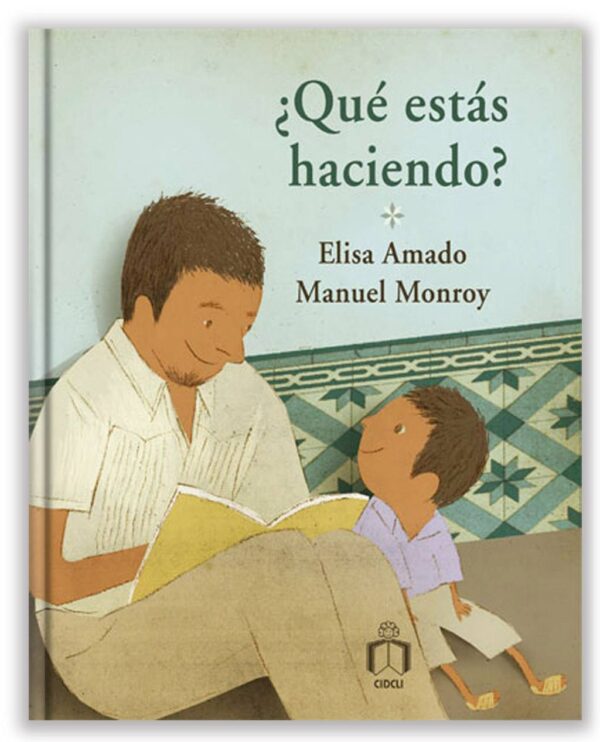
To hear the pronunciation and get a simple explanation of what this phrase means, let's watch a short video.
Learn to answer in Spanish: ¿Qué estás haciendo? ¿Qué estabas haciendo? – estoy & estaba
The instructor in this video from Butterfly Spanish clearly introduces the question and explains that it's used to ask what someone is doing right now.
Watch from 00:15 to 01:00. Pay close attention to how she pronounces '¿Qué estás haciendo?' and her explanation of its meaning.
This question is a fundamental part of what's called the "present continuous" tense—a way to talk about actions happening at this very moment.
2. How to Answer: "Estoy..."
When you ask ¿Qué estás haciendo?, the answer almost always starts with Estoy... (I am...).
The action word that follows Estoy changes its ending. This is similar to adding "-ing" in English. While we're focusing on a phrase-based approach, here’s a very simple rule of thumb:
- For verbs ending in -ar (like
caminar- to walk), the ending becomes -ando (caminando). - For verbs ending in -er or -ir (like
comer- to eat), the ending becomes -iendo (comiendo).
Let's look at some common actions you might see your son doing:
| Infinitive Verb | Action (-ing form) |
Example Answer |
|---|---|---|
jugar (to play) |
jugando |
Estoy jugando. (I am playing.) |
leer (to read) |
leyendo |
Estoy leyendo. (I am reading.) |
dibujar (to draw) |
dibujando |
Estoy dibujando. (I am drawing.) |
correr (to run) |
corriendo |
Estoy corriendo. (I am running.) |
comer (to eat) |
comiendo |
Estoy comiendo. (I am eating.) |
To hear these and many more useful action words, let's return to the Butterfly Spanish video.
Learn to answer in Spanish: ¿Qué estás haciendo? ¿Qué estabas haciendo? – estoy & estaba
This next segment of the video provides a fantastic list of common actions, showing you how to form the answer to '¿Qué estás haciendo?'.
Watch from 02:30 to 11:14. You don't need to memorize every word, but listen for the rhythm and pronunciation. Pay special attention to verbs you've seen before or that seem useful, like 'comiendo' (eating), 'durmiendo' (sleeping), 'leyendo' (reading), and 'caminando' (walking).
3. Practice Time!
Now let's put the question and answer together. One of the best ways to practice is to say it out loud. A great activity, inspired by resources for children, is a simple chant.
Try this:
- March in place and say the question:
¿Qué estás haciendo? - Pretend to do an action (like running) and say the answer:
Estoy corriendo. - Repeat with another action! Ask:
¿Qué estás haciendo? - Pretend to eat and answer:
Estoy comiendo.
This repetition helps lock the phrases in your memory.
Now, let's use a visual aid. Look at the game board below. For a few of the numbered pictures, ask the question ¿Qué estás haciendo? and then form the answer that matches the picture.

For example:
- Picture #3:
¿Qué estás haciendo?->Estoy durmiendo.(I am sleeping.) - Picture #9:
¿Qué estás haciendo?->Estoy leyendo.(I am reading.) - Picture #19:
¿Qué estás haciendo?->Estoy cantando.(I am singing.)
Test your understanding!
Look at picture #10 on the game board (a person with a pencil and paper). Imagine you ask your son, ¿Qué estás haciendo?. What would be the correct response?
a) Estoy comiendo.
b) Estoy dibujando.
c) Estoy corriendo.
Show answer
The correct answer is b) Estoy dibujando. (I am drawing.)
4. A Quick Look at Daily Routines
Remember our lessons on morning and evening routines? You can use ¿Qué estás haciendo? to talk about those actions too. For things you do to yourself (like washing your hands or getting dressed), you add a little -me to the end of the action word.
Estoy lavándo**me** las manos.(I am washing my hands.)Estoy cepillándo**me** los dientes.(I am brushing my teeth.)Estoy poniéndo**me** los zapatos.(I am putting on my shoes.)
You can use this to narrate your own actions or ask your son what he's doing as he gets ready. For example, if he's putting on his coat, you can ask ¿Qué estás haciendo? and help him answer, Estoy poniéndome la chaqueta.
Conclusion
¡Muy bien! You have learned one of the most powerful and practical questions for daily conversation in Spanish. This single phrase opens up countless opportunities to connect with your son about his world.
Key Takeaways:
- You can now ask what someone is doing right now with
¿Qué estás haciendo?. - You know the basic structure for answering with
Estoy...followed by an action word ending in-andoor-iendo. - You have practiced with common actions like
jugando,leyendo,comiendo, andcorriendo.
Preview of the Next Lesson:
In this lesson, you focused on asking the question and answering for yourself (Estoy...). In our next lesson, we'll build on this so you can describe what other people are doing. You'll learn to say things like Papá está cocinando (Dad is cooking) or El niño está leyendo (The boy is reading), allowing you to narrate even more of the world around you and your son.
¡Hasta la próxima