Introduction
In our last lesson, we focused on the dynamics within a single meeting, exploring how you can lead through influence to guide conversations and achieve clear outcomes. Now, we will expand our view from the success of individual meetings to the health of ongoing collaboration, especially in the modern workplace.
This lesson addresses a crucial aspect of teamwork: identifying common communication "anti-patterns." An anti-pattern is a practice that seems like a good idea or a natural way to work, but which ultimately creates more problems than it solves. For you, as someone aiming to transition into the tech and AI space, understanding these dysfunctional patterns is a significant advantage. It allows you to diagnose team challenges, contribute to solutions, and demonstrate a level of organizational awareness that goes beyond technical skills.
Our goal is to identify these common anti-patterns as they appear in the distributed, cross-functional teams that are standard in the tech industry.
What is a Communication Anti-Pattern?
Before we dive into specific examples, let's establish a clear definition. An anti-pattern is a common response to a recurring problem that is ultimately ineffective and risks being counterproductive. They are often born from good intentions but are based on a misunderstanding of underlying principles.
To ground this concept, let's start with a brief reading that defines the term in the context of Scrum, a popular Agile framework used by many software development teams.
66 Scrum Anti-Patterns and How to Use Them - Parabol
This article from Parabol provides a clear and concise definition of an anti-pattern, using an example that is very common in the tech world.
Please read the first two paragraphs under the heading "What are Scrum anti-patterns?". The example of a "daily stand-up meeting that turns into a status report" is a classic communication anti-pattern. Instead of being a quick sync to identify blockers, it becomes a rote reporting session that often wastes time and hides real issues.
As you can see, the action itself (reporting progress) isn't inherently bad, but its application in this context undermines the meeting's true purpose. Now, let's explore more of these patterns.
The Root of Many Anti-Patterns: Organizational Silos
Many communication breakdowns don't start with individuals but with the structure of the organization itself. When departments or functions operate in isolation, they form "silos," which are barriers to effective communication and collaboration.

These silos aren't just an HR issue; they can directly impact the products and systems a company builds. There's a famous observation in software development known as Conway's Law, which states that organizations design systems that mirror their own communication structures.
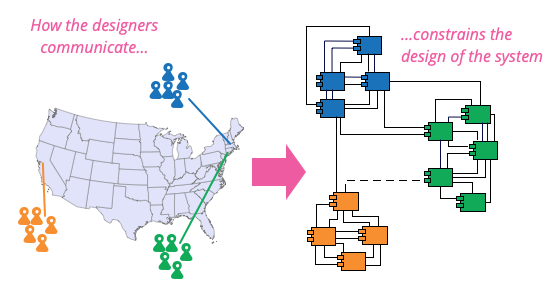
To see how these structural issues manifest as specific anti-patterns, we'll turn to a detailed presentation by consultant Emily Webber.
Bridging Silos and Overcoming Collaboration Antipatterns in ... - InfoQ
This resource details three major anti-patterns that create silos and hinder collaboration in multidisciplinary organizations. Understanding these will give you a powerful lens for analyzing team and company structures.
Please read about the three anti-patterns described: Anti-pattern 1: One Role Across Many Teams. Read the section from this heading to understand how splitting a specialist's time across multiple projects leads to context-switching overhead and makes them a bottleneck. Anti-pattern 2: Product vs. Engineering Wars. Read this section, starting from this heading. This is a classic silo that directly relates to your interest in bridging the gap between business and technology. Pay attention to how organizational structure can create an "us vs. them" mentality. Anti-pattern 3: X-led. Read from this heading. This describes how an organization that over-emphasizes one discipline (e.g., "data-led" or "engineering-led") can inadvertently devalue other critical perspectives.
The problems created by these anti-patterns—power imbalances, professional protectionism, and internal team silos—are discussed further in the article sections titled "Problems with Anti-Patterns." While not required, scanning these sections will deepen your understanding of the negative consequences.
Anti-Patterns Within Cross-Functional Teams
Even in a team with the right structure, communication anti-patterns can emerge from the interactions between people from different professional backgrounds. A cross-functional team (e.g., combining engineering, marketing, data analysis, and design) is powerful, but it's also a breeding ground for misunderstanding.
The following video from the Stanford Graduate School of Business explains four common reasons why cross-functional teams fail. These are, in essence, four communication anti-patterns.
This video succinctly explains four pitfalls that plague cross-functional teams, using the acronym FAIL: Familiarity, Aims, Isolation, and Language.
Watch the segment from the four reasons for failure. As you watch, consider how each point is a form of communication breakdown: Familiarity: Using jargon that others don't understand. Aims: Assuming everyone shares the same immediate goals or approach. Isolation: Not taking the time to understand or care about the challenges of other functions on the team. Language: Using common words that have different meanings in different professional contexts.
These four points highlight that simply putting people from different disciplines in the same "team" isn't enough. Without intentional effort to create shared understanding, communication will falter.
Anti-Patterns in Remote and Distributed Work
Finally, the rise of remote and hybrid work has created its own set of unique communication anti-patterns. When we lose the high-bandwidth, in-person cues we're used to, it's easy to fall into habits that reduce clarity and create friction.
This short video from Harvard Business Review outlines several of these pitfalls and offers advice on how to counteract them.
How to Collaborate Effectively If Your Team Is Remote (The Explainer)
This video introduces key challenges and rules for effective remote communication, highlighting several common anti-patterns along the way.
Watch the video from the beginning. Notice the anti-patterns described: Lack of agreed-upon norms: This leads to confusion about which tools to use for which purpose and what response times are expected. Assuming understanding: Being overly brief in written communication, which lacks the context of tone and body language. Bombarding with messages: Using multiple channels to send the same message, creating "digital volume" that is disruptive and feels like micromanagement. These behaviors often stem from an attempt to replicate in-person communication online, but they fail to account for the differences in the medium.
The article "66 Scrum Anti-Patterns" also lists several more remote-specific anti-patterns in its "Remote Scrum anti-patterns" section, such as Synchronous-only communication (relying too much on meetings instead of written communication) and Communication overdose ("Zoom fatigue"). Recognizing these is key to fostering a sustainable and productive remote work environment.
Conclusion
In this lesson, we have moved from the specifics of running a meeting to the broader patterns of team collaboration. You have learned to identify common communication anti-patterns that can derail even the most talented teams.
Key Takeaways:
- Anti-patterns are deceptive: They are common, often well-intentioned habits that seem productive but ultimately cause harm to collaboration, morale, and productivity.
- Silos are the source: Many anti-patterns originate from organizational structures that separate people by function, geography, or hierarchy (Conway's Law).
- Cross-functional friction is common: Teams composed of different specialists must actively work to overcome differences in language, goals, and professional norms.
- Remote work has unique pitfalls: The lack of non-verbal cues in distributed environments requires more explicit and thoughtful communication to avoid anti-patterns like information overload and ambiguity.
By learning to spot these patterns—whether it's the "Product vs. Engineering" war, the jargon-filled meeting, or the endless stream of notifications—you are equipping yourself with a critical diagnostic tool. This ability to see why a team is struggling is the first step toward helping it improve.
In our next lesson, we will shift from identifying problems to proactively building solutions. We'll explore practical strategies for creating trust and rapport with colleagues in remote and hybrid settings, which is the fundamental antidote to many of the anti-patterns we've discussed today.