Introduction
In our last two lessons, you’ve built a solid foundation for communicating technical ideas. First, you learned how to identify your key stakeholders and their primary concerns. Then, you practiced translating a project's technical features into a clear, general business value proposition. You now understand who you need to talk to and, broadly, what makes a technical project valuable to the business.
This lesson takes you to the final and most crucial step in crafting a persuasive message: tailoring it. A single, one-size-fits-all pitch rarely succeeds because different stakeholders view the same project through vastly different lenses. The Chief Financial Officer (CFO) is evaluating its ROI, while an end-user is wondering how it will change their daily tasks. Your goal in this lesson is to learn how to craft distinct value propositions for each of these groups, ensuring your message resonates deeply by speaking directly to their unique priorities.
The Stakeholder Maze: Why One Message Fails
In any organization, selling an idea or a project isn't a single transaction; it's a journey through what we can call a "stakeholder maze." Treating the "company" as a single entity is a common mistake. In reality, you are communicating with a collection of individuals, each with their own jobs, pains, and gains.
This article from Strategyzer introduces this concept and explains why navigating this maze is critical for success in B2B environments, a principle that applies equally to internal projects.
B2B Sales Playbook: Tech Capabilities to Clear Value Props
This section from the "B2B Sales Playbook" explains why a generic approach to communication is ineffective.
Please read the section titled The stakeholder maze. As you read, pay attention to the Michelin example. Notice how the CEO, fleet manager, and truck driver all care about the same product (tires) but for entirely different reasons: profitability, operational efficiency, and safety, respectively.
As the article highlights, failing to differentiate your messaging can lead to confusion, disinterest, and ultimately, the failure of your proposal. Your ability to win support hinges on your ability to create specific value propositions for each key player.
Identifying Stakeholder Archetypes and Their Currencies
To tailor your message effectively, you first need to understand the common "currencies" that different stakeholders trade in. While every individual is unique, people in similar roles tend to prioritize similar outcomes.
Let's explore some of the most common stakeholder archetypes you'll encounter. The Strategyzer article you just read introduced a few, and the following resource from Agentic AI Pricing provides a C-Suite perspective, which is particularly relevant for your goal of communicating the value of AI.
Communicating AI Agent Value to C-Suite Decision Makers
This article breaks down how to customize your communication for specific executive stakeholders.
Read the section on Stakeholder-Specific Customization. This provides a clear guide to the primary concerns of the CEO, CFO, CTO, COO, and CMO.
By combining insights from both resources, we can build a more complete map of the stakeholder landscape:
- The CEO (Decision Maker):
- Currency: Strategy, growth, competitive advantage, market position.
- They Ask: "How does this make us a market leader? How does it align with our long-term vision?"
- The CFO (Economic Buyer):
- Currency: ROI, cost savings, revenue generation, profitability, risk management.
- They Ask: "What is the business case? How much will it cost, how much will it save, and what's the payback period?"
- The COO (Operator):
- Currency: Operational efficiency, process optimization, productivity, quality, implementation risk.
- They Ask: "How will this impact our daily operations? How will we roll this out without disruption?"
- The CTO (Technologist):
- Currency: Technical feasibility, scalability, security, integration with existing systems, innovation.
- They Ask: "Does this technology work? Is it secure? Can we maintain it?"
- The End-Users (Practitioners):
- Currency: Ease of use, impact on daily workflow, training, support.
- They Ask: "Will this make my job easier or harder? Will I get the training I need?"
- Recommenders & Influencers: These can be experts or respected leaders without formal authority. Their currency is often credibility and expertise. They need to be convinced on the merits of the solution so they can champion it to others.
Understanding these archetypes is the key to unlocking persuasive communication. You can't talk about ROI with an end-user who just wants to know if the new software is intuitive.
A Framework for Customization
Now that you know the "who" and "what they care about," how do you systematically craft your message? We can adapt the tools you've already learned.
1. The Value Proposition Canvas for Each Stakeholder
In the last lesson, you used the Value Proposition Canvas. The key here is to realize you don't create one canvas; you create one for each key stakeholder archetype.
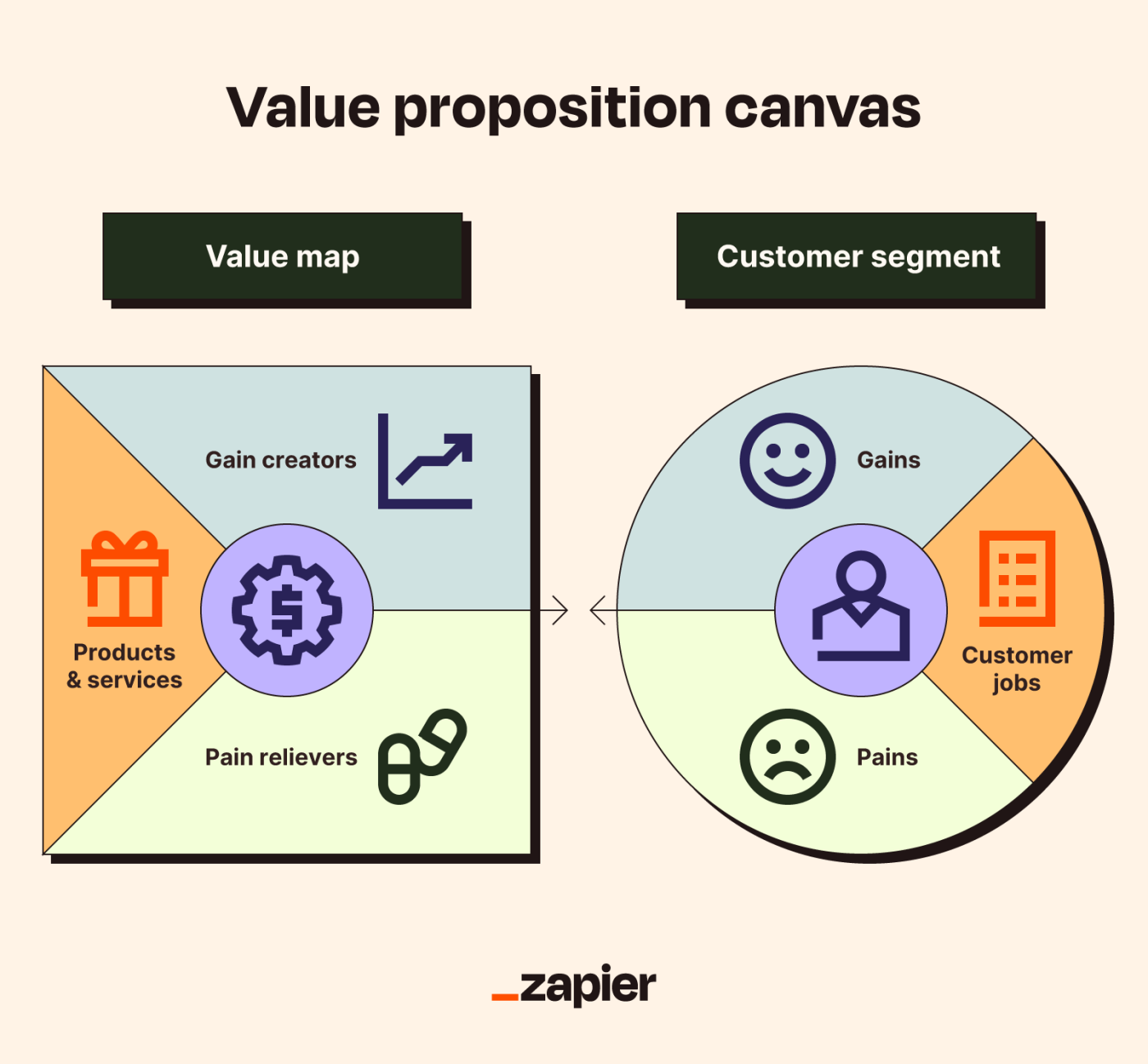
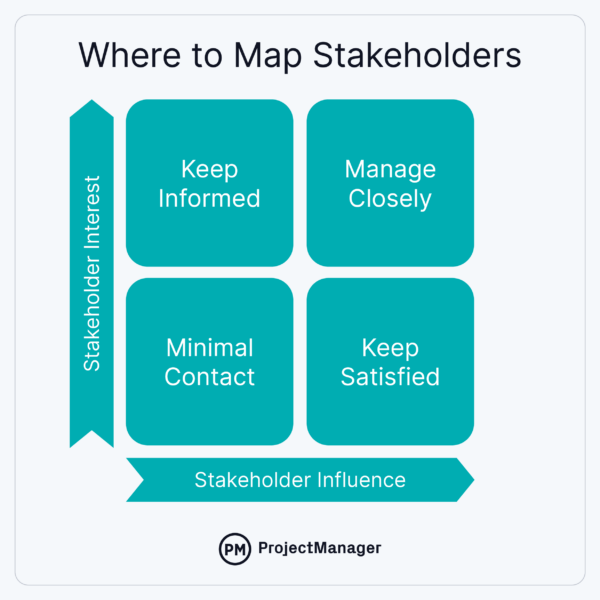
2. The Stakeholder Map for Communication Strategy
You can also overlay this with the Power/Interest grid from our first lesson. The quadrant a stakeholder falls into should dictate the style and depth of your communication.
Deepening Your Understanding of Stakeholder Needs
To create a compelling, tailored message, you need to go beyond surface-level assumptions about stakeholder needs. You must understand their deepest pains and the true gain they are seeking. A powerful framework for this is the "4U's" and the "Gain/Pain Ratio."
Value Props: Create a Product People Will Actually Buy
This workshop from the Harvard Innovation Labs provides excellent frameworks for digging into the core of a value proposition.
Please watch the following segments: For Who? (User vs. Customer): Watch from the beginning of this section. This discussion highlights the critical difference between the person who uses the product and the person who pays for it—a fundamental form of stakeholder differentiation. The 4U Framework: Jump to the segment from this section. As you watch, think about how you would frame your project's value. Does it solve a problem that is Unworkable, Unavoidable, Urgent, or Underserved? A strong value proposition often hits several of these. The Gain/Pain Ratio: Finally, watch the explanation from this segment. This concept is especially critical when communicating with economic buyers like the CFO. They need to believe the gain from your solution is significantly larger (often 10x) than the pain of adopting it (cost, training, disruption).
From Theory to Practice: A Case Study
Let's look at how this works in a real-world scenario. The "Communicating AI Agent Value" article provides a concise case study of a financial services company applying these principles.
Communicating AI Agent Value to C-Suite Decision Makers
This case study perfectly illustrates how to tailor a message about a single AI solution for different C-suite executives.
Please read the case study starting from this section. Note how the same project is presented differently: To the CEO: It's about competitive advantage and strategic transformation. To the CFO: It's about a 267% ROI, operational savings, and fraud prevention. To the CTO: It's about integration, scalability, and technical milestones. To the COO: It's about operational efficiency and change management.
This case study is your template. It demonstrates the direct application of identifying an audience's currency and speaking their language.
Your Turn: Pitching an AI Payroll Tool
Now, let's connect this directly to your background. Imagine you've identified a promising AI-powered tool that could revolutionize the payroll process at your company. The tool uses AI to automate data entry from timesheets, detect anomalies that might indicate errors or fraud, and provides an internal chatbot to answer common employee questions about their pay stubs.
How would you pitch this to different stakeholders?
-
Your Pitch to the CFO (Economic Buyer):
"This AI tool will deliver a projected annual savings of $75,000 by reducing manual data entry hours by 80% and cutting down on costly payroll errors and potential compliance penalties. We anticipate a full return on investment within 18 months."
-
Your Pitch to the HR Director (Operator):
"By implementing this tool, we can significantly improve our employee experience. The AI chatbot provides instant answers to common payroll questions, freeing up our team's time. This also boosts our team's efficiency, allowing them to focus on more strategic analysis rather than manual data processing."
-
Your Pitch to the Payroll Team (End-Users):
"I've found a tool that can eliminate the most tedious parts of our job. It will automatically handle the bulk of data entry and flag potential issues for us to review. This means we can spend our time being experts and problem-solvers, not just data processors."
-
Your Pitch to the IT Director (Technologist):
"This is a SOC 2 compliant, cloud-native solution that offers secure, seamless integration with our existing HRIS via a well-documented API. It's built on a scalable architecture that can grow with us, and the vendor provides a robust SLA for support."
Notice that each pitch describes the same product but emphasizes completely different benefits, using the specific currency of that audience.
Conclusion
Today you've integrated the skills from our previous lessons to master the art of tailoring your message. You've moved beyond a generic value proposition to become a strategic communicator who can speak the specific language of each key stakeholder.
Key Takeaways:
- One Message Doesn't Fit All: Different stakeholders have different priorities, or "currencies." Effective communication requires crafting a unique value proposition for each.
- Know Your Archetypes: Understanding the typical concerns of a CEO, CFO, COO, CTO, and End-User gives you a powerful head start in tailoring your message.
- Use Frameworks to Customize: Apply the Value Proposition Canvas and the Gain/Pain Ratio to each key stakeholder to systematically build your tailored pitch.
- Speak Their Language: Frame the benefits of your project in terms that matter most to your audience—be it strategic advantage, ROI, operational efficiency, or ease of use.
In our next lesson, we'll add the final layer of polish to your communication toolkit. Now that you know who to talk to and what to say to them, you will learn how to construct analogies and stories to make complex technical ideas accessible and memorable, ensuring your message not only lands but sticks.