Introduction
Welcome back. In our last lesson, we examined how China's accession to the WTO in 2001 acted as a catalyst for unprecedented economic growth, cementing its role as the "world's factory." This rapid expansion, however, triggered a new challenge for Beijing: a growing international perception of a "China threat." How could a country of its size and power rise without alarming its neighbors and the incumbent global leader, the United States?
Today, we will address that question directly. Our learning outcome is to explain the concept of 'Peaceful Rise/Development' and China's growing role in UN peacekeeping. We will explore the diplomatic narrative China constructed during the 2000s to reassure the world of its benign intentions, and the most significant policy it used to lend that narrative credibility. We'll cover:
- The origins and meaning of the "Peaceful Rise" doctrine.
- The strategic shift in language from "Rise" to "Development."
- The evolution of China's role in UN peacekeeping, from a reluctant observer to a leading contributor.
- The strategic motivations behind China's embrace of UN peacekeeping.
This lesson bridges the gap between the economic focus of the "Reform and Opening" era and the more assertive foreign policy that would follow, showing how China sought to manage the geopolitical consequences of its own success.
The Doctrine of "Peaceful Rise"
As China's economic and military power grew in the early 2000s, so did anxiety in Western capitals and among its Asian neighbors. The "China threat theory" (中国威胁论, Zhōngguó wēixié lùn) gained traction. In response, Chinese leaders and theorists developed a new foreign policy concept designed to soothe these fears.
This concept was articulated as "Peaceful Rise" (和平崛起, hépíng juéqǐ). Its central argument was that China could achieve modernization and great power status through its own efforts and by engaging with the global system, without resorting to the aggression, colonization, or expansion that characterized the rise of previous great powers.
To understand this concept in more detail, let's turn to an analysis from the journal Modern Diplomacy.
Unraveling China's Doctrine of Peaceful Rise, its Changing Global ...
This article, 'Unraveling China's Doctrine of Peaceful Rise,' explains the concept's origin, its core message, and why it was developed. It also offers a critical perspective on whether it was more rhetoric than reality.
Please read from the beginning of the article through the section titled 'Peaceful Rise as Propaganda'. As you read, focus on three key points: The definition of the concept, attributed to scholar Zheng Bijian, and its connection to countering the 'China threat' theory. The reason for the official shift in terminology from 'Peaceful Rise' to 'Peaceful Development.' The argument that the doctrine was a continuation of Deng Xiaoping's 'hide and bide' strategy and served as a propaganda tool to mask China's ambitions.
As the article highlights, the "Peaceful Rise" doctrine was a masterful piece of strategic communication. It addressed international fears head-on and proposed a new model of great power relations. The very sensitivity around the word "rise"—which implies a zero-sum competition where one power's rise necessitates another's decline—led to its official replacement with the more benign term "Peaceful Development" (和平发展, hépíng fāzhǎn).
However, the doctrine was also viewed with skepticism. Critics saw it as a temporary tactic, a diplomatic smokescreen to buy time for China to continue its development unimpeded. For this narrative to be credible, China needed to do more than just talk; it had to demonstrate its commitment to global peace and stability through concrete actions.
Walking the Talk: China's Role in UN Peacekeeping
The most prominent way China chose to demonstrate its commitment to "Peaceful Development" was by transforming its role in United Nations Peacekeeping Operations (PKOs). Historically, during the Mao era, China had viewed UN peacekeeping with suspicion, often condemning it as an instrument of "imperialist" intervention that violated state sovereignty. This began to change in the 1980s, but it was under the banner of "Peaceful Rise" in the 2000s that China truly stepped up to become a major player.
Participating in UN PKOs was an ideal policy tool for several reasons:
- Legitimacy: Acting under a UN mandate provided international legitimacy and countered accusations of unilateralism.
- Multilateralism: It showcased China's willingness to work within the existing international system.
- Demonstrating Responsibility: It positioned China as a "responsible stakeholder" that contributes to providing global public goods, like peace and security.
The following academic paper traces this remarkable evolution.
The Evolution of China's Position toward UN Peacekeeping
Now, let's examine how the 'Peaceful Development' idea was put into practice. This paper details the evolution of China's involvement in UN peacekeeping, showing how it went from a skeptic to a major player.
Please read the sections titled 'The champion of the developing world 1981-1988' and 'The responsible stakeholder (2000-2012)'. The first section provides useful background on the initial shift, but your main focus should be on the second section ('The responsible stakeholder'). Pay close attention to how President Hu Jintao's 'peaceful rise' policy is directly linked to a significant increase in China's PKO contributions, including major troop deployments and the creation of training centers.
As you've just read, under Hu Jintao's leadership, China's participation expanded dramatically. It sent thousands of troops, police, and engineers to missions, particularly in Africa (e.g., Liberia, Sudan), a continent where China's economic interests were also rapidly growing. This contribution wasn't just symbolic; it became substantial, positioning China as a pillar of the UN's peacekeeping architecture.

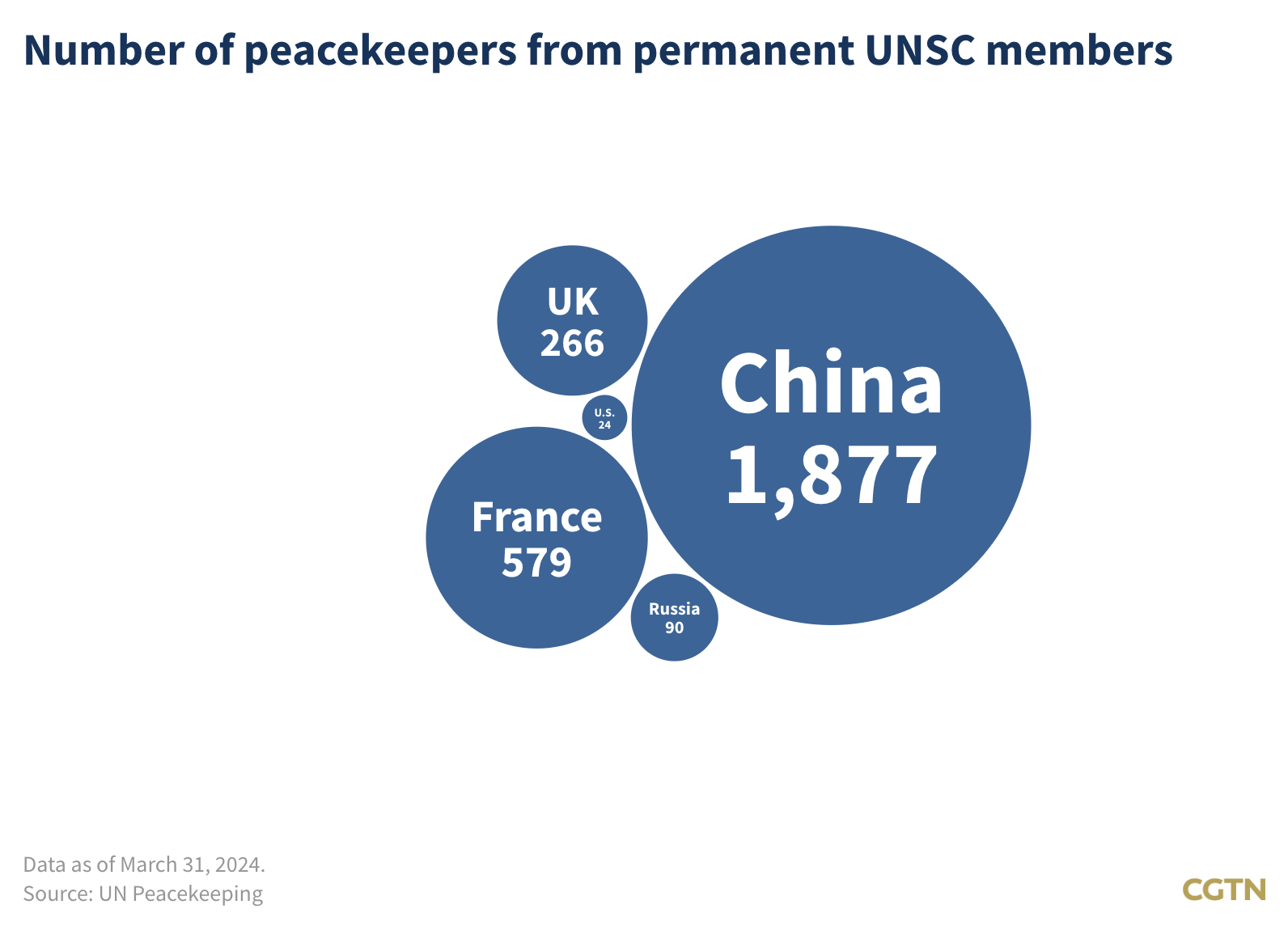
By the end of this period, China had become the largest contributor of peacekeeping troops among the five permanent members (P5) of the UN Security Council—a position it still holds today.
This embrace of peacekeeping served multiple strategic interests beyond just public relations:
- Operational Experience: It provided the People's Liberation Army (PLA) with valuable experience in complex international environments, what the military terms "Military Operations Other Than War" (MOOTW).
- Protecting Interests: Deploying to conflict zones, especially in Africa and the Middle East, helped secure a stable environment for China's expanding overseas investments and the safety of its nationals.
- Building Influence: It increased China's influence within the UN system and strengthened its diplomatic ties with host countries, particularly in the Global South.
Conclusion
The "Peaceful Rise/Development" doctrine was the signature foreign policy concept of the Hu Jintao era (2002-2012). It was a sophisticated response to the geopolitical anxieties created by China's dramatic economic growth, aiming to create a stable international environment that would allow its development to continue.
Key Takeaways:
- The "Peaceful Rise/Development" narrative was formulated to counter the "China threat" theory, arguing that China could become a great power without threatening the international order.
- The shift in terminology from "rise" to "development" was a deliberate diplomatic move to soften the message and reduce international anxiety.
- To make this narrative credible, China dramatically increased its contributions to UN peacekeeping, transforming from a skeptic into the largest troop contributor among the P5 Security Council members.
- This enhanced role in peacekeeping served multiple goals: bolstering China's image as a "responsible stakeholder," giving its military operational experience, and helping to protect its growing overseas economic interests.
Preview of the Next Lesson:
The "Peaceful Rise" doctrine, with its emphasis on reassurance and maintaining a low profile, was a product of its time. As China's power continued to grow, especially in the wake of the 2008 Global Financial Crisis which seemed to highlight the West's decline, a new confidence emerged in Beijing. In our next lesson, we will begin our study of the Xi Jinping era and explore his vision of the "China Dream" and "National Rejuvenation," which marks a decisive shift away from "hiding and biding" toward a more assertive and ambitious foreign policy on the world stage.