Arabic version below
Introduction
Welcome to your third lesson! In our last session, we identified the five main channels of digital marketing: SEO, SEM, Social Media, Content, and Email. You now know what tools are in the digital marketer's toolbox.
Today, we'll learn how to use these tools together in a structured way. We'll explore the marketing funnel, a core concept that provides a roadmap for turning strangers into customers. Our goal is to explain the marketing funnel (e.g., AIDA) and its role in the customer journey.
By the end of this lesson, you will understand:
- The difference between the customer journey and the marketing funnel.
- The stages of the classic AIDA marketing funnel.
- How to apply different digital marketing channels at each stage of the funnel.
Understanding the funnel is essential because it transforms your marketing from random activities into a coordinated strategy designed to guide potential customers step-by-step.
مقدمة
مرحباً بك في درسك الثالث! في جلستنا الأخيرة، تعرفنا على القنوات الخمس الرئيسية للتسويق الرقمي: تحسين محركات البحث (SEO)، والتسويق عبر محركات البحث (SEM)، ووسائل التواصل الاجتماعي، وتسويق المحتوى، والتسويق عبر البريد الإلكتروني. أنت الآن تعرف ما هي الأدوات الموجودة في صندوق أدوات المسوق الرقمي.
اليوم، سنتعلم كيفية استخدام هذه الأدوات معًا بطريقة منظمة. سوف نستكشف قمع التسويق (marketing funnel)، وهو مفهوم أساسي يوفر خريطة طريق لتحويل الغرباء إلى عملاء. هدفنا هو شرح قمع التسويق (على سبيل المثال، نموذج AIDA) ودوره في رحلة العميل.
بنهاية هذا الدرس، ستفهم:
- الفرق بين رحلة العميل وقمع التسويق.
- مراحل قمع التسويق الكلاسيكي AIDA.
- كيفية تطبيق قنوات التسويق الرقمي المختلفة في كل مرحلة من مراحل القمع.
إن فهم القمع أمر ضروري لأنه يحول تسويقك من أنشطة عشوائية إلى استراتيجية منسقة مصممة لتوجيه العملاء المحتملين خطوة بخطوة.
1. The Customer Journey vs. The Marketing Funnel
Arabic version below
To understand the marketing funnel, we first need to understand the customer journey. Think of the last time you bought something significant, like a new phone. You probably didn't just wake up and buy it. You likely saw ads, read reviews, asked friends, and compared prices. This entire, often messy, path is your customer journey.
The marketing funnel, on the other hand, is the business's simplified model for guiding you through that journey.
To see how these two concepts work together, let's watch a video from the Google Career Certificates program. It clearly explains the difference between the customer journey (the customer's perspective) and the marketing funnel (the business's perspective).
The Customer Journey & the Marketing Funnel | Google Digital Marketing & E-commerce Certificate
This video explains the customer journey using a relatable example and then introduces the marketing funnel as a business's framework to manage that journey.
Watch the segment from 05:57 to 14:29. Pay close attention to: The definition of the customer journey and 'touchpoints'. The four stages of the marketing funnel presented: Awareness, Consideration, Conversion, and Loyalty. The explanation of how the two concepts complement each other.
As the video explained, here’s a simple breakdown:
-
Customer Journey:
- Perspective: The customer's point of view.
- Path: Complex and non-linear. A customer might jump between stages, go backward, or take a long pause.
- Focus: Understanding the customer's actual experience and all the touchpoints (interactions) they have with a brand.
-
Marketing Funnel:
- Perspective: The business's point of view.
- Path: A simplified, linear model (like a funnel, wide at the top and narrow at the bottom).
- Focus: Creating a strategic plan to move as many people as possible from one stage to the next, from initial awareness to making a purchase.
Marketers often use acronyms to describe the main parts of the funnel:
- ToFu (Top of the Funnel): Where people first become aware of a problem or your brand.
- MoFu (Middle of the Funnel): Where people are considering their options and evaluating solutions.
- BoFu (Bottom of the Funnel): Where people are ready to make a purchase decision.
These two concepts aren't in conflict; they are two sides of the same coin. By understanding the messy reality of the customer journey, we can build a better, more effective marketing funnel.
١. رحلة العميل مقابل قمع التسويق
لكي نفهم قمع التسويق، نحتاج أولاً إلى فهم رحلة العميل. فكر في آخر مرة اشتريت فيها شيئًا مهمًا، مثل هاتف جديد. على الأرجح أنك لم تستيقظ وتقرر شراءه فجأة. من المحتمل أنك رأيت إعلانات، وقرأت مراجعات، وسألت الأصدقاء، وقارنت الأسعار. هذا المسار بأكمله، الذي غالبًا ما يكون معقدًا، هو رحلة العميل الخاصة بك.
من ناحية أخرى، قمع التسويق هو نموذج مبسط تضعه الشركة لتوجيهك خلال تلك الرحلة.
لنرى كيف يعمل هذان المفهومان معًا، دعنا نشاهد مقطع فيديو من برنامج شهادات Google المهنية. يشرح الفيديو بوضوح الفرق بين رحلة العميل (منظور العميل) وقمع التسويق (منظور الشركة).
The Customer Journey & the Marketing Funnel | Google Digital Marketing & E-commerce Certificate
يشرح هذا الفيديو رحلة العميل باستخدام مثال واقعي ثم يقدم قمع التسويق كإطار عمل للشركة لإدارة تلك الرحلة.
شاهد المقطع من 05:57 إلى 14:29. انتبه جيدًا إلى: تعريف رحلة العميل و'نقاط التلامس' (touchpoints). المراحل الأربع لقمع التسويق المقدمة: الوعي (Awareness)، والتفكير (Consideration)، والتحويل (Conversion)، والولاء (Loyalty). شرح كيف يكمل المفهومان بعضهما البعض.
كما أوضح الفيديو، إليك تفصيل بسيط:
-
رحلة العميل:
- المنظور: وجهة نظر العميل.
- المسار: معقد وغير خطي. قد يقفز العميل بين المراحل، أو يعود للخلف، أو يأخذ استراحة طويلة.
- التركيز: فهم تجربة العميل الفعلية وجميع نقاط التلامس (التفاعلات) التي يجريها مع العلامة التجارية.
-
قمع التسويق:
- المنظور: وجهة نظر الشركة.
- المسار: نموذج مبسط وخطي (مثل القمع، واسع في الأعلى وضيق في الأسفل).
- التركيز: وضع خطة استراتيجية لنقل أكبر عدد ممكن من الأشخاص من مرحلة إلى أخرى، من الوعي الأولي إلى اتخاذ قرار الشراء.
غالبًا ما يستخدم المسوقون اختصارات لوصف الأجزاء الرئيسية من القمع:
- ToFu (أعلى القمع): حيث يدرك الناس لأول مرة وجود مشكلة أو علامتك التجارية.
- MoFu (منتصف القمع): حيث يفكر الناس في خياراتهم ويقيّمون الحلول.
- BoFu (أسفل القمع): حيث يكون الناس مستعدين لاتخاذ قرار الشراء.
هذان المفهومان ليسا متعارضين؛ بل هما وجهان لعملة واحدة. من خلال فهم الواقع المعقد لرحلة العميل، يمكننا بناء قمع تسويق أفضل وأكثر فعالية.
2. The AIDA Model: A Classic Marketing Funnel
Arabic version below
One of the oldest and most famous marketing funnels is the AIDA model. It breaks down the customer's psychological journey into four key stages.
AIDA stands for:
- Attention (or Awareness)
- Interest
- Desire
- Action
Let's watch a short video that explains each stage of the AIDA model and gives practical examples.
The AIDA Model Explained with Examples
This video provides a clear, concise explanation of the AIDA model, breaking down each of the four stages with real-world examples.
Watch from 00:44 to 04:22, and then from 05:06 to 07:24. Focus on understanding the goal of each stage and the example marketing tactics used.
Now, let's connect the AIDA model back to the digital marketing channels we learned about in the last lesson. Different channels are effective at different stages of the funnel.
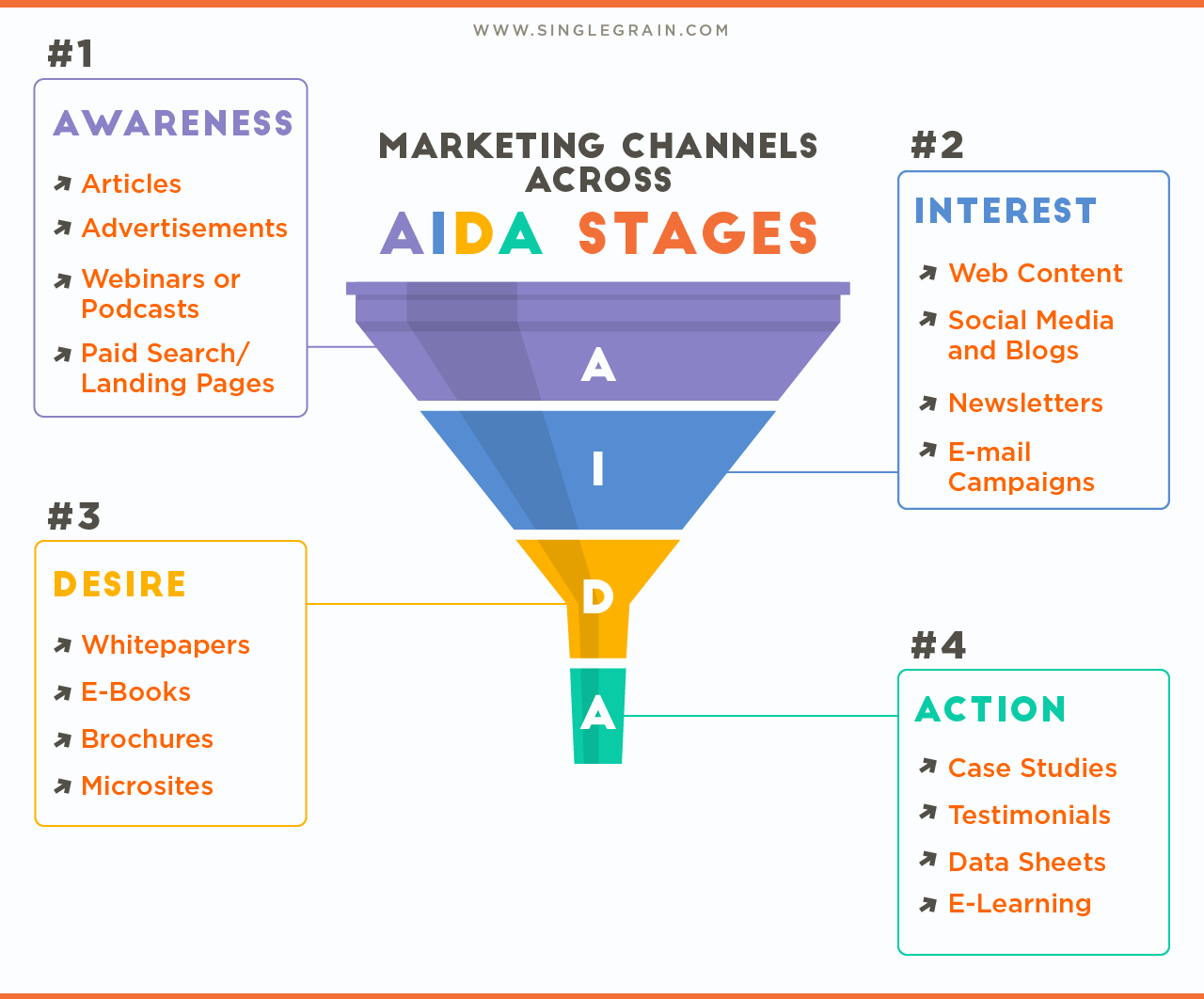
Here is how you can use the channels you know at each stage:
-
Attention (Awareness - ToFu): The goal is to make potential customers aware that you exist. You are trying to interrupt their day and grab their focus.
- Channels:
- SEO: Optimizing your site to appear in search results when someone is looking for information.
- Content Marketing: Writing blog posts or creating videos that answer broad questions.
- Social Media Marketing: Using engaging posts and ads to reach a wide audience.
- Channels:
-
Interest (MoFu): Now that you have their attention, you need to keep it. The goal is to provide valuable information that encourages them to learn more about your brand.
- Channels:
- Content Marketing: In-depth guides, webinars, or interesting video content.
- Email Marketing: Sending newsletters with useful tips to people who have subscribed.
- Social Media Marketing: Engaging with your community and sharing helpful content.
- Channels:
-
Desire (MoFu/BoFu): At this stage, you shift from "I like this" to "I want this." The goal is to show why your product or service is the best solution for them.
- Channels:
- Email Marketing: Sending case studies, customer testimonials, and product comparisons.
- Content Marketing: Publishing whitepapers or detailed "before and after" examples.
- Website: Having detailed product pages that highlight benefits.
- Channels:
-
Action (BoFu): This is the final step where you prompt the customer to make a purchase, sign up, or take a specific action. The goal is to make it as easy and compelling as possible.
- Channels:
- SEM/PPC: Running ads that target people who are ready to buy (e.g., "buy hiking backpack online").
- Website/Landing Pages: Using clear Calls-to-Action (CTAs) like "Buy Now" or "Start Your Free Trial."
- Email Marketing: Sending out special offers or limited-time discounts to create urgency.
- Channels:
Test your understanding! (EN)
Imagine you are marketing a new online course about graphic design. For each activity below, identify which AIDA stage it belongs to.
- Running a Facebook ad campaign with a beautiful, eye-catching design that says, "Unlock Your Creativity."
- Sending an email to your subscribers with testimonials from students who got jobs after taking the course.
- Publishing a blog post titled "Top 10 Graphic Design Trends for 2025."
- Creating a page on your website with a big "Enroll Now for 50% Off" button.
Show answer
- Attention: The ad is designed to grab the attention of people interested in creativity.
- Desire: The testimonials build trust and make potential students want the same successful outcome.
- Interest: The blog post provides value and engages people who are already interested in graphic design, positioning you as an expert.
- Action: The clear offer and button are designed to get an immediate enrollment.
٢. نموذج AIDA: قمع تسويق كلاسيكي
أحد أقدم وأشهر أقماع التسويق هو نموذج AIDA. يقوم هذا النموذج بتقسيم الرحلة النفسية للعميل إلى أربع مراحل رئيسية.
AIDA هو اختصار لـ:
- Attention (الانتباه أو الوعي)
- Interest (الاهتمام)
- Desire (الرغبة)
- Action (الإجراء)
دعنا نشاهد مقطع فيديو قصيرًا يشرح كل مرحلة من مراحل نموذج AIDA ويقدم أمثلة عملية.
The AIDA Model Explained with Examples
يقدم هذا الفيديو شرحًا واضحًا وموجزًا لنموذج AIDA، حيث يحلل كل مرحلة من المراحل الأربع مع أمثلة من العالم الحقيقي.
شاهد من 00:44 إلى 04:22، ثم من 05:06 إلى 07:24. ركز على فهم هدف كل مرحلة وتكتيكات التسويق النموذجية المستخدمة.
الآن، دعنا نربط نموذج AIDA بقنوات التسويق الرقمي التي تعلمناها في الدرس السابق. تكون القنوات المختلفة فعالة في مراحل مختلفة من القمع.
إليك كيفية استخدام القنوات التي تعرفها في كل مرحلة:
-
الانتباه (Awareness - ToFu): الهدف هو جعل العملاء المحتملين يدركون وجودك. أنت تحاول مقاطعة يومهم وجذب انتباههم.
- القنوات:
- تحسين محركات البحث (SEO): تحسين موقعك للظهور في نتائج البحث عندما يبحث شخص ما عن معلومات.
- تسويق المحتوى: كتابة منشورات مدونة أو إنشاء مقاطع فيديو تجيب على أسئلة عامة.
- التسويق عبر وسائل التواصل الاجتماعي: استخدام المنشورات والإعلانات الجذابة للوصول إلى جمهور واسع.
- القنوات:
-
الاهتمام (Interest - MoFu): الآن بعد أن حصلت على انتباههم، تحتاج إلى الحفاظ عليه. الهدف هو توفير معلومات قيمة تشجعهم على معرفة المزيد عن علامتك التجارية.
- القنوات:
- تسويق المحتوى: أدلة متعمقة، ندوات عبر الإنترنت، أو محتوى فيديو مثير للاهتمام.
- التسويق عبر البريد الإلكتروني: إرسال رسائل إخبارية تحتوي على نصائح مفيدة للأشخاص الذين اشتركوا.
- التسويق عبر وسائل التواصل الاجتماعي: التفاعل مع مجتمعك ومشاركة المحتوى المفيد.
- القنوات:
-
الرغبة (Desire - MoFu/BoFu): في هذه المرحلة، تنتقل من "أنا معجب بهذا" إلى "أنا أريد هذا". الهدف هو إظهار سبب كون منتجك أو خدمتك هو الحل الأفضل لهم.
- القنوات:
- التسويق عبر البريد الإلكتروني: إرسال دراسات حالة، وشهادات عملاء، ومقارنات بين المنتجات.
- تسويق المحتوى: نشر تقارير متخصصة (whitepapers) أو أمثلة مفصلة لـ "قبل وبعد".
- الموقع الإلكتروني: وجود صفحات منتجات مفصلة تسلط الضوء على الفوائد.
- القنوات:
-
الإجراء (Action - BoFu): هذه هي الخطوة الأخيرة حيث تدفع العميل إلى إجراء عملية شراء، أو التسجيل، أو اتخاذ إجراء معين. الهدف هو جعل الأمر سهلاً وجذابًا قدر الإمكان.
- القنوات:
- التسويق عبر محركات البحث (SEM/PPC): تشغيل إعلانات تستهدف الأشخاص المستعدين للشراء (على سبيل المثال، "شراء حقيبة ظهر للمشي لمسافات طويلة عبر الإنترنت").
- الموقع الإلكتروني / الصفحات المقصودة: استخدام دعوات واضحة لاتخاذ إجراء (CTAs) مثل "اشترِ الآن" أو "ابدأ تجربتك المجانية".
- التسويق عبر البريد الإلكتروني: إرسال عروض خاصة أو خصومات محدودة الوقت لخلق شعور بالإلحاح.
- القنوات:
اختبر فهمك! (AR)
تخيل أنك تسوق لدورة تدريبية جديدة عبر الإنترنت حول التصميم الجرافيكي. لكل نشاط أدناه، حدد مرحلة AIDA التي ينتمي إليها.
- تشغيل حملة إعلانية على فيسبوك بتصميم جميل وجذاب يقول: "أطلق العنان لإبداعك".
- إرسال بريد إلكتروني إلى المشتركين لديك يحتوي على شهادات من الطلاب الذين حصلوا على وظائف بعد أخذ الدورة.
- نشر تدوينة بعنوان "أفضل 10 اتجاهات في التصميم الجرافيكي لعام 2025".
- إنشاء صفحة على موقعك الإلكتروني بها زر كبير "سجل الآن بخصم 50%".
إظهار الإجابة
- الانتباه (Attention): الإعلان مصمم لجذب انتباه الأشخاص المهتمين بالإبداع.
- الرغبة (Desire): الشهادات تبني الثقة وتجعل الطلاب المحتملين يرغبون في تحقيق نفس النتيجة الناجحة.
- الاهتمام (Interest): تقدم التدوينة قيمة وتشرك الأشخاص المهتمين بالفعل بالتصميم الجرافيكي، مما يضعك كخبير.
- الإجراء (Action): العرض الواضح والزر مصممان للحصول على تسجيل فوري.
Conclusion
Arabic version below
Great job! You have now learned one of the most fundamental concepts in marketing.
Key Takeaways:
- The customer journey is the complex, real path a customer takes, while the marketing funnel is the simplified, strategic model a business uses to guide them.
- The AIDA model (Attention, Interest, Desire, Action) is a classic framework for structuring your marketing efforts.
- Different digital marketing channels are best suited for different stages of the funnel, from grabbing Attention with social media to driving Action with paid ads and clear website CTAs.
In our next lesson, we will answer a crucial question that comes before you even build your funnel: "Who are we talking to?" We will learn how to define a target audience and create a basic buyer persona, ensuring your marketing messages reach the right people.
خاتمة
عمل رائع! لقد تعلمت الآن أحد أهم المفاهيم الأساسية في التسويق.
النقاط الرئيسية:
- رحلة العميل هي المسار المعقد والواقعي الذي يسلكه العميل، بينما قمع التسويق هو النموذج الاستراتيجي المبسط الذي تستخدمه الشركة لتوجيهه.
- نموذج AIDA (الانتباه، الاهتمام، الرغبة، الإجراء) هو إطار عمل كلاسيكي لتنظيم جهودك التسويقية.
- تتناسب قنوات التسويق الرقمي المختلفة بشكل أفضل مع مراحل مختلفة من القمع، من جذب الانتباه بوسائل التواصل الاجتماعي إلى دفع الإجراء بالإعلانات المدفوعة والدعوات الواضحة لاتخاذ إجراء على الموقع الإلكتروني.
في درسنا القادم، سنجيب على سؤال حاسم يأتي قبل أن تبني قمعك: "مع من نتحدث؟" سنتعلم كيفية تحديد الجمهور المستهدف وإنشاء شخصية مشترٍ أساسية (buyer persona)، لضمان وصول رسائلك التسويقية إلى الأشخاص المناسبين.