Introduction
In our last lesson, we focused on the 'final girl' and how her signature tank top or undershirt became a symbol of her resilience and grit. We analyzed this styling as a functional, practical choice that documents her struggle for survival.
Today, we shift our focus from survivalist practicality to atmospheric storytelling. This lesson will guide you to identify Gothic and dark lingerie aesthetics in horror films. We'll move beyond the heroine's realistic underpinnings to explore how more theatrical and symbolic styles—involving lace, leather, corsetry, and dark colors—are used to create an aura of the supernatural, the forbidden, and the macabre. You will learn to distinguish the key garments, materials, and design motifs that define this powerful aesthetic.
Part 1: Defining the Gothic Aesthetic in Horror
The term "Gothic" in horror costuming refers to a specific visual language rooted in 19th-century literature, historical fashion, and the modern Goth subculture. This aesthetic prioritizes mood and symbolism over realism. Key elements include:
- Color Palette: Dominated by black, often accented with deep jewel tones like crimson, emerald, and royal purple.
- Materials: Rich, textured fabrics like velvet, lace, leather, and satin. Modern interpretations also heavily feature PVC, vinyl, and sheer mesh.
- Silhouettes: Often inspired by historical garments, particularly from the Victorian and Edwardian eras. This includes corsets, bustles, high necklines, and long, flowing gowns.
To see how these elements combine in on-screen characters, it's helpful to look at a survey of iconic gothic figures in horror cinema.
Top 20 Horror Goth Characters in Film
Let's begin by looking at a list of quintessential Goth characters in horror. This article from Horror Land provides a great overview of the different facets of the Goth aesthetic on screen.
Please read the introduction, and then the descriptions for Tiffany Valentine (#20), Lydia Deetz (#5), Nancy Downs (#2), and Elvira (#1). Notice how each character uses dark clothing, and in Tiffany's case, explicit 'black lingerie,' to build a specific persona.
The characters in the article—from Tiffany's overt use of lingerie to Nancy's rebellious layers and Elvira's iconic plunging neckline—showcase the spectrum of the Gothic look. It can be menacing, melancholic, or campy, but it is always deliberate and visually potent. The aesthetic is not just about wearing black; it's about constructing an identity that is "strange and unusual," as Lydia Deetz would say.
Part 2: Case Study: The Period Gothic of Crimson Peak
Guillermo del Toro's Crimson Peak (2015) is a masterclass in using costume to build a Gothic world. While the previous lesson explored how a character's undergarments are revealed through destruction, here, the entire wardrobe, from outerwear to foundations, is part of a cohesive dark aesthetic.
The film uses costume to create a stark contrast between its two female leads. The heroine, Edith, is the "butterfly," dressed in light, warm colors. Her foil, Lucille Sharpe, is the "moth," embodying the decaying, sinister glamour of the Gothic.
STYLISH SCREAMS: THE BEST OF FASHION IN HORROR
This brief article from Macabre Daily explains the symbolic color-coding used in Crimson Peak and describes Lucille's style as having an 'opulent, yet maudlin gothic feel.'
Read the section on Crimson Peak (2015). It provides excellent context before we dive into a more detailed video analysis.
Now, let's examine Lucille's costumes in detail. The following video offers a deep dive into her wardrobe, which is directly inspired by 1880s fashion and gothic architecture.
The Haunting Costumes of Crimson Peak
The YouTube video 'The Haunting Costumes of Crimson Peak' by Alyssa Nicole provides a thorough breakdown of Lucille's style. It highlights how her outdated, structured, and dark-colored clothing makes her a physical extension of the decaying mansion she inhabits.
Please watch from the beginning of the discussion on Lucille (14:04) to the end of the segment (19:26). Pay close attention to the analysis of: The 'Drop of Blood' Dress (14:04): Note the 1880s silhouette, the Elizabethan ruff, and the eerie lace-up back that resembles a spine. The Black Dress (15:06): Observe the use of dark passementerie (tassels and leaves) and the gargoyle-inspired hat. The Nightgown & Corset (18:13): This is a key part. The video discusses Lucille's loose, ghostly nightgown and, crucially, a deleted scene that shows her corset. Notice the description of the corset's 1870s/1880s style.
Lucille's costumes are perfect examples of the period Gothic aesthetic. The designs are restrictive, severe, and richly detailed. The "spine" lacing on her red dress is a fantastic example of a lingerie construction element (corset lacing) being used on an outer garment to create a sinister, anatomical effect. The brief mention of her corset in the deleted scene is valuable; it confirms that the dark, structured aesthetic extends to the foundational garments, creating a complete, layered look, even if it's not fully seen on screen.
Part 3: Modern Gothic and Fetish-Influenced Styles
While period pieces like Crimson Peak draw on historical fashion, modern horror often blends Gothic elements with aesthetics from punk, S&M, and fetish culture. This results in a style that is less about historical accuracy and more about psychological impact, using materials like leather, PVC, and metal hardware.
STYLISH SCREAMS: THE BEST OF FASHION IN HORROR
Let's return to the 'Stylish Screams' article to see examples of this modern, darker aesthetic.
Read the sections on Hellraiser (1987), The Craft (1996), and The Hunger (1983). Focus on the materials and influences mentioned: S&M clubs and punk fashion for Hellraiser, the alt-girl 'armor' for The Craft, and the chic mix of leather, fishnets, and sheer fabrics for The Hunger.
These films showcase a more aggressive and confrontational dark aesthetic. The Cenobites in Hellraiser are the most extreme example, with their look described as "leather-clad hell priests." This style directly informs the kind of dark lingerie you might see in contemporary horror.
Let's look at some examples of this style.

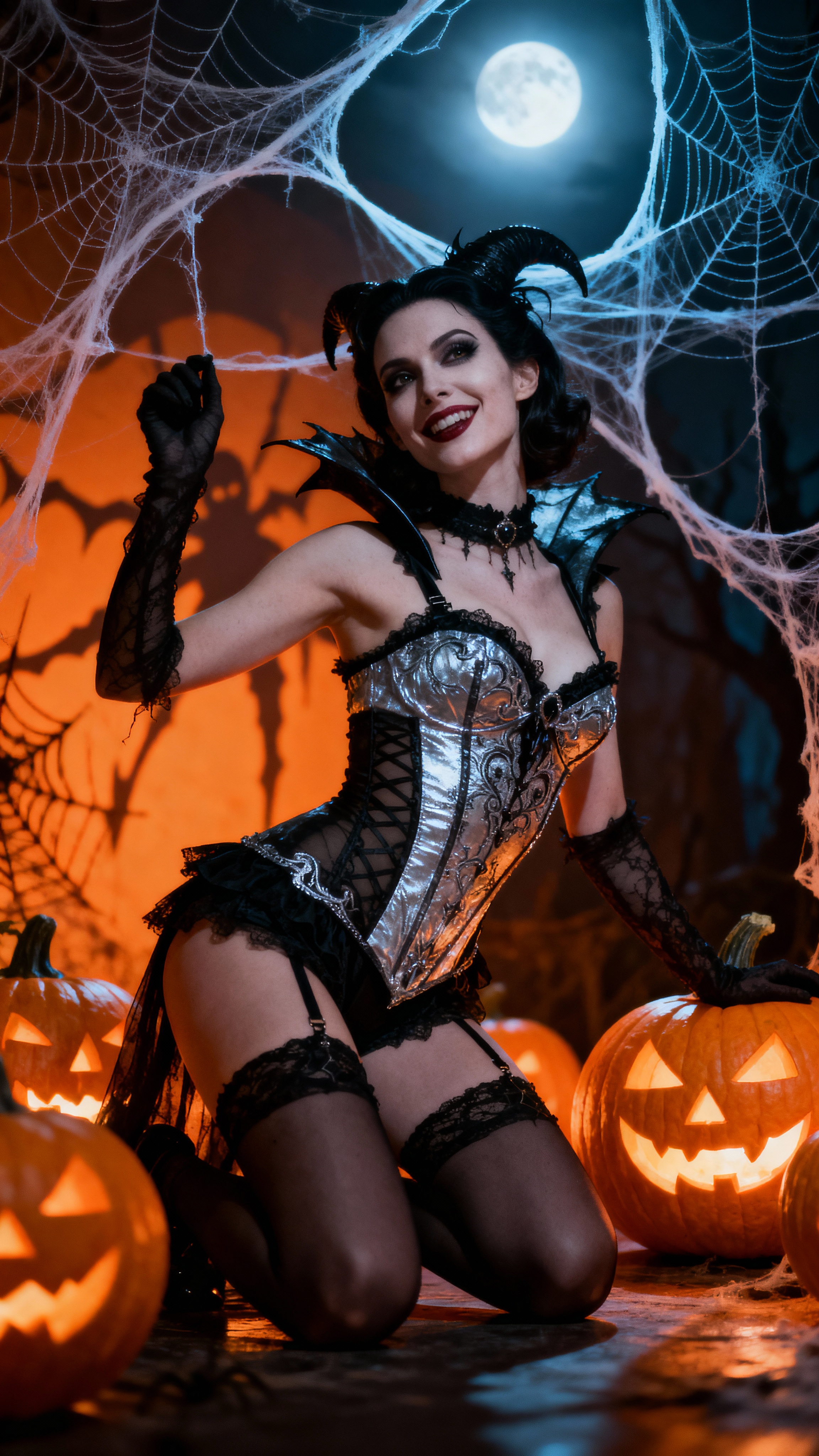
These looks are defined by their structure and material. Unlike the soft, functional bras of other genres, these are statement pieces designed to be seen. They function as both armor and adornment, conveying power, danger, and otherworldliness.
Part 4: A Visual Dictionary of Gothic Lingerie Aesthetics
Based on our analysis, we can build a visual dictionary of the key garments and design elements that constitute the Gothic and dark lingerie aesthetic in horror films. Given your background in lingerie design, you can think of these as a specific set of tools used for character creation.
Key Garments:
- Corsets & Bustiers: The cornerstone of the aesthetic, providing structure, historical reference, and a restrictive silhouette.
- Longline Bras: Bras where the band extends down the torso, often featuring boning or lace-up details.
- Harnesses: Strappy accessories worn over or integrated into bras and clothing to create a caged or bondage-inspired effect.
- Structured Bodysuits: Often in lace or mesh, used as a foundational layer that can be revealed.
Key Design Elements:
- Materials: Black lace is fundamental. Leather, patent/PVC, velvet, and sheer mesh add texture and specific sub-cultural references (fetish, punk).
- Construction: Exposed boning channels, lace-up panels (front or back), and prominent underwires that create a sharp, defined bust shape.
- Hardware: Buckles, studs, O-rings, and chains, borrowing directly from fetish and punk aesthetics.
- Details: High necklines (as seen on Victorian-inspired lace tops), garter straps (both functional and decorative), and cross motifs.
This combination of elements creates a look that is instantly recognizable and rich with connotations of mystery, power, and the supernatural.
Conclusion
In this lesson, we have moved from the 'final girl's' practical undershirt to the highly stylized world of Gothic and dark lingerie in horror. We have seen that this aesthetic is a powerful tool for building atmosphere and character, drawing on a rich history of literature, fashion, and subculture.
Key Takeaways:
- Gothic and dark lingerie aesthetics in horror are symbolic and atmospheric, not typically functional or realistic.
- The aesthetic has two main branches: Period Gothic, which uses historical silhouettes (corsets, bustles), rich fabrics (velvet, lace), and dark colors to evoke a sense of decaying grandeur (e.g., Crimson Peak).
- The second branch is Modern/Fetish-Influenced Gothic, which incorporates materials like leather, PVC, and hardware (buckles, straps) to create a more aggressive, punk, or S&M-inspired look (e.g., The Craft, Hellraiser).
- Key garments include corsets, bustiers, harnesses, and structured bodysuits, defined by a dark color palette and specific design details like lacing, strapping, and metal hardware.
Next Lesson
Having explored both the practical 'final girl' aesthetic and the theatrical Gothic look, our next lesson will examine a style that sits somewhere in between. We will describe distressed and survival-context bra appearances in thriller and horror films, analyzing how everyday lingerie becomes part of the visual storytelling of a character pushed to their absolute limit.