Introduction
In our last lesson, we explored the "warrior-princess" archetype, focusing on bodice and armor styles designed to look battle-ready. We analyzed how designers create a sense of strength and history, and we discussed the practical realities versus the aesthetic choices behind designs like "boob plate" armor.
Today, we'll shift our focus from overt armor to a related but distinct garment: the fantasy corset-bra hybrid. While it can incorporate armor-like elements, its primary function is often to shape the silhouette and signify power, status, or magical prowess. Our goal is to describe these corset-bra hybrids as they appear in recent fantasy film and television. You'll find that many of the construction principles, such as boning and structured cups, are dramatic-scale adaptations of techniques used in lingerie design.
Defining the Fantasy Corset-Bra Hybrid
A corset-bra hybrid is a single, structured upper-body garment that combines the waist-cinching and torso-shaping function of a corset with the bust support and definition of a bra. In fantasy productions, these are rarely simple undergarments. Instead, they are highly visible, stylized pieces of costuming that serve several narrative functions:
- Silhouette & Stature: They create a powerful, idealized, and often intimidating physical presence.
- Status & Authority: Ornate materials and rigid construction can signify a character's wealth, rank, or authority, such as a queen or a powerful sorceress.
- World-Building: The specific style, materials, and embellishments help define the aesthetic of a particular fantasy culture.
Let's examine how this plays out in some iconic fantasy productions.
Case Study 1: The Sorceress Aesthetic in The Witcher
Netflix's The Witcher provides excellent examples of how corset-bra hybrids are used to define the powerful mages of its world. The costumes for characters like Yennefer of Vengerberg and her mentor, Tissaia de Vries, rely heavily on structured bodices.
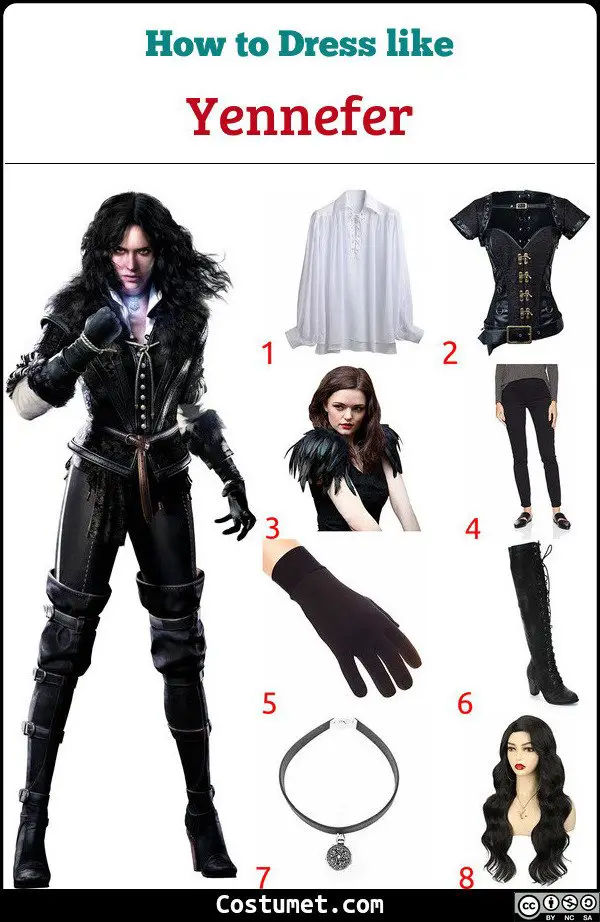
This garment is a perfect example of a fantasy hybrid. It is not designed for battle in the way a soldier's cuirass is, but its rigid structure and dark leather material convey a sense of personal armor and unyielding will. It shapes the body into a powerful silhouette that has become synonymous with the character.
This design philosophy extends to other sorceresses in the series.
The Witcher: 10 Hidden Details You Missed In The Costumes
To see how this concept is applied to another character, please read this brief analysis of Tissaia de Vries's costumes from an article on ScreenRant.
Please read the section titled 'Tissaia and Her Structured Sorcery.' Focus on the description of 'architectural elements' and 'structured bodices' and how they are used to visually signify her authority.
As the text notes, the structured bodices worn by Tissaia are a deliberate choice to communicate her authority and status as Rectoress of Aretuza. The garment becomes a key part of her characterization, projecting power before she even speaks.
Case Study 2: High-Fantasy Royalty in Snow White & The Huntsman
Another striking example comes from Colleen Atwood's Oscar-nominated costume design for Snow White & The Huntsman. The film's villain, Queen Ravenna, wears a series of extraordinary outfits that externalize her menacing power and vanity.

This piece is less a garment and more a piece of wearable sculpture.
- Material: The metallic gold and rigid, almost skeletal structure suggest both immense wealth and a cold, unfeeling nature.
- Silhouette: The defined bust and waist are combined with dramatic, cage-like shoulder pieces (pauldrons) that broaden the shoulders, creating an intensely intimidating and regal silhouette.
- Function: This is not armor for a battlefield. It is armor for the court—a visual weapon meant to dominate and awe. It perfectly embodies the concept of a corset-bra hybrid used to project character and power.
High-Fashion as a Source of Fantasy
Where do these fantastical ideas come from? While historical corsetry is one source, many fantasy costumers draw inspiration from avant-garde and haute couture fashion, where designers are free to explore structure and silhouette without the constraints of commercial wearability.
Perhaps no designer is more influential in this realm than the late Thierry Mugler. His work from the 1980s and 90s is famous for its "armored," futuristic, and fantastical female forms, often built around extreme corset-bra hybrids.
Thierry Mugler in 9 cult collections
To build your visual vocabulary, let's explore some of Mugler's most iconic and influential designs. You will see direct parallels to the fantasy aesthetics we've been discussing.
Please read through the selected highlights of this article from Numéro magazine. As you read, focus on identifying the recurring themes of structured bodices and unconventional materials. Start with the introduction, 'With Mugler, femininity is in your face...' to understand his core philosophy of the 'armoured body.' Look at the 'shell-like bustiers' from his Spring-Summer 1989 collection. Note the 'bodywork-bustier' from his Fall-Winter 1989-1990 collection. See the 'Harley Davidson” bustier' from Spring-Summer 1992. Read about the 'metal bra' and 'gynoid robots' from his Fall-Winter 1995-1996 collection. Finally, look at the description of the 'Chimera dress' from Fall-Winter 1997-1998, a collaboration with the famous corset-maker Mr Pearl.
Mugler's work demonstrates how the corset-bra hybrid can be pushed to its most extreme and imaginative limits. His use of plexiglass, chrome, and rubber to create sculptural, robotic, and mythological forms provided a rich visual language that costume designers continue to reference for futuristic and fantasy productions. Seeing these high-fashion precedents helps us understand the design DNA of the costumes we see on screen.
Conclusion
In this lesson, we have defined and analyzed the fantasy corset-bra hybrid, a key garment in the costume designer's toolkit for fantasy world-building.
Key Takeaways:
- A fantasy corset-bra hybrid is a structured outer garment that combines the shaping properties of a corset and a bra to create a powerful, non-naturalistic silhouette.
- Unlike the warrior armor we studied previously, its primary function is not protection but the projection of status, power, and character. It is often worn by queens, sorceresses, and other figures of authority.
- Key examples from productions like The Witcher and Snow White & The Huntsman show how material, structure, and embellishment are used to this effect.
- The aesthetic of these fantasy garments is heavily influenced by avant-garde fashion, particularly the boundary-pushing, "armored" designs of Thierry Mugler.
Next Lesson
We have now examined two major types of fantasy bodices: the battle-oriented "warrior-princess" armor and the status-oriented "corset-bra hybrid." In our next lesson, we will synthesize these ideas to compare ceremonial versus battle bra-adjacent costumes in fantasy worldbuilding. This will allow us to analyze how costume choices help tell a story about a character's role and the specific context of a scene, whether it's a royal court or a battlefield.