Introduction
Welcome to your next lesson. In our previous session, we delved into the realm of science fiction, analyzing how designers create "alien" and "otherworldly" aesthetics. We saw how biomechanical textures, organic materials, and transformative glamour can be used to signal a non-human origin.
Today, we pivot from sci-fi to fantasy. While both genres are speculative, fantasy often draws its visual language from a reimagined past rather than a hypothetical future. Our learning outcome is to identify warrior-princess bodice and armor styles in fantasy films. We will explore how costume designers blend historical inspiration, mythological archetypes, and pure imagination to create iconic and powerful looks for female warriors on screen.
We'll begin by analyzing a quintessential example—the modern cinematic Wonder Woman—to define the archetype. Then, we'll contrast these fantasy designs with historical reality to understand the creative choices involved, paying special attention to the controversial "boob plate" armor.
1. The Archetype: Wonder Woman's Battle Bodice
The modern warrior-princess aesthetic is perhaps best encapsulated by Wonder Woman's costume in recent DC films. It's a masterful blend of superhero iconography and ancient warrior motifs. Let's explore its design evolution and intent.
The Untold Truth Of Wonder Woman's Costume
First, let's watch a brief history of Wonder Woman's costume from the Looper channel to see how the look evolved from its comic book origins to the armored version we see in film.
Please watch the following clips, focusing on the shift towards a more armored, battle-ready aesthetic: Hippolyta's Armor (03:47 - 04:17): Note the introduction of an eagle emblem that looks 'more like armor than a simple insignia' and the inclusion of a sword. Donna's Armor (04:17 - 04:39): See how the 'fully armored costume with a gladiator skirt' pushes the design further into warrior territory. The Movie Look (05:37 - 06:27): Pay close attention to the description of Gal Gadot's costume: 'dark red and armored,' with a 'blue gladiator skirt' and integrated 'W' logo on the chest.
This evolution shows a clear trajectory towards a more formidable, martial appearance. The film's designers deliberately leaned into this to create a believable warrior.
Creating and Evolution of Wonder Woman's Suit | Behind The Scenes
Now, let's go behind the scenes with Flashback FilmMaking to hear directly from the creators about the philosophy behind the cinematic suit.
Watch these two segments, focusing on the key design concepts: Initial Concept (00:09 - 01:35): Listen for terms like 'gladiator costume,' 'ancient,' 'feels like something she could actually fight in,' and the idea that the costume shows 'centuries of wear from battle.' Evolution and Practicality (01:35 - 03:09): Note the goals of mixing 'strength but also elegance' and the need for practicality in movement and fighting.
These clips reveal that the goal wasn't just to create a costume, but a piece of functional, story-telling armor. The materials and construction were key to achieving this.
The 'Wonder Woman' Costumes Are a Celebration of Female ...
To understand the materials and construction, please read this short excerpt from an article in Fashionista about the film's costumes.
Read the sections describing Diana's 'training armor' and the general 'warrior armor'. Specifically, focus on: The combination of research into ancient societies and modern athletic-wear trends. The description of the construction process: 'traditionally handcrafted leather, which was then dyed, gilded... steamed and molded onto mannequins'.
From this case study, we can identify the core elements of the modern warrior-princess bodice:
- A Molded Cuirass: The centerpiece is a rigid breastplate, often made of leather or materials simulating metal, that is molded to the female form.
- Historical & Mythological References: The design incorporates Greco-Roman gladiator elements, such as the skirt (pteruges) and the eagle/W-motif on the chest.
- Aesthetic of Aged Authenticity: The armor is intentionally distressed to look battle-worn, suggesting a long history of combat.
- Balance of Hard and Soft: The rigid bodice is paired with a skirt and exposed skin, balancing a powerful silhouette with elegance and freedom of movement.
2. Fantasy vs. Reality: The Problem with "Boob Plate" Armor
The Wonder Woman design is visually powerful, but how does it relate to historical armor? Fantasy costuming often prioritizes aesthetics over historical accuracy and practicality. This is most obvious in the common "boob plate" design—a breastplate with individually sculpted cups.
Given your background in lingerie design, you understand the importance of shape and support. However, when applied to rigid armor, this can create a significant functional flaw.
Women Wearing Armor in Historical Movies – Fact & Fiction
The blog Frock Flicks provides an excellent, accessible analysis of this issue. This reading will help you distinguish between fantasy aesthetics and functional armor design.
Please read the following sections: Start with 'A Bit About Historical Armor' to get a quick primer on plate armor vs. chain mail. Then, read the section that starts after the 'Game of Thrones Cersi' GIF, which directly addresses the impracticality of 'boob plate' armor, explaining why it would be dangerous in a real fight. Finally, read the section 'A Note on Mythological and Allegorical Imagery' to understand that historical depictions of women in armor are often symbolic, not literal.
The key takeaway here is a principle of physics and design: a convex, smooth surface (like a traditional breastplate) deflects force outwards, away from the vital organs and sternum. A "boob plate" design, with its central concave channel between the breasts, does the opposite. It can trap a blade and guide it directly into the center of the chest.
So, while form-fitting armor is a staple of the warrior-princess look, it's a purely aesthetic choice. It emphasizes the feminine form but would be a liability in real combat. Real historical armor worn by women (which was rare) was functionally identical to men's armor.

3. Key Styles and Materials in Fantasy Armor
Now that we've established the archetype and contrasted it with reality, let's break down the common styles you'll see in fantasy films.
Molded Leather Bodices
This is one of the most prevalent styles. It sits between cloth and metal, offering a look that is both rugged and form-fitting.
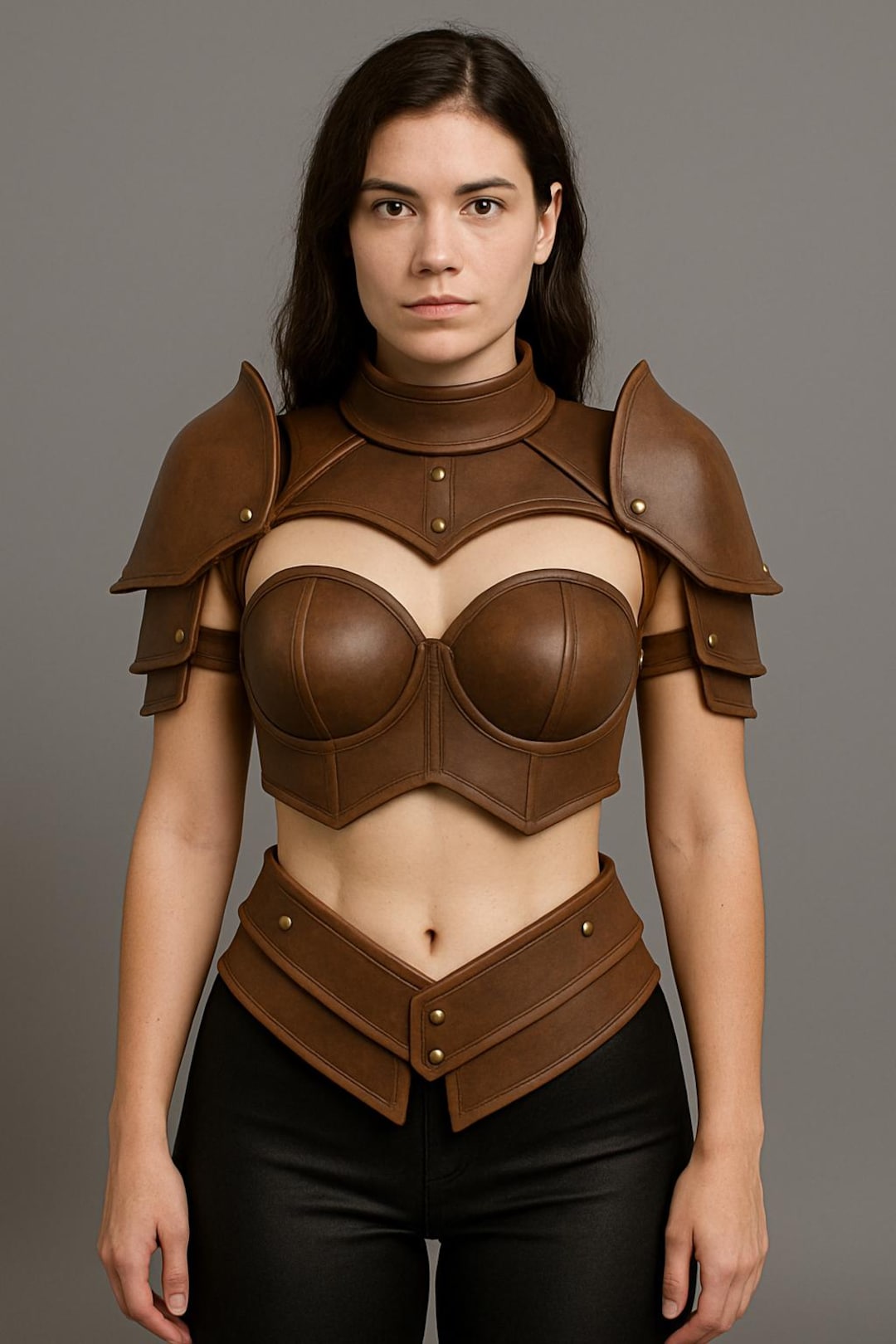
This style leverages techniques similar to those in bespoke shoemaking or, in some ways, molded-cup bra construction. The leather is treated, shaped, and stiffened to create a rigid, supportive structure that defines the silhouette. It's often dyed in earthy tones—browns, blacks, and deep reds—and may be tooled or embossed with cultural symbols relevant to the character.
Stylized Metal Breastplates
These designs aim for a more formidable, high-status look. They are rarely solid metal in production (often lighter materials like fiberglass painted to look metallic) but convey the unyielding strength of plate armor. This is where you most often see the "boob plate" design, as seen in the Game of Thrones and The Spanish Princess examples from the Frock Flicks article. The primary goal is to create a powerful, feminine, and instantly recognizable silhouette.
Strapping and Hybrid Designs
Many warrior-princess bodices don't exist in isolation. They are integrated with other elements through strapping, belts, and shoulder guards (pauldrons). This creates a more complex and visually interesting design. From a construction perspective, this is where lingerie and armor design share common ground—the strategic use of straps to connect pieces, create structure, and add decorative detail. These straps often secure the bodice to a separate skirt or leg armor, creating a cohesive battle uniform.
Conclusion
In this lesson, we have focused on identifying the key characteristics of warrior-princess bodices and armor in fantasy films. We've moved from the sci-fi realm of the "other" to the fantasy realm of the "imagined past."
Key Takeaways:
- The warrior-princess aesthetic is a distinct fantasy archetype that blends historical (often Greco-Roman) influences with a modern, stylized, and powerful feminine silhouette.
- The style is defined by molded cuirasses made of leather or faux metal, which are often paired with skirts and intricate strapping. The modern cinematic Wonder Woman is a prime example.
- A common but impractical feature is "boob plate" armor. While visually effective at highlighting the female form, its design is functionally flawed compared to historically accurate, smooth-surfaced breastplates.
- The core difference between fantasy armor and historical armor is intent: fantasy design prioritizes aesthetics, character, and story, while historical armor prioritized survival above all else.
Next Lesson
We have examined the rigid, protective styles of fantasy armor. In our next lesson, we will explore a related but distinct style that also uses structure to shape the body: "Describe fantasy corset-bra hybrids in recent fantasy film productions." We will see how designers adapt historical corsetry to create fantastical garments that convey status, power, and period fantasy flavor.