Welcome back. In our last lesson, you created a "rough edit" by systematically filtering your entire body of work into a strong, manageable pool of candidate images. You have moved from a mountain of raw material to a collection of viable blocks of stone. Now, the sculptor's real work begins: examining each block to understand its unique character and decide its purpose in the final form.
Today's lesson focuses on the critical criteria you will use to make those decisions. We will move beyond the initial "is this a good photo?" question to a more rigorous, three-pronged evaluation: Is the image conceptually relevant? Is it visually powerful? And what is its narrative potential? By the end of this lesson, you will have a clear framework for applying these criteria to your rough edit, transforming it into a highly curated shortlist of images for your book.
The Three Pillars of Selection: An Editor's Framework
When a professional editor curates a selection of images, they aren't just looking for technical perfection. They are looking for images that work together to create an experience that is resonant, coherent, and meaningful. An excellent article from Fstoppers, analyzing the selection process of a National Geographic photo editor, breaks this down into a practical framework.
What “Nat Geo-Quality” Actually Means: A Photo Editor Breaks ...
This article provides an invaluable look into an editor's mind, explaining the key criteria used to evaluate and select photographs for a world-class publication.
Please read the introduction and the first three chapters, which align perfectly with our goals for today: Read the introduction to understand the three core criteria. Read Chapter 1 to explore how an image connects with a viewer on an emotional level. Read Chapter 2 for a discussion of composition, light, and originality as forms of clarity, not just style. Read Chapter 3 to understand how an image can deepen a viewer's understanding and contribute to a narrative.
The article gives us a powerful vocabulary for our own curatorial process. Let's formalize these ideas into the three pillars of selection for your photo book:
- Conceptual Relevance: This is the bedrock. Does the image directly serve the artist statement and concept you developed in Module 2? An image might be visually stunning and emotionally resonant, but if it's off-concept, it pulls the project in a different direction.
- Visual Strength & Craft: This is about how the photograph is made. As the article notes, craft is a form of clarity. It encompasses composition, the intentional use of light, and originality. Given your background in fine art and design, this is familiar territory. The key here is to evaluate craft not in a vacuum, but in how it supports the image's emotional and narrative content.
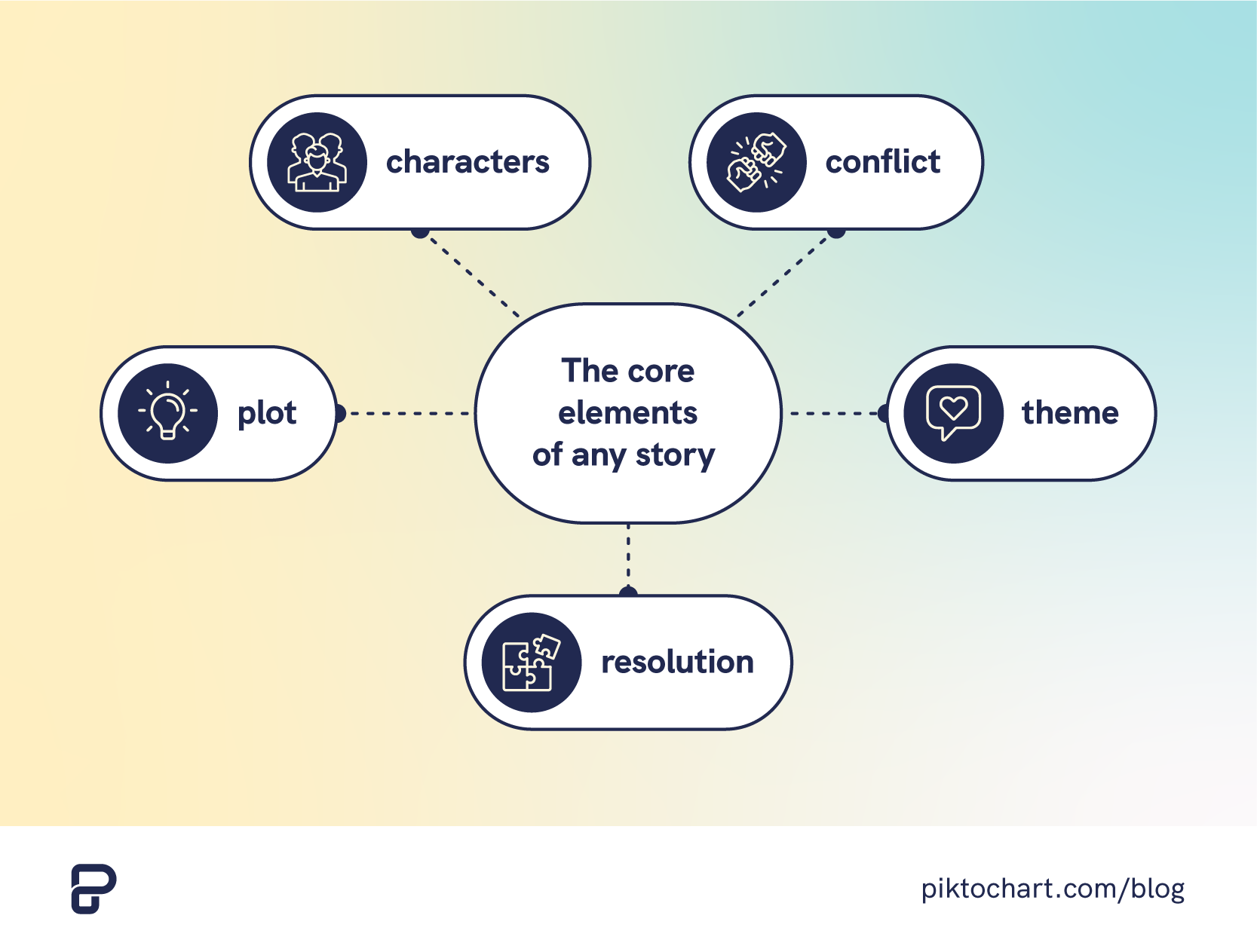
- Narrative Potential & Emotional Resonance: This pillar addresses what the image does. Does it elicit an emotion? Does it introduce a character, establish a setting, create conflict, or offer a resolution? Does it function as a full sentence, a poetic phrase, or simply punctuation?
The Different Roles an Image Can Play
A common mistake in editing is to assume every image must be a "greatest hit." A successful book needs variety and pacing. It requires a mix of images that play different roles. Some images are loud; others are quiet. Some are dense with information, while others provide breathing room.
In the following video, photographer and bookmaker Dan Milnor demonstrates his sequencing process. While sequencing is the topic of a future lesson, his commentary reveals how an experienced editor thinks about the different jobs that photos can do within a narrative. He makes a particularly useful distinction between "aesthetic" and "informational" photographs.
How to Sequence Photos to Tell a Story | The Edit
In this video from Blurb, Dan Milnor live-edits a project about the Port of Los Angeles, offering a transparent look at his decision-making process.
Watch the segment from his critique of the Port of Los Angeles project. Pay close attention to his justification for including what he calls an "informational photograph" around this timestamp. He explains that telling a story sometimes requires putting your "photographic ego aside" to include an image that provides crucial context, even if it's less aesthetically pleasing than others.
Milnor's point is crucial: an "informational" photo that shows scale, provides context, or clarifies a process can be just as vital to the book's success as a breathtaking landscape. Its visual strength lies in how effectively it performs its narrative job. When you evaluate your images, consider the full spectrum of roles they might play.
A Method for Application: Categorizing by Function
With these criteria in mind, how do you apply them to your rough edit? A powerful method is to move beyond simply rating images and start categorizing them by their conceptual and narrative function. This forces you to define what each image is contributing to the whole.
The article "Kill Your Darlings" describes a collaborative project where the photographers did exactly this.
Kill Your Darlings: The Challenge of Curating a Photo Project
This article from PetaPixel details the practical steps a group of photographers took to curate a large project into a cohesive publication.
Read the section beginning with the description of the collaborative process. Focus on their method: they "critically divided the images up between different kinds of things they were saying – for example, characters, energetic scenes, detail shots, contextual semiotics." This is the core technique we will adapt for your own edit.
This act of sorting—similar to how you might organize components for a sculpture—is the bridge between theory and practice. It moves the evaluation from an abstract judgment of quality to a concrete assessment of purpose.
Your Turn: Creating the Shortlist
It's time to apply this three-pillar framework to your "rough edit" (the images you rated 3-stars in the previous lesson). The goal is to promote the most effective images to a 4-star "shortlist," which will become the primary pool for sequencing.

- Re-center Your Concept: Before you begin, re-read your artist statement and review the mood board you created in Module 2. This is your North Star for judging conceptual relevance.
- Establish Narrative Categories: Look through your 3-star images. Based on your project's theme, create a set of categories that describe the different narrative roles your images play. You can do this with keywords in Lightroom/Bridge or by creating physical piles of prints. Your categories will be unique to your project, but here are some common examples to get you started:
- Establishing Shots: Broad scenes that introduce a place, mood, or atmosphere.
- Character Portraits: Images focused on a person, object, or entity that acts as a "character."
- Action/Energy: Images depicting movement, tension, or a peak moment.
- Quiet Details: Close-ups or subtle observations that add texture and depth.
- Transitional Moments: Images that can bridge two different scenes or ideas.
- Metaphors/Symbols: Abstract or evocative images that speak to the project's deeper themes.
- Evaluate Within Categories: Go through each category one by one. Now, you are no longer comparing every image to every other image. You are comparing like with like.
- If you have three "establishing shots," which one does it best?
- Apply the other two pillars: Which has more emotional resonance? Which displays superior visual strength and craft?
- If two images are saying the same thing, force yourself to choose the more effective one.
- Promote to the Shortlist: The images that are the clear winners in their respective categories—the ones that are conceptually relevant, visually strong, and serve a clear narrative purpose—should be promoted to a 4-star rating.
This process will be challenging. You will have to make difficult choices. But by the end, you will have a much smaller, more potent collection of images, each with a defined purpose.
Conclusion
You have now moved from a broad "rough edit" to a curated shortlist. By applying the three pillars of selection—conceptual relevance, visual strength, and narrative potential—you are learning to think like an editor, evaluating each photograph not just on its individual merit, but on its ability to contribute to a larger, cohesive artistic statement. You have a collection not just of good images, but of potential sentences, paragraphs, and punctuation for your book.
This refined shortlist is the direct result of applying rigorous criteria. However, there may still be some beautiful, powerful images in that list that, upon final reflection, don't quite belong. In our next lesson, we will confront the most difficult step in curation: "killing your darlings" by identifying and eliminating those strong but ultimately off-concept images to arrive at your final selection.