Introduction
In our last lesson, we built a strategic framework for your LinkedIn presence, defining a sustainable posting cadence and a powerful content mix. You now have a plan for creating high-value content on a key B2B platform. But creating great content is only half the battle; the other half is ensuring it reaches the right people.
Today, we move from content creation to content amplification. We will focus on one of the most authentic and powerful distribution channels at your disposal: your own employees. This lesson addresses the learning outcome: Outline an employee advocacy plan to leverage internal networks for content amplification.
By turning your colleagues into brand advocates, you can dramatically increase your content's reach, build trust, and drive engagement in a way that corporate accounts alone cannot. This is a critical component of the content engine you're building, as it creates a scalable and cost-effective distribution layer that directly supports your goal of driving revenue impact.
1. What is Employee Advocacy?
At its core, employee advocacy is the promotion of your company by the people who work there. However, in a B2B context, it's far more nuanced than simply asking employees to reshare company posts. Effective advocacy happens when employees share company-related content and industry news through their personal social media profiles, adding their own unique perspectives and voices.
Let's begin by exploring the concept and its strategic importance.
B2B Employee Advocacy: The Complete Strategy Guide
The article 'B2B Employee Advocacy: The Complete Strategy Guide' by Oktopost provides an excellent introduction to this topic. It clearly defines what employee advocacy is (and isn't) and why it's so critical for B2B marketing.
Please read the first two sections, 'What is employee advocacy?' and 'Why employee advocacy matters for B2B'. Focus on the difference between simple resharing and authentic advocacy, and note the key benefits for the business.
As the article highlights, the "why" is compelling. People trust people more than they trust brands. An employee's network is often more engaged and, on average, ten times larger than a corporate page's following. When an employee shares content, it comes with a layer of built-in credibility.
This isn't just about brand awareness. An effective program benefits everyone:
- The Company: Gains authentic reach, higher engagement, increased website traffic, and more qualified leads.
- The Employee: Builds their professional brand, establishes themselves as a thought leader, and expands their professional network. Research from Hinge Marketing, cited in the Oktopost article, found that 86% of employees in advocacy programs said it had a positive impact on their careers.
2. The Blueprint: How to Build Your Employee Advocacy Plan
An employee advocacy program doesn't happen by accident. It requires a deliberate strategy and a clear plan. Both the Oktopost guide and LinkedIn's "Official Guide to Employee Advocacy" outline a similar six-step process to launch a successful program. We will use this structure as our blueprint.
B2B Employee Advocacy: The Complete Strategy Guide
To get a comprehensive overview of the steps involved, let's turn to this guide from Oktopost. It provides a detailed, actionable framework for launching a program from start to finish.
Read the section titled 'How to launch an employee advocacy program in 6 steps'. Pay close attention to the title of each step, as we will use this as the framework for your own plan.
Let's break down these six essential steps.
Step 1: Set Goals and Outline a Content Strategy
Goals: Before you start, you must define what success looks like. Your goals should be SMART (Specific, Measurable, Attainable, Relevant, Time-bound) and align with your broader marketing objectives. Common goals include:
- Increasing brand awareness (measured by reach and impressions).
- Driving website traffic (measured by clicks).
- Generating leads (measured by conversions on gated content).
- Boosting engagement (measured by likes, comments, and shares).
Content Strategy: You can't expect employees to share content they don't find valuable or interesting. The content you provide must serve their networks and help build their personal brands.

A balanced content mix is crucial. Experts recommend a variation of the following rules:
- The 6-3-1 Rule (Oktopost): For every 10 pieces of content, 6 should be curated from third-party sources, 3 should be original (owned) content from your company, and 1 should be promotional.
- The 4-1-1 Rule (LinkedIn): For every 6 pieces, 4 should be third-party, 1 owned, and 1 promotional.
The principle is the same: lead with value, not with sales.
Step 2: Gain Leadership and Employee Buy-In
A program needs support from both the top down and the bottom up.
- Leadership Buy-in: To get executive support, you need to speak their language. Frame the program's value in terms of business impact: ROI, lead generation, and competitive advantage.
- Employee Buy-in: For employees, the key is to answer "What's in it for me?" Emphasize how participating will help them build their professional reputation, expand their network, and advance their careers.
Step 3: Choose Initial Advocates (The Pilot Group)
Don't try to boil the ocean. Start with a small, manageable pilot program. Your ideal pilot group includes:
- Social Enthusiasts: Employees who are already active and comfortable on social media. These are often in customer-facing roles like sales, marketing, and customer success.
- Leadership: When executives participate, it signals that the program is a priority and encourages others to join.
Step 4: Conduct Social Media Training
Provide clear guidance to build confidence and ensure consistency. Training should cover:
- The company's social media policy (dos and don'ts).
- Best practices for the target platform (e.g., how to write a compelling post on LinkedIn).
- How to use any employee advocacy tools.
- How to add personal commentary to make shares more authentic.
Step 5: Run a Pilot
The pilot program is your chance to test, learn, and refine your strategy. Use this phase to:
- See what content resonates with employees and their audiences.
- Gather feedback on the process and tools.
- Collect initial performance data to build a business case for a full rollout.
Step 6: Establish Goals, KPIs, and Measurement
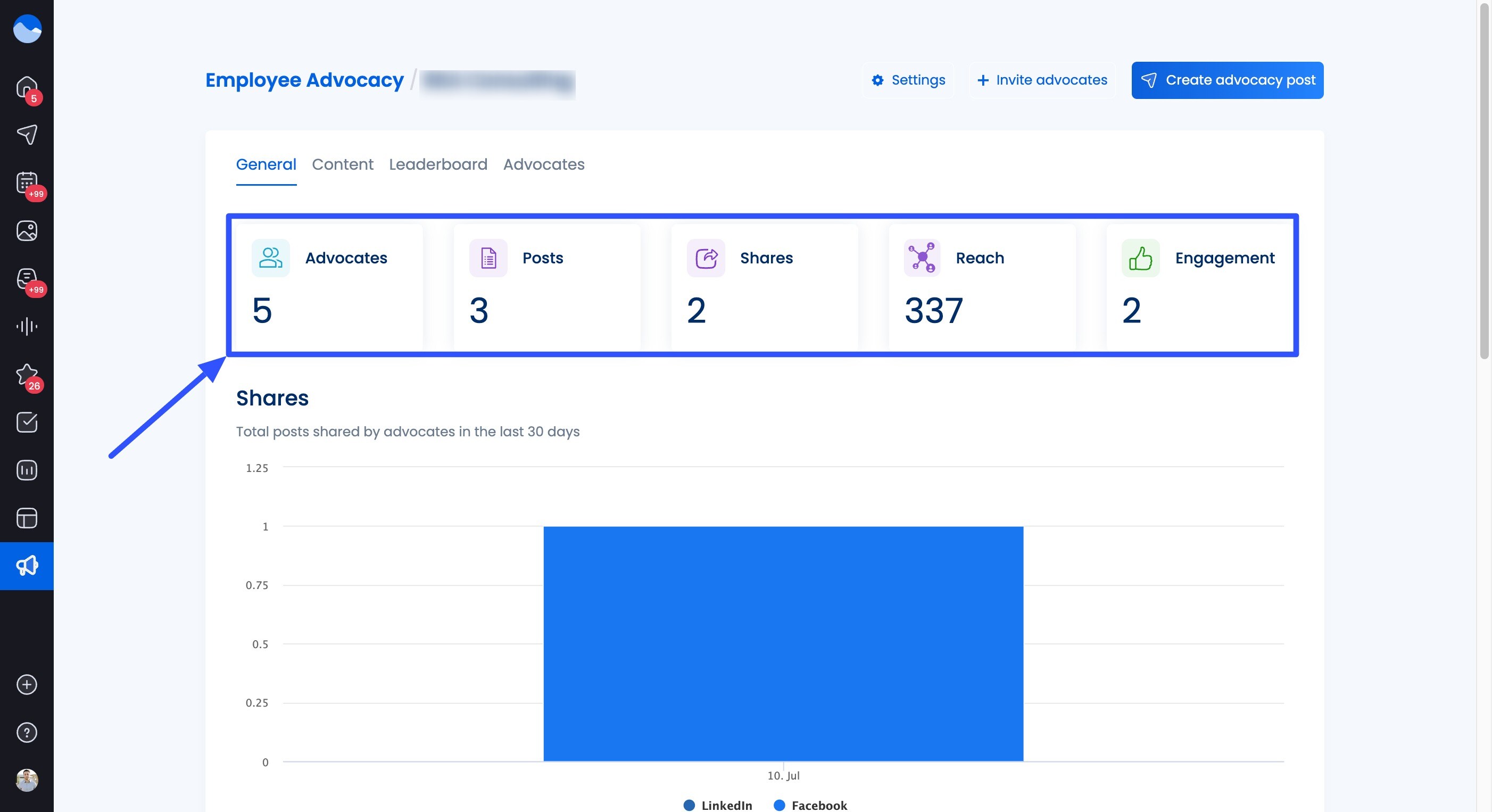
To prove the program's value, you must track its performance against the goals you set in Step 1. Key Performance Indicators (KPIs) often include:
- Adoption Rate: How many employees are actively participating?
- Engagement Metrics: Total shares, clicks, likes, and comments generated by advocates.
- Reach: The total potential audience of all advocate shares.
- Top Contributors: Identifying and recognizing your most active advocates.
- Traffic and Conversions: Using UTM parameters to track how many website visitors and leads are generated through the program.
3. Activity: Outline Your Employee Advocacy Plan
Now it's your turn to apply this framework. Your task is to create a high-level outline for an employee advocacy plan for your organization (or a hypothetical one). This exercise will structure your thinking and give you a tangible document to build upon.
Instructions:
Fill out the template below. For each of the six steps, provide 1-3 bullet points that describe your initial approach. Be specific where possible.
My Employee Advocacy Plan Outline
-
1. Program Goals & KPIs:
- Primary Goal:
- Key KPIs to Track:
-
2. Content Strategy:
- Content Mix Rule: (e.g., 6-3-1 Rule)
- Types of Content to Prioritize: (Refer to the checklist image)
-
3. Pilot Group Selection:
- Target Departments/Roles for Pilot:
- Key Leaders to Involve:
-
4. Training & Enablement:
- Core Topics for Training Session:
- Resources to Provide: (e.g., social media policy doc, content library)
-
5. Buy-in & Motivation:
- Pitch to Leadership: (How you'll frame the value)
- Pitch to Employees: (How you'll frame the WIIFM - "What's In It For Me?")
- Incentive/Recognition Idea: (e.g., monthly leaderboard, shout-out in company newsletter)
-
6. Measurement & Reporting:
- Key Metric to Report to Leadership:
- Reporting Cadence: (e.g., monthly performance email)
Take about 15 minutes to complete your outline.
Conclusion
Well done. You've just created the strategic backbone of an employee advocacy program. By moving through these six steps, you've transformed a vague idea—"get employees to share more"—into an actionable plan with clear goals, defined processes, and measurable outcomes.
Key Takeaways:
- Advocacy is a Strategy, Not a Tactic: A successful program is built on clear goals, buy-in, training, and measurement.
- It's a "Win-Win-Win": The company gains authentic reach, the employee builds their professional brand, and the audience receives valuable content from a trusted source.
- Start Small, Then Scale: A pilot program with enthusiastic volunteers is the best way to prove the concept and refine your approach before a company-wide rollout.
- Content is Queen, Value is King: The program will only succeed if the content you provide is genuinely valuable to both your employees and their networks.
Preview of the Next Lesson:
A successful content engine relies on both brilliant execution of individual strategies (like LinkedIn content and employee advocacy) and a highly organized operational foundation. To ensure you can consistently feed your distribution channels with high-quality content, you need a master plan. In our next lesson, we will begin Module 8 by tackling a cornerstone of content operations: Design a B2B content editorial calendar that aligns with sales cycles and marketing campaigns.