Introduction
Welcome back! In our last lesson, we crafted a blueprint for a B2B case study, a powerful Middle-of-Funnel (MOFU) asset for providing social proof. You learned how to structure a compelling narrative around the "Problem, Solution, Results" framework to build credibility.
Now that your prospects believe you can deliver results, the next step is to educate them on why your solution is the best choice for them. This is the core purpose of lead nurturing. Today's lesson is dedicated to this crucial process. Our learning outcome is: Outline a MOFU lead nurturing asset, such as a webinar or comparison guide, to educate qualified leads.
We'll explore two of the most effective MOFU assets for this task. Webinars allow for interactive, in-depth education, while comparison guides help prospects make a logical choice when weighing their options. Mastering these formats is key to your goal of building a content engine that systematically moves qualified leads through the funnel and closer to a sales conversation.
1. The Strategy of Middle-of-Funnel Nurturing
Before we build the assets, let's clarify the strategy behind them. MOFU nurturing is not about blasting leads with sales pitches. It's a deliberate process of building a relationship by providing value.
Your Guide to Lead Nurturing in 2025
To understand the strategic foundation of this process, let's start with 'Your Guide to Lead Nurturing in 2025' from Martal.ca. This will clarify what we mean by 'nurturing' and why it's more than just sending automated emails.
Please read the first two main sections: 'What is Lead Nurturing? (Meaning & Importance)' and 'Drip Marketing vs Lead Nurturing: What’s the Difference?'. Focus on the distinction between a static 'drip' campaign and a dynamic, value-driven 'nurturing' strategy.
As the article explains, true nurturing is adaptive. It responds to a lead's behavior and delivers consistently valuable content that educates and builds trust. Your goal is to become a helpful advisor, not just another vendor.
In the consideration stage of the funnel, prospects are actively researching and comparing. Let's see how a real brand uses content to meet this need.
How to Build a Marketing Funnel that Actually Works for your Business
This clip from HubSpot's 'How to Build a Marketing Funnel' video uses Warby Parker as an example. Notice the specific types of content they offer during the 'consideration' stage to help people evaluate their options.
Watch from 02:36 to 04:11. Pay attention to how assets like virtual try-ons, home try-on kits, and detailed comparison guides are designed to help a potential customer make an informed choice.
Just as Warby Parker provides tools to compare frames, your B2B MOFU assets should help prospects compare solutions. Let's explore how to build two of the most effective types: webinars and comparison guides.
2. Anatomy of an Educational Webinar
A webinar is an excellent format for a deep-dive educational session. It allows you to present complex ideas, demonstrate your product in context, and interact with your audience directly through Q&A.
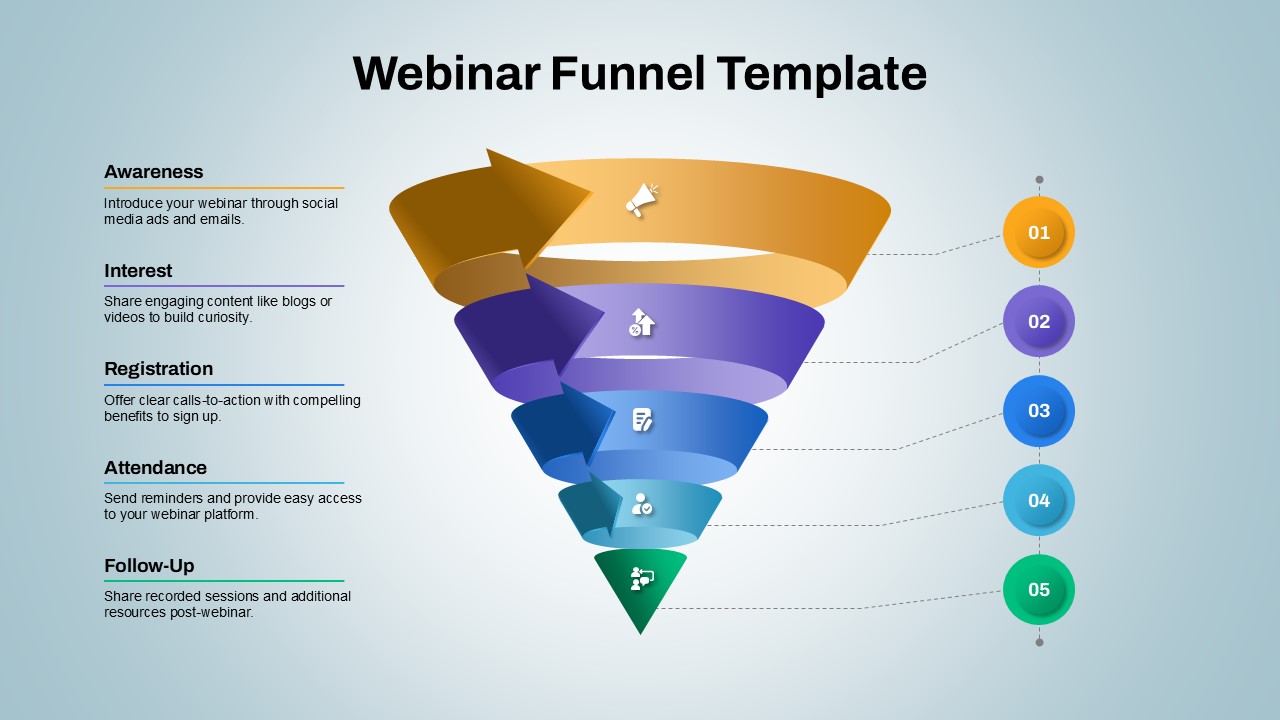
A successful educational webinar isn't a long sales pitch. It follows a narrative structure designed to guide the audience from their current problem to your solution.
Webinar Outline Template: Engage, Educate & Inspire Your Audience
The article 'Webinar Outline Template' from Demio provides a robust, step-by-step framework for structuring a webinar that engages and educates.
Please read the section 'Steps to Create a Winning Webinar Outline'. Focus on the flow: Introduction and Kickoff: Establish authority. Acknowledge the Problem: Build empathy and rapport. Introduce Your Solution: Present your offering as the logical answer. Tackle Objections: Address doubts proactively. Run a Q&A: Engage directly. End With a Call to Action: Guide them to the next step.
This structure ensures you deliver value before you ask for anything. The case study you outlined in the previous lesson would be a perfect piece of evidence to include in the "Introduce Your Solution" or "Tackle Objections" sections.
However, a great structure is only half the battle. To keep your audience engaged, you need a compelling hook.
How a Single Webinar Outperformed 6 Months of Paid Ads!
While aimed at a different style of marketing, this short clip from Russell Brunson's video on 'dramatic demonstrations' perfectly explains the power of a great hook and story to capture an audience's attention from the very beginning.
Watch from 02:18 to 03:16. The key principle here is that your webinar needs a central, intriguing idea or 'hook' that sparks curiosity and a story that makes it relatable.
Your hook could be a provocative question, a surprising statistic, or a bold promise. This is what turns a standard presentation into a must-see event.
3. Structuring a Persuasive Comparison Guide
While webinars are event-based, a comparison guide is a static, high-value asset that prospects can download and review at their own pace. It's particularly effective for leads who are in the final stages of evaluation and have a shortlist of vendors.
Your goal is not just to list features, but to frame the comparison in a way that highlights your unique strengths.

Here’s a simple framework for outlining your own comparison guide:
- Define the Playing Field: Start by identifying the 3-5 most critical decision criteria for a customer in your target market. This shouldn't be a random list of features, but rather the factors that lead to a successful outcome (e.g., "Time to Value," "Integration with X," "Scalability for Enterprise Teams"). This allows you to control the narrative.
- Create the Comparison Matrix: Use a table to compare your solution against 2-3 key competitors based on the criteria you just defined. Be objective where you can, but use this format to let your strengths shine.
- Add Qualitative Analysis: Below the matrix, include a short paragraph for each criterion explaining why it matters and how your approach delivers superior value. This is where you move beyond features to benefits.
- Include Social Proof: Add a powerful customer quote or a key metric from a case study to validate your claims. For example, next to the "Time to Value" criterion, you could add a quote: "We were fully operational in two weeks, something we thought was impossible."
- Conclude with a Clear CTA: Guide the reader to the next logical step. Since this is a MOFU/BOFU asset, the CTA can be more direct, such as "Request a Personalized Demo" or "Talk to a Specialist."
4. Your Turn: Outline a MOFU Nurturing Asset
Now it's time to put this into practice. Choose one of the following options—a webinar or a comparison guide—and create a detailed outline based on a topic relevant to your business and a buyer persona you know well.
Task (Allow ~20 minutes):
Complete one of the blueprints below in a separate document.
Option A: Webinar Outline Blueprint
- Webinar Title:
(Craft a compelling, benefit-oriented title with a strong hook) - Target Audience:
(Who is this for? What is their role and primary challenge?) - Core Promise/Hook:
(What is the one big idea or transformation you are promising? e.g., "Stop guessing and start measuring: A 3-step framework for proving content ROI.") - Outline:
- Introduction:
(Your credentials/story that establishes authority.) - The Problem:
(Describe the common, frustrating pain point the audience experiences.) - The "Old Way":
(Describe the flawed approaches people currently use to solve this problem.) - The "New Way" (Your Solution):
(Introduce your core framework or methodology. Break it into 3-5 key teaching points.)Point 1:Point 2:Point 3:
- Proof Point:
(Mention a specific metric or result from a case study that validates your 'New Way'.) - Handling a Key Objection:
(Proactively address one major doubt, e.g., "But what if I don't have a big budget?") - Call to Action (CTA):
(What is the clear next step? e.g., Book a strategy call, start a free trial.)
- Introduction:
Option B: Comparison Guide Outline Blueprint
- Guide Title:
(e.g., "The Marketer's Guide to Choosing a Content Analytics Platform") - Target Audience:
(Who is this for and what is their primary goal with this type of solution?) - Competitors Included:
(List your company and 2-3 key competitors.) - Key Comparison Criteria:
(List 4-5 criteria that frame the comparison in your favor.)Criterion 1 (e.g., Data Integration Capabilities)Criterion 2 (e.g., Ease of Use for Non-Analysts)Criterion 3 (e.g., Quality of Customer Support)Criterion 4 (e.g., Reporting & Dashboard Customization)
- Your Unique Differentiator:
(In one sentence, what makes you the clear winner for your target audience?) - Proof Point to Include:
(Identify a specific customer quote or data point that supports your claim on one of the key criteria.) - Call to Action (CTA):
(What is the clear next step? e.g., See a detailed demo, get custom pricing.)
Conclusion
Great work today. You've now outlined a strategic asset designed to nurture qualified leads by educating them and helping them make a confident decision. By creating high-value webinars and comparison guides, you move from simply attracting an audience to actively guiding them through their buying journey. This is a critical function of a successful content engine that directly supports sales and impacts revenue.
Key Takeaways:
- MOFU Nurturing is about Education: The goal is to build trust and demonstrate expertise by providing value, not by delivering a hard sales pitch.
- Webinars Offer Interactive Deep Dives: They follow a narrative structure (Problem -> Solution -> Proof) and require a strong hook to capture and hold attention.
- Comparison Guides Aid Logical Decisions: They help prospects evaluate their options by framing the comparison around criteria where you excel.
- Structure is Strategy: A well-planned outline ensures your content is persuasive, easy to follow, and effectively guides the prospect toward your solution.
Preview of the Next Lesson:
After you've successfully nurtured a lead through the middle of the funnel, they are often handed off to the sales team. In our next lesson, we will focus on the final stage of the funnel. You will learn how to create a sales enablement kit with key BOFU assets (e.g., battle card, one-pager) for sales conversations, ensuring your content engine supports the entire revenue process from start to finish.