Hello! Welcome to your eighth lesson on the Indian Economy.
In our last few lessons, we focused on how to measure an economy, looking at concepts like GDP, GNP, and the crucial difference between nominal and real growth. Today, we shift from measuring to managing. We will explore how economies are organized and what happens when the chosen model faces a crisis.
This lesson directly addresses your learning outcome: to explain the basic role of the state in a mixed economy and the general context that led to India's 1991 economic reforms (Liberalization).
This is a pivotal moment in India's economic history and understanding it is key to making sense of the modern Indian economy.
1. The Role of the State in a Mixed Economy
In a previous lesson, we briefly touched upon the three types of economic systems: capitalist, state, and mixed. As a quick refresher, a mixed economy is a blend of both. It combines the private sector's drive for efficiency and innovation (like in capitalism) with government oversight and intervention to achieve social goals (like in a state economy).
Think of it like an open-source software project. Individual developers and private companies (the private sector) are free to contribute code, create new features, and pursue their own goals. However, a project steering committee (the state) maintains the overall vision, sets coding standards, merges pull requests, and ensures the project serves the broader community's needs, not just the interests of one contributor.
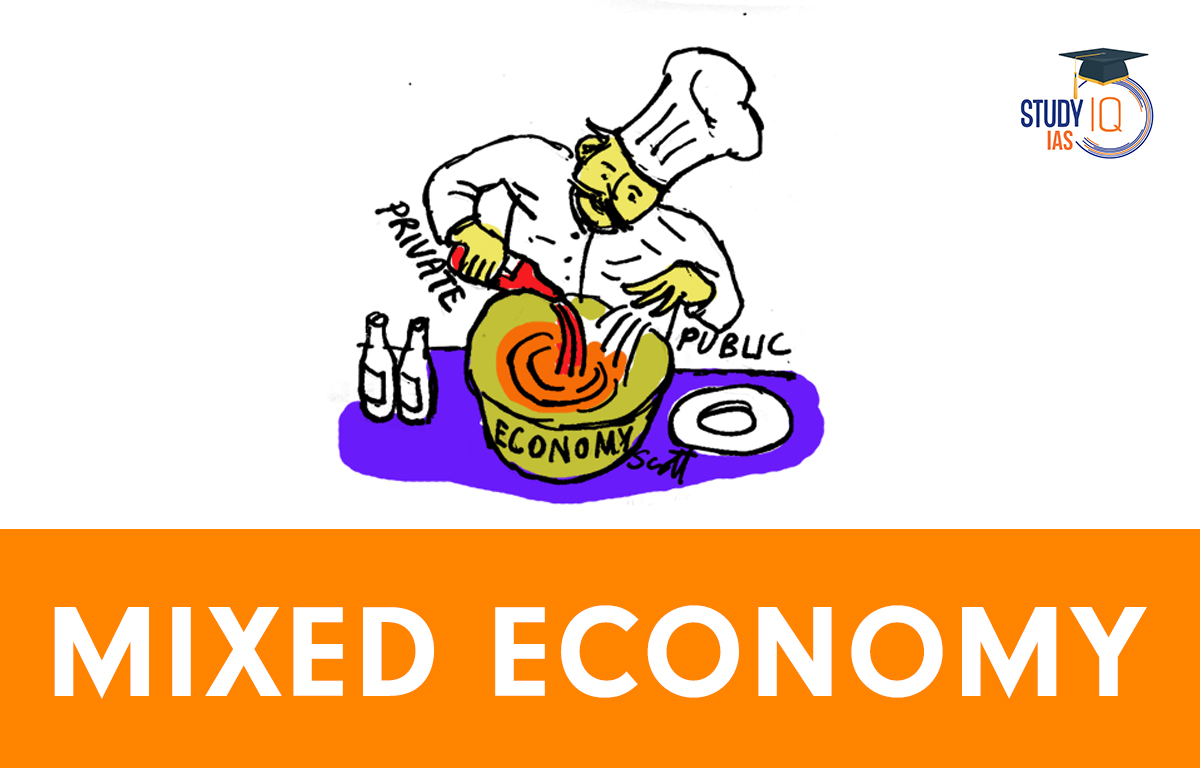
The state's role in a mixed economy isn't to control everything, but to act as a regulator, a safety net, and a provider of essential services that the market might not offer efficiently on its own.
To get a clearer picture of these roles, let's turn to a well-structured article.
Understanding the Mixed Economic System: Key Features, Benefits ...
This article from Investopedia, 'Understanding the Mixed Economic System', clearly outlines the key features of this system. It will help you understand the specific ways a government participates in the economy.
Please read the introduction ('What Is a Mixed Economic System?') and the section titled 'Key Features of a Mixed Economic System'. Focus on the examples provided for social welfare programs, price controls/subsidies, and business regulations.
As you read, you can see that India, with its mix of large private corporations like Reliance and Tata, and significant government roles in areas like railways, social schemes, and regulation, is a classic example of a mixed economy. However, the degree of state involvement can change dramatically over time. This brings us to India in 1991.
2. India Before 1991: An Economy in Chains
After independence in 1947, India adopted a mixed economy model, but with a very strong, interventionist state. The goal was self-reliance and protection of domestic industries from foreign competition. This led to a system that came to be known as the "Licence Raj" (or Permit Raj).
In this system, the government's role went far beyond simple regulation. It controlled almost every aspect of business:
- You needed a license to start a business.
- You needed a license to expand production.
- You needed a license to import machinery or raw materials.
This created a complex, slow, and often corrupt bureaucratic environment that stifled innovation and competition. The following video powerfully illustrates this pre-reform era.
The 1991 Crisis: The Week India Changed Forever
This video from Behind Asia, 'The 1991 Crisis: The Week India Changed Forever', vividly paints a picture of the pre-1991 Indian economy. The story of N.R. Narayana Murthy (co-founder of IT giant Infosys) trying to import a single computer is a perfect example of the challenges posed by the Licence Raj.
Please watch from 02:25 to 06:50. Pay close attention to the description of the 'Licence Raj' and how it impacted entrepreneurs.
This heavy-handed role of the state, while well-intentioned, ultimately led to decades of slow growth and made the economy inefficient and uncompetitive. By the late 1980s, this system was becoming unsustainable.
3. The 1991 Crisis: A Perfect Storm
By 1991, India was on the verge of economic collapse. A combination of long-term internal weaknesses and sudden external shocks created a 'perfect storm' that pushed the country to the brink.
The main causes of the crisis are summarized visually below:

Let's watch a segment from the same video to understand how these factors came together to create the crisis.
The 1991 Crisis: The Week India Changed Forever
The video now explains the underlying economic problems and the external shocks that triggered the full-blown crisis, culminating in the dramatic act of airlifting India's gold reserves as collateral for a loan.
Please watch from the beginning (00:00) to 02:25, and then from 06:50 to 10:33. This will explain the concept of the 'balance of payments' crisis and the immediate triggers like the Gulf War.
To summarize the situation in 1991:
- Balance of Payments (BoP) Crisis: India was spending much more foreign currency (mostly US dollars) on imports like oil than it was earning from exports.
- Dwindling Forex Reserves: Its savings of foreign currency had fallen so low that it could only pay for about two weeks' worth of essential imports.
- High Fiscal Deficit: The government was spending far more than it was earning through taxes, leading to massive borrowing.
- External Shocks: The 1990 Gulf War drove up oil prices (a major import), and the collapse of the Soviet Union (a major trading partner) hit India's exports hard.
- Loss of Confidence: International lenders downgraded India's credit rating, making it nearly impossible to borrow more money.
The country had no choice but to seek help from the International Monetary Fund (IMF) and the World Bank. This help came with strict conditions, requiring India to fundamentally reform its economy. This began the process of changing the role of the state from a controller to a facilitator.
4. The Response: Liberalization
The package of reforms initiated in 1991 is famously known as LPG: Liberalization, Privatization, and Globalization. Your learning outcome focuses on Liberalization, which was the first and most critical step.
Liberalization simply means systematically dismantling the "Licence Raj" and freeing the economy from excessive government control. The goal was to make it easier to do business, encourage competition, and let market forces play a greater role in the allocation of resources.
The following video provides a very clear, step-by-step breakdown of the key measures undertaken as part of liberalization.
LPG Reforms - Detailed & Indepth Explanation | UPSC Economy | 1991 Reforms
This video from StudyIQ IAS offers a detailed explanation of the reforms. We'll focus on the section that breaks down the specific actions taken under 'Liberalisation'.
Watch the segment from 36:24 to 45:38. Focus on understanding the four key aspects of liberalization discussed: de-licensing, de-reservation, de-control (of prices), and de-regulation (the 'Inspector Raj').
As the video explained, liberalization involved:
- De-licensing: Abolishing the need for licenses for most industries.
- De-reservation: Opening up industries that were previously reserved only for government-owned companies to the private sector.
- De-control: Allowing market forces (demand and supply) to determine the prices of many goods, rather than the government.
- De-regulation: Simplifying rules and reducing the power of inspectors to conduct raids, thus curbing corruption and harassment.
These steps marked a monumental shift in the role of the state in India's mixed economy, paving the way for the high-growth period that followed.
Conclusion
Today, you've learned about the delicate balance of a mixed economy and the dramatic story of how and why India's economic model was forced to change in 1991.
Key Takeaways:
- A mixed economy combines private enterprise with state intervention. The state acts as a regulator, provides public goods, and ensures social welfare.
- India's pre-1991 economy was a mixed economy with a highly dominant state, characterized by the "Licence Raj", which stifled growth and innovation.
- By 1991, a combination of internal inefficiencies and external shocks led to a severe balance of payments crisis, forcing India to seek international help.
- The primary reform was Liberalization, which meant systematically reducing government controls (de-licensing, de-regulation) to "unshackle" the economy and allow for greater private sector participation.
In our next module, we will start looking at the structure of an economy. Now that you understand how it's managed, we'll break it down into its core components—the Primary (agriculture), Secondary (industry), and Tertiary (services) sectors—to see what the economy is actually made of.