Welcome back. In our previous lesson, we focused on the internal mechanics of transformation, establishing how to measure delivery performance with DORA metrics and how to implement a new operating model through a phased rollout. We now have a blueprint for building and shipping software more effectively.
Today, we pivot from the internal engine room to the external marketplace. A successful transformation doesn't just change how you work; it fundamentally changes what you offer. This lesson explores the profound impact that microservices and AI have on your product's core value proposition for B2B customers. For your goal of leading a transformation, understanding this shift is paramount—it is the strategic "why" that underpins the subsequent changes to your product positioning, messaging, and go-to-market strategy.
The Old B2B Value Proposition: A Messy Reality
Your extensive experience in B2B product management, especially in domains like loan origination and credit card systems, has undoubtedly exposed you to the traditional value proposition of enterprise software: automating complex, rule-based workflows. The promise was efficiency, standardization, and control.
However, this model often leads to what product leader Aakash Gupta calls the "messy reality" of B2B. In sales-led environments, the pursuit of opportunistic growth can turn a coherent product into a collection of custom-built features for individual, high-value clients. This creates a product that is hard to scale and a value proposition that becomes diluted over time.
To set the stage, let's explore this "messy reality" and the challenges it creates.
The MESSY Reality of B2B Product Management
In this excerpt from "The MESSY Reality of B2B Product Management," Jason Knight and Aakash Gupta discuss the common pitfalls of sales-led B2B companies that directly impact the product's value proposition.
Please watch the following three segments: First, watch the discussion on opportunistic growth. Note the tension between the desire for scalable product management and the sales-driven impulse to build custom features to close the next deal. Next, watch the segment on the inability to say no to any revenue. Pay attention to the consequences of not focusing on a specific customer segment, which leads to a product that tries to please everyone but excels for no one. Finally, consider the crucial distinction between the buyer and the user. In B2B, the economic buyer's needs (e.g., checkbox features for compliance) can often be different from, but just as important as, the end-user's needs.
This dynamic—building a fragmented product for a diverse set of buyers with differing needs—is the very problem that a modern, technology-driven transformation seeks to address. The shift to microservices and AI provides the tools to redefine this value proposition from the ground up.
Reframing Value with Microservices: From Monolith to Composability
The first part of this re-framing comes from the architectural shift to microservices, which we introduced in a previous module. While it's an internal technical decision, its impact on the customer-facing value proposition is significant.
The core change is the move from a monolithic "all-in-one" product to a composable suite of "best-of-breed" services. Instead of selling a single, massive platform where customers might only use 20% of the features, you can now offer a portfolio of independent, yet interconnected, capabilities.
This reframes value in several key ways:
- Flexibility and Choice: Customers can subscribe only to the services they need, creating a solution that fits their specific requirements like a set of building blocks.
- Faster Time-to-Value: Instead of a lengthy implementation of an entire platform, customers can adopt a single microservice to solve an immediate, high-priority problem.
- Future-Proofing: Customers can add new services as their needs evolve, without having to replace an entire system.
This concept of offering composable building blocks, or "primitives," is becoming central to the B2B software value proposition, especially as AI begins to influence purchasing decisions.
Reframing Value with AI: From Automation to Intelligence
If microservices change the structure of your product offering, AI changes its very nature. It elevates the value proposition from simply automating known processes to enabling intelligent, adaptive, and predictive operations.
Dr. George Westerman of MIT frames the opportunities for digital and AI transformation in four key areas.
Integrating Generative AI Into Business Strategy: Dr. George Westerman
In this clip from a presentation at MIT, Dr. Westerman outlines the primary domains where technology can create new value.
Watch the segment from where he outlines the four opportunity areas: engaging customer experiences, adaptable operations, new business models, and improved employee experience. As you watch, think about how AI could specifically enhance these areas in a B2B software context.
Let's break down how AI delivers on these opportunities and reframes the B2B value proposition. The following article provides an excellent overview of this transformation.
AI in B2B SaaS: The 2025 Product Leadership Transformation Guide
This guide from Scenic West details how AI is reshaping the B2B SaaS landscape across product, operations, and revenue models.
Please read the following three sections under the "Key Areas of AI Transformation" heading: Product Experience: Focus on the shift from static interfaces to personalized, predictive, and conversational experiences. Operations and Efficiency: Note how AI moves beyond simple workflow automation to intelligent optimization and cost reduction. Revenue Models: See how pricing can be more tightly aligned with the actual value and outcomes delivered by AI.
As the article illustrates, AI transforms the value proposition from being a "tool" to being an "intelligent partner." This is the transition from rigid, rule-based logic to AI-driven probabilistic reasoning.
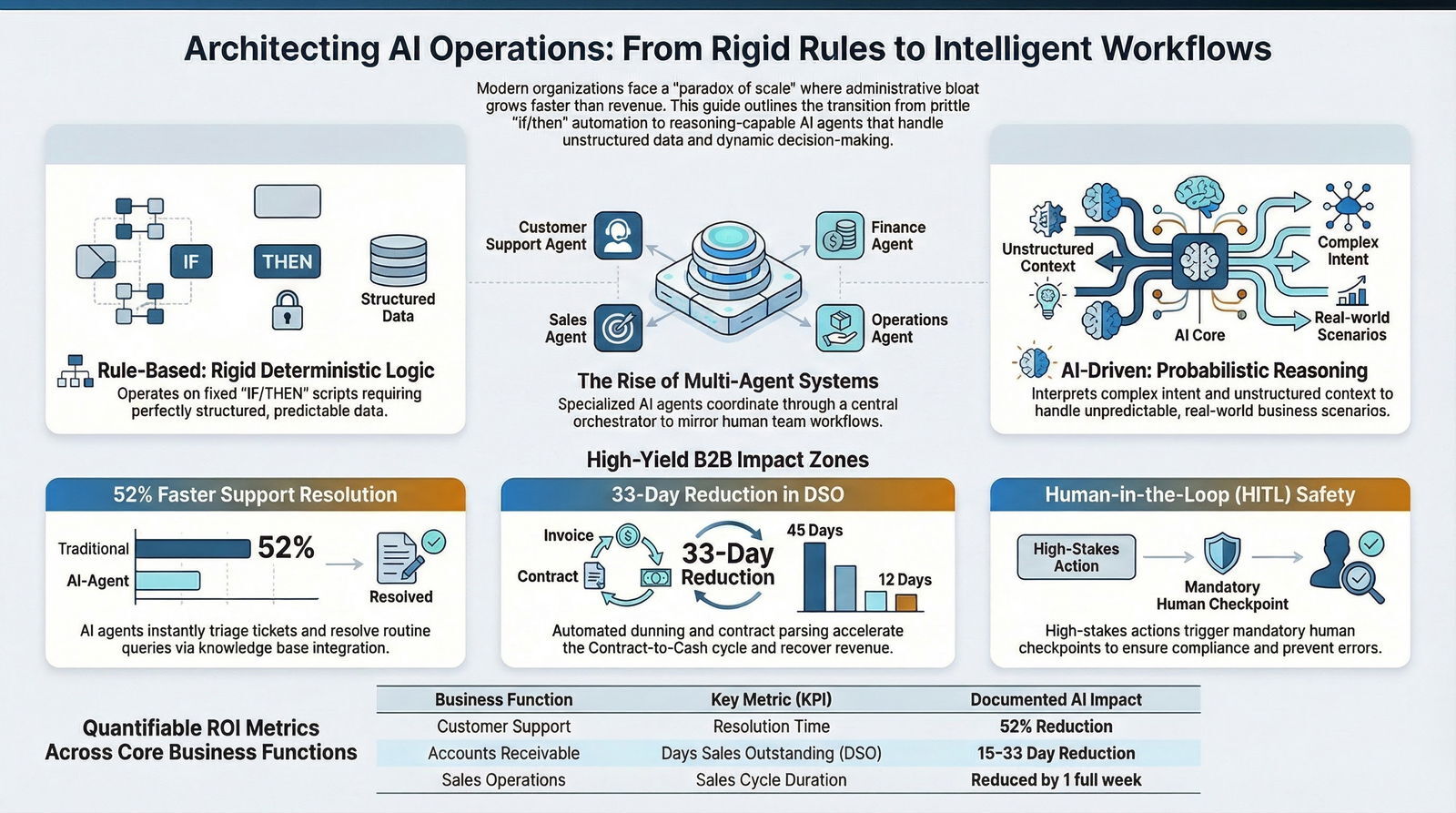
The value no longer lies in simply executing a pre-defined workflow faster. It now lies in:
- Generating Automated Insights: The software doesn't just hold data; it analyzes it to find trends, predict outcomes, and recommend actions.
- Delivering Hyper-Personalization: The experience adapts to each user's role, behavior, and needs, making complex software more intuitive and effective.
- Enabling Intelligent Operations: The system can optimize workflows, allocate resources, and even provide real-time coaching to users, as seen in the Cresta call center example from Dr. Westerman's talk.
The Ultimate Reframe: Marketing to AI Agents
Perhaps the most profound shift comes from combining the modularity of microservices with the power of AI. We are entering an era where the "buyer" of your B2B software may not be human. Increasingly, AI agents are tasked with discovering, evaluating, and shortlisting software solutions based on technical criteria.
This requires a radical re-thinking of your value proposition. You are no longer just selling a user-friendly "destination." You are selling robust, well-documented "infrastructure."
Why AI decision automation will change the way you run software ...
This article from DevPro Journal makes a compelling case for why B2B value propositions must now be designed for evaluation by AI agents, not just human decision-makers.
Please read the entire article. Pay close attention to these key concepts: The "agent buyer" and its preference for "primitives" (APIs, SDKs). The strategic shift from "destination" to "infrastructure." Why your technical documentation is becoming your most important marketing asset. The need to rethink the "all-in-one" value proposition, even for existing platforms. The importance of data transparency for cold, hard AI calculators.
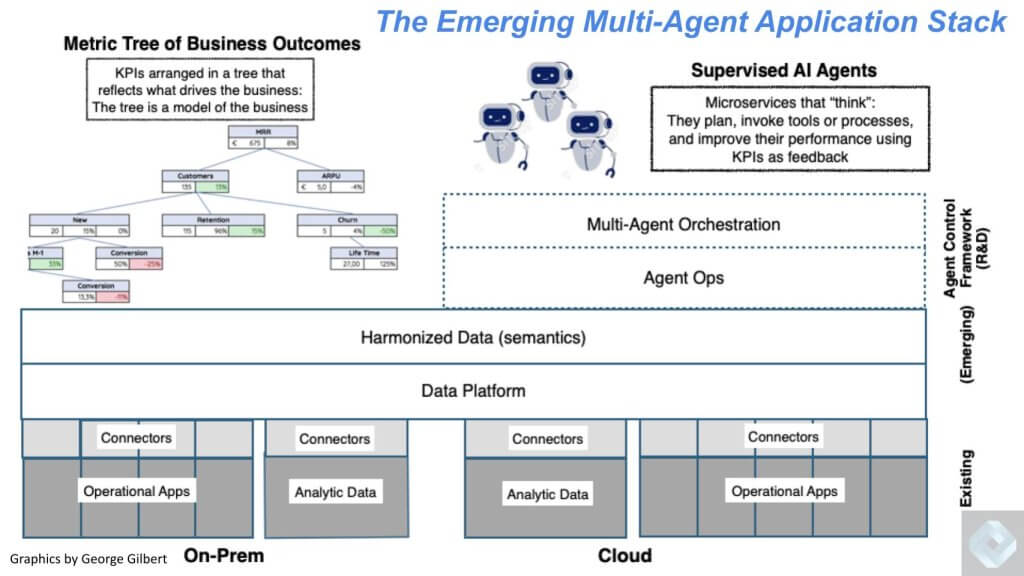
This "infrastructure" value proposition is the ultimate convergence of microservices and AI. The microservices are the "primitives" that AI agents evaluate. Your documentation must clearly expose these primitives. Your value claims must be backed by transparent data that an AI can process.
Conclusion
In this lesson, we have analyzed the fundamental ways in which microservices and AI are reshaping the B2B customer value proposition. We've moved from the messy reality of the old model to a new paradigm defined by intelligence, composability, and machine-to-machine interaction.
Here are your key takeaways:
- From Monolith to Composability: Microservices shift the value proposition from a rigid, "all-in-one" platform to a flexible, "best-of-breed" set of composable services or "primitives."
- From Automation to Intelligence: AI elevates the value proposition from simply executing workflows to providing automated insights, hyper-personalization, and predictive, intelligent operations.
- From Human Buyers to AI Agents: The combination of microservices and AI means your value proposition must be articulated as robust "infrastructure," with clear documentation and transparent data designed for evaluation by AI agents.
You now have a clear understanding of what has changed for the customer. In our next lesson, we will build directly on this foundation to redesign your product positioning and messaging to articulate this new, powerful value proposition to the market.