Introduction
In our previous lesson, we established the formal structures of corporate governance—the board of directors and its committees—that are designed to ensure a company is run in the best interests of its shareholders. We saw how roles are separated and responsibilities are delegated to maintain oversight. Today, we delve into what happens when these structures and the people within them are put to the test by ethical challenges.
Your background as a social researcher has given you deep insight into the complexities of human relationships and motivations. Business ethics operates in a similar domain, exploring how individuals navigate conflicting duties, pressures, and personal interests within a corporate setting. This lesson is not about memorising rules, but about developing a framework to analyse and resolve these complex scenarios. We will use a case-based approach to analyse ethical dilemmas, directly addressing a key qualitative aspect of your CB1 exam syllabus.
A Framework for Ethical Analysis
Before diving into specific cases, it's essential to have a structured way to think about them. An ethical dilemma in business is rarely a simple choice between right and wrong. More often, it's a conflict between two or more competing responsibilities—for example, loyalty to a boss versus the duty to report financial statements accurately, or a personal financial interest versus the duty to a client.
The Consultative Committee of Accountancy Bodies (CCAB) provides a robust conceptual framework for this analysis. It's a powerful tool for deconstructing any ethical problem you might face.
[PDF] Ethical Dilemmas Case Studies
This document from the CCAB, a leading UK accounting body, provides the professional framework for resolving ethical issues. We will use this as our guide throughout the lesson.
Please read the introductory sections to understand the three core components of the ethical framework. Focus on: The five fundamental principles: These are the bedrock of professional conduct: Integrity, Objectivity, Professional Competence and Due Care, Confidentiality, and Professional Behaviour. The five types of threats: These are factors that can compromise the fundamental principles. Pay close attention to the definitions of self-interest, familiarity, and intimidation threats. The 'reasonable and informed third party' test: This is a crucial filter for evaluating your judgments. Would an objective outsider agree with your conclusion?
This framework gives us a three-step process for any ethical dilemma:
- Identify which fundamental principles are at stake.
- Evaluate the threats to those principles.
- Address the threats by determining a course of action that an objective third party would find reasonable.
Let's apply this framework to some real-world scenarios.
Case Study 1: Pressure from the Top
One of the most common ethical challenges arises from explicit or implicit pressure from management to manipulate financial results. This pressure often stems from the desire to meet market expectations, secure funding, or achieve performance bonuses.
The following video features a forensic accountant who explains why this kind of fraud is so prevalent and the mechanisms used to perpetrate it.
Forensic accountant explains why fraud thrives on Wall Street
This video from Big Think, "Forensic accountant explains why fraud thrives on Wall Street," provides a compelling real-world context for understanding earnings management and the pressures that drive it.
Watch the following segments to understand the "why" and "how" of this ethical dilemma: Motivation for Fraud: Understand the intense pressure publicly traded companies face to meet Wall Street estimates. Accrual vs. Cash Accounting: Note the explanation of how accrual accounting, specifically revenue recognition, can be exploited. This is a critical technical point. The Case of Andrew Johnson: This is a powerful, real-life case study of an accountant who faced the "make the numbers work" dilemma. Pay attention to his motivations and the consequences.
The case of Andrew Johnson is a classic example of an intimidation threat. He was afraid of losing his job if he didn't comply with his bosses' demands. This pressure compromised his integrity (being straightforward and honest) and professional competence (applying accounting standards correctly). He knew what he was doing was wrong but felt he had no choice.
This next, shorter video animates a similar, very common scenario involving sales targets and bonuses.
Ethics Case Study: It was Just a Careless Mistake
This case study from the Institute of Singapore Chartered Accountants provides a concise, animated scenario that clearly labels the ethical threats involved.
Watch the full video, from the main scenario to the analysis. Notice how the finance director, David, is pressured by the sales director, Johnny, to delay an accounting adjustment.
In this case, David faces two distinct threats:
- A self-interest threat: His own bonus would be negatively affected if he makes the correct accounting adjustment.
- An intimidation threat: Johnny threatens to escalate the issue to the CEO, creating pressure to comply.
David's proposed action—insisting on the correct accounting treatment—upholds the principle of integrity. The analysis suggests that if pressured further, he should escalate the issue to the audit committee or, in the worst case, resign. This demonstrates the "addressing threats" part of our framework.
Case Study 2: When Internal Controls Fail
Companies establish systems and policies to prevent and detect fraud. These internal controls are the practical safeguards that support an ethical culture. But what happens when these systems are deliberately bypassed or when a culture of familiarity undermines them?
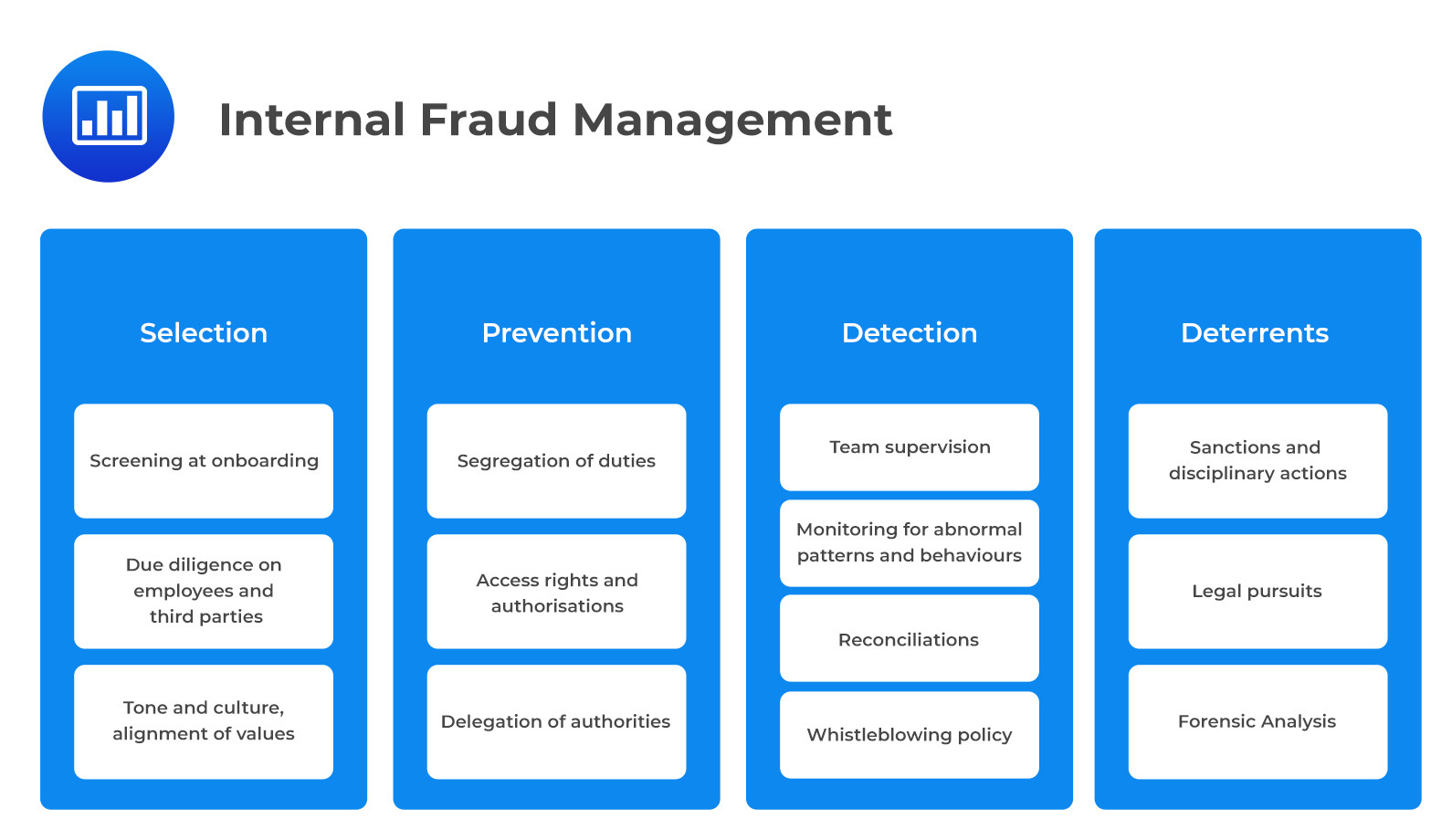
The pillars of Prevention and Detection rely on robust internal controls. Now let's examine a case study from the CCAB where these controls break down due to a seemingly harmless workplace culture.
[PDF] Ethical Dilemmas Case Studies
This case study explores how a culture of familiarity can lead to a systematic breakdown in accounting controls, resulting in potentially serious legal consequences.
Read this case study in full. A company is processing staff sales "off the books" to fund a Christmas party.
Let's analyse this using our framework:
- Principles at stake: Primarily Integrity. The financial statements are misleading, and undeclared income is being hidden from tax authorities. Professional Behaviour is also key, as this conduct is illegal (tax evasion) and discredits the profession.
- Threats: The main threat is familiarity. The accountant has a close relationship with the directors and staff, making it difficult to challenge a practice that everyone seems to accept and benefit from.
- Resolution: The accountant must advise the directors to stop the practice, record the sales properly, and rectify the situation with the tax authority. If the directors refuse, the accountant must resign from the engagement and consider their legal obligation to report the suspected tax evasion under anti-money laundering regulations. Simply resigning is not enough.
This case shows how a minor ethical lapse, rationalized by a "friendly" culture, can snowball into serious misconduct.
Exam Practice: Making the Call
The CB1 exam will present you with short scenarios requiring you to identify the core ethical conflict and the most appropriate response. Let's work through a few examples.
[PDF] Objective Based Assessment - CB1 Specimen Examination
This specimen paper will give you a taste of how ethical dilemmas are presented in the exam.
Read the following two questions and consider the correct course of action based on our framework. First, review Question 10. An actuary is asked by a superior to understate a pension liability for a client. Next, read Question 12. A junior analyst discovers that his company has overstated the effectiveness of a new drug and his line manager has ignored his concerns.
Analysis of Question 10: The actuary, P, is facing an intimidation threat from their superior. Complying would violate the principle of integrity and objectivity.
- (A) and (B) are incorrect as they involve knowingly acting unethically.
- (D) is about accepting responsibility, but it doesn't solve the immediate dilemma of being asked to do something wrong.
- (C) "seek advice from a senior manager at the consulting firm" is the correct first step. This is a form of internal escalation to address the threat without immediately violating confidentiality or creating a larger conflict.
Analysis of Question 12: The analyst, Tom, has already tried to resolve the issue with his manager. The principle of professional behaviour (and arguably public interest) requires him to take further action.
- (A) Keeping quiet is a failure to act.
- (C) Going to the media is a drastic step that should only be a last resort after all internal channels are exhausted, as it breaches confidentiality.
- (D) Resigning without a reason does not solve the problem.
- (B) "Escalate the matter internally using his company’s whistleblowing process" is the correct next step. This follows established corporate governance procedures and allows the company to address the issue, aligning with the function of the Audit Committee we discussed in the last lesson.
Conclusion
In this lesson, we have moved from the structures of governance to the ethical pressures that test them. We've seen that navigating business ethics requires more than just good intentions; it demands a systematic approach to analysis and a commitment to professional principles.
Key Takeaways:
- Ethical dilemmas often involve a conflict between competing duties and pressures, not simple right-or-wrong choices.
- A robust framework for analysis involves identifying the fundamental principles at stake (e.g., Integrity, Objectivity), evaluating the threats (e.g., Self-interest, Intimidation, Familiarity), and determining an appropriate response.
- Common dilemmas include pressure from management to manipulate results, conflicts of interest, and the breakdown of controls due to overly familiar relationships.
- Resolving dilemmas often involves a process of escalation, from discussing with a manager to involving senior leadership, the audit committee, or, if necessary, external authorities via whistleblowing procedures.
In our next lesson, we will shift our focus from the conduct within a company to the legal and financial characteristics of different types of businesses. We will compare sole traders, partnerships, and limited companies, examining how their structure affects liability, taxation, and access to finance.