Introduction
In our last lesson, we compared the four main types of business structures, establishing that the concept of liability is the most critical distinction between them. We saw that while sole traders and partners face unlimited personal risk, limited companies offer a protective shield for their owners. This lesson puts that shield to the test.
Today, we will move from legal theory to financial reality by analysing exactly what "limited liability" means when a company fails. In line with your preference for practical application, we will work through a numerical creditor-loss scenario. You will see firsthand who bears the financial cost of a corporate collapse, why some creditors get paid while others lose everything, and how this all demonstrates the core trade-off of the limited liability structure. This directly addresses the learning outcome of analysing the financial implications of a company's failure for its creditors.
Limited vs. Unlimited Liability: A Quick Refresher
Before we delve into a liquidation scenario, let's quickly reinforce the fundamental difference between limited and unlimited liability. The core idea is the separation—or lack thereof—between the business and its owners.
Limited Liability and Unlimited Liability The Key Differences Explained!
This video, "Limited Liability and Unlimited Liability," provides a concise explanation of these two crucial concepts.
Please watch these two short segments: Limited Liability: Focus on the concept of a 'separate legal entity' and how it protects shareholders' personal assets. Unlimited Liability: Note how, for unincorporated businesses, the owner is the business, meaning their personal assets are at risk.
With unlimited liability, there is no distinction. If the business incurs debts it cannot pay, creditors can pursue the owners' personal assets—their house, car, and savings—to settle the claims.
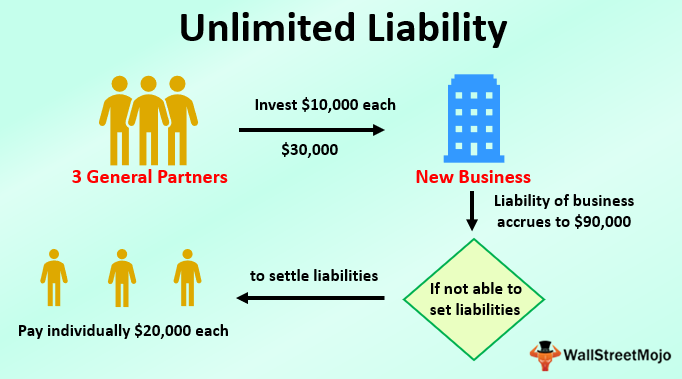
With limited liability, the company is a separate legal person. If it fails, the owners (shareholders) stand to lose the money they invested in buying shares, but nothing more. Their personal assets are safe. This begs the question: if the shareholders are protected, who absorbs the loss? The answer lies in the process of liquidation.
When a Company Fails: The Process of Liquidation
When a limited company is unable to pay its debts as they fall due, it is deemed insolvent. This typically triggers a formal process called liquidation (or "winding up"), where the company's life is brought to an end. A licensed insolvency practitioner, known as a liquidator, is appointed. Their job is to:
- Take control of the company.
- Sell off ("realise") all of the company's assets to raise cash.
- Distribute that cash to the company's creditors in a strict, legally-defined order of priority.
[PDF] Quick Guide to Liquidation - Squire Patton Boggs
This guide from law firm Squire Patton Boggs provides a professional overview of the liquidation process.
Please read the following sections to understand the context of our numerical example: The first section, which defines liquidation as a terminal process aimed at maximising returns for creditors. The section on Types of Liquidation, which explains the difference between a voluntary liquidation (started by the company) and a compulsory one (forced by a creditor).
The Order of Priority: Who Gets Paid First?
The most critical part of a liquidation is the order in which creditors are paid from the realised assets. This is not a negotiation; it's a rigid hierarchy set by law. Understanding this "pecking order" is essential to analysing the financial outcome for each party.
The following video explains the "Liquidator's Statement of Account," which is the formal summary of cash received and paid out. The payment side of this statement perfectly illustrates the order of priority.
#2 Liquidation - Liquidator Statement of Account - Format -By Saheb Academy - B.COM / BBA / CA INTER
This video, "Liquidator Statement of Account," walks through the format and, crucially, the strict order of payments made during a liquidation.
Focus on these two segments which detail the creditor hierarchy: The Payment Order: This section explains the priority of liquidation costs, debenture holders (a type of secured creditor), and introduces the different classes of creditors. Preferential Creditors: Pay close attention to the definition of preferential creditors, such as government taxes and specific employee-related payments. This is a key category that ranks above ordinary creditors.
To summarise the hierarchy, payments are made in the following order until the money runs out:
- Fixed Charge Holders: Creditors with a claim over a specific asset (e.g., a bank with a mortgage on a building). They get the proceeds from that specific asset.
- Liquidation Expenses: The liquidator's fees and legal costs. They get paid before anyone else from the general pot of money.
- Preferential Creditors: This includes certain unpaid wages and holiday pay to employees (up to a statutory limit) and some taxes owed to HMRC.
- Floating Charge Holders: Creditors with a general claim over a class of assets, like inventory.
- Unsecured Creditors: This is the largest group, including suppliers, customers who paid in advance, landlords (for unpaid rent), and HMRC for other taxes.
- Shareholders: If, by some miracle, all creditors are paid in full, any remaining money is returned to the shareholders (preference shareholders first, then ordinary shareholders). In most insolvent liquidations, they receive nothing.
Creditor-Loss Scenario: "Lingerie Designs Ltd."
Let's apply this to a numerical example. Your former hobby in lingerie design has grown into a small business, "Lingerie Designs Ltd." Unfortunately, after a few tough years, the company is insolvent and enters liquidation.
Here is a simplified summary of the company's financial position:
- Assets:
- Cash at bank: £5,000
- Inventory (fabric, etc.): Expected to sell for £15,000
- Workshop Equipment: Expected to sell for £20,000
- Total cash to be realised: £40,000
- Liabilities (who the company owes money to):
- Liquidator's Fees (estimated): £4,000
- Employee Wages: 2 employees are owed 1 month's salary of £2,000 each. Total: £4,000
- Bank Loan (secured by a floating charge): £25,000
- Trade Creditors (fabric suppliers): £30,000
- HMRC (Corporation Tax): £10,000
- Total Liabilities: £73,000
- Share Capital: You invested £10,000 for your shares.
The company has only £40,000 in assets to pay off £73,000 of debts. Let's distribute the cash according to the order of priority.
The Distribution Waterfall:
- Starting Cash Pool: £40,000
- Pay Liquidation Expenses: The liquidator is paid first.
- Cash remaining: £40,000 - £4,000 = £36,000
- Pay Preferential Creditors: Unpaid employee wages are a preferential debt. The full £4,000 is preferential.
- Cash remaining: £36,000 - £4,000 = £32,000
- Pay Floating Charge Holders: The bank has a floating charge.
- Cash remaining: £32,000 - £25,000 = £7,000
- Pay Unsecured Creditors: This is where the money runs out. The unsecured creditors are the trade suppliers (£30,000) and HMRC (£10,000).
- Total unsecured claims: £30,000 + £10,000 = £40,000
- Cash available for them: Only £7,000
- Each unsecured creditor will receive a fraction of what they are owed. The recovery rate is , or 17.5 pence in the pound.
- The fabric suppliers receive: £30,000 * 0.175 = £5,250. They lose £24,750.
- HMRC receives: £10,000 * 0.175 = £1,750. It loses £8,250.
- Cash remaining: £7,000 - £7,000 = £0
Financial Implications and Analysis:
- For the Shareholders (You): You receive nothing. Your initial investment of £10,000 is completely lost. However, the company's creditors cannot ask you for another penny. Your personal assets are safe. This is the benefit of limited liability.
- For the Creditors: The cost of your limited liability has been transferred to them.
- The liquidator, employees, and the bank were paid in full because they ranked higher in the order of priority.
- The unsecured creditors (suppliers, HMRC) bore the brunt of the shortfall, losing a collective £33,000. This is the "creditor-loss" at the heart of this scenario. It is the price they pay for the protection afforded to the company's owners.
Conclusion
In this lesson, we have moved beyond the definition of limited liability to see its powerful and sometimes harsh financial consequences in practice. By simulating a liquidation, we've seen that the protection enjoyed by shareholders is not without cost—it is a risk transferred to the company's creditors.
Key Takeaways:
- Limited liability protects the personal assets of shareholders, but their investment in the company is at risk.
- In a liquidation, a company's assets are sold and distributed to creditors according to a strict statutory order of priority.
- Creditors higher up the hierarchy (like employees with preferential claims and secured lenders) are more likely to be paid.
- Unsecured creditors and shareholders are at the bottom of the pecking order and therefore face the highest risk of financial loss when a company fails. The loss they suffer is the direct consequence of the shareholders' liability being limited.
In our next lesson, we will continue our exploration of limited companies by comparing the characteristics of public and private limited companies. While both offer limited liability, they differ greatly in their ability to raise funds, their ownership structure, and their regulatory burdens.