Hello! Welcome to your next lesson in the Fundamentals of Financial Accounting module.
In our last session, we mastered the mechanics of double-entry bookkeeping, learning how to record any transaction using debits and credits. We saw that for an asset purchase, we debit an asset account. For a running cost like rent, we debit an expense account. Today, we focus on the critical decision that precedes this entry: how to classify an expenditure in the first place.
This lesson addresses a cornerstone concept in accounting: distinguishing between capital expenditure and revenue expenditure. Getting this classification right is crucial because it directly impacts a company's reported assets on the Statement of Financial Position and its profit on the Statement of Profit or Loss. For your CB1 exam, you'll be expected to confidently make this distinction across various scenarios.
1. The Core Distinction: Building vs. Running
At its heart, the difference is about the time horizon of the benefit the spending provides.
- Capital Expenditure (CapEx) is money spent to acquire or improve a long-term asset. These are significant investments that will benefit the business for more than one year. Think of it as spending to build the business's capacity.
- Revenue Expenditure (OpEx) is money spent on the day-to-day costs of running the business. The benefit of this spending is used up within the current year. Think of it as spending to run the business's operations.
The following video provides an excellent, detailed introduction to these concepts and explains why the distinction is so vital for accurate financial reporting.
#1 Capital & Revenue Expenditure - Concept & Problem - By Saheb Academy - Class 11 / CA Foundation
This video, "Capital & Revenue Expenditure" by Saheb Academy, provides a clear and comprehensive foundation for our topic.
Please watch the first two sections of the video. The first part introduces the basic idea of capital vs. revenue items based on their long-term or short-term effect. The second part explains the crucial reason for this distinction: capital items go to the balance sheet, while revenue items go to the profit and loss account. Misclassification distorts both profit and financial position.
2. Characteristics and Examples
Now that we have the basic definitions, let's explore the specific features of each type of expenditure.
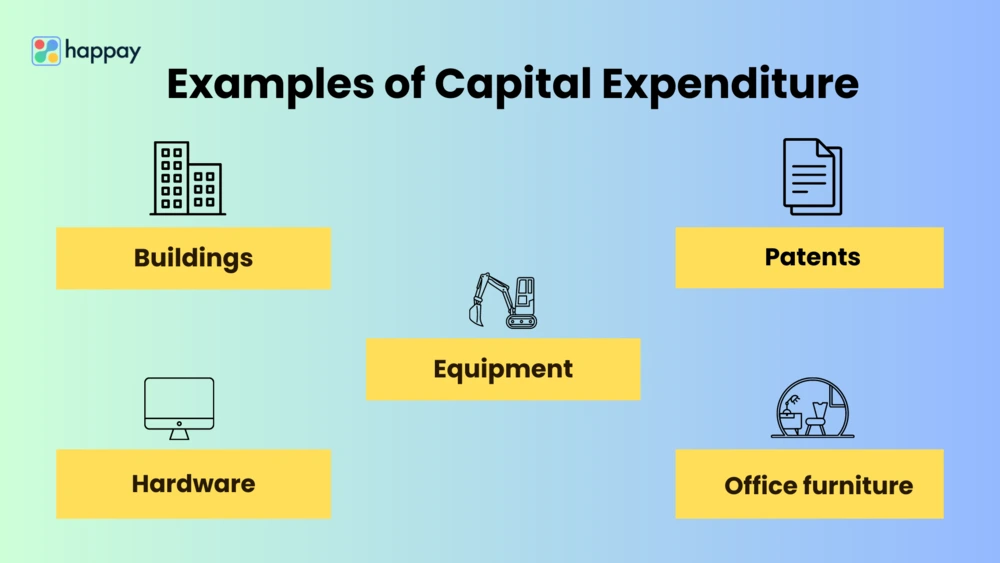
Capital Expenditure generally has the following characteristics:
- Acquires or improves a non-current (fixed) asset.
- The benefit lasts for more than one accounting period.
- It is typically non-recurring (e.g., you don't buy a new factory every month).
- It is intended to increase the business's income-generating capacity.
- The expenditure is capitalized, meaning it's recorded as an asset on the Statement of Financial Position.
Revenue Expenditure has these contrasting features:
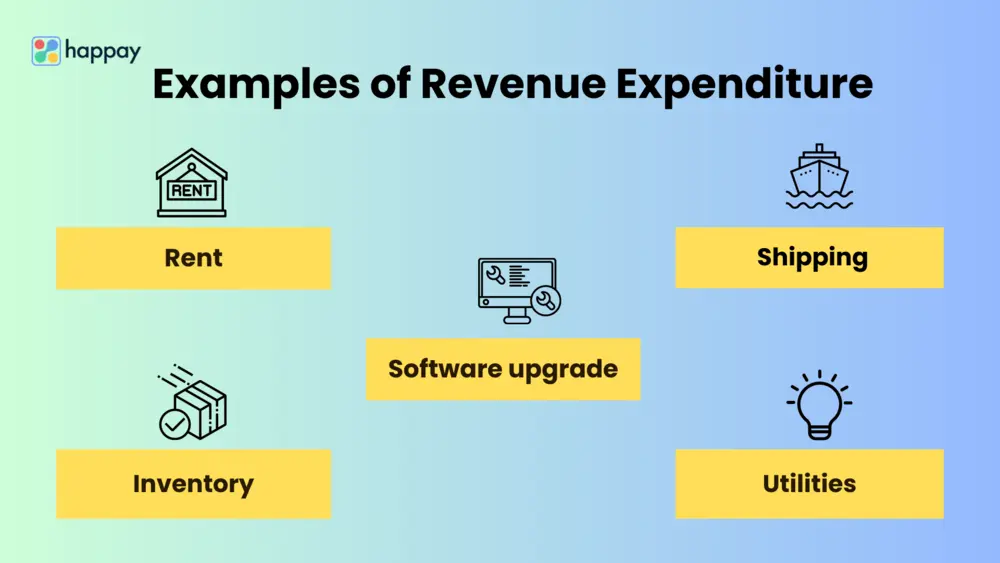
- Relates to the daily operations of the business.
- The benefit is consumed within one accounting period.
- It is typically recurring (e.g., rent, salaries).
- It maintains the existing income-generating capacity, but does not enhance it.
- The expenditure is expensed, meaning it's recorded as an expense in the Statement of Profit or Loss for the current period.
To deepen your understanding of these characteristics, let's return to the Saheb Academy video.
#1 Capital & Revenue Expenditure - Concept & Problem - By Saheb Academy - Class 11 / CA Foundation
Let's continue with the Saheb Academy video to delve into the specific features of each expenditure type.
Please watch the following two sections: Capital expenditure features: This part provides a detailed breakdown of CapEx, covering its non-recurring nature, long-term benefit, and its role in enhancing business capacity. Pay close attention to the example about all the costs associated with importing a machine (shipping, installation, taxes) – these are all part of the capital expenditure. Revenue expenditure features: This section explains OpEx as the opposite of CapEx, focusing on its recurring nature and its role in maintaining, rather than enhancing, assets and operations.
3. Making the Call: Key Classification Factors
In practice, the line between capital and revenue expenditure can sometimes be blurry. Accountants use a set of guiding principles or factors to make the correct classification. The context of the transaction is everything.
For example, the purchase of a computer by a law firm is a capital expenditure. But for a company that sells computers, the very same purchase is a revenue expenditure (purchase of inventory for resale).
The next section of the video is invaluable as it walks through the key factors that guide this critical decision.
#1 Capital & Revenue Expenditure - Concept & Problem - By Saheb Academy - Class 11 / CA Foundation
This part of the video is crucial for developing practical judgment. It moves beyond simple definitions to the nuanced factors that determine classification in real-world scenarios.
Watch the section on "Considerations in determining capital and revenue expenditure". The instructor explains five key factors, with clear examples for each: Nature of the business: The computer shop vs. furniture shop example is a classic. Recurring nature: One-off vs. frequent spending. Purpose of the expense: Maintenance vs. a major upgrade to boost capacity. Effect on revenue: Does it merely maintain current earning levels or expand them? Materiality: Small-value items that last a long time (like a calculator or a trash can) are often treated as revenue expenditure for simplicity, even though they technically fit the definition of an asset.
4. Application: A Practical Walkthrough
Theory is one thing, but applying it is how you will earn marks in your exam. The best way to solidify your understanding is to work through practical scenarios. The final part of our main video resource does exactly this, analyzing a series of transactions and justifying the classification for each.
#1 Capital & Revenue Expenditure - Concept & Problem - By Saheb Academy - Class 11 / CA Foundation
Now, let's apply these principles. This section presents a series of true/false questions, which is a common format for testing this topic.
Watch the problem-solving section from the start of the problem to its conclusion. For each of the eight scenarios presented, try to decide for yourself whether the statement is true or false before the instructor reveals the answer. This active engagement will be far more effective than just watching passively. Key scenarios to focus on include: Overhaul expenses on a second-hand machine. Legal fees to acquire a property vs. legal fees to defend a title to a property. First-time repairs on a newly purchased old building. Construction of temporary huts necessary for a main construction project.
This exercise demonstrates a critical rule: any cost incurred to bring an asset to its intended location and make it ready for use is part of the capital expenditure. This includes delivery, installation, legal fees for acquisition, and initial renovations to make a second-hand asset usable. In contrast, any cost to simply maintain the asset in its current working condition is a revenue expenditure.
Conclusion
In this lesson, we have established the crucial distinction between capital and revenue expenditure. This is not just a theoretical exercise; it fundamentally affects how a company's performance and position are presented to the outside world.
Key Takeaways:
- Capital Expenditure (CapEx) is for acquiring or improving long-term assets, providing benefits for more than one year. It is capitalized on the Statement of Financial Position.
- Revenue Expenditure (OpEx) is for the day-to-day running of the business, with benefits consumed within the year. It is expensed on the Statement of Profit or Loss.
- The key distinction lies in the purpose and time horizon of the benefit. Does the spending enhance earning capacity for the long term, or simply maintain it for the short term?
- Costs necessary to bring a new or second-hand asset into a usable condition are considered capital expenditure.
In our next lesson, we will see how these classifications feed into the accounting process as we learn to prepare a trial balance. The trial balance is a list of all the debit and credit balances from our ledger accounts. Correctly identifying an expenditure as capital (an asset) or revenue (an expense) is the first step to ensuring the right accounts are used and the trial balance is prepared accurately.