Welcome to the final lesson of our module on the fundamentals of financial accounting. In our previous session, you learned how to consolidate all the ledger accounts into a trial balance, which serves as a vital internal check on the arithmetic accuracy of your bookkeeping.
Today, we shift our focus from internal processes to external validation and the rules that govern financial reporting. This lesson will introduce you to the key components of an audit report and the main regulatory standards that ensure financial statements are reliable and comparable. Understanding these concepts is crucial for anyone who needs to interpret financial information, as they provide context on the quality and credibility of the numbers.
1. The Need for a Regulatory Framework
Imagine if every company could invent its own rules for preparing financial statements. It would be impossible for an investor, lender, or analyst to compare one company's performance to another's. To solve this, a global regulatory framework has been established to create a common language for business.
The goal is to ensure that financial reports are consistent, transparent, and globally comparable. The most widely used set of rules is the International Financial Reporting Standards (IFRS).
The structure of the organization behind these standards is quite logical. At the top is the IFRS Foundation, which oversees two key boards:
- The International Accounting Standards Board (IASB), which develops and issues the IFRS Accounting Standards.
- The International Sustainability Standards Board (ISSB), a newer body focused on sustainability-related disclosures.
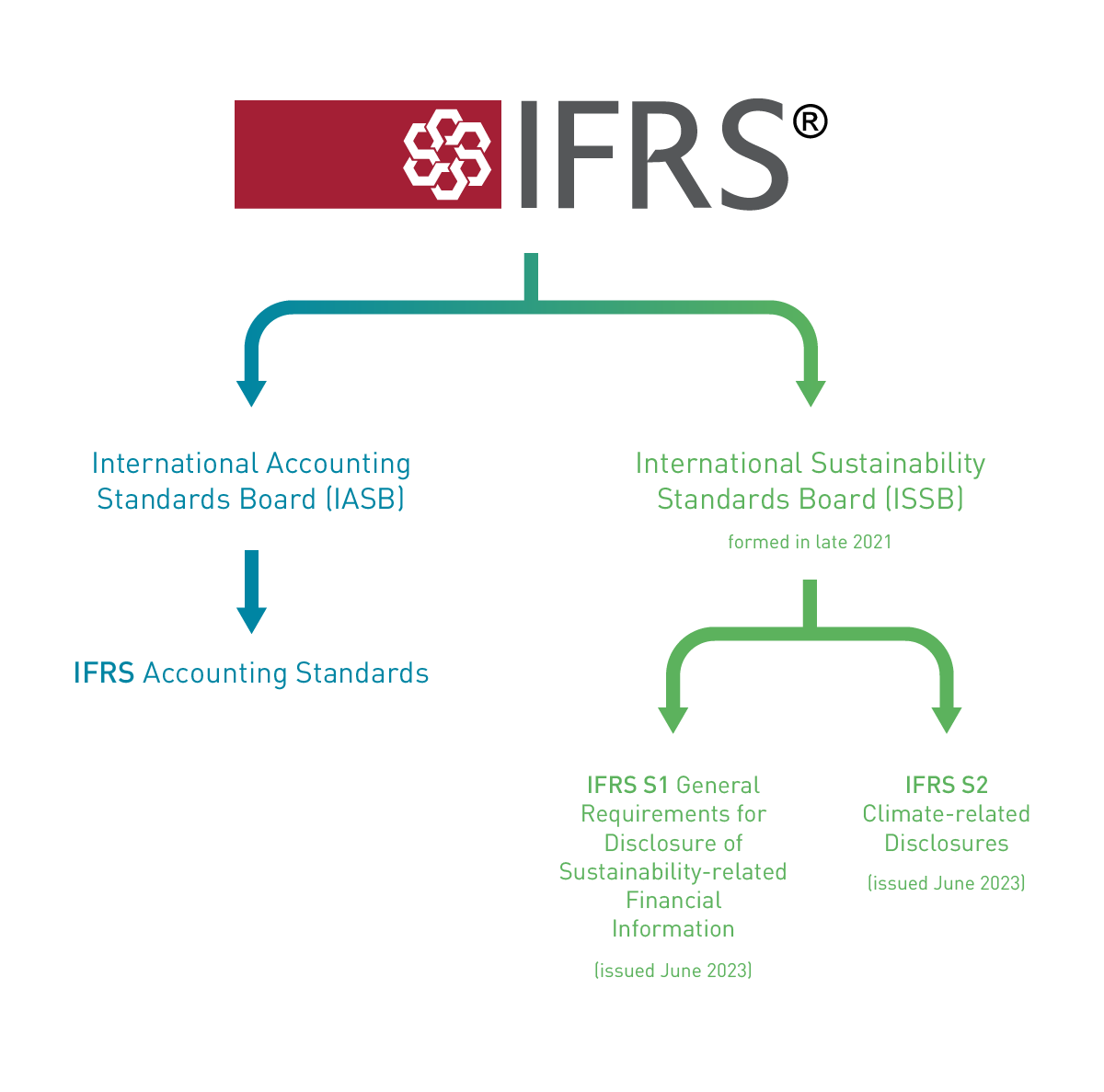
To understand the roles of these bodies more clearly, let's watch a short video.
Regulatory framework - ACCA Financial Reporting (FR)
This video from OpenTuition, titled "Regulatory framework," provides a concise overview of the IFRS Foundation and the IASB.
Please watch the first three minutes of the video, covering: The need for regulation to ensure high-quality reporting. The role of the IFRS Foundation in promoting a single set of global standards. The IASB's responsibility for the technical development and publication of IFRS.
The ultimate aim of these standards is to ensure that financial statements provide a 'true and fair view' of a company's financial position and performance. This is the bedrock principle of financial reporting.
2. The Concept of Materiality
In a perfect world, financial statements would be 100% accurate. In reality, absolute precision is impractical. The guiding principle that helps accountants and auditors decide what matters is materiality.
Information is considered material if its omission or misstatement could influence the economic decisions of users. As a statistician, you are familiar with the concept of a significance threshold. Materiality is a similar idea in accounting, but it relies heavily on professional judgment rather than a strict statistical rule.
[PDF] The Conceptual and Regulatory Framework for Financial Reporting
This brief section from "The Conceptual and Regulatory Framework for Financial Reporting" provides a formal definition of materiality.
Please read the section titled "Definition of Materiality". Notice that it's assessed using both quantitative (size) and qualitative factors.
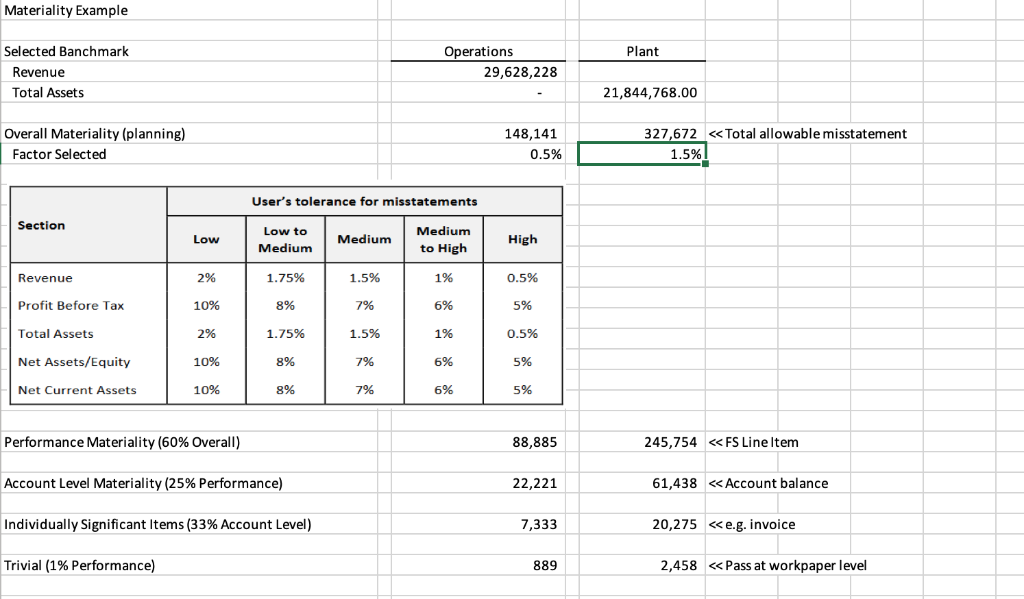
In practice, auditors often use quantitative benchmarks to guide their judgment. They might calculate a percentage of revenue, profit, or total assets to establish a "planning materiality" threshold. Anything below this amount might be considered trivial, while anything above it warrants closer inspection.
3. The Audit Report: The Independent Verdict
Once a company has prepared its financial statements according to IFRS, an independent auditor is often required to examine them. The auditor's findings are presented in an audit report. This report is not a guarantee of future success or a statement that the business is a good investment. Its purpose is singular: to provide an opinion on whether the financial statements give a 'true and fair view' and are free from material misstatement.
The most important part of the report is the audit opinion. Let's explore the different types of opinions an auditor can issue.
The Audit Report - Revisited - ACCA Audit and Assurance (AA)
This video, "The Audit Report - Revisited," clearly explains the different types of audit opinions and why they are issued.
Please watch the first four minutes. As you watch, focus on the logic connecting the problem found during the audit to the final opinion issued. Unmodified vs. Modified Opinions: Understand the two fundamental reasons for an auditor to issue a "bad" (modified) report: a material misstatement or an inability to get enough evidence. Levels of Modification: Grasp the difference between an issue that is "material" and one that is "pervasive" (so serious it fundamentally undermines the accounts). This distinction determines the type of modified opinion.
To summarize the key points from the video:
- Unmodified Opinion (or Unqualified): This is a "clean" opinion. The auditor concludes that the financial statements are true and fair in all material respects.
- Modified Opinion: This indicates a problem. There are three types:
- Qualified Opinion: Issued when there is a material misstatement or lack of evidence, but the issue is not pervasive. The report essentially says, "The financial statements are true and fair, except for this specific issue."
- Adverse Opinion: The worst opinion. Issued when there is a material misstatement that is pervasive. The auditor concludes that the financial statements as a whole are misleading and do not present a true and fair view.
- Disclaimer of Opinion: Issued when a lack of sufficient evidence is both material and pervasive. The auditor cannot gather enough information to form any opinion at all. They are effectively saying, "We couldn't do our job, so we can't tell you if these statements are right or wrong."
Besides the opinion itself, the audit report contains other important paragraphs, such as:
- Material Uncertainty Relating to Going Concern: Used when there are significant doubts about the company's ability to continue operating for the next year, even if the financial statements have disclosed this properly.
- Key Audit Matters (KAM): Required for listed companies, this section highlights the most significant areas of risk and judgment the auditor dealt with during the audit (e.g., valuing a complex financial instrument or assessing a major provision).
4. Practical Scenarios
Given your preference for practical application, let's test your understanding with a series of scenarios. For each situation below, decide which type of audit report or opinion would be most appropriate. These are adapted from a specimen exam paper for your CB1 exam.
Scenarios:
- A. The auditors required additional information about the sales of Company W. Company W’s managers are unable to provide it. The auditors are satisfied that apart from the uncertainty concerning sales, the accounts represent a true and fair view.
- B. Company X has disclosed in the notes to its accounts that there is uncertainty over the value of the investments it holds. The auditor is satisfied that the accounts represent a true and fair view and that the disclosure is adequate.
- C. Company Y’s directors have been uncooperative and have refused to supply the auditor with a significant amount of information required in their audit of financial statements, despite repeated requests. The auditor has been unable to complete the audit.
- D. The auditors fundamentally disagree with how Company Z has valued many of its assets. The auditors hold the opinion the accounts do not give a true and fair view.
Possible Audit Reports:
- Unqualified opinion with an Emphasis of Matter paragraph
- Qualified opinion
- Adverse opinion
- Disclaimer of opinion
Think through each scenario and match it to an outcome.
...
Here are the solutions:
- Scenario A matches with (2) Qualified opinion. The auditors have a problem (lack of evidence about sales) that is material, but it's isolated to one area ("apart from..."). Therefore, they issue a qualified "except for" opinion.
- Scenario B matches with (1) Unqualified opinion with an Emphasis of Matter paragraph. The accounts are true and fair, and the company has disclosed the uncertainty correctly. The auditor wants to draw users' attention to this important disclosure without modifying the opinion. An Emphasis of Matter paragraph does exactly that.
- Scenario C matches with (4) Disclaimer of opinion. The lack of cooperation is so significant ("a significant amount of information") that the auditor cannot form an opinion at all. The issue is pervasive.
- Scenario D matches with (3) Adverse opinion. The disagreement is fundamental and affects "many" assets. The auditor believes the accounts as a whole are not true and fair. This is a material and pervasive misstatement, requiring an adverse opinion.
This exercise is very similar to what you might encounter in your CB1 exam, turning a theoretical topic into a practical judgment task.
Conclusion
This lesson completes our journey through the fundamentals of accounting. We've moved from the building blocks of transactions to the final, externally verified financial reports and the rules that underpin them.
Key Takeaways:
- Financial reporting is governed by a regulatory framework, with IFRS issued by the IASB serving as the primary global standard. The goal is to ensure a 'true and fair view'.
- Materiality is the key judgment concept used to determine if an error or omission is significant enough to affect a user's decision.
- The audit report provides an independent opinion on the financial statements.
- The audit opinion can be unmodified (clean) or modified. Modified opinions include qualified, adverse, or a disclaimer of opinion, depending on whether an issue is material and/or pervasive.
You have now built a complete, foundational understanding of the accounting cycle, from recording transactions to preparing a trial balance and appreciating the context provided by auditors and regulators.
In our next module, Constructing Financial Statements, we will take the unadjusted trial balance you learned to prepare and refine it. We will incorporate crucial year-end adjustments for items like depreciation, accruals, and inventory. This will allow us to construct the three primary financial statements: the Statement of Profit or Loss, the Statement of Financial Position, and the Statement of Cash Flows.