Welcome to our final lesson in the module on long-term financing. In our last session, we explored convertible bonds, which combine the features of debt with an embedded option to convert into equity. Today, we will examine a related instrument, the warrant, which isolates that equity option into a standalone, tradable security.
This lesson is designed to help you master the learning outcome: describe the features of warrants and calculate their value upon exercise. Building on your understanding of options from our study of convertible bonds, we will delve into the unique characteristics of warrants, particularly how they differ from exchange-traded options and their impact on the company's capital structure. True to your preference, we will ground our discussion in practical calculations and numerical examples.
1. The Anatomy of a Warrant
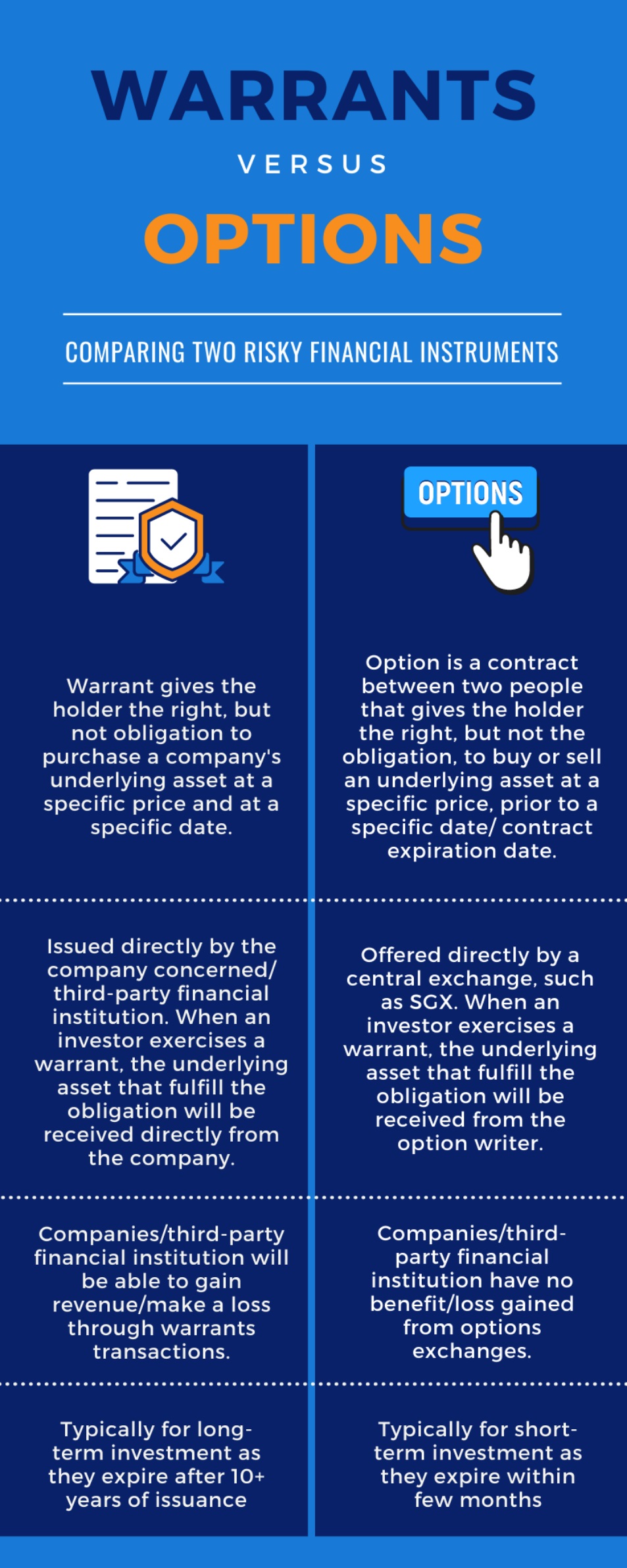
A warrant gives its holder the right, but not the obligation, to purchase a company's shares at a fixed price (the strike or exercise price) on or before a specified date (the expiry date). Think of it as a long-term call option issued directly by the company itself.
This last point is the most crucial distinction. While a standard call option is a contract between two investors, a warrant is a contract between an investor and the company. This structural difference has important consequences that we will explore throughout this lesson.
To start, let's get a clear overview of what a warrant is and why a company might issue one.
Stock Warrants Explained- How to Buy Warrants
The video "Stock Warrants Explained" by Zac Hartley provides an excellent introduction to the core concepts and the primary reasons for their existence.
Please watch the segment from the beginning. As you watch, focus on two key points: The fundamental difference between a warrant and an option. The reasons a company issues warrants, including raising capital and employee compensation.
As the video highlighted, the two main purposes for issuing warrants are:
- As a "sweetener": Companies often attach warrants to other financing, such as a bond issuance or private placement, to make the offering more attractive to investors. This allows the company to, for instance, pay a lower interest rate on its bonds.
- As compensation: Warrants can be a form of long-term incentive for executives and key employees, aligning their interests with those of shareholders.
Key Features and Terminology
Warrants share much of their terminology with options. Let's define the essential terms, using the comprehensive "MANUAL FOR THE INVESTOR IN WARRANTS" as a reference.
[PDF] MANUAL FOR THE INVESTOR IN WARRANTS - CaixaBank
This manual from CaixaBank provides detailed definitions for the features of warrants.
First, read the sections "Definition" and "Characteristics of warrants" to understand the basic properties. Then, familiarise yourself with the two main types of warrants by reading about European, American, Call, and Put warrants. While companies typically issue call warrants for financing, put warrants also exist. Finally, review the definitions in the Glossary for the following key terms: Strike price, Expiry date, Premium, Ratio, Call warrant, and Put warrant.
The image below provides a concise summary comparing warrants to the options you might be more familiar with.
2. The Impact of Exercise: Dilution
The most significant consequence of a warrant being a contract with the company stems from what happens upon exercise. When you exercise a standard call option, you buy existing shares from another investor. When you exercise a warrant, you pay the exercise price directly to the company, and in return, the company issues new shares.
This increases the total number of shares outstanding, which leads to dilution. Each existing share now represents a smaller percentage of the company, and the value per share is diluted by the influx of new shares issued at the (typically lower) exercise price.
Let's examine this concept more formally.
[PDF] Warrants - Bernt Arne Ødegaard
This academic paper by Bernt Arne Ødegaard provides a precise explanation of the dilution effect.
Read the sections titled "What is a warrant?" and "Dilution". Focus on the logic showing why the stock price after exercise (St+) is lower than the price before exercise (St).
As the paper explains, let's say a company has shares outstanding with a stock price of . The total value of the firm's equity is . If one warrant is exercised at a strike price of , the company receives in cash, and the number of shares increases to .
The new equity value is , and the new share price is:
Since an investor will only exercise if the stock price is greater than the strike price (), we can see that:
Thus, the new share price is always lower than the pre-exercise price , demonstrating the dilutive effect. This is a fundamental feature of warrants. The concept is also explained very intuitively in the following video.
Hertz Warrants Explained Simply: Should You Exercise HTZZW For HTZZ Stock?
This video from Financially Aware uses a simple analogy to distinguish warrants from options and explain dilution.
Watch the segment from this timestamp. Notice how the exercise of a warrant is a transaction with the company itself, leading to the creation of new stock.
3. Calculating the Value of a Warrant Upon Exercise
Now, let's turn to the core calculation. The "value upon exercise" is the gross profit an investor realizes by exercising their warrant. This is also known as the warrant's intrinsic value. A rational investor will only exercise if this value is positive.
For a call warrant, which gives the right to buy, the intrinsic value is the difference between the current market price of the stock and the warrant's strike price.
[PDF] MANUAL FOR THE INVESTOR IN WARRANTS - CaixaBank
The CaixaBank manual provides the direct formula for this calculation.
Read the section on "Intrinsic value (Vi)". Pay close attention to the formula for a call warrant. Then, observe how intrinsic value relates to a warrant being "in the money", "at the money", or "out of the money".
As the reading shows, for a single share (ratio = 1), the intrinsic value of a call warrant is:
The max(0, ...) simply ensures that the value cannot be negative, as you would not exercise a warrant to buy a share for more than its market price.
A Practical Example
Let's see how this works in a detailed scenario, accounting for the initial cost of the warrant.
Stock Warrants Explained- How to Buy Warrants
Zac Hartley's video, which you viewed earlier, contains an excellent numerical example demonstrating the payoff calculation.
Now, watch the extended segment from his example. He walks through two scenarios: Scenario 1 (Out-of-the-money): The stock price at expiration is below the total cost, so the warrant expires worthless. Scenario 2 (In-the-money): The stock price is well above the strike price, leading to a profitable exercise. Follow his calculation of the total profit per share.
Let's recap the profitable scenario from the video:
- Initial cost of warrant (premium): $0.27
- Exercise price: $0.95
- Total cost per share if exercised: $0.27 + $0.95 = $1.22
- Market price of the stock at expiration: $3.00
- Profit per share: $3.00 (sale price) - $1.22 (total cost) = $1.78
This demonstrates the leverage inherent in warrants. The initial investment was only $0.27, but it controlled an asset that generated a profit of $1.78, a return of over 600%.
A More Formal Calculation with Dilution
For your CB1 exam, you should also be prepared to calculate payoffs in a scenario that explicitly models dilution. Let's work through a more formal problem.
[PDF] Warrants - Bernt Arne Ødegaard
This paper contains a more advanced, but very useful, exercise that models the value of warrants and shares at liquidation, fully accounting for the dilutive effect.
Carefully study Exercise 2 and its solution. I will walk you through the key steps below.
Let's break down the logic of Exercise 2 from the paper:
- Data:
- Shares outstanding (): 1,000
- Warrants outstanding (): 250
- Strike price (): $120
- Total firm value at maturity (): This is the variable we are interested in.
- Exercise Condition: The warrants will only be exercised if the resulting share price is greater than the strike price. If they are not exercised, the share price is simply . If they are exercised, the new share price becomes . The exercise condition simplifies to whether the total firm value exceeds the total strike price needed for all original shares, i.e., .
- Payoff Calculation (if exercised):
- The total value of the firm becomes .
- The total number of shares becomes .
- The new price per share is .
- The value of one warrant upon exercise is the value of the share received minus the cost to exercise:
This type of calculation, which incorporates the dilutive impact on the entire firm, demonstrates a full understanding of how warrants function.
Conclusion
In this lesson, we have dissected the features and valuation of warrants, completing our survey of long-term financing instruments. We have established that while they appear similar to options, their direct issuance by a company creates the crucial feature of dilution upon exercise.
Key Takeaways:
- A warrant is a security issued by a company that gives the holder the right to buy stock at a fixed price and date.
- Unlike exchange-traded options, exercising a warrant involves paying new capital to the company in exchange for newly issued shares.
- The issuance of new shares causes dilution, reducing the value of each existing share.
- The value of a call warrant upon exercise (its intrinsic value) is the amount by which the stock's market price exceeds the strike price, calculated as .
- The total profit from a warrant position must also account for the initial premium paid to acquire the warrant.
This lesson concludes our module on long-term financing. In our next session, we will begin a new module, "Short-Term and Alternative Financing", starting with a comparison of two fundamental sources of short-term cash for a business: bank overdrafts and term loans.