In our last lesson, we examined accruals and prepayments, which are essential adjustments for ensuring expenses and income are reported in the correct period. We continue our exploration of year-end adjustments today by focusing on a topic that directly engages the accounting principle of prudence: accounting for provisions and bad debts.
When a business sells goods on credit, it creates an asset known as a receivable—the right to collect cash in the future. However, experience shows that not all customers will pay what they owe. Prudence dictates that we should anticipate and account for these potential losses. This lesson will equip you with the methods to do just that, ensuring that a company's assets are not overstated and its profits are reported fairly. Your background in statistics will be particularly useful here, as the process of creating a provision for doubtful debts is fundamentally an exercise in estimating expected losses based on historical data and probability.
1. The Spectrum of Receivables: From Good to Bad
Not all receivables are equal. When analyzing them at the end of a financial period, we can categorize them into three groups.
#1 Provision for Doubtful Debts - Bad Debts - By Saheb Academy
To begin, let's establish some core definitions. The video "#1 Provision for Doubtful Debts" by Saheb Academy provides a clear breakdown of the key terminology.
Please watch the section from the definitions. As you watch, focus on the distinction between: Receivables (Debtors): The total amount owed to the business. Doubtful Debts: A portion of receivables where there is a doubt about collection. This is a potential future loss. Bad Debts (Irrecoverable Debts): Receivables that are confirmed to be uncollectible. This is a certain loss.
2. Accounting for Bad Debts
When a specific debt is confirmed as uncollectible (for instance, due to a customer's bankruptcy), it must be written off. This is a straightforward process where the receivable asset is removed from the books and an expense is recognized for the loss.
The double entry for writing off a bad debt is:
- Debit: Bad Debts Expense (an expense account in the Statement of Profit or Loss)
- Credit: Receivables (to reduce the asset on the Statement of Financial Position)
At the end of the year, the Bad Debts Expense account is closed to the Statement of Profit or Loss. Let's see how this works in practice.
IRRECOVERABLE DEBTS AND ALLOWANCES (BAD DEBTS AND PROVISIONS) - PART 2
The video "IRRECOVERABLE DEBTS AND ALLOWANCES (BAD DEBTS AND PROVISIONS) - PART 2" by FOG Accountancy Tutorials provides a very clear, multi-year demonstration of how to prepare the Bad Debt T-account.
Watch the segment from preparing the bad debt account. Notice how for each year, the bad debt amount is debited to the Bad Debt account and then immediately credited and transferred to the Profit or Loss (or Income Statement) account. There is no opening or closing balance carried forward for this expense account.
The journal entries shown below from the Books of Madden Ltd. perfectly illustrate this two-step process: first, the debt is written off against receivables, and second, the total bad debt expense is transferred to the Profit and Loss Account.

3. The Provision for Doubtful Debts: An Application of Prudence
Writing off known bad debts is only half the story. The prudence (or conservatism) principle requires us to anticipate likely future losses, not just those that have already been confirmed. Based on past experience, a business can estimate that a certain percentage of its remaining receivables will likely go bad in the future. To account for this, we create a Provision for Doubtful Debts (also called an Allowance for Receivables).
This is a direct application of probability. For example, if a company has $100,000 in receivables and historical data suggests 2% of such debts are never collected, it would anticipate a future loss of $2,000. Under International Accounting Standard (IAS) 37, a provision is recognized when there is a present obligation from a past event (selling on credit), a probable outflow of resources is expected (the loss of cash), and a reliable estimate can be made.
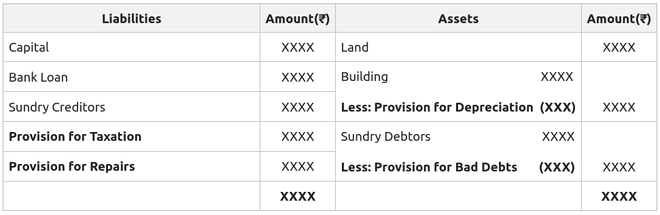
The provision acts as a contra-asset account. It is a credit balance that is offset against the debit balance of receivables on the Statement of Financial Position, thereby reducing the asset to a more realistic collectible amount.
4. A Worked Example: Creating and Adjusting a Provision
Let's now work through a comprehensive, multi-year example that ties together bad debts and the provision. This will demonstrate how to create the provision in the first year and, crucially, how to account for its movement (increase or decrease) in subsequent years.
We will use the excellent step-by-step example from the FOG Accountancy Tutorials video.
Step 1: Calculate the Required Provision
First, you need to calculate the closing provision required at the end of each year. This is typically a percentage of the closing receivables after writing off any specific bad debts identified during the year.
IRRECOVERABLE DEBTS AND ALLOWANCES (BAD DEBTS AND PROVISIONS) - PART 2
The instructor first calculates the required provision for each of the four years in the example. This sets the target for our provision account balance at the end of each period.
Watch the calculations from the workings. You'll see the provision is calculated as 5% of the year-end receivables figure.
Step 2: The T-Account for Provision for Doubtful Debts
Now, we will prepare the T-account. This is where you will see the mechanics of how the provision is created and adjusted year after year.
IRRECOVERABLE DEBTS AND ALLOWANCES (BAD DEBTS AND PROVISIONS) - PART 2
This is the core of the lesson. The video walks through the preparation of the Provision for Doubtful Debts account over four years, covering its initial creation, an increase, and a decrease.
Please watch carefully from preparing the provision account. Pay close attention to the following for each year: Opening Balance: The closing balance from the previous year is brought forward. Closing Balance: This is the required provision you calculated in Step 1. Profit or Loss Entry: This is the balancing figure. It represents the increase or decrease in the provision for the year and is the amount that goes to the Statement of Profit or Loss.
Let's summarize the key double entries for the provision account movements you just saw:
- To Create or Increase a Provision:
- Debit: Profit and Loss (an expense)
- Credit: Provision for Doubtful Debts (increases the contra-asset/liability)
- To Decrease a Provision:
- Debit: Provision for Doubtful Debts (decreases the contra-asset/liability)
- Credit: Profit and Loss (a negative expense, or income)
The most important takeaway is that while the full provision appears on the Statement of Financial Position, only the movement during the year affects the Statement of Profit or Loss.
5. Presentation in the Financial Statements
Finally, let's see how all these pieces are presented in the final accounts.
Statement of Profit or Loss
The total expense related to receivables for the year is the sum of two components:
- Bad debts written off during the year.
- The increase (or minus the decrease) in the provision for doubtful debts for the year.
Statement of Financial Position
The presentation under Current Assets is:
The FOG Accountancy video concludes by preparing extracts of these statements for its multi-year example, which perfectly illustrates this final presentation.
IRRECOVERABLE DEBTS AND ALLOWANCES (BAD DEBTS AND PROVISIONS) - PART 2
The video now shows how the figures from the T-accounts are presented in extracts from the Income Statement (P&L) and the Statement of Financial Position.
Watch from the income statement extract and then from the SOFP extract. This will solidify your understanding of the final output.
6. A Practical Shortcut for Exam Questions
For exam purposes, you often need to quickly calculate the total charge to the Profit & Loss. While T-accounts are the best way to understand the logic, a shortcut formula can be very efficient.
How to Account for Bad Debts - First Intuition - FI Hub
The article from First Intuition provides a concise summary of the rules. We'll focus on the part that explains how to handle adjustments to an existing provision.
Please read the sections starting from the introduction to provisions and continuing to the section explaining adjustments, from the example of adjusting the provision. This text reinforces the concept that only the movement is posted to the P&L.
As you saw in the videos and the reading, the total expense is the bad debts written off plus the movement in the provision. This logic can be summarized in a handy formula derived from the T-accounts. The Saheb Academy video explains a common shortcut format.
#1 Provision for Doubtful Debts - Bad Debts - By Saheb Academy
The Saheb Academy video explains a popular shortcut for calculating the amount to be charged to the P&L. This formulaic approach might appeal to your analytical background.
Watch the segment from the shortcut. The formula presented is: New Provision + Bad Debts for the year - Old Provision.
Let's break down this shortcut:
- New Provision (Closing Provision): This is the target provision needed at year-end.
- Bad Debts for the year: This includes any debts written off during the year plus any 'further bad debts' found at year-end.
- Old Provision (Opening Provision): The provision that existed at the start of the year.
This formula mechanically computes the total expense for the P&L. It's an excellent tool to use under exam pressure once you understand the underlying T-account logic.
Conclusion
Today, we've added another crucial year-end adjustment to your toolkit. You've seen how the principle of prudence guides us to account not only for confirmed losses (bad debts) but also for expected future losses (provision for doubtful debts).
Key Takeaways:
- Bad Debts are a confirmed loss and are written off as an expense.
- A Provision for Doubtful Debts is an estimate of future losses, created in line with the prudence principle.
- The total expense in the Statement of Profit or Loss is the sum of bad debts written off plus the increase (or minus the decrease) in the provision for the year.
- The Statement of Financial Position shows the gross receivables less the closing balance of the provision.
- Both T-accounts and the shortcut formula are effective methods for calculating the necessary figures for the financial statements.
In our next lesson, we will examine how to account for inventory, the final major adjustment in our journey to constructing a full set of financial statements. We will cover the different valuation methods, such as FIFO and weighted average cost.