Hello! Welcome back.
In our last lesson, we constructed the Statement of Changes in Equity, which meticulously tracked the journey of the owners' stake in the business over the accounting period. We concluded by calculating the final, closing balance for each equity component, especially Retained Earnings. That closing figure is not an endpoint; it's a critical input for our final destination in this module: the Statement of Financial Position (SFP).
Today, we will prepare the SFP, often called the Balance Sheet. This statement provides a snapshot of a company's financial health at a single point in time. It brings together everything we've worked on, from individual transactions to the adjusted trial balance and the other financial statements. Your quantitative background will be invaluable here, as the entire process is governed by the logic of a single, fundamental equation. By the end of this lesson, you will be able to confidently construct a complete Statement of Financial Position from an adjusted trial balance.
1. The Architecture of the Statement of Financial Position
The Statement of Financial Position is built upon the fundamental accounting equation:
This equation must always hold true—the statement must balance. It tells us that what a company owns (its Assets) is financed by what it owes to others (its Liabilities) and what it owes to its owners (its Equity).
To provide a clear picture, these three core elements are further classified:
- Assets: Resources controlled by the company.
- Non-Current Assets: Long-term resources not expected to be converted to cash within a year (e.g., property, equipment, intangible assets).
- Current Assets: Short-term resources expected to be converted to cash or used up within a year (e.g., inventory, accounts receivable, cash).
- Liabilities: Obligations of the company to transfer economic resources.
- Non-Current Liabilities: Obligations due in more than one year (e.g., long-term bank loans, bonds).
- Current Liabilities: Obligations due within one year (e.g., accounts payable, salaries payable).
- Equity: The residual interest in the assets of the company after deducting all liabilities. This includes Share Capital, Share Premium, and the closing Retained Earnings we calculated in the last lesson.
To start, let's watch a short, clear video that outlines this structure and reinforces the core equation.
The BALANCE SHEET for BEGINNERS (Full Example)
The video "The BALANCE SHEET for BEGINNERS" by Accounting Stuff offers a great introduction to the statement's purpose and classified structure.
Please watch the first two minutes, from the introduction to the accounting equation, and then from the breakdown of assets, liabilities, and equity into their current and non-current categories.
2. From Adjusted Trial Balance to Balance Sheet
Our primary source document for preparing the SFP is the Adjusted Trial Balance. As we've discussed, this document lists the final balance of every single account in the general ledger.
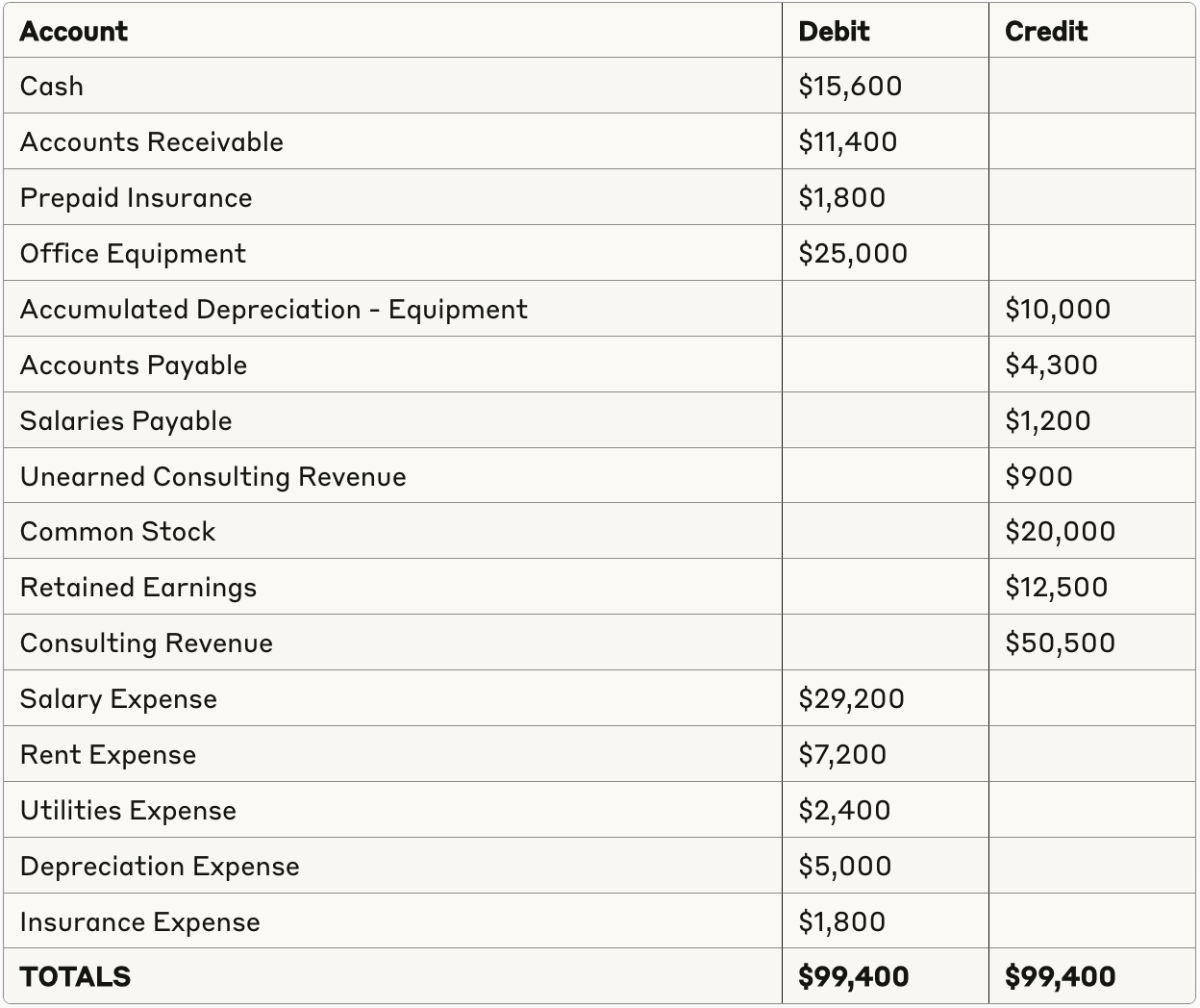
The process is one of systematic classification. You take each "real" account (Assets, Liabilities, Equity) from the trial balance and place it into the correct section of the SFP.
Let's practice this classification with a short exercise.
4.5: Prepare Financial Statements Using the Adjusted Trial Balance
This reading from OpenStax provides a clear example of an adjusted trial balance and asks you to sort the accounts.
First, look at the adjusted trial balance for "Magnificent Landscaping Service." Then, read the section titled "YOUR TURN". Before looking at the solution, mentally (or on paper) assign each account to either the Balance Sheet, Statement of Retained Earnings, or Income Statement. Finally, check your work against the provided solution.
3. A Step-by-Step Worked Example
Now, let's put theory into practice by building a complete Statement of Financial Position. The following video provides an excellent, detailed walkthrough that starts with a post-adjustment trial balance and ends with a fully balanced SFP. This is precisely the kind of numerical task you will face in your exam.
As you watch, pay close attention to these key steps:
- Populating the Asset Section: Note how the presenter lists non-current and current assets. A crucial detail is how Property, Plant, and Equipment (PPE) is presented: its original cost less its Accumulated Depreciation.
- Populating the Equity & Liabilities Section: Observe how the equity accounts are listed first, followed by non-current and current liabilities.
- The Final Check: The video culminates in the most satisfying moment—when Total Assets perfectly matches Total Equity and Liabilities, proving the accounting equation holds.
Balance Sheet from Post-Adjustment Trial Balance (Full Example)
The video "Balance Sheet from Post-Adjustment Trial Balance (Full Example)" by Counttuts is a perfect walkthrough of the entire process.
Please watch the video in two main parts: First, watch the creation of the asset side of the statement, from assets section. Focus on the distinction between non-current and current assets, and especially the treatment of accumulated depreciation. Next, watch the compilation of the other side of the equation, from equity and liabilities. Notice how capital, retained earnings (profit), and liabilities from the trial balance are slotted into place, leading to the final balancing of the statement.
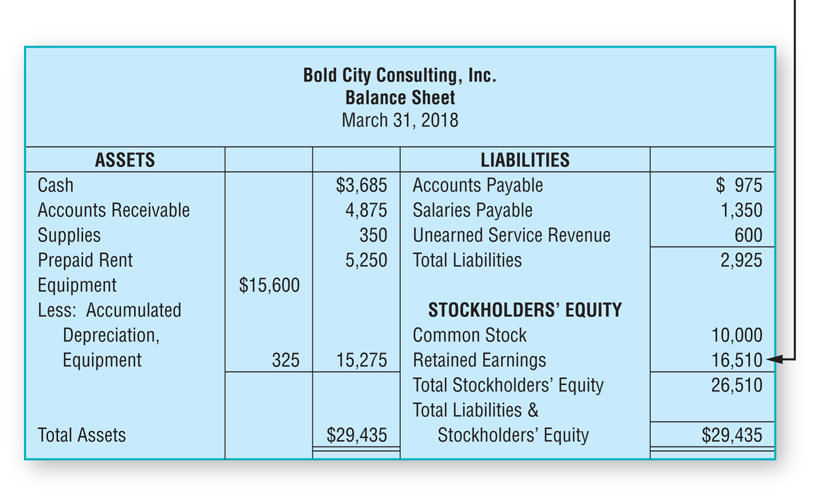
The final output is a clearly structured report. The image below shows a well-formatted "classified" balance sheet, which separates current and non-current items, just as you saw in the video. This is the standard presentation format.
4. A Common Mistake and a Useful Tool
A very common reason for a balance sheet not to balance is an error in the Retained Earnings figure. Remember, the Retained Earnings on the SFP must be the closing balance for the period. It's calculated as:
Opening Retained Earnings + Net Income for the period - Dividends for the period = Closing Retained Earnings
Forgetting to add the current period's net income is a frequent pitfall. The "Accounting Stuff" video you watched earlier has a quick segment explaining this exact error.
The BALANCE SHEET for BEGINNERS (Full Example)
Let's revisit "The BALANCE SHEET for BEGINNERS" to highlight a common error.
Watch the segment from the wrong way, where the presenter demonstrates why the balance sheet doesn't balance if you forget to include the profit for the year in the equity section.
Finally, while not always a required step in an exam, some accountants use a 10-column worksheet to organize the flow of information from the initial trial balance to the final financial statements. As a statistician, you might appreciate this structured, tabular approach. It visually bridges the gap between the trial balance and the financial statements.
4.5: Prepare Financial Statements Using the Adjusted Trial Balance
This part of the OpenStax article explains the 10-column worksheet, a tool that visualizes the entire statement preparation process.
Read the section introducing the worksheet. Then, skim through the detailed images and explanations to see how account balances are extended from the 'Adjusted Trial Balance' columns into the 'Income Statement' and 'Balance Sheet' columns. Focus on the final two columns (Balance Sheet columns) to see how net income is used to mechanically balance the worksheet.
Conclusion
Today we have assembled the Statement of Financial Position, the cornerstone report of a company's financial health. We have seen how it is logically constructed from the adjusted trial balance and how it must adhere to the fundamental accounting equation.
Key Takeaways:
- The Statement of Financial Position is built on the equation: Assets = Liabilities + Equity.
- It is prepared using the "real" accounts (assets, liabilities, equity) from the adjusted trial balance.
- Assets and liabilities are classified into current (short-term) and non-current (long-term) categories.
- The closing Retained Earnings figure, carried forward from the Statement of Changes in Equity, is the crucial link that ensures the SFP balances.
We have now prepared the three main financial statements: the Statement of Profit or Loss, the Statement of Changes in Equity, and the Statement of Financial Position. However, there is one more key statement to master. Our next lesson will focus on the Statement of Cash Flows, which explains the movement in a company's cash balance—the figure you see on the SFP—by classifying all cash movements into operating, investing, and financing activities.