Hello! Welcome to our lesson.
In our last session, we constructed a multi-layered analysis of the causes of the Russia-Ukraine war, moving from the deep historical and geographical factors like the quest for strategic depth, to the post-Cold War accelerant of NATO expansion, and finally to the immediate triggers and miscalculations that led to the 2022 invasion.
Today, we shift our focus from causes to consequences. The invasion did not occur in a vacuum; it was a massive shock to a deeply interconnected global system. Your background in computer engineering gives you an appreciation for how a single point of failure can trigger cascading effects across a network. We will apply a similar logic today to understand the war's global impact.
This lesson directly addresses the learning outcome: Assess the primary global consequences of the Russia-Ukraine war on energy markets, international alliances, and the global food supply.
We will dissect the war's fallout across these three critical domains, exploring how a regional conflict has reshaped the global landscape.
1. The Energy Shock: Europe's Painful Pivot
One of the most immediate and dramatic consequences of the war was the upheaval in global energy markets. This was particularly acute in Europe, which had built a decades-long, deep-seated dependence on Russian fossil fuels.

When Russia launched its invasion, this dependence turned from an economic reality into a profound geopolitical vulnerability. European nations were forced to impose sanctions on the very country that heated their homes and powered their industries.
To understand the mechanics of this disruption, let's examine a comprehensive academic review of the war's impact on supply chains.
The impact of the Russia-Ukraine war on global supply chains
This article, 'The impact of the Russia-Ukraine war on global supply chains,' systematically reviews the findings of multiple studies on the war's economic consequences. We will focus on the section detailing energy market volatility.
Please read the subsection titled 'Energy market volatility' (Section 3.2.2). As you read, focus on these key data points: Russia's significant share of global energy exports. The EU's specific import dependency on Russia. The immediate and dramatic price increases for oil, natural gas, and coal in Europe following the invasion.
As the reading highlights, the war triggered several key effects:
- Price Volatility: Energy prices skyrocketed as markets panicked about supply disruptions.
- Weaponization of Energy: Russia began cutting gas flows to Europe in retaliation for sanctions, attempting to break European resolve by inflicting economic pain.
- Strategic Realignment: The EU was forced into a rapid and costly search for alternative suppliers (like the US, Qatar, and Norway) and an acceleration of its transition to renewable energy. This has led to what the resource you just read refers to as "persistent trade pattern changes," which are likely to outlast the conflict itself.
This energy crisis demonstrates a core concept in modern geopolitics: weaponized interdependence. A relationship of mutual dependence, once seen as a source of peace, can be exploited as a tool of coercion in a conflict.
2. The Food Crisis: A Global Harvest of Hunger
Beyond energy, the war struck at an even more fundamental human need: food. Russia and Ukraine are not just two countries; together, they form a global breadbasket, a critical hub for the world's supply of grains and vegetable oils.
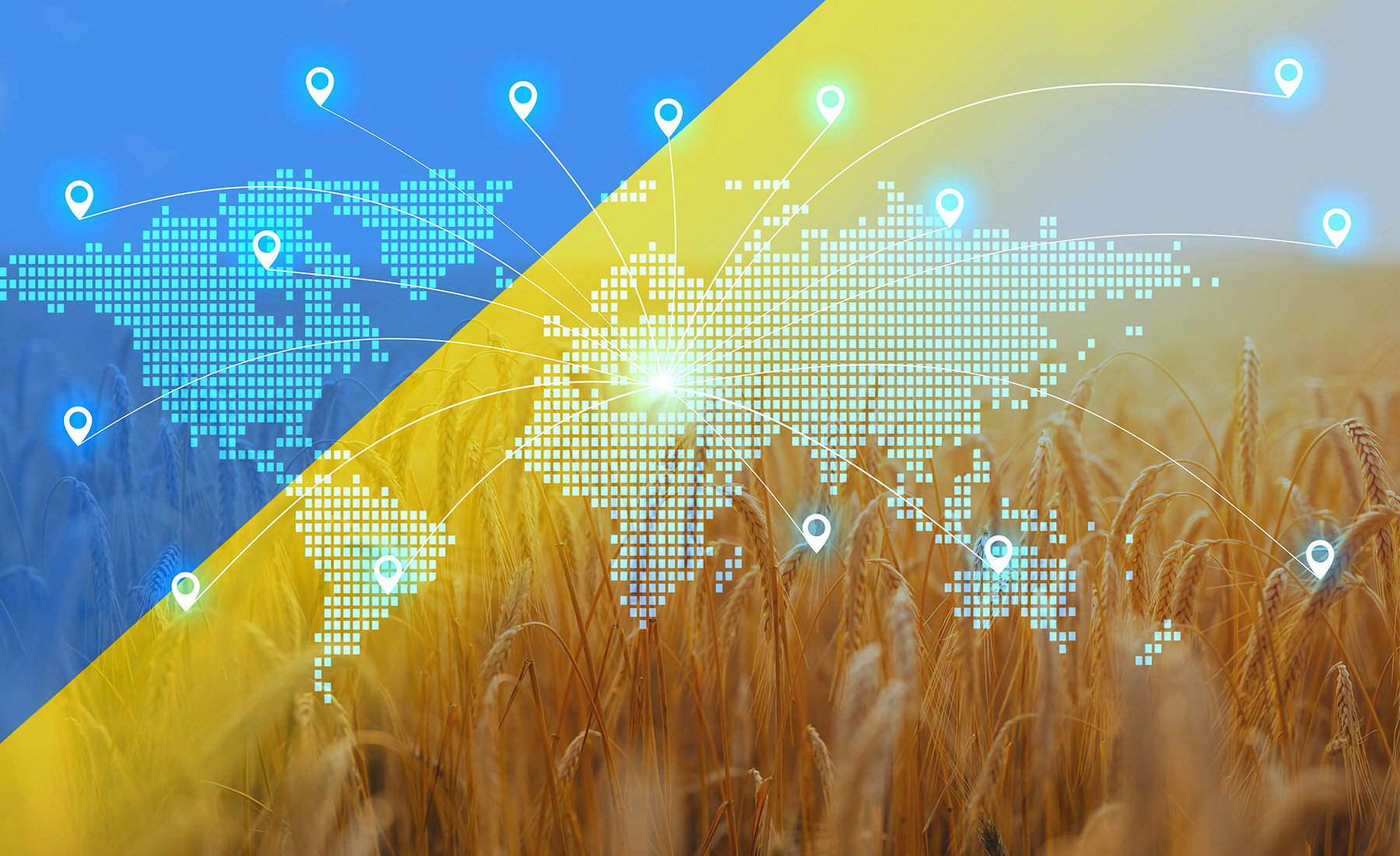
The fighting immediately disrupted this vital flow, creating a multi-faceted global food crisis. Let's start with a video that outlines the immediate human impact.
Could Russia's invasion of Ukraine trigger a global food crisis? | Inside Story
This news report from Al Jazeera English, produced shortly after the invasion, explains how the conflict immediately threatened global food security.
Please watch the video from the beginning to 02:33 and then from 09:39 to 11:22. Pay attention to: The combined share of global wheat and other grains supplied by Russia and Ukraine. The specific reliance of countries in the Middle East and Africa (like Egypt and Lebanon) on these supplies. How Russia can use its control over food and fertilizer as a 'potent political tool'.
The video provides a clear overview of the problem. Now, let's turn back to our academic review paper for more detailed data on the mechanisms of this disruption.
The impact of the Russia-Ukraine war on global supply chains
We will now read the section from the same systematic review that focuses specifically on food security.
Please read the subsections 'Food security disruptions' (3.2.1), 'Critical material shortages' (3.2.3), and 'Differential impacts in South Asia' (3.3.2). Focus on the following: The specific percentages of global wheat, maize, and sunflower oil exports coming from Russia and Ukraine. The physical disruption: blockage of Black Sea ports and the inability to harvest farmland. The secondary shockwave: disruption of fertilizer exports from Russia and Belarus, affecting future harvests globally. The varied impacts in South Asia, noting how India's neutral stance allowed it to benefit from discounted Russian energy, while countries like Pakistan and Sri Lanka faced severe negative consequences.
The key takeaways on the food crisis are:
- Concentration Risk: The global food system was highly dependent on a single geographic region, creating a critical vulnerability.
- Physical Disruption: The war physically blocked Ukraine's main export routes (its Black Sea ports) and reduced its ability to produce food.
- Price Shocks: This led to massive price spikes, hitting poorer, food-importing nations the hardest and raising the risk of political instability. The link between food prices and political unrest, mentioned in the Al Jazeera video regarding the Arab Spring, is a recurring theme in geopolitics.
- Fertilizer as a Weapon: The disruption of fertilizer supplies created a second-order crisis, threatening agricultural yields worldwide in subsequent planting seasons.
Your interest in South Asian dynamics is particularly relevant here. As the text noted, the war's effects were not uniform. India's strategic decision to maintain neutrality and increase trade with Russia contrasts sharply with the economic pain felt in Pakistan and Sri Lanka, demonstrating how geopolitical positioning can radically alter a nation's experience of a global crisis.
3. The Alliance Realignment: A World Reconfigured
The war's most profound and lasting impact may be on the structure of international alliances. It shattered the relative stability of the post-Cold War era and forced a rapid, worldwide strategic realignment.
NATO's Rebirth and Expansion
Perhaps the most direct consequence was the revitalization of NATO. An alliance that French President Macron had described as experiencing "brain death" in 2019 was suddenly imbued with a clear and urgent purpose.
- Germany's Zeitenwende: Germany, Europe's economic powerhouse, announced a Zeitenwende ("turning point"), reversing decades of post-Cold War policy by committing to a massive increase in defense spending.
- Nordic Expansion: Finland and Sweden, two nations with long histories of military neutrality, abandoned that stance and applied for NATO membership. Their accession fundamentally redraws the security map of Northern Europe and the Baltic Sea.
- Reinforced Eastern Flank: NATO massively reinforced its military presence in Eastern European member states like Poland and the Baltic republics.
Transatlantic Unity and Deepening Commitments
The invasion forged an initial, powerful wave of unity between the United States and its European allies. This went beyond political statements to include deep coordination on sanctions, financial aid, and military support for Ukraine. To understand how this is evolving, let's look at the complex issue of security guarantees.
Michael Kofman: Is There an Endgame in Ukraine? | Foreign Affairs Interview
In this interview, military analyst Michael Kofman discusses the nature of the security commitments being offered to Ukraine by the US and Europe.
Please watch the segment from 47:12 to 53:02. Focus on how he describes the 'security guarantees' not as a single treaty, but as a complex package involving: Sustained financial and military support. A potential military presence. The political complexities of making these commitments credible and sequencing them with any potential ceasefire.
Kofman's analysis shows that the alliance structure is not static. The war is forcing the West to create new, hybrid models of security relationships that fall somewhere between a formal treaty like NATO's Article 5 and ad-hoc support.
A Fracturing World Order
While the West consolidated, the war also accelerated the formation of a rival bloc and highlighted the diverse positions of other global powers.
- Sino-Russian Alignment: Pushed into a corner by Western sanctions, Russia has drawn significantly closer to China, deepening their "no limits" partnership. This alignment of two great powers presents a formidable challenge to the US-led international order.
- The Rise of the "Middle Powers": Many influential countries, including India, Brazil, South Africa, and Turkey, have resisted pressure to align firmly with the West. They have pursued a path of strategic neutrality, maintaining economic and diplomatic ties with both sides to maximize their own national interests. This complex, multi-aligned world is a defining feature of the new geopolitical era.
[PDF] GEOPOLITICAL IMPLICATIONS OF THE RUSSIA-UKRAINE WAR ...
This paper on the war's geopolitical implications touches on the broad shifts in global alliances.
Please read the paragraph in the 'LITERATURE REVIEW' section that begins: 'The study by Inna Frank took a close look...'. Note how it explicitly mentions that the conflict 'reigniting tensions reminiscent of the Cold War and challenging established global security frameworks like NATO and the United Nations.'
Conclusion
The 2022 invasion of Ukraine was a watershed moment, and its consequences continue to unfold. By assessing its impact on energy, food, and alliances, we can see the outlines of a new, more contentious, and fragmented global order.
Key Takeaways:
- Energy Markets: The war brutally exposed Europe's energy dependence on Russia, triggering a severe price shock and forcing a rapid, costly strategic pivot toward new suppliers and renewable sources.
- Global Food Supply: The disruption of grain and fertilizer exports from the "breadbasket" region created a global food and price crisis, disproportionately harming developing nations and highlighting the fragility of concentrated supply chains.
- International Alliances: The conflict has led to a major realignment. It revitalized NATO and strengthened transatlantic ties, while also deepening the Sino-Russian partnership and showcasing the rise of strategically neutral middle powers that are charting their own course.
Preview of the Next Lesson:
We've identified the deepening Sino-Russian alignment as a key consequence of the war. In our next lesson, we will delve into this crucial relationship, where we will evaluate the Sino-Russian strategic alignment and the limits of their 'no limits' partnership. This will be essential for understanding the emerging bipolar or multipolar dynamics of the 21st century.