Hello! Welcome to the next lesson in our module on Information Warfare and Strategic Influence.
In our last lesson, we examined the overt tools of narrative warfare, specifically state-controlled media like RT and CGTN. We saw how they operate openly to shape international perception. These operations, whether overt or covert, rely on a deep understanding of the world—an understanding provided by the intelligence community.
Today, we're going behind the curtain to explore the engine that drives so much of geopolitical decision-making. This lesson directly addresses your interest in how states use information and technology to navigate a complex world, and it will build upon the analytical concepts from Richards Heuer's Psychology of Intelligence Analysis that you're familiar with.
Our learning outcome is to explain the role of the intelligence community in geopolitical decision-making, building on concepts from intelligence analysis. We will explore how information is gathered, analyzed, and—crucially—how it is used (or ignored) by those in power.
1. The Intelligence Cycle: From Question to Insight
At its core, intelligence work is a structured process designed to transform raw data into actionable insight for decision-makers. This process is commonly known as the intelligence cycle. While models vary slightly, they generally follow a clear sequence of steps.
To get a concise overview of this foundational concept, please watch this short video.
The Intelligence Cycle, Explained
The video 'The Intelligence Cycle, Explained' from The Intel Lab provides a clear, five-step breakdown of how intelligence is produced.
Watch from 01:00 to the end (05:00). As you watch, focus on understanding the purpose of each of the five steps: Direction, Collection, Processing, Analysis, and Dissemination.
As the video illustrates, the cycle is a loop:
- Direction: Policymakers set the priorities. What do we need to know? (e.g., "What are Russia's intentions in the Arctic?")
- Collection: This is the "spying" part people think of, but it's much broader. It involves gathering raw data from all sources.
- Processing: Raw data is converted into a usable format. A captured conversation is translated and transcribed; satellite images are collated.
- Analysis: This is the crucial human step. Analysts take the processed information, interpret it, add context, and generate an assessment. This is where information becomes intelligence.
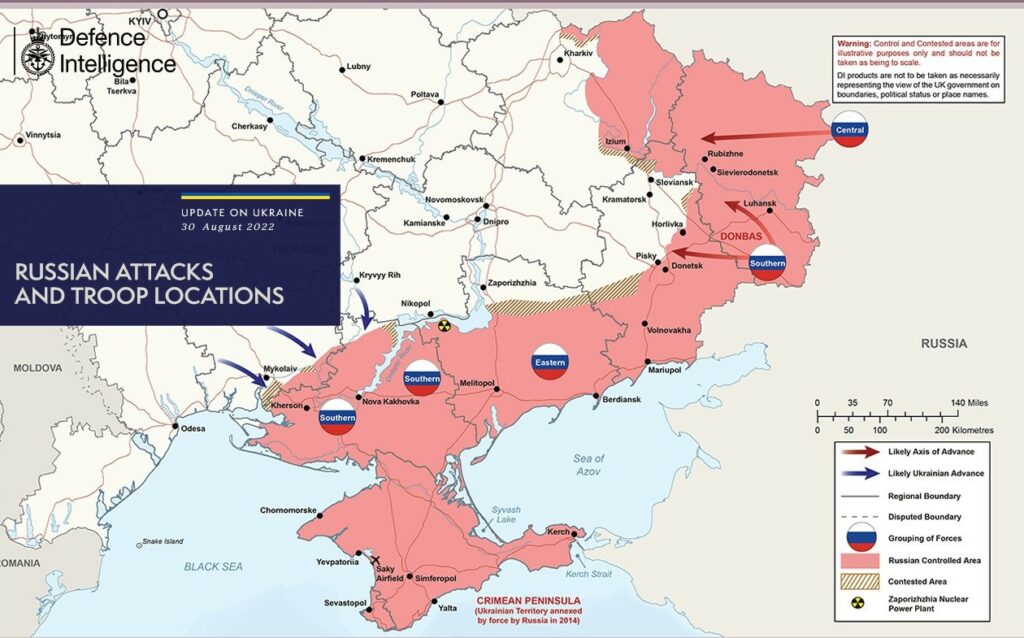
- Dissemination: The finished intelligence product (a report, a briefing, a map) is delivered to the policymaker who originally asked the question.
The nature of the "Collection" step, in particular, has been radically transformed by technology, something that will be very familiar from your work in computer engineering.
To explore this transformation, please read the following excerpt from a CSIS report.
Intelligence in a Transparent World - CSIS
The article 'Intelligence in a Transparent World' explains how the digital age has reshaped intelligence collection.
Read the introduction and the section titled 'Modern Intelligence: Oceans of Accessible Data and Nowhere to Hide.' Pay attention to: The rise of Open-Source Intelligence (OSINT), exemplified by the Bellingcat investigation. The challenges to traditional Human Intelligence (HUMINT) due to what the article calls 'digital dust' and ubiquitous surveillance.
As the article highlights, the world is awash in data. This has made OSINT—intelligence derived from publicly available information like social media, commercial satellite imagery, and academic papers—incredibly powerful. Your experience developing an AI chatbot for NBA fans using public data is a microcosm of this; intelligence agencies do the same on a global scale.
Simultaneously, the "digital dust" we all leave behind makes traditional clandestine work, like operating under a false identity, extremely difficult.
A classic example of a disseminated intelligence product is a map used for strategic briefings. This map from the UK's Defence Intelligence on the Ukraine war illustrates how complex data is synthesized into a clear, visual format for decision-makers.
2. The Evolving Role of Intelligence Agencies
The intelligence community's role has expanded far beyond just collecting and analyzing information. They are also instruments of state power, tasked with actively shaping events. This is especially true in the domains of cybersecurity and counterterrorism.
This next video discusses the multifaceted nature of modern intelligence agencies and the profound societal questions their actions raise.
Master Crisis and Security Management - specialisation Intelligence and National Security
This video from Leiden University's Faculty of Governance and Global Affairs discusses the expanded mission of intelligence services and the new domains they operate in.
Please watch the following segments: Introduction (00:02 - 02:39): Note the shift from intelligence agencies as 'information clearing houses' to active players that 'change the world' through special operations and drone strikes. Cyber Espionage (04:16 - 05:03): This explains how the cyber domain is now a primary arena for intelligence activity. Covert Action (05:03 - 06:08): Understand the concept of 'covert action'—secret attempts to influence events abroad.
The video underscores a critical point: intelligence agencies operate at the intersection of information, technology, and action. Your interest in the merger of geopolitics and computer engineering sits precisely at this nexus. The development of AI, in particular, is a revolutionary force in intelligence, promising to help agencies make sense of uncertainty.

3. The Intelligence-Policy Disconnect: "Two Tribes"
Perhaps the most critical and fraught part of the entire process is the relationship between the intelligence community and the policymakers they serve. An intelligence assessment, no matter how brilliant, is useless if it is ignored or misunderstood by leaders.
This is often referred to as the intelligence-policy disconnect. Renowned intelligence scholar Mark Lowenthal famously described analysts and policymakers as "two closely related tribes that believe, mistakenly, that they speak the same language."
Let's delve into why this disconnect exists and its consequences.
The Intelligence-Policy Disconnect - by Dan Spokojny
The article 'The Intelligence-Policy Disconnect' by Dan Spokojny and Gary Gomez provides an excellent analysis of this problem, framing it through the lens of 'discourse communities.'
Please read from the beginning down to the section 'Narrowing the Discourse Gap.' Focus on: The 'two tribes' analogy and the idea of discourse communities. The historical examples (Yugoslavia, Iraq) where accurate intelligence failed to influence policy. The different ways analysts and policymakers handle uncertainty (e.g., 'weasel words').
The article explains that intelligence analysts and policymakers have fundamentally different cultures:
- Analysts value objectivity, nuance, and expressing uncertainty. Their goal is to be correct.
- Policymakers value clarity, decisiveness, and actionable options. Their goal is to decide and act.
This cultural gap can lead to catastrophic failures. The CSIS article you read earlier provides a stark, recent example.
Intelligence in a Transparent World - CSIS
Let's revisit 'Intelligence in a Transparent World' to see a case study of this disconnect in action.
Read the section 'Israel: High-Tech Collection and Cognitive Bias.' Notice how the intelligence itself was not the problem; the failure was in its interpretation.
The intelligence failure leading up to the October 7th attack was not a failure of collection but of analysis and acceptance. Israeli leaders were hobbled by cognitive biases—specifically, an anchor bias that Hamas was not interested in a major conflict and a confirmation bias that led them to interpret all new information through that lens. This is a real-world application of the very concepts Richards Heuer warned about in Psychology of Intelligence Analysis.
So, how can this dangerous gap be bridged?
The fp21 article (LINK) you read suggests moving from a product-based relationship (analysts tossing reports "over the transom") to a process-based one, which they call a "client-synthesist" model. This involves sustained engagement where analysts and policymakers build a shared understanding.
Similarly, the Leiden University video (LINK) touches upon this from another angle: the challenge for intelligence agencies to "speak truth to power," especially when policymakers are not receptive.
Master Crisis and Security Management - specialisation Intelligence and National Security
Let's return to the Leiden University video for a final thought on this critical relationship.
Watch the segment on 'Intelligence and Policy making' from 06:08 to 07:23. It vividly illustrates the political complexities of the intelligence-policy relationship.
Conclusion
Today, we have dissected the role of the intelligence community in geopolitical decision-making, seeing it as far more than just cloak-and-dagger espionage.
Key Takeaways:
- Intelligence production is a structured process known as the intelligence cycle (Direction, Collection, Processing, Analysis, Dissemination).
- The modern intelligence landscape has been reshaped by technology. The rise of OSINT provides vast opportunities, while digital surveillance makes traditional HUMINT more perilous.
- Intelligence agencies are not just passive observers; they are active instruments of state power, engaging in covert action and cyber operations.
- The most significant challenge is often the intelligence-policy disconnect, a cultural and linguistic gap between analytical and political "tribes."
- As seen in the October 7th failure, even perfect intelligence collection can be rendered useless by the cognitive biases of decision-makers, a key theme from Heuer's work.
Preview of the Next Lesson:
We have now deeply explored the "Information" component of national power. In our next lesson, we will begin the final Capstone module. We will start by learning the DIME framework (Diplomatic, Information, Military, Economic), a tool used to analyze a country's complete geopolitical posture. This will equip us with a comprehensive structure for our final analytical projects.