Hello! Welcome to the next lesson in our module on Information Warfare.
In our last session, we analyzed Stuxnet, a landmark case of a cyber operation designed for physical sabotage. We saw how code can be weaponized to destroy centrifuges and disrupt critical infrastructure. Today, we shift our focus from the physical domain to the cognitive one. We will explore how information itself is used as a weapon to attack not machines, but minds, societies, and political systems.
Given your background in computer engineering and software development, you are acutely aware of how digital platforms are built to connect people and disseminate information. In this lesson, we will examine the "dual-use" nature of that technology, seeing how the same infrastructure can be co-opted for strategic competition.
This brings us to our learning outcome: to define information warfare and distinguish between propaganda, disinformation, and misinformation. These terms are frequently used interchangeably in public discourse, but for a geopolitical analyst, precision is key. Understanding their distinct meanings is the first step toward dissecting and countering strategic influence campaigns.
1. What is Information Warfare?
At its core, information warfare (IW) isn't new. Sun Tzu, whom you've read, wrote, "All warfare is based on deception." What has changed is the scale, speed, and reach of that deception, supercharged by 21st-century technology.
Information warfare is the broad, strategic effort by a state or actor to manipulate an adversary's information environment to gain a competitive advantage. The ultimate goal is to influence the decision-making of leaders, the morale of armed forces, and the opinions of the general public.
To get a formal grasp of this concept, let's look at an academic paper that explores this topic in the context of South Asian geopolitics, an area of particular interest to you.
[PDF] INDIA'S STRATEGIC INFORMATION WARFARE - NDU Journal
This paper from the NDU Journal, titled 'India's Strategic Information Warfare,' provides a robust conceptual framework for understanding IW.
Please read the 'Abstract' and the section titled 'Information Warfare: A Conceptual Understanding' (pages 77 and 81-83). Focus on these points: The general definition of IW: 'mechanisms and operations devised to target and exploit information to malign and destabilise the adversary.' The seven forms of IW identified by Libicki. The diverse perspectives from officials and experts on the objectives of IW, such as creating disharmony, changing narratives, and undermining an opponent.
As you read, you'll see that IW is an umbrella term that encompasses everything from electronic warfare and cyberattacks to psychological operations. The common thread is the use of information as both a weapon and a target. The goal is often not to win a single argument, but to "pollute people's minds" and erode their trust in facts, institutions, and each other, thereby weakening the adversary from within.
2. The Analyst's Toolkit: Distinguishing the Weapons of IW
Within the broad strategy of information warfare, actors deploy several specific tools. Understanding the difference between propaganda, misinformation, and disinformation is crucial. The key differentiator is intent.
Let's break them down one by one.
Misinformation
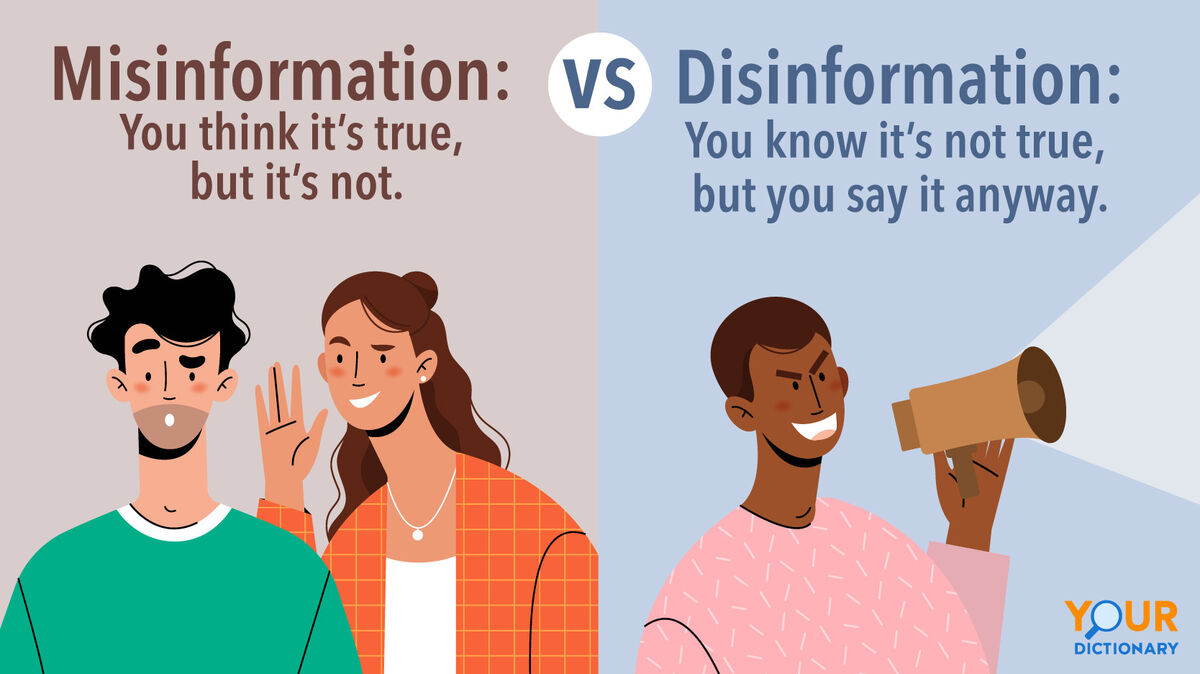
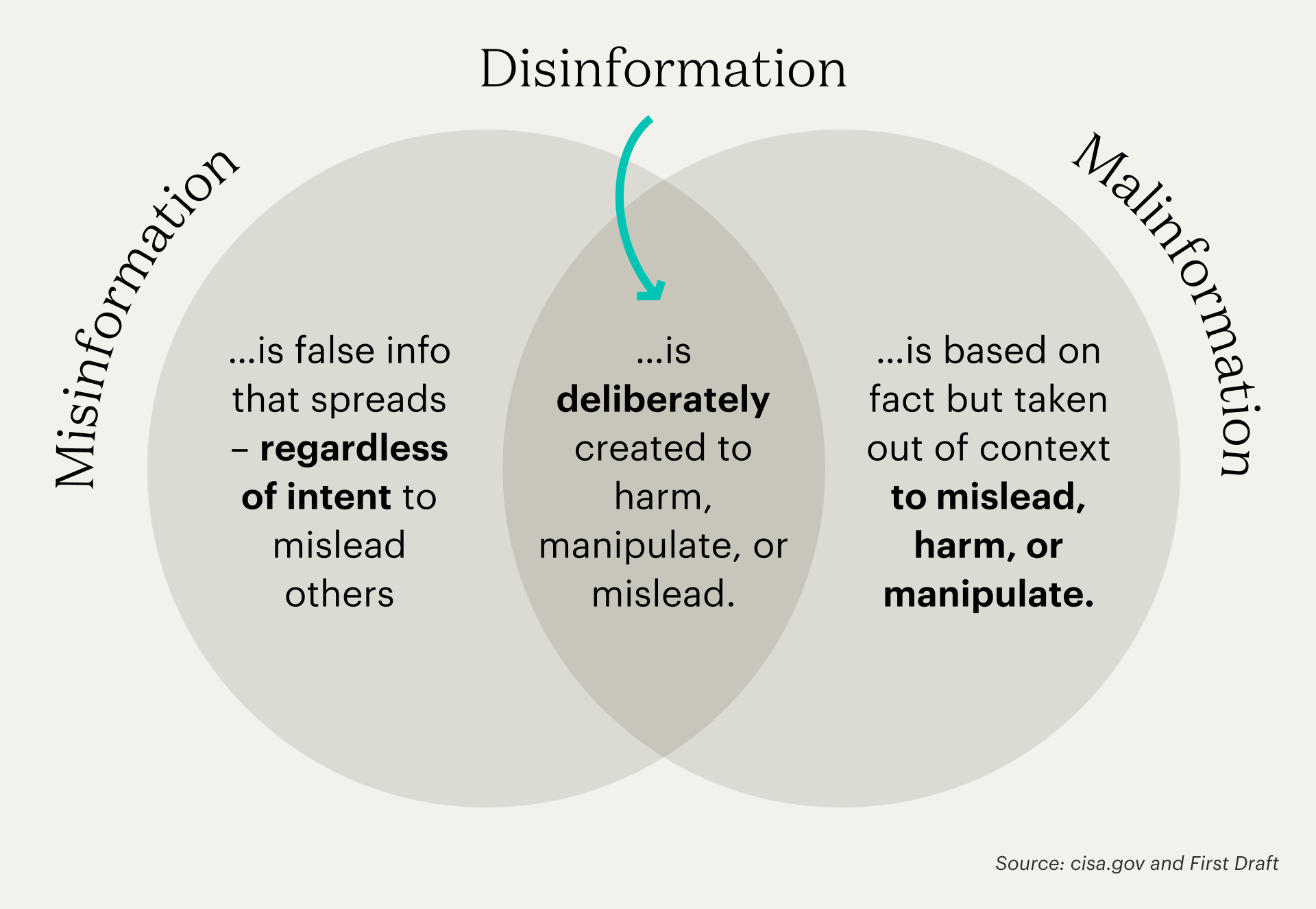
Misinformation is false or inaccurate information that is spread without the intent to deceive. It's a mistake. People who share misinformation often genuinely believe it to be true. Urban legends, rumors, or honest reporting errors that are later corrected are all forms of misinformation.
Disinformation
Disinformation is false information that is deliberately created and spread with the express purpose of deceiving, misleading, or causing harm. This is a weapon. It is crafted and disseminated strategically by state or non-state actors to achieve a specific objective, such as discrediting a political opponent, sowing social chaos, or justifying a military action.
This short educational video provides a memorable way to understand this crucial difference.
Why people fall for misinformation - Joseph Isaac
This TED-Ed video uses a simple analogy to explain how false facts take root and clearly defines the distinction between misinformation and disinformation.
Please watch the segment from 02:08 to 02:39. Focus on the core definitions provided for disinformation (intentionally designed to mislead) and misinformation (resulting from unintentional inaccuracy).
Propaganda
Propaganda is information, ideas, or rumors deliberately spread to help or harm a person, group, movement, institution, or nation. Unlike disinformation, propaganda is not necessarily false. It can be based on facts, but those facts are selected and framed in a biased or misleading way to provoke a desired emotional and political response. Its goal is persuasion and mobilization.
For a clear, text-based summary of all three terms, the Johns Hopkins University library guide is an excellent resource.
Propaganda, Misinformation, Disinformation - Evaluating Information
This guide provides concise, academic definitions for our three key terms, with helpful examples.
Please read the short sections under the headings 'Propaganda,' 'Misinformation,' and 'Disinformation.' Pay attention to how propaganda can be fact-based but biased, while misinformation is defined by its 'intention neutral' nature, and disinformation is characterized by deliberate deception.
To help visualize these concepts, here are two useful diagrams.
Here is a summary table to keep these distinctions clear:
| Term | Intent to Deceive? | Factual Basis? | Primary Goal |
|---|---|---|---|
| Misinformation | No | False | None (spread by mistake) |
| Disinformation | Yes | False | To deceive, confuse, and destabilize |
| Propaganda | Yes | Can be true, but is biased and framed | To promote a political cause or point of view |
3. Case in Point: Information Warfare in Ukraine
The 2022 Russian invasion of Ukraine is a living laboratory for modern information warfare. The Kremlin has deployed a full spectrum of these tools to justify its actions, demoralize Ukrainians, and divide international opposition.
This video provides powerful, concrete examples of our concepts in action.
Understanding Russian Disinformation in the Ukraine War
Let's watch a few clips from 'Understanding Russian Disinformation in the Ukraine War' by Axis Point to see how these theories are applied in a real conflict.
As you watch these clips, try to categorize the Russian tactics using the definitions we've just learned: The 'Denazification' Narrative (01:34 - 02:32): Is this primarily propaganda or disinformation? Note how it uses a powerful historical theme (fighting Nazis) to frame a false claim about the Ukrainian government. Denial of the Bucha Massacre (02:32 - 03:50): This is a textbook example of pure disinformation. Russia created a completely fabricated counternarrative (a 'staged attack') to obscure a documented war crime. Strategic Goals (06:31 - 08:57): This final clip explains the 'why.' Notice the statement that Russia's goal is not to convince the West, but to divide it and erode trust. This is the core strategic objective of information warfare.
This case study demonstrates that these tools are not used in isolation. A single campaign often blends them. The "denazification" narrative, for example, functions as propaganda for a domestic Russian audience that is culturally primed to respond to anti-fascist rhetoric, while simultaneously functioning as disinformation on the world stage because its central premise is demonstrably false.
Conclusion
Today we've moved from the hardware of cyber warfare to its "software"—the manipulation of information itself. We have established a clear analytical framework for understanding this domain, which is essential for navigating the modern geopolitical landscape.
Key Takeaways:
- Information Warfare (IW) is the strategic use of information and information systems to gain an advantage over an adversary. Its primary goal is to influence decision-making and erode an opponent's societal cohesion and political will.
- Misinformation is false information spread unintentionally.
- Disinformation is false information spread intentionally to deceive and cause harm. It is a calculated act of aggression.
- Propaganda is biased or misleading information used to promote a political cause. It may be based on facts but is framed to elicit an emotional response.
- The crucial difference between these concepts lies in the intent of the creator and distributor.
Preview of the Next Lesson:
Now that you have a solid grasp of these foundational definitions, we will apply them to a deep-dive case study. In our next lesson, we will analyze how states conduct election interference and political destabilization through social media, using the 2016 US election as our primary example. We will dissect the specific tactics, tools, and platforms used to turn information into a weapon against a democratic process.