Hello! Welcome to our lesson on a cyber operation that fundamentally changed the nature of modern conflict.
In our last session, we analyzed the OPM hack, a classic case of state-sponsored cyber espionage where the primary goal was to steal vast amounts of sensitive information for intelligence purposes. Today, we move from theft to destruction. We will examine a case where the objective was not just to breach a network, but to cross the digital-physical divide and cause tangible, real-world damage.
This brings us to our learning outcome: to analyze a case study of a cyber operation used for physical sabotage, using Stuxnet as our primary example.
We will dissect the Stuxnet worm, a landmark cyber weapon that targeted Iran's nuclear program. You'll see how it worked, why it was created, and how its deployment set a dangerous new precedent, effectively firing the starting gun for a new global cyber arms race.
1. A Watershed Moment in Cyber Warfare
In 2010, cybersecurity researchers stumbled upon something they had never seen before. A piece of malware was discovered that was not designed to steal credit cards or create a botnet; it was a highly sophisticated, military-grade weapon engineered for a single purpose: to physically destroy industrial equipment.
To set the stage, let's watch a brief introduction to how Stuxnet first appeared on the world stage.
How Cyberwarfare Actually Works
This clip from Wendover Productions captures the initial shock and mystery surrounding the discovery of Stuxnet and why it immediately signaled the dawn of a new era in warfare.
Please watch the first 2 minutes and 18 seconds of the video (00:00 - 02:18). Note the scale of the infection in Iran and the initial questions about the malware's purpose.
As you saw, the worm's complexity and targeted nature were immediately apparent. It was, as the academic community would later confirm, a paradigm shift.
[PDF] CASE STUDY AND ANALYSIS STUXNET WORM
For a more formal definition, let's turn to a paper from the International Journal of Engineering Applied Sciences and Technology (IJEAST) that analyzes the Stuxnet incident.
Please read the 'Abstract' and 'Introduction' sections on the first two pages. Focus on how the paper defines Stuxnet as a 'paradigm shift' and a 'watershed moment' that demonstrated the ability to cause physical damage.
2. The Anatomy of a Cyber Weapon
Stuxnet's genius lay in its ability to solve a series of incredibly difficult technical challenges. Given your background in computer engineering, the sophistication of its design will be particularly clear. It was designed to attack Industrial Control Systems (ICS), specifically the Programmable Logic Controllers (PLCs) that manage physical machinery.
Its target was the Natanz uranium enrichment facility in Iran, an air-gapped facility, meaning its critical systems were not connected to the internet. Stuxnet had to breach this air gap, find its specific target among thousands of machines, and execute its destructive payload without being detected.
The following video, from a retired Windows engineer, provides an excellent technical breakdown of how it achieved this.
The Incredible Stuxnet Cyberweapon Explained by a Retired Windows Engineer
Let's dive into the technical details of how Stuxnet operated. This video explains the complex chain of attack, from initial infection to physical sabotage.
Please watch the segment from 01:46 to 08:20. The video breaks down the attack into three main phases: Complexity and Targeting (01:46 - 04:33): Notice the discussion of its size (500 KB), multiple zero-day vulnerabilities, stolen digital certificates, and specific targeting of Siemens Step 7 software and PLCs controlling gas centrifuges. Jumping the Air Gap (04:33 - 06:18): Pay close attention to how it used USB drives and exploited both the Windows autorun feature and a link file vulnerability to infect the isolated network. The Payload: Deception and Destruction (06:18 - 08:20): This is the core of the attack. Understand how Stuxnet performed a 'man-in-the-middle' attack, replaying recorded normal data to the operators while subtly altering the centrifuges' rotational speeds to cause physical destruction.
To summarize the attack sequence:
- Infection: An infected USB drive, likely introduced by a contractor or insider, was plugged into a computer on the Natanz administrative network.
- Propagation: The worm used multiple zero-day exploits to spread from the initial machine across the network, eventually finding its way to the engineering workstations that programmed the PLCs.
- Sabotage & Deception: Once on the target PLCs, Stuxnet would intermittently spin the uranium centrifuges at dangerously high and low frequencies, causing immense physical stress and causing them to fail. Crucially, it recorded the normal sensor data beforehand and played it back to the control room, making operators believe everything was functioning perfectly while their equipment was being destroyed.
This was not just hacking; it was digital sabotage of the highest order.
3. Strategic Implications: Opening Pandora's Box
Stuxnet was more than a technical marvel; it was a profound geopolitical act. It introduced a new tool into the arsenal of statecraft, a "third option" between sanctions and military strikes.
Motive and Attribution
While no nation has ever officially claimed responsibility, a consensus quickly formed, supported by leaks and investigative journalism, that Stuxnet was a joint US-Israeli project codenamed "Operation Olympic Games."
The strategic motive was clear: to delay Iran's progress toward developing a nuclear weapon without resorting to a conventional bombing campaign, which would have carried immense risks of escalating into a wider regional war. Stuxnet reportedly destroyed nearly 1,000 centrifuges, setting back the Iranian program by months or even years.
A New Precedent
By proving that a cyberattack could cause significant physical destruction to a strategic target, Stuxnet opened Pandora's box. It demonstrated a new form of deniable, asymmetric warfare and kickstarted a global cyber arms race.
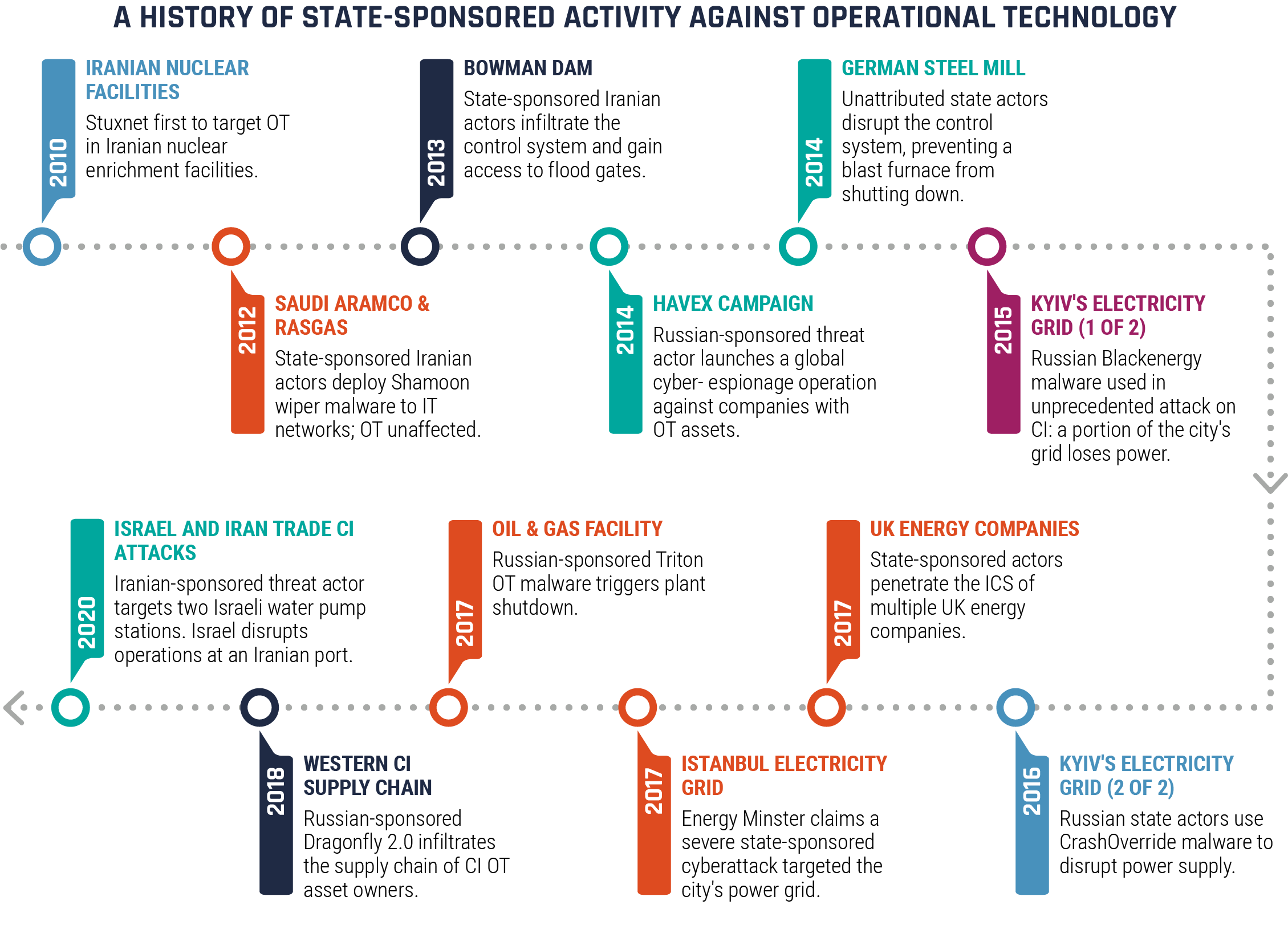
The creators of Stuxnet may have believed they were creating a one-of-a-kind weapon for a specific problem. Instead, they provided a blueprint. Other nations, seeing this new capability, accelerated their own offensive cyber programs. The years following Stuxnet saw a rise in attacks on critical infrastructure, including:
- The Ukrainian Power Grid Hacks (2015 & 2016): Russian-linked hackers shut down parts of Ukraine's power grid, leaving hundreds of thousands of people without electricity in the middle of winter. This was a clear use of cyber sabotage in a hybrid warfare context.
- The Triton/TRISIS Malware (2017): This malware targeted the safety systems of a Saudi petrochemical plant, with the potential to cause a catastrophic explosion.
Stuxnet had let the genie out of the bottle. The line between the digital and physical worlds in conflict had been irrevocably blurred.
4. Proliferation and Regional Relevance: The Kudankulam Incident
The capabilities pioneered by Stuxnet did not remain confined to great powers. They proliferated, and the echoes of Stuxnet's impact have been felt in your own region.
In 2019, a cyber intrusion was discovered at the Kudankulam Nuclear Power Plant (KNPP) in Tamil Nadu, India. While this attack did not cause physical damage, the analysis reveals a direct lineage from the Stuxnet playbook.
- Attribution: The malware used, known as "Dtrack," was linked by multiple cybersecurity firms to the Lazarus Group, a state-sponsored hacking collective associated with North Korea.
- Targeting: The attack was highly targeted. According to the report "Cyber Attack on Kudankulam Nuclear Power Plant – A Wake Up Call" by the Vivekananda International Foundation, hackers used spear-phishing emails to target senior Indian nuclear scientists, including the former chairman of the Atomic Energy Commission of India.
- Motive: The analysis suggests the primary motive was not destruction but reconnaissance and technology theft. North Korea has been trying to develop its own nuclear reactor technology, and India is a leader in thorium-based reactor designs. The hackers appeared to be stealing designs and operational data, a classic case of using cyber tools for strategic industrial espionage.
The KNPP incident is significant because it shows how a Stuxnet-style focus on nuclear facilities has been adopted by other state actors. It also highlights the dual-use nature of these operations: an intrusion designed for espionage could easily be "weaponized" into a destructive attack if the adversary's intent changes.
Conclusion
Stuxnet was a landmark event that transformed the landscape of international security. It marked the moment when code was definitively proven to be a weapon capable of physical destruction.
Key Takeaways:
- Cyber-Physical Attacks: Stuxnet was the first widely known cyber weapon designed specifically for physical sabotage, successfully targeting and destroying centrifuges in an air-gapped Iranian nuclear facility.
- Unprecedented Technical Sophistication: Its success depended on an extraordinary combination of capabilities, including multiple zero-day exploits, stolen digital certificates, and a deceptive payload that masked the attack in real-time.
- A New Geopolitical Tool: It represented a "third option" for statecraft, allowing nations to pursue strategic objectives (disrupting a nuclear program) while maintaining a degree of deniability and avoiding the risks of conventional military action.
- The Proliferation Precedent: Stuxnet opened a Pandora's box, demonstrating a new form of warfare and accelerating a global cyber arms race. Subsequent attacks on critical infrastructure worldwide, including in Ukraine and the attempted intrusions in India, show the proliferation of these tactics.
Preview of the Next Lesson:
We have now seen how cyber tools are used for espionage (OPM) and physical sabotage (Stuxnet). In our next lesson, we will explore another dimension of this new battlefield: information warfare. We will define and distinguish between propaganda, disinformation, and misinformation, and analyze how states use them to manipulate public opinion and destabilize adversaries from within.