Hello! Welcome back to our study of geopolitics.
In our last lesson, we conducted a deep dive into the Syrian proxy war. We saw how external powers like Russia, Iran, the US, and Turkey transformed a domestic conflict into an international battlefield, leading to state fragmentation and a devastating humanitarian crisis. The key takeaway was how competing external interests can trap a country in a cycle of instability.
Today, we shift our focus to Africa to explore a different, but equally consequential, form of great power competition. This lesson directly addresses the learning outcome: Explain how external power competition in Africa (China, US, Russia, France) affects governance and sovereignty.
Instead of a single, intense proxy war like in Syria, the competition in Africa is a continent-wide "scramble" for influence using economic, military, and diplomatic tools. This directly relates to your core interest in how great power rivalries impact smaller nations. We will analyze the strategies of the key external players and then synthesize how their actions shape the political landscape and national autonomy of African states.
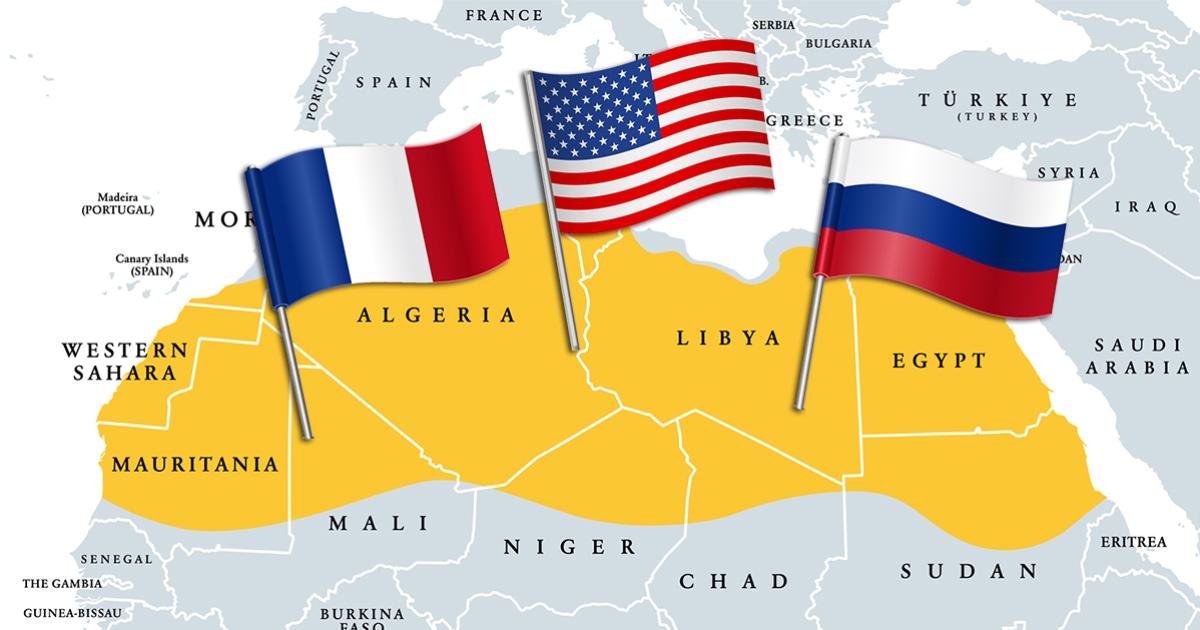
1. The New "Scramble for Africa": Why Now?
Africa has re-emerged as a central arena for geopolitical competition. This isn't just about resources; it's about the continent's future role in the global order. Two key factors are driving this renewed interest: economics and demographics.
To understand the scale and stakes of this new competitive environment, let's watch a segment from the Geopolitics & Money show.
Global Shift: China, Russia, and NATO Fight for Influence in Africa
This video explains the fundamental drivers behind Africa's growing strategic importance, highlighting its economic potential and unique demographic profile.
Please watch from 04:23 to 14:03. As you watch, focus on two main points: Why is Africa seen as the 'next' major economic frontier, especially as China's own economy matures? What is the demographic significance of Africa's growing youth population compared to the aging populations in China, Europe, and the US?
As the video explains, Africa's combination of rapid population growth, urbanization, and developing economies makes it a critical market and labor source for the 21st century. This potential has attracted external powers, each bringing a different model of engagement.
This competition is often framed as a contest between the Western model of liberal democracy and the authoritarian-friendly models offered by China and Russia. This ideological layer adds another dimension to the race for influence. Now, let's examine the specific strategies of the four main external powers.
2. The Competitors and Their Strategies
Each major power approaches Africa with a distinct playbook, leveraging its unique strengths and pursuing its own strategic objectives.
China: Economic Statecraft and the Digital Silk Road
China's strategy is primarily economic. Through its Belt and Road Initiative (BRI), it has become the continent's largest bilateral lender and a dominant force in infrastructure development. Beijing's approach offers African nations rapid development financing without the political conditions (like human rights or democracy requirements) often attached to Western aid.
The following article from the US Army War College provides a detailed analysis of this strategy.
US Relations with Africa and the New Cold War
This article, 'US Relations with Africa and the New Cold War,' offers a structured look at China's strategy, including the BRI and the controversial 'debt-trap' debate.
Please read the section titled 'China’s Opportunistic and Calculating Strategies.' Focus on understanding: China's three main competitive advantages. The distinction between direct investment and lending. How debt can lead to a loss of sovereignty over critical infrastructure.
China's influence extends beyond physical infrastructure. A key component of its strategy, which might resonate with your background in computer engineering, is the Digital Silk Road.
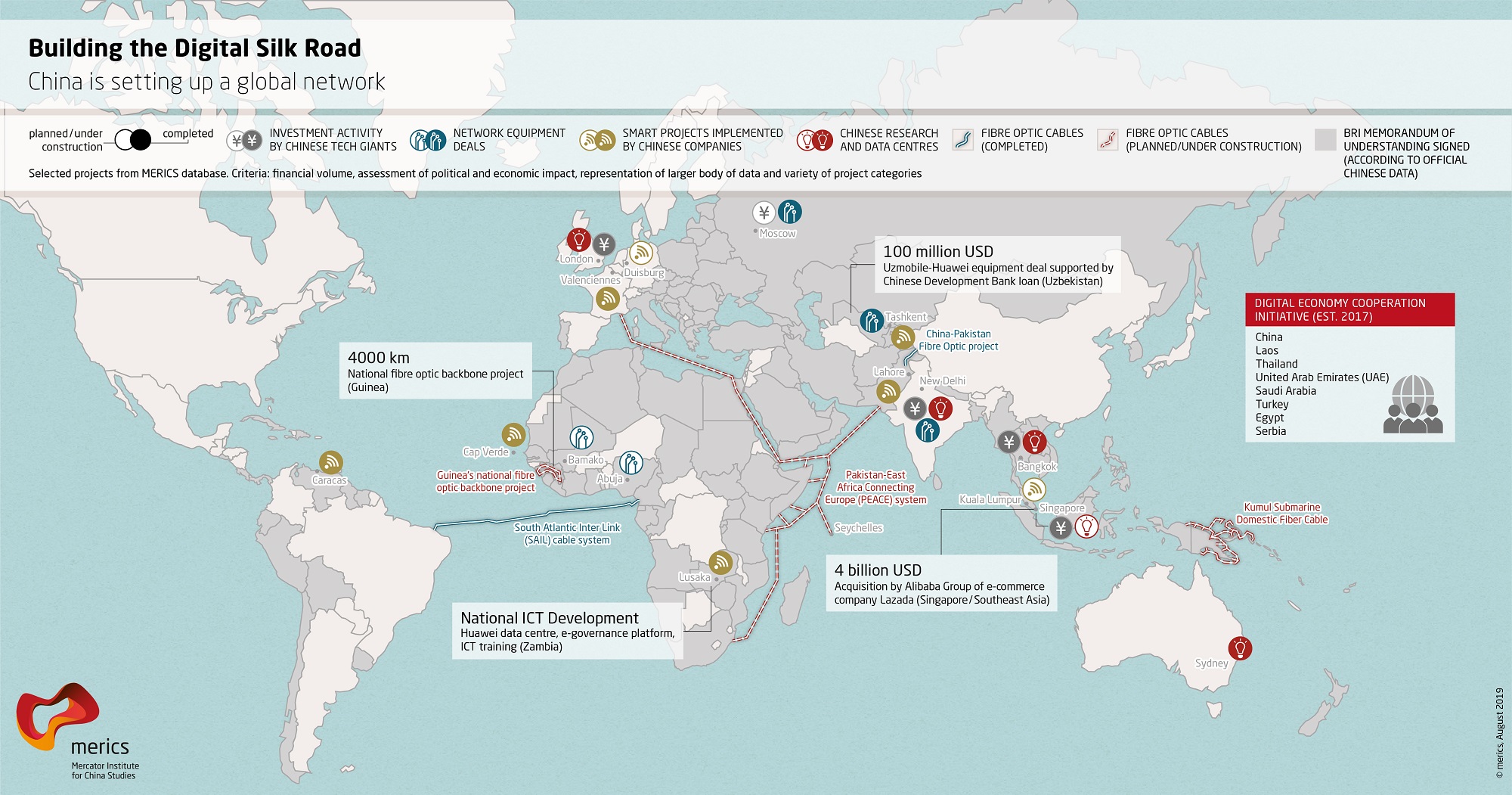
To see how these massive loans affect sovereignty in practice, let's look at a specific case from a Kenyan perspective.
Why America Is Dumping Ruto And The New Scramble for Africa by the US, Russia & China | LNN
This clip from the Lynn Ngugi channel provides a powerful on-the-ground perspective on Chinese loans, using the example of Kenya's Standard Gauge Railway (SGR).
Please watch from 47:30 to 50:40. This segment discusses the 'opaque' nature of Chinese loan agreements and the potential for strategic assets, like the Port of Mombasa, to be used as collateral, directly impacting national sovereignty.
This dynamic—where debt is used to gain leverage over strategic assets—is a primary way external economic power translates into a loss of sovereignty for the recipient nation.
Russia: The Security Provider
While China focuses on economics, Russia's primary vector of influence is security. It leverages Soviet-era relationships, arms sales, and, most notably, private military contractors (PMCs) to gain a foothold. Russia positions itself as a pragmatic security partner for regimes that feel alienated by the West.
Let's return to the Army War College article for an overview of Russia's strategy.
US Relations with Africa and the New Cold War
This section details Russia's approach, which mirrors some of the proxy dynamics we discussed in the Syria lesson.
Please read the section 'Russia’s Opportunistic and Calculating Strategies.' Note the mix of tools Russia uses: PMCs (like the Wagner Group, now rebranded as Africa Corps), arms sales, and political support for authoritarian leaders.
The use of mercenaries has a direct and often destabilizing impact on governance. These groups can prop up fragile regimes, protect them from popular uprisings, and secure access to valuable natural resources in return, effectively making the host country's leadership dependent on a foreign military force for its survival.
This clip discusses this dynamic and its implications for sovereignty.
Why America Is Dumping Ruto And The New Scramble for Africa by the US, Russia & China | LNN
This segment explores the destabilizing role of Russian mercenaries and how their presence undermines the very sovereignty of the states they are 'protecting.'
Please watch from 1:18:45 to 1:21:07. The speaker highlights the paradox of a state claiming sovereignty while its leader is protected by foreign mercenaries, as seen in the Central African Republic (CAR).
France: A Post-Colonial Power in Decline
France has a unique and complex role due to its long colonial history. Its influence has been maintained through a web of military agreements, linguistic ties, and economic structures like the CFA Franc currency zone. However, this legacy is now a source of deep resentment, and France's influence is visibly waning, creating a power vacuum that Russia and China are eager to fill.
Redefining U.S. Foreign Policy in Africa - In Response to Rising Coups
This article, 'Redefining U.S. Foreign Policy in Africa,' provides an excellent analysis of France's historical role and how it contributes to instability today.
Please read the section 'Causes of Underdevelopment and the French Role in Africa.' Focus on how the CFA Franc system limits economic sovereignty and how French political and military influence has fostered resentment, contributing to the recent wave of coups in the Sahel.
The recent coups in Mali, Burkina Faso, and Niger, all former French colonies, saw the expulsion of French troops and a turn toward Russia for security support. This starkly illustrates how unresolved post-colonial grievances can directly impact a state's governance and foreign policy alignment.
The United States: A Reactive and Security-Focused Posture
The US approach to Africa has often been criticized as inconsistent, overly focused on counter-terrorism, and reactive to the moves of China and Russia. While the US promotes democracy and provides significant humanitarian aid, its strategic objectives can sometimes lead it to support long-standing authoritarian rulers for the sake of "stability."
US Relations with Africa and the New Cold War
This final reading critiques the US strategy, highlighting its inconsistencies and the challenges it faces in competing with China and Russia.
Please read the section 'American-African Partnership: Where Is the Strategy?' Pay attention to the critique that US policy is often 'reactionary' and the examples of the US maintaining relationships with authoritarian regimes for strategic reasons (e.g., Egypt, Uganda).
This perceived hypocrisy—advocating for democracy while partnering with autocrats—can undermine US credibility and soft power, making the straightforward, non-ideological offers from China and Russia more appealing to some African leaders.
3. Synthesis: The Collective Impact on Governance and Sovereignty
The competing strategies of these four powers create a complex web of pressures that directly affect governance and sovereignty across Africa. Here is a summary of the primary impacts:
- Weakening of Democratic Governance: The "no strings attached" models of China and Russia provide a lifeline for authoritarian regimes, insulating them from Western pressure to reform. Russia's security assistance explicitly helps coup leaders consolidate power, as seen in the Sahel.
- Erosion of Economic Sovereignty: Dependency on Chinese loans for critical infrastructure can force countries to make political concessions or cede control of strategic assets. The CFA Franc system historically limited the monetary autonomy of 14 nations.
- Fueling Corruption and Elite Capture: External powers often engage directly with ruling elites ("big man syndrome"), bypassing and thus weakening state institutions. Opaque loan deals and resource-for-security swaps can foster corruption and ensure that the benefits of foreign engagement do not reach the broader population.
- Loss of Security Sovereignty: The reliance on foreign troops—be it French forces in the past or Russian mercenaries today—to ensure regime survival represents a fundamental loss of sovereignty. A state that cannot control the monopoly on violence within its own borders is sovereign in name only.
- Forced Geopolitical Alignment: As competition intensifies, African nations are increasingly pressured to choose sides, limiting their foreign policy flexibility. A decision to host a US base, take a Chinese loan, or hire Russian mercenaries has significant geopolitical consequences.
Conclusion
Today we've seen how the contemporary competition for influence in Africa is a complex interplay of economic, security, and post-colonial dynamics. Unlike the singular focus of the Syrian proxy war, the "scramble for Africa" involves a broader toolkit that profoundly impacts the internal workings of African states.
Key Takeaways:
- External power competition in Africa is driven by the continent's immense economic and demographic potential.
- China primarily uses economic statecraft (loans, infrastructure), which can create debt dependency and erode economic sovereignty.
- Russia acts as a security provider, often using mercenaries to prop up friendly regimes, directly undermining democratic governance and state sovereignty.
- France's declining post-colonial influence has created a power vacuum and fueled anti-Western sentiment, leading to political instability and realignment.
- The US has struggled with a consistent strategy, often balancing its democracy promotion goals with security interests, leading to a reactive posture.
- Collectively, these pressures weaken democratic institutions, foster corruption, and limit the ability of African nations to chart their own independent course.
Preview of the Next Lesson:
Having now analyzed how great power competition impacts smaller states in both the Middle East and Africa, a crucial question arises: How do these smaller states respond? Are they merely passive pawns on a chessboard? The next lesson will address this by focusing on the learning outcome: Assess how small states navigate great power competition through hedging, bandwagoning, and balancing strategies. We will explore the strategic agency of smaller nations and the clever ways they maneuver to survive and even thrive amidst the giants, a theme particularly relevant to your interest in Nepal's position between India and China.