Hello! Welcome to the final lesson of the course.
In our last session, we constructed a comprehensive framework for analyzing geopolitical crises by synthesizing multiple IR theories and geopolitical concepts. You learned how to build a "full-stack" analysis that layers realist, liberal, and constructivist perspectives with emerging ideas like weaponized interdependence and narrative warfare.
Today, we bring everything together in this capstone lesson. We will apply the analytical toolkit you have developed throughout the course to a case study that is central to your own interests: your home country of Nepal. This lesson is designed to be the culmination of your learning, moving from theoretical knowledge to practical, applied analysis.
Your learning outcome for this lesson is to: Select a small state (e.g., Nepal) and analyze its geopolitical context, position, and strategic options using concepts from the course.
By the end of this lesson, you will have a structured understanding of Nepal's geopolitical situation and be able to articulate a coherent strategic recommendation, demonstrating a mastery of the course's core concepts.
1. The Geopolitical Chessboard: Nepal's Context
Any sound analysis begins with the fundamentals: geography and history. For Nepal, its position is its destiny. The famous aphorism of Prithvi Narayan Shah, describing Nepal as a "yam between two boulders," remains the starting point for any geopolitical discussion about the country. You've read Divyaupadesh, so this concept is already familiar to you.
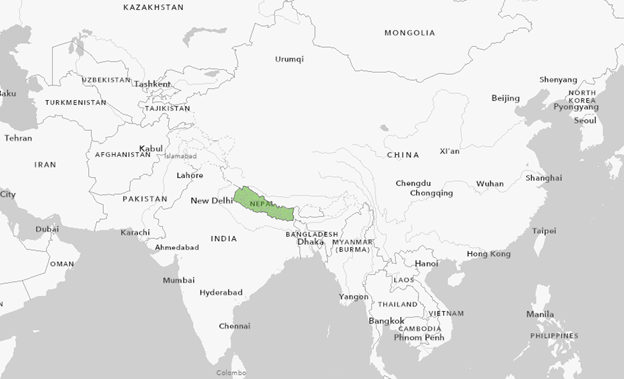
This unique position has shaped Nepal's foreign policy for centuries. To understand its current strategic options, we must first appreciate the historical evolution of its diplomacy.
EP-2 'Nepal's foreign policy: Past, Present & Future' | Idea of Nepal with Nishchal N Pandey
This interview with Nishchal N Pandey, from The Kathmandu Post, provides a concise yet comprehensive overview of Nepal's foreign policy from its unification to the present day. It's an excellent primer on the historical forces that continue to influence Nepal's strategic thinking.
Please watch the following two segments: Start to 10:47: Focus on how Nepal's foreign policy was shaped initially by the British presence in India and the need to preserve sovereignty. 10:47 to 16:23: Pay close attention to the discussion of King Mahendra's era and the strategy of balancing India and China, especially in the context of the 1962 Sino-Indian War. This lays the groundwork for modern hedging strategies.
This historical context shows a consistent theme: a struggle for autonomy and survival. However, the contemporary environment is far more complex than just balancing two neighbors. Today, Nepal is an arena where the interests of multiple global and regional powers intersect.
[PDF] Journal of APF Command and Staff College
This academic paper by Nawaraj Bikram Kunwar, 'Evolving Security Landscape of Nepal-China Relations,' provides a structured analysis of the external pressures on Nepal. It moves beyond the simple India-China binary to include the role of the United States and the West.
Please read the following sections: Start at 'Evolving Security Landscape and Its Impact on Nepal-China Relation' and read through the sub-sections on 'Chinese Strategy and Security Interest,' 'India’s Strategy and Security Interest,' and 'US’s Strategy.' Also read the section titled 'The MCC and BRI.' Focus on understanding the primary goals and security concerns of these external powers regarding Nepal. This will form the 'external context' part of your analysis.
This reading clarifies the modern "great game" being played in the Himalayas. Nepal is not just a buffer state; it is a critical piece in China's BRI, a partner in the US Indo-Pacific Strategy, and a nation deeply intertwined with India's security architecture.
2. From Survival to Strategy: Nepal's Options
Given this complex external environment and Nepal's limited hard power, what are its realistic strategic options? This is where we move from description to analysis, applying the concepts you've learned about small-state statecraft.
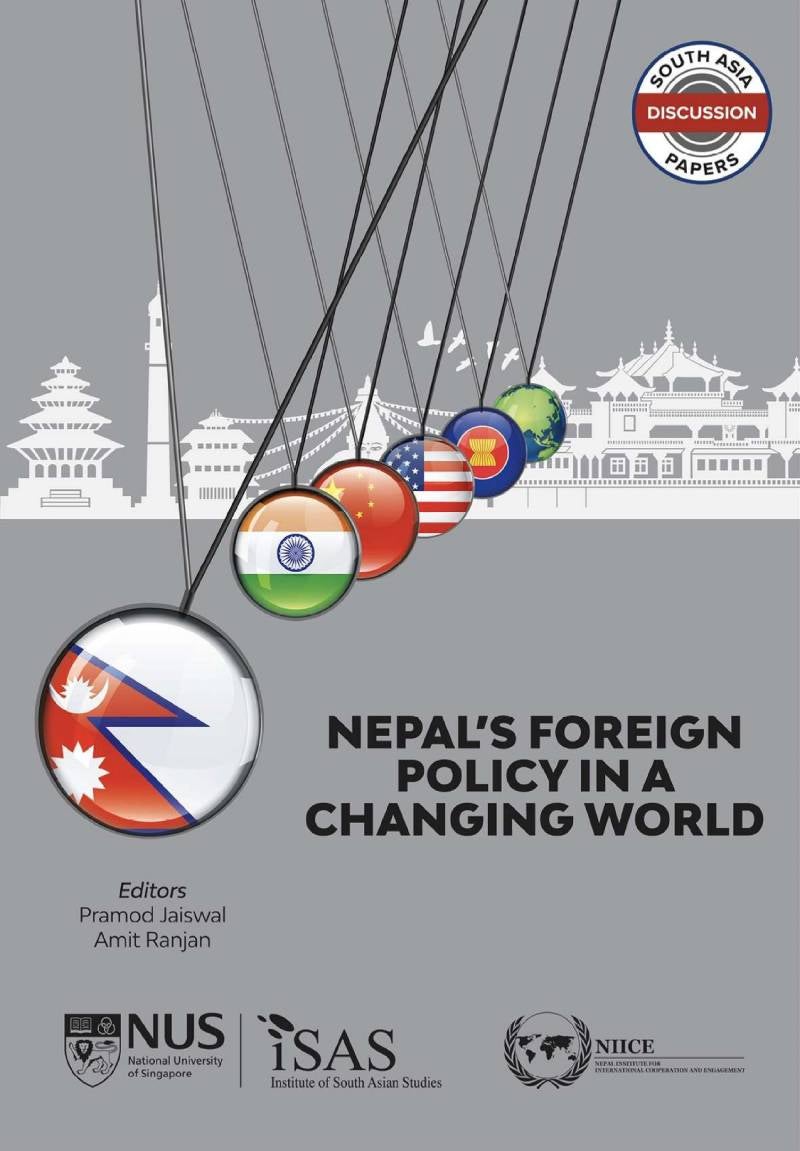
A small state's power lies not in coercion but in clever and agile diplomacy. The following paper offers an excellent theoretical framework for understanding these strategies.
[PDF] Small State, Big Influence – Nepal's Role in South Asian Diplomacy
The paper 'Small State, Big Influence – Nepal's Role in South Asian Diplomacy' by Abhishek Pushkar et al. is essential for this lesson. It directly addresses how a small state like Nepal can exert influence by using strategies other than hard power.
Please read two key parts of this paper: Section IV, 'Theoretical Framework': This section explains the key theories that define small state strategy: Hedging, Role Theory (projecting a specific identity), Complex Interdependence (using non-military ties), and Norm Entrepreneurship (shaping regional norms). Section V, 'Case Studies': Review the four cases presented: strategic neutrality, the map amendment, energy diplomacy, and multilateral engagement. These are concrete examples of the theories in action. This reading will provide you with the specific analytical vocabulary to describe Nepal's strategic options.
The key strategic options for Nepal, as highlighted in the paper, are:
- Strategic Hedging/Multi-alignment: Not picking a side in the US-China-India competition, but rather maintaining positive relationships with all to maximize autonomy and extract concessions. This is the modern evolution of the balancing act you saw in the video about King Mahendra.
- Niche Diplomacy & Norm Entrepreneurship: Leveraging its unique identity to punch above its weight. This involves positioning itself as a champion of multilateralism (e.g., as chair of SAARC), a leader in climate advocacy (the "Sagarmatha Sambaad" initiative), or a hub for peace and spirituality.
- Energy Diplomacy: Using its significant hydropower potential not just for economic development, but as a tool of strategic influence. By becoming a key energy provider to India and Bangladesh, Nepal creates a relationship of interdependence, giving it leverage it wouldn't otherwise have. This is a form of Economic Statecraft we discussed in Module 9.
A prominent Nepali politician and thinker, Dr. Minendra Rijal, articulates this shift in mindset from mere survival to proactive engagement.
Navigating Nepal's Geopolitics | Dr. Minendra Rijal | TEDxKathmanduUniversity
In this TEDx talk, Dr. Minendra Rijal outlines a vision for Nepal's future. He argues for moving beyond a 'strategy for survival' to one that actively leverages Nepal's geopolitical position for economic prosperity.
Please watch these key segments: 00:15 - 01:58: The introduction, which frames the core challenge of achieving 'strategic autonomy.' 01:58 - 04:00: The discussion of moving from a 'landlocked' to a 'land-linked' mentality and leveraging relationships with India and China. 06:22 - 07:35: The identification of key development pillars: infrastructure, hydropower, and tourism. 12:11 - 13:39: The conclusion, which powerfully summarizes the shift from a 'strategy of survival' to one of 'expanding potential.'
Dr. Rijal's talk provides a clear, forward-looking policy perspective that synthesizes many of the academic points we've covered. The goal is to use diplomacy to unlock economic potential, thereby strengthening the nation from within.
3. Capstone Exercise: Your Analysis of Nepal's Strategy
Now it's your turn to be the analyst. Using the structure from our previous lesson and the insights from this one, outline a geopolitical analysis of Nepal. Your task is to synthesize the context, power dynamics, and strategic options into a coherent assessment.
Please outline your response to the following prompt:
"Analyze Nepal's geopolitical position and formulate a strategic recommendation for navigating great power competition."
Your outlined analysis should include these four points:
- Geopolitical Context: Briefly summarize Nepal's situation, referencing its geography and the competing interests of India, China, and the US.
- Sources of Power: Assess Nepal's power. Beyond its limited military (hard power), what are its key sources of influence (e.g., hydropower, normative identity, diplomatic positioning)?
- Primary Strategic Options: Discuss the pros and cons of at least two of the following strategies for Nepal:
- Strategic Hedging/Multi-alignment
- Energy Diplomacy
- Niche Diplomacy/Norm Entrepreneurship
- Strategic Recommendation: Conclude with your recommendation. Which strategy, or combination of strategies, offers Nepal the most viable path to enhancing its security and prosperity? Justify your choice.
This exercise is the final step in applying the course content to a complex, real-world problem that is deeply relevant to your interests.
Conclusion
This lesson, and this course, have been designed to provide you with a durable intellectual toolkit for understanding and analyzing the complex world of geopolitics. Today, we applied that entire toolkit to Nepal, moving from the foundational constraints of geography to the sophisticated strategies of small-state diplomacy.
Key Takeaways:
- Nepal's geopolitical reality is defined by its landlocked position between India and China, but its strategic environment also includes significant influence from the US and other powers.
- For a small state like Nepal, influence is not derived from hard power but from smart statecraft.
- Key strategic options include hedging against over-dependence on any single power, leveraging economic assets like hydropower to create interdependence, and using niche diplomacy to build soft power and normative influence.
- The ultimate goal of this strategic approach is to achieve strategic autonomy—the ability to make independent decisions that advance the national interest—and translate that autonomy into economic prosperity.
You have now completed the entire course on geopolitics. From the foundational theories of Mackinder and Spykman to the cutting-edge concepts of weaponized interdependence and information warfare, you have covered a vast intellectual terrain. Congratulations on this significant achievement. I hope this journey has equipped you with the critical thinking skills to analyze global events with depth, nuance, and clarity for years to come.