Introduction
In our last lesson, we focused on actively training platform algorithms, treating them as dynamic systems that can be steered with the right inputs. We established that you can act as the architect of your algorithmic environment through defensive pruning and strategic engagement. Now, we shift the focus from the system to the self. While training the algorithm is crucial, it's only half the battle. The other half involves managing your own consumption habits.
Today, we will address the learning outcome: Design a personal 'content diet' to counterbalance algorithmic influence and maintain a balanced perspective. We will introduce the powerful analogy of information as food to frame a conscious, deliberate approach to what you consume online. From your background in operations research, you can think of this as moving from optimizing the supply chain (the algorithm's delivery) to managing demand-side behavior (your own consumption) to achieve a healthier, more efficient overall system.
The Problem: Information Obesity and Algorithmic Complacency
Just as a diet of cheap, high-calorie, low-nutrition food leads to physical health problems, a diet of cheap, sensational, and affirmation-heavy information leads to cognitive and emotional issues. Author Clay Johnson coined the term "Information Diet" to describe this parallel.
One on One: Clay Johnson, Author of 'The Information Diet'
This interview with Clay Johnson for The New York Times succinctly introduces the core concepts behind the Information Diet. It draws a clear line between the production of low-quality, engagement-driven content and our responsibility as consumers.
Please read through the interview. As you do, focus on these key ideas: The distinction between being "highly informed" vs. "well informed". The concept of "affirmation-based news" and how it's driven by the economic incentive to generate clicks. The argument that we have an information consumption problem, not an overload problem. The idea that your clicks have consequences for the broader information environment. The basic "doctor's orders" for a healthier diet, such as consuming locally first.
Johnson's core argument is that we've become passive consumers of whatever is algorithmically convenient and emotionally satisfying. This passivity has a name: algorithmic complacency. We have ceded control of our information streams to platforms, often forgetting that we have the agency to curate them ourselves.
The following video from the Technology Connections channel provides an insightful analysis of this phenomenon. It explains how we've moved from actively navigating the internet to passively "hanging out" on platforms, and the psychological consequences of that shift.
Algorithms are breaking how we think
This video explores the concept of "algorithmic complacency" and argues for regaining agency over our digital experiences.
Please watch the following segments: First, watch the introduction to algorithmic complacency, where the presenter defines the term as surrendering your agency to a computer program. Next, watch the contrast between the early internet and today's platforms. This highlights the shift from a manual, self-directed experience to an automated, algorithmically-driven one. Pay close attention to the data-backed example of YouTube's underutilized subscriptions feed. This serves as powerful evidence of our collective complacency. Finally, consider the larger danger discussed from allowing algorithms to decide what matters and how it makes us susceptible to manipulation. The analogy to GPS navigation from physical world navigation is particularly relevant; the "fastest" route is not always the "best" one.
The key takeaway is that relying solely on algorithmic feeds is like eating only what's placed in front of you at a buffet designed to sell the cheapest ingredients. To maintain a balanced perspective, you need a plan. You need a content diet.
Designing Your Personal Content Diet
A content diet, like a nutritional diet, is a personal plan based on awareness, intention, and consistent practice. We can break down the design process into three steps, mirroring a research or optimization project: Assessment, Planning, and Implementation.
Step 1: The Consumption Audit (Assessment)
Before changing your diet, you need to know what you're currently consuming. This means tracking your behavior to establish a baseline.
- Action: For one week, use your phone's built-in screen time utility (e.g., "Screen Time" on iOS, "Digital Wellbeing" on Android) or a dedicated app like RescueTime to log the time you spend on different apps and websites. Be honest and non-judgmental; this is simply the data collection phase.
- Analysis: At the end of the week, review the data and reflect on it. Ask yourself:
- Quantity & Type: How many hours are you consuming daily? What is the ratio of passive scrolling to active creation or meaningful connection?
- Emotional Impact: What is your typical emotional state after using each platform? Do you feel inspired and energized, or anxious and drained?
- Nutritional Value: How much of the content is "affirmation" (reinforcing existing beliefs, like in-group community chatter) versus "information" (novel ideas, diverse perspectives, skill-building content)?
Step 2: Setting Intentions (Planning)
Based on your audit, you can now define what "healthy" looks like for you. This is where you set your goals. What do you want your information stream to do for you? Inspire your designs? Foster meaningful connections in your community? Challenge your intellect?
Here are some principles for setting your intentions, adapted from Clay Johnson's advice:
- Go "Local" First: In your context, "local" means what is most directly relevant to your life and goals. This is your "whole foods" base.
- For your lingerie brand: This includes content on sewing techniques, textile science, art history, small business marketing, and the work of other couture designers.
- For your lifestyle advocacy: This means high-quality discussions on communication, consent, and relationship psychology.
- Seek Information over Affirmation: It's comfortable to stay within an echo chamber, but growth happens when you encounter different ideas.
- For your brand: Intentionally follow artists from different disciplines or economists who write about consumer trends.
- For your advocacy: Actively seek out and read well-reasoned, good-faith critiques of non-monogamy. The goal isn't to be converted, but to understand outside perspectives, strengthen your own positions, and avoid developing a distorted view of the world. This is akin to testing your model against a challenging dataset.
- Prioritize Creation and Connection: Shift your goal from consuming to using information. Every piece of content should ideally serve a purpose: inspiration for a design, a talking point for a conversation, or a new skill to practice.
Step 3: Implementing the Diet (Action)
This is where you translate your plan into daily practice. It involves a combination of environmental design and mindful action.

Here are specific techniques to implement your diet:
-
Time Blocking: Schedule your consumption. Instead of letting notifications pull you in randomly, set aside specific times for different types of content. For example:
- Morning (Meal): 30 minutes for deep reading of industry newsletters or long-form articles related to your goals.
- Afternoon (Snack): 15 minutes for mindless scrolling on TikTok or Instagram to decompress and spot trends.
- Evening (Social): 1 hour for engaging with your communities, with a clear start and end time.
-
Proactive Curation: Don't rely on the main "For You" page. Use the manual curation tools that platforms provide but are often ignored due to algorithmic complacency.
- YouTube: Make the "Subscriptions" feed your default destination. You explicitly chose to follow those creators; honor that choice.
- Instagram: Create and use "Favorites" to see posts only from selected accounts. Use "Collections" to save inspiring posts into categories like "Design Ideas" or "Photography Styles," creating your own curated library.
- X (Twitter): Create "Lists" to segment your feed. You could have one for "Lingerie Designers," another for "Relationship Experts," and a third for "Close Friends." This allows you to check in with specific groups without being dragged into the chaos of the main timeline.
-
Reset Your Algorithmic Palate: If your "For You" page is hopelessly polluted with low-quality content, perform a reset. You can aggressively use the "Not Interested" button, but sometimes a harder reset is needed.
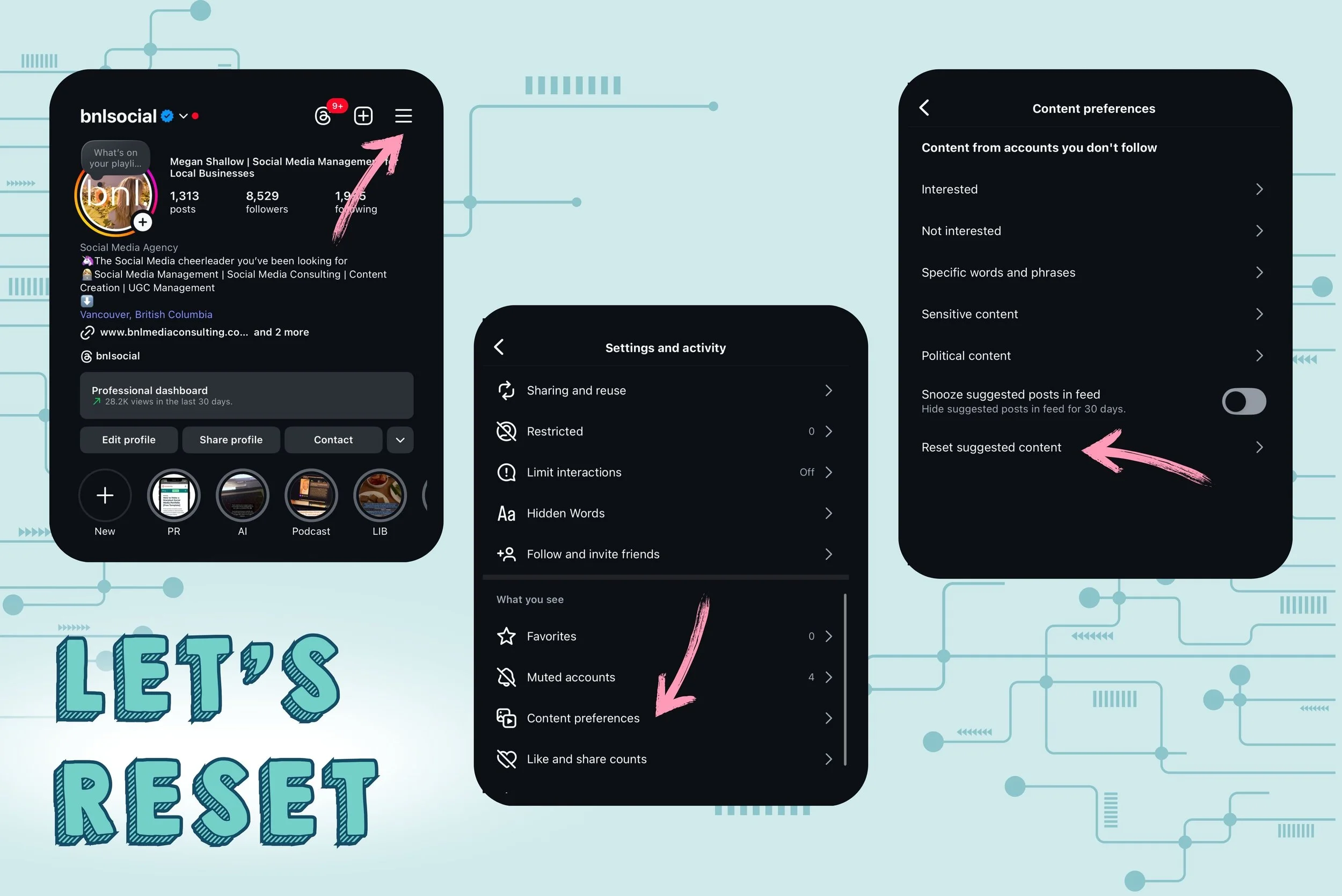
This is like a "detox" for your feed. By resetting the algorithm's recommendations, you create a clean slate, allowing your new, more deliberate engagement patterns (from the previous lesson) to train it more effectively.
4. Diversify Your Sources: Actively pull in content from outside the main social media ecosystems.
* Newsletters: Subscribe to high-quality newsletters on platforms like Substack from individual writers you trust.
* RSS Feeds: Use an RSS reader (like Feedly or Inoreader) to follow blogs and websites directly, creating a feed that is 100% curated by you and free of any algorithmic ranking.
* Podcasts and Books: Dedicate consumption time to formats that inherently require deeper, more sustained focus.
Conclusion
Today we've laid the groundwork for a healthier and more intentional relationship with information. By moving from a passive recipient to a conscious consumer, you reclaim your cognitive agency and build resilience against the distortions of the digital world.
Key Takeaways:
- The concept of a 'content diet' treats information consumption as a health issue, prioritizing "nutritious" content that aligns with your goals over "junk" content designed for cheap engagement.
- Algorithmic complacency is the tendency to passively accept what platforms serve us; the antidote is to actively and manually curate your information streams.
- Designing a personal content diet involves a three-step process: auditing your current habits, setting intentions for what you want to consume, and implementing the plan through techniques like time blocking, proactive curation, and source diversification.
In our last lesson of this module, we will get even more practical. We've designed the diet plan; next, we will configure platform and device settings to set screen time limits and encourage mindful content consumption. This involves setting up the digital guardrails and environmental cues that will help you stick to your new, healthier content diet.