Introduction
In our previous lesson, we designed a comprehensive protocol for the client closing session, focusing on weaving quantitative progress data with the client's qualitative narrative. That session masterfully demonstrates value at the individual level. Now, we shift our focus from evaluating a single engagement's outcomes to evaluating your service as a whole. This is a critical step in building the feedback loops necessary for a self-improving, data-driven practice.
This lesson directly addresses the learning outcome: Design a post-engagement client satisfaction survey using validated measurement approaches. We will move beyond informal "How did I do?" questions to construct a professional, psychometrically sound instrument. You'll learn why concepts like reliability and validity are not just academic but are essential for gathering data you can actually trust. We will leverage a gold-standard academic instrument as our foundation and then explore how to supplement it with custom questions tailored to your unique consulting niche.
The Foundation: Why Validated Measurement Matters
As a statistician, you know that not all data is created equal. The same principle applies to survey design. A casual survey might tell you if a client is generally happy, but a methodologically sound one can provide precise, comparable, and actionable insights over time. The two core pillars of a high-quality measurement instrument are reliability and validity.
- Reliability: This refers to the consistency of a measure. A reliable survey will produce similar results under consistent conditions. For instance, if a client took your satisfaction survey today and again next week (assuming their feelings haven't changed), their scores should be very similar. This consistency is what allows you to trust that changes in scores reflect genuine changes in satisfaction, not just random noise in the measurement tool.
- Validity: This refers to the accuracy of a measure. A valid survey measures what it actually claims to measure. If a survey is designed to measure "relationship satisfaction," its questions should accurately capture that specific construct, not bleed into measuring communication skills or financial stress, for example.
The images below provide a clear overview of the main types of reliability and validity that psychometricians consider when developing an instrument.

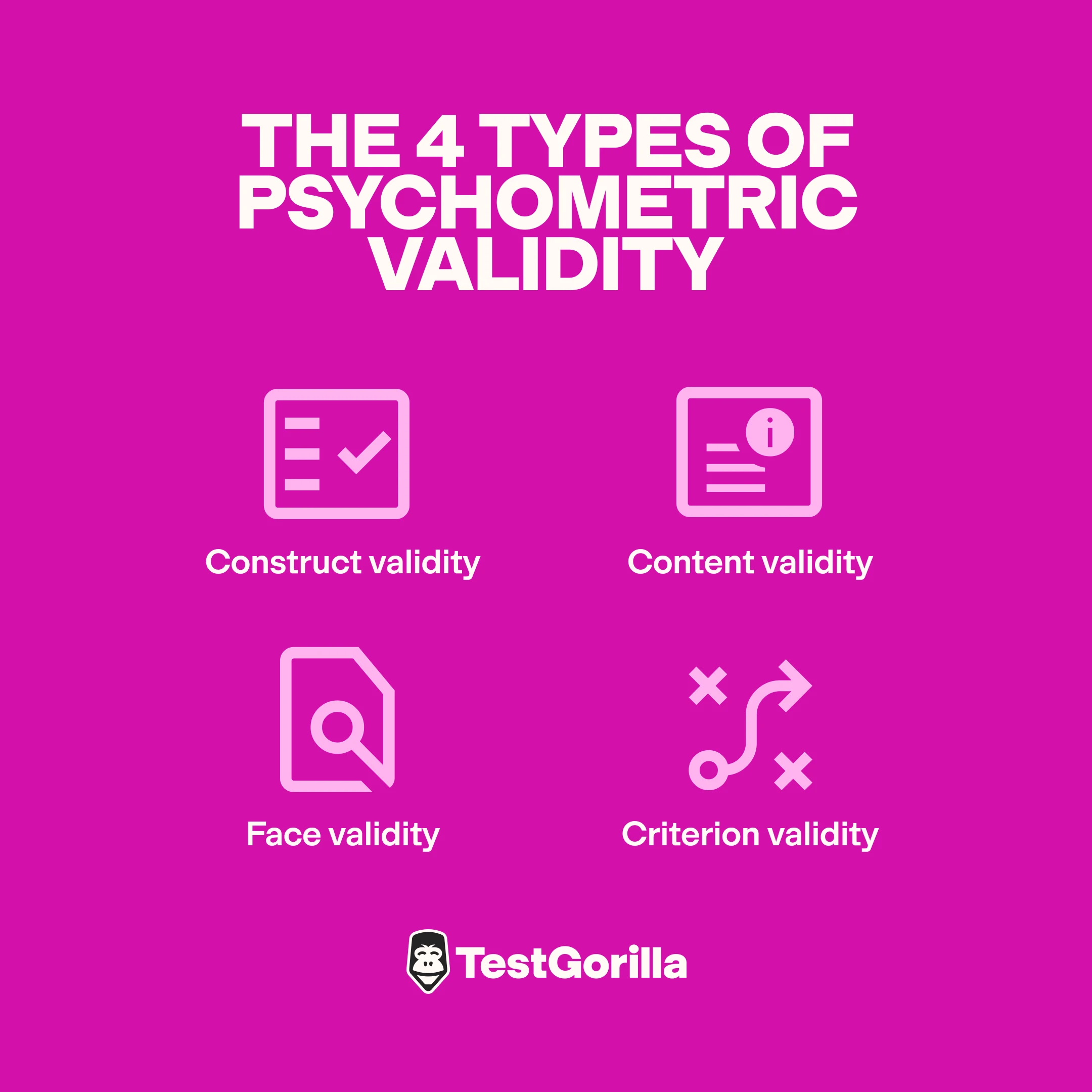
For a practitioner, developing a new instrument that satisfies these criteria from scratch is a massive undertaking, equivalent to a significant academic research project. A more efficient and rigorous approach is to anchor your survey in a pre-existing, validated instrument.
Selecting a Core Instrument: The Couples Satisfaction Index (CSI)
Instead of reinventing the wheel, we will build upon one. The Couples Satisfaction Index (CSI) is a widely respected and psychometrically robust instrument for measuring relationship satisfaction. It was developed using Item Response Theory (IRT), a modern statistical framework you may be familiar with, to improve upon older scales.
The following resource from NovoPsych provides an excellent overview of the CSI-16 (a 16-item version) and its psychometric properties. This explains why it's a "validated measurement approach."
Couples Satisfaction Index (CSI-16) - NovoPsych
This article summarizes the key features and strengths of the CSI, making a clear case for its use in a professional setting.
Please read the following sections: Start with the CSI-16 Overview to understand its purpose and development. Next, read the section on Scoring & Interpretation. Pay close attention to the empirically derived cut-off score for dissatisfaction; this provides a powerful, objective benchmark. Then, review the Psychometrics section. Note the high internal consistency (Cronbach’s alpha of .98) and the strong convergent validity with other scales. The mention of its sensitivity to change is particularly relevant for you, as it confirms the tool can detect the impact of an intervention like your coaching. Finally, read the FAQ entry that explains how the CSI improves upon older measures. This reinforces its status as a modern, precise tool.
Now that you understand the strengths of the CSI, let's look at the actual items. The full instrument provides a rich bank of questions from which the shorter versions are derived.
[PDF] THE COUPLES SATISFACTION INDEX (CSI)
This document contains the full 32-item version of the CSI, showcasing the variety of question formats used.
Review the list of 32 questions under the "Scale" heading, starting from item 1 and ending with item 32. As you read, notice the mix of question types: Standard Likert-type scales (e.g., item 1: "degree of happiness"). Frequency scales (e.g., item 5: "how often do you think that things...are going well?"). Semantic differential scales (e.g., items 26-32, which use bipolar adjectives like INTERESTING/BORING). This variety is a hallmark of a well-designed instrument, capturing the construct from multiple angles. The 16-item version (CSI-16) is often ideal for a post-engagement survey as it is both robust and concise.
Customizing the Survey for Your Niche
The CSI provides a powerful, validated core for measuring general relationship satisfaction. However, your consulting practice has specific goals related to lifestyle integration, emotional management, and communication dynamics unique to the cuckold-hotwife lifestyle. Your survey must also capture client satisfaction relative to these specific services.
Therefore, your post-engagement survey will be a hybrid instrument:
- Part 1: The validated CSI-16 to benchmark general relationship satisfaction against established norms.
- Part 2: A set of custom questions evaluating the effectiveness and value of your specific coaching interventions.
Crafting these custom questions requires care. A poorly worded question can introduce bias and lead to useless data. The Pew Research Center, a leader in survey methodology, offers excellent guidance on this.
This video from the Pew Research Center provides practical, evidence-based tips for writing clear and neutral survey questions.
Please watch these key segments: Just the right amount: This explains the balance of providing enough context without leading the respondent. Avoiding leading questions: A crucial skill for maintaining neutrality. Avoiding double negatives: This common pitfall can make questions confusing and data unreliable. Counteracting acquiescence bias: This section explains why forced-choice questions are often superior to simple agree/disagree formats.
After drafting your custom questions, how do you assess their quality? While a full validation study is impractical, you can perform a content validity check. This process ensures your questions are relevant to the construct you intend to measure (e.g., "satisfaction with coaching on emotional integration"). The core idea is to have experts review your questions. Initially, you are the primary expert.
This video outlines the formal process, including calculating a Content Validity Index (CVI). While you won't need to perform the full calculation at this stage, understanding the methodology is valuable.
How to validate a survey questionnaire for research paper, thesis and dissertation
This video from Renz Online Academy explains the steps of conducting a content validation study. We will focus on the conceptual process, not the statistical calculation.
Watch the following parts to understand the framework: The six procedures: This gives you a high-level map of the process. Preparing forms and expert rating: This is the key part. It shows how experts are asked to rate items on two simple dimensions: relevance and clarity. When you write your own questions, you should vet them against these two criteria. Ask yourself: "Is this question highly relevant to what I'm trying to measure?" and "Is this question unambiguously clear?" Interpreting the score: This briefly explains the goal—to ensure items meet a high threshold for relevance and clarity.
Action Plan: Your Draft Post-Engagement Survey
Here is a structured template for your survey. Your task is to flesh out Section 2 with 5-7 custom questions based on your unique coaching framework.
Post-Engagement Client Feedback Survey
Introduction:
"Thank you for completing your coaching engagement with us. Your feedback is incredibly valuable for improving our services. This survey should take approximately 10-15 minutes to complete. Your responses will be kept confidential."
Section 1: Your Relationship Satisfaction (CSI-16)
(Here, you would implement the 16 items of the CSI-16, using the appropriate response scales as detailed in the source document. For example...)
-
Please indicate the degree of happiness, all things considered, of your relationship.
- (0) Extremely Unhappy ... (6) Perfect
-
In general, how often do you think that things between you and your partner are going well?
- (0) Never ... (5) All the Time
... and so on for all 16 selected items.
Section 2: Your Coaching Experience
(This is where you add your custom questions. They should be on a consistent scale, e.g., a 1-5 Likert scale from "Strongly Disagree" to "Strongly Agree" or "Not at all satisfied" to "Extremely satisfied". Draft 5-7 questions based on your core services.)
Example Custom Questions (for you to adapt/replace):
- The coaching engagement provided me with practical tools for managing the logistics of our lifestyle. (Strongly Disagree to Strongly Agree)
- I feel more confident communicating my emotional needs to my partner as a result of the coaching. (Strongly Disagree to Strongly Agree)
- The framework for integrating our lifestyle with our professional lives was effective. (Strongly Disagree to Strongly Agree)
- ...
- ...
Section 3: Overall Feedback and Testimonial
-
On a scale of 0 to 10, how likely are you to recommend this coaching service to a friend or couple in a similar situation? (This is the Net Promoter Score question).
- 0 (Not at all likely) ... 10 (Extremely likely)
-
What was the single most valuable aspect of our work together? (Open-ended)
-
Is there anything you would suggest we change or improve? (Open-ended)
-
We are always looking for client stories to share. Would you be willing to provide a brief testimonial about your experience? If so, please write it below. (Optional)
Conclusion
In this lesson, you have learned how to design a professional post-engagement survey by grounding it in validated measurement principles. This hybrid approach, combining a psychometrically robust instrument like the CSI with carefully crafted custom questions, gives you the best of both worlds: credible, benchmarkable data on general outcomes and specific, actionable feedback on your unique services.
Key Takeaways:
- Reliability and validity are essential for creating surveys that produce trustworthy data.
- Using a pre-validated instrument like the Couples Satisfaction Index (CSI) provides a rigorous and efficient foundation for measuring relationship satisfaction.
- Custom questions are necessary to evaluate the specific components of your niche consulting service.
- The quality of custom questions depends on careful wording to avoid bias, as well as an evaluation of their content validity (relevance and clarity).
In our next lesson, we will move to the analysis of the data you'll collect. We'll tackle the learning outcome: Analyze survey data to identify patterns in client satisfaction and areas for service improvement. You'll apply your statistical skills to the survey data, looking for trends, calculating scores like the NPS, and turning raw feedback into strategic improvements for your practice.