Introduction
In our previous session, we explored Socratic questioning as a method for guiding clients to discover their own insights. This powerful technique, however, depends on a state of collaborative calm. Inevitably, in coaching conversations about deeply personal topics like relationship dynamics, emotions can become heightened, and that calm can be lost. This lesson addresses what to do in those exact moments.
Today, we will focus on the learning outcome: using de-escalation techniques to manage emotionally charged conversations. This is a critical skill for any coach, as it allows you to maintain a safe and productive space where transformation can occur. For your goal of building a systematic practice, we will approach de-escalation not as an intuitive art, but as a structured, evidence-based process. We will examine the physiological roots of emotional escalation and learn a clear, three-step framework—Regulate, Relate, Reason—to guide a person from a state of high emotional distress back to a state of rational collaboration.
The Neurobiology of a Crisis
Before you can de-escalate a situation, you must first understand what is happening on a biological level. When a person feels threatened—whether by a physical danger or a deep emotional trigger like disrespect or fear of abandonment—their nervous system takes over. Logical, rational thought becomes a luxury it can no longer afford.
The Polyvagal Theory provides a useful map for this internal experience.
De-Escalation: The Science to Navigating High-Conflict, High-Crisis ...
This article from Looking for Bears explains the physiological states that underpin emotional escalation. Understanding this science is the first step to mastering the skill.
Read the section under the heading "Understanding the Human Nervous System." Pay close attention to the descriptions of the three states: Ventral Vagal: The state of safety, social engagement, and logical thought. This is the state required for effective coaching. Sympathetic: The "fight-or-flight" response, characterized by mobilization and high arousal. Dorsal Vagal: The "freeze" response, characterized by shutdown, immobilization, or dissociation.
When a client becomes highly agitated, angry, or accusatory, they are likely in a sympathetic state. If they become withdrawn, silent, or seem to "check out" (a behavior sometimes called stonewalling), they may be shifting into a dorsal vagal state.
The key insight from a systems perspective is this: you cannot reason with a person who is not in a ventral vagal state. Their "prefrontal cortex"—the brain's center for executive function, creative problem-solving, and compromise—is effectively offline. Their more primitive fear and anger centers are in control. Your first job is not to solve the problem, but to help them shift back into a physiological state where problem-solving becomes possible.
The Core Principle: Compassion Over Control
A common but flawed response to an escalated person is to meet their intensity with control—to command them to calm down or to argue with their emotional reaction. This almost always backfires.
De-Escalation: The Science to Navigating High-Conflict, High-Crisis ...
This article also explains why power-based approaches fail and offers a more effective guiding principle.
First, review the section The Pitfalls of Command and Control to understand what to avoid. Then, read the section on The Principle of Empathy and Compassion.
The fundamental mindset shift is to adopt the principle: "People aren't giving you a hard time; they're having a hard time." Their emotional outburst is not an attack on you, but a signal of their own distress, pain, or unmet needs. By approaching the situation with empathy instead of judgment, you move from an adversarial stance to a collaborative one, which is the first step toward de-escalation.
A Three-Step De-escalation Framework: Regulate, Relate, Reason
With the right mindset in place, you can apply a structured process to guide the conversation. This framework provides a clear, sequential path from chaos to calm.
De-Escalation: The Science to Navigating High-Conflict, High-Crisis ...
The same article introduces a simple, powerful framework for de-escalation.
Read the section titled "The Regulate > Relate > Reason Framework." This sequence is the central algorithm for your de-escalation strategy.
- Regulate: This first step is purely physiological. It involves creating a pause and using techniques to help the client's nervous system down-regulate from the sympathetic or dorsal state. You must also regulate your own nervous system—maintaining a calm tone and non-threatening body language is crucial for "co-regulation."
- Relate: Once the immediate intensity has subsided slightly, the focus shifts to emotional connection. This step is about making the person feel seen, heard, and understood. Validation and empathy are the key tools here.
- Reason: Only after the person is regulated and feels a connection with you can you begin to engage in rational dialogue and problem-solving. Attempting to reason before the first two steps are complete is futile.
Let's now stock your toolkit with specific techniques for each stage of this framework.
Your De-escalation Toolkit
Step 0: Assess the Intensity
Before intervening, you need a quick way to gauge the level of distress. A useful tool from Dialectical Behavior Therapy (DBT) is the Standard Unit of Distress (SUD) scale.
Discover DBT Strategies for Managing Extreme Emotions
This article from the Counseling Center Group introduces a simple way to quantify emotional distress.
Read the section "Using the SUD Scale."
You can use this scale both for yourself and with your clients. You might ask, "On a scale of 0 to 100, where 0 is totally calm and 100 is the most distress you can imagine, where are you right now?" If the number is high (e.g., above 70), you know that immediate, physiological regulation techniques are required.
Toolkit for Stage 1: Regulate
When distress is high, you need to interrupt the physiological stress cycle. These DBT skills are designed for exactly that.
Discover DBT Strategies for Managing Extreme Emotions
This article details several "crisis survival skills" that are powerful physiological pattern-interrupts.
Read the section "Crisis Survival Skills for High Distress." Focus on the core ideas behind: TIPP: Especially the concepts of changing temperature (e.g., splashing cold water on the face) and paced breathing. Distract: Shifting focus away from the distressing emotion. Self-Soothe: Using the five senses to ground oneself.
In a coaching session, your most accessible tool is co-regulating through paced breathing. You can say:
"This is clearly hitting a nerve, and the intensity is high. Let's pause for a moment. I'm going to take three slow, deep breaths. I invite you to join me."
This simple act does three things: it models calm, provides a physiological interrupt, and non-verbally communicates that you are not scared of their emotion.
Toolkit for Stage 2: Relate
Once the immediate physiological storm has passed, the goal is to build an emotional bridge. This is done through active listening, validation, and empathy.
De-escalation Skills Training for Employees | Dr. Jeremy Pollack
This video from Dr. Jeremy Pollack offers a beautifully simple and effective sequence for making someone feel heard.
Watch the first two steps of his de-escalation process: Listen and Repeat: The core of this is validating by paraphrasing what you've heard, showing you're truly listening. Empathize and Apologize: Focus on expressing empathy through your tone and offering an apology for their experience, not their feelings (e.g., "I'm so sorry you're going through this," not "I'm sorry you feel that way").
A crucial point in this stage is to avoid saying "I understand." This phrase often provokes a "No, you don't!" response. Instead, convey your desire to understand.
Verbal Crisis De-Escalation with Dr. Dawn-Elise Snipes
Dr. Dawn-Elise Snipes provides a wealth of practical verbal de-escalation tips in this detailed lecture.
Watch the segment on providing support, paying special attention to the advice to convey understanding without saying 'I understand'. Instead of claiming to understand, you reflect what you're hearing: "What I'm hearing is that you feel completely alone in this." This invites correction or confirmation, rather than defiance.
The infographic below shows common communication patterns that escalate conflict and offers direct, actionable alternatives that build connection.

Toolkit for Stage 3: Reason
Only when the client is regulated and feels connected can you pivot back to problem-solving. This final step is about providing reassurance and collaboratively defining the next action.
De-escalation Skills Training for Employees | Dr. Jeremy Pollack
Dr. Pollack's video concludes with the final step of the pivot to problem-solving.
Watch the final step, Reassure and Resolve. The key here is to communicate your commitment to partnership: "I'm going to stay with you on this until we find a path forward."
At this point, you can re-engage the skills from our previous lessons, such as Socratic questioning, to explore the issue from a calmer, more resourceful perspective.
Applying the Framework in Your Niche
Let's apply this to a scenario from your consulting work.
Scenario: During a session, a husband (Mark) becomes angry with his wife (Sarah), believing she violated a previously agreed-upon boundary during a date. His voice gets louder, and he says, "What's the point of making rules if you're just going to ignore them? You obviously don't respect me at all!" Sarah starts to cry and shut down.
Here is how you apply the Regulate > Relate > Reason framework:
-
Regulate:
- Yourself: You stay calm, keep your voice even, and maintain open body language.
- Them: "Mark, Sarah, let's press pause. This is a crucial conversation, and I see it's bringing up a lot of pain for both of you. Before we go further, let's all just take one slow breath together." You are setting a boundary on the escalation while validating the emotion.
-
Relate:
- To Mark (Sympathetic state): "Mark, thank you for being so honest about your anger. What I'm hearing underneath that anger is a deep feeling of disrespect, like the trust you put in the agreement was broken. Is that right?" (Listen/Repeat, label the deeper feeling).
- To Sarah (Dorsal Vagal state): "Sarah, I see you've gone quiet. There's no pressure to speak. I'm just here with you. When you're ready, I want to understand what's happening for you." (Acknowledge shutdown, offer safety, no pressure).
-
Reason:
- Once both have regulated and feel heard, you can pivot. "Okay. We have two powerful experiences here: Mark feeling disrespected, and Sarah feeling overwhelmed. We're not going to solve it all this second. Our goal for the next ten minutes is simply to understand what happened from each person's perspective, without judgment. Mark, can you walk me through what you understood the boundary to be?"
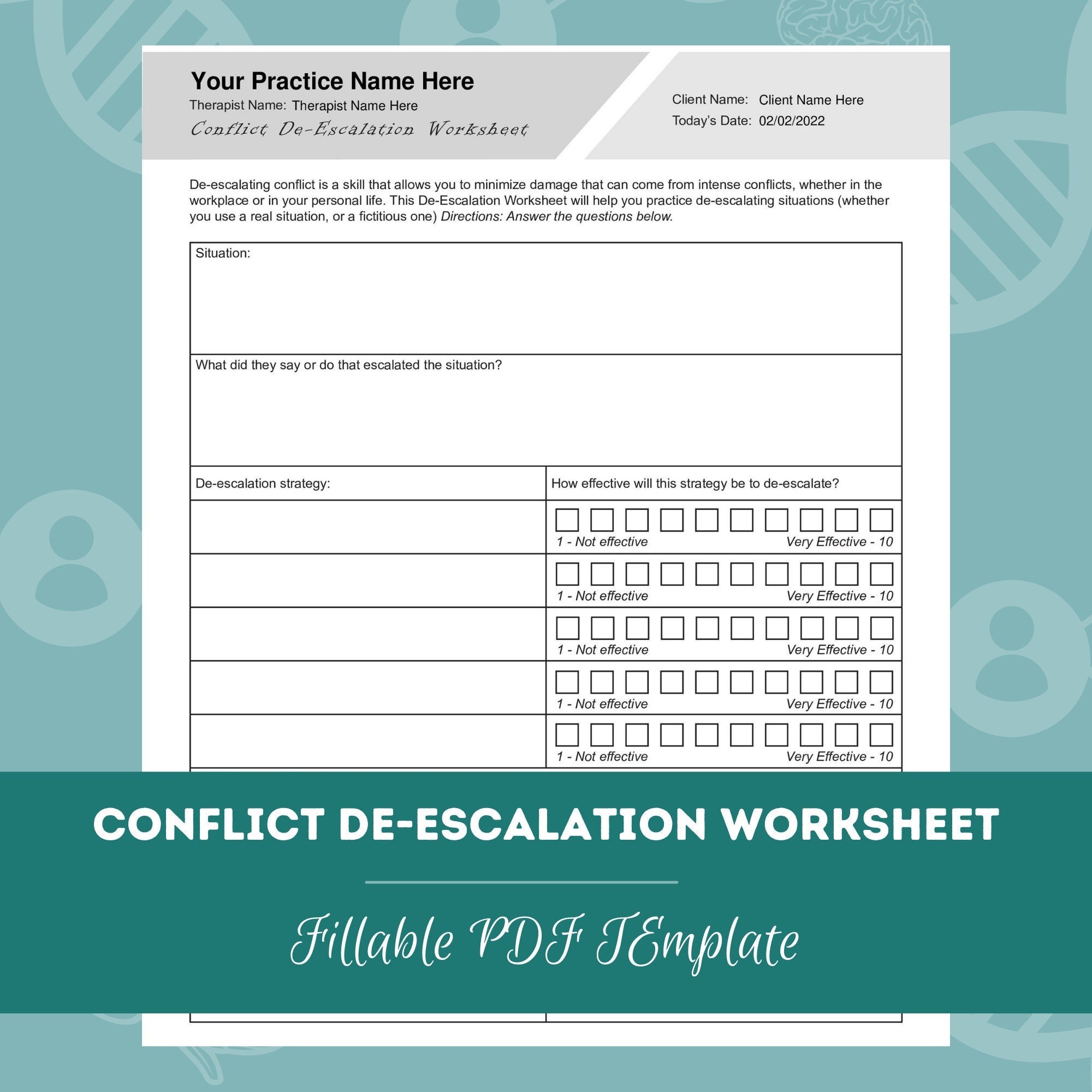
This structured approach prevents the session from spiraling out of control and turns a potential crisis into a valuable data-gathering opportunity. For post-session analysis, or even as a tool for clients, a worksheet can help systematize this process.
Conclusion
Today we transformed the reactive art of managing difficult conversations into a proactive, structured skill. By understanding the underlying neurobiology, you can stop reacting to the emotion and start addressing its root cause.
Key Takeaways:
- Escalation is Physiological: An emotionally escalated person is in a sympathetic ("fight-or-flight") or dorsal vagal ("freeze") state. Reasoning is impossible until they return to a ventral vagal (safe and social) state.
- Use the "Regulate > Relate > Reason" Framework: This three-step sequence is your guiding algorithm. Always start with physiological calming, then build emotional connection, and only then move to cognitive problem-solving.
- Your Mindset Matters: Approach the situation with the belief that "they are having a hard time, not giving me a hard time." This shifts you from an adversary to an ally.
- Your Toolkit is Specific: Use techniques like paced breathing for regulation, active listening and validation for relating, and reassurance for the pivot to reasoning.
In this lesson, we focused on managing conflict in the moment. Often, the insights gained from these intense moments lead to new goals or behaviors that need to be practiced between sessions. In our next lesson, we will focus on this critical aspect of coaching: how to design and debrief between-session 'homework' that reinforces in-session learning and gathers data, turning insights into lasting change.