Introduction
Welcome to our next session. In the last lesson, you did the foundational work of translating your extensive field experience into a written coaching philosophy, structured around the Mission, Attitudes, and Process (MAP) framework. This act of codifying your principles gives your practice an intellectual and ethical backbone. Now, we will put that philosophy to its first critical test: defining its boundaries.
Today's learning objective is to design a preliminary 'red flag' checklist for identifying client situations that are outside the scope of coaching. This is not just an administrative task; it's a direct application of your coaching philosophy that serves three vital functions: protecting your clients, managing your professional risk, and preserving the integrity of your data-driven methodology. A well-defined set of red flags ensures you only engage with clients you are truly equipped to help, making your interventions more effective and your practice more sustainable.
Coaching vs. Therapy: Drawing the Bright Line
The first principle of your red flag system is understanding the fundamental distinction between coaching and therapy. As you formalize your practice, this boundary becomes your primary guide for referral. A coach is a forward-looking facilitator of skill-building and goal achievement. A therapist is a licensed clinician who diagnoses and treats mental health conditions, often by exploring and healing past traumas. Misunderstanding this distinction is a significant ethical and professional risk.
The following video provides a clear and concise breakdown of these differences.
Relationship Counseling vs. Relationship Coaching ⚖️ What are the Differences and Similarities?
This video from Chris A. Matthews, a Licensed Marriage and Family Therapist, sharply contrasts relationship counseling and coaching. It will help you articulate the specific domain of your practice.
Please watch the following segments to solidify your understanding of these distinct roles: First, note the characteristics of counseling. Pay close attention to the focus on licensed professionals, healing past traumas (like infidelity or grief), and the diagnosis and treatment of pathologies or mental health issues. These are your clearest indicators for referral. Next, review the description of coaching, which is described as 100% skill-based and results-driven. The speaker emphasizes that coaching is not about exploring the "why" of the past but about "fixing the problem" and moving forward. Finally, the summary starting at "if you have mental health issues..." provides a simple decision rule that will form the basis of your red flag checklist.
Your role as a coach is to help clients optimize their existing relationship structure and dynamics. Your red flag system should, therefore, be designed to detect when the presenting problem is not an optimization challenge but a symptom of underlying trauma or psychopathology that requires clinical intervention.
A Trauma-Informed Perspective
Even though you are not a therapist, adopting a trauma-informed perspective is essential. This does not mean you treat trauma. It means you operate with the awareness that trauma can be a factor in your clients' lives, and you structure your practice to prioritize safety and avoid re-traumatization. For a coach, this perspective is less about intervention and more about observation and risk assessment. The principles of trauma-informed care provide an excellent framework for identifying subtle red flags in client interactions.
Trauma Informed Principles & Practices
This video from the Phoenix Trauma Center clearly defines the principles of trauma-informed practice. Understanding these principles will equip you to create a safer environment for your clients and recognize when that safety is compromised.
Focus on these key principles as they relate to your coaching practice: First, understand the crucial difference between "trauma-informed" and "trauma-focused". You are building a trauma-informed practice, not a trauma-focused one. Safety: Watch the segment on the principle of safety. A client feeling psychologically or emotionally unsafe, or a dynamic that compromises their identity safety, is a major red flag. Trustworthiness and Transparency: Listen to this section starting at this principle. A client's profound inability to trust, or a situation where they have been betrayed, may indicate deeper issues beyond coaching. Empowerment, Voice, and Choice: Pay close attention to the discussion on empowerment. Trauma is disempowering. A situation where a client feels they have no voice or choice, especially if it's being framed as part of a consensual dynamic, is a critical red flag that warrants investigation.
These principles form the "attitude" portion of your MAP philosophy. When you notice a dynamic that consistently violates safety, trust, or empowerment, it should trigger your red flag protocol, regardless of the specific content of the conversation.
Building Your Red Flag Checklist
Now, let's translate these principles into a concrete, actionable checklist tailored to your niche. We will draw upon clinical practice guidelines developed for professionals working with kink-identified individuals. These documents are invaluable as they are written for clinicians, clearly delineating the line between healthy expression and situations requiring clinical assessment. Your task is to extract the indicators that signal a situation has crossed from a coaching context into a clinical one.
[PDF] Clinical Practice Guidelines for Working with People with Kink Interests
This document provides a set of guidelines for therapists. For you, it serves as an authoritative map of the territory that lies outside a coach's scope of practice.
Focus on the following guidelines as you read: Guideline 2: Read the section on professional competence and scope of practice. This is the ethical foundation for your checklist. Guideline 3: Review the text explaining that kink itself is not psychopathology. This helps you avoid false positives. Guideline 4: Note the conclusion that kink is not inherently a trauma response. This prevents you from making unsupported assumptions, a key part of your data-driven approach. Guideline 16: Understand how internalized stigma can cause distress. This is a "yellow flag" – it may be within your scope if it's about navigating societal pressure, but could require referral if it's causing severe anxiety or depression. Guideline 19: This is the most critical section for your checklist. Study the discussion on how to discern intimate partner violence (IPV) within kink relationships. The document explicitly lists "red flags" like safewords being ignored, boundary-pushing without negotiation, and restrictions on access to money or people.
This next resource provides even more specific clinical competencies, which you can reverse-engineer into red flags for your coaching practice.
[PDF] Kink Clinical Practice Guidelines Project
This document outlines core competencies for clinicians. The items listed are things a licensed therapist should be able to do. If a client's situation requires one of these competencies, it's a red flag that they need a clinician, not a coach.
Scan these sections for indicators that a situation requires clinical expertise: Under "Level 1 Elemental Kink Readiness Clinician," review points 1.09 and 1.13. These points cover knowing your scope of practice and evaluating your own personal biases. This informs the internal red flags on your checklist. In the same level, review points 1.30 to 1.33. The ability to assess for IPV, legal risk, and distinguish age play from pedophilia are clinical skills. The need for such an assessment is a red flag. Under "Level 2 Intermediate Kink Proficient Clinician," note points 2.18, 2.19, and 2.25. The ability to differentiate consent violations from consensual marks, distinguish "sub drop" from clinical depression, and discern "edge play" from coercion are all clinical judgments. Finally, note point 2.31, which mentions understanding the "dark triad" (narcissism, Machiavellianism, psychopathy). The presence of these traits is a significant red flag for potential abuse and manipulation that falls far outside a coaching scope.
Exercise: Draft Your Preliminary Red Flag Checklist
Using a document, create a checklist with three categories. Based on the resources above, draft 2-3 bullet points for each category. This will be the first version of a critical operational tool.
Category 1: Hard Stops (Immediate Referral to a Licensed Therapist)
These are situations where you must ethically decline or cease coaching and refer the client to a qualified mental health professional.
- Example: Evidence or disclosure of non-consensual activities, such as safewords being ignored or pre-negotiated limits being violated with abusive intent.
- ...
- ...
Category 2: Yellow Flags (Proceed with Extreme Caution & Consider Consultation)
These are situations that may still be within the scope of coaching but require heightened awareness and may necessitate that you seek supervision or consult with a mentor.
- Example: Client expresses extreme distress or anxiety stemming from internalized stigma ("kink-phobia") that impacts their daily functioning.
- ...
- ...
Category 3: Internal Red Flags (Coach Self-Assessment)
These are your own reactions that signal you may not be the right fit for the client, potentially compromising your objectivity.
- Example: Experiencing strong feelings of judgment, disgust, or fear in response to a client's practices or desires.
- ...
- ...
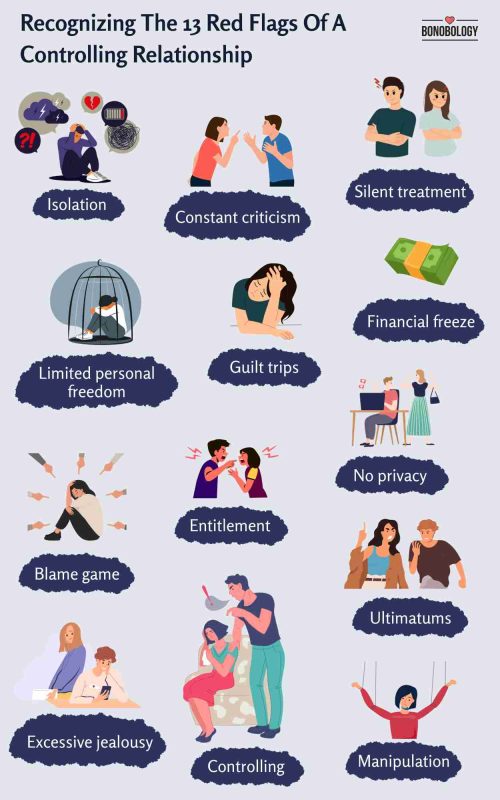
To help you populate your checklist, this infographic summarizes many of the coercive behaviors that can be mistaken for or hidden within power-exchange dynamics.
Conclusion
In this lesson, you have taken a crucial step in professionalizing your practice. By establishing clear boundaries based on the distinction between coaching and therapy, adopting a trauma-informed lens, and drawing from clinical guidelines, you have begun to design a robust red flag system.
Your key takeaways are:
- Coaching is not therapy. Your role is to facilitate future-focused skill development, not to diagnose or treat past trauma or mental health conditions.
- A trauma-informed approach prioritizes safety, trust, and empowerment, providing a powerful lens for identifying subtle signs of distress or coercion.
- Clinical guidelines offer an authoritative source for identifying situations that fall outside a coach's scope, including signs of intimate partner violence, severe mental health issues, and personality-disordered traits.
- Your red flag checklist is a dynamic risk management tool, protecting both your clients and the ethical integrity of your practice.
In our next lesson, we will move from defining your internal expertise to communicating it externally. You will draft a white paper or lead magnet outline that showcases this codified expertise to attract ideal clients. Now that you have a clear philosophy and defined boundaries, you are perfectly positioned to articulate your unique value to the market.