Introduction
In our previous lesson, we constructed a comprehensive informed consent document, which serves as the formal, written foundation of your professional relationships. Today, we build upon that foundation by moving from the static document to the dynamic, ongoing process of boundary management. Our focus is to establish and communicate professional boundaries regarding dual relationships and scope of practice at the outset.
Mastering this skill is critical for any high-end consulting practice. It ensures professionalism, manages client expectations, and protects both your clients and your practice from ethical and professional risks. For your work in efficiency and relationship analysis, clear boundaries are what allow you to maintain the objective, analytical perspective that is central to your value proposition.
1. Defining Your Scope: Coach/Consultant vs. Therapist
The most fundamental boundary is your scope of practice. Your informed consent document states this legally, but you must be able to articulate and enforce it in conversation. You are a coach and consultant, not a therapist. This distinction must be crystal clear to you and your clients.
This image provides a useful high-level comparison.

While the chart is a good starting point, the video below offers a more nuanced explanation, particularly for practitioners who, like you, operate adjacent to the therapeutic space.
Therapist Turned Coach: Differences Between Therapy and Coaching
The video "Therapist Turned Coach" clarifies the critical line between addressing diagnosable mental health conditions and coaching on specific, situational life problems.
Watch the section from the start that distinguishes therapy from coaching. The speaker makes a key point: therapy treats diagnosable disorders (from the DSM), whereas coaching addresses specific problems that are not mental health conditions. Then, continue watching the examples of coachable issues, such as life transitions, goal-setting, and situational anxiety. Notice how these align with your work on lifestyle integration and relationship strategy.
Given your niche, it's useful to think of your role within a potential network of support for a client. The "Collaborative Tetralogical Model" offers a sophisticated framework for this.
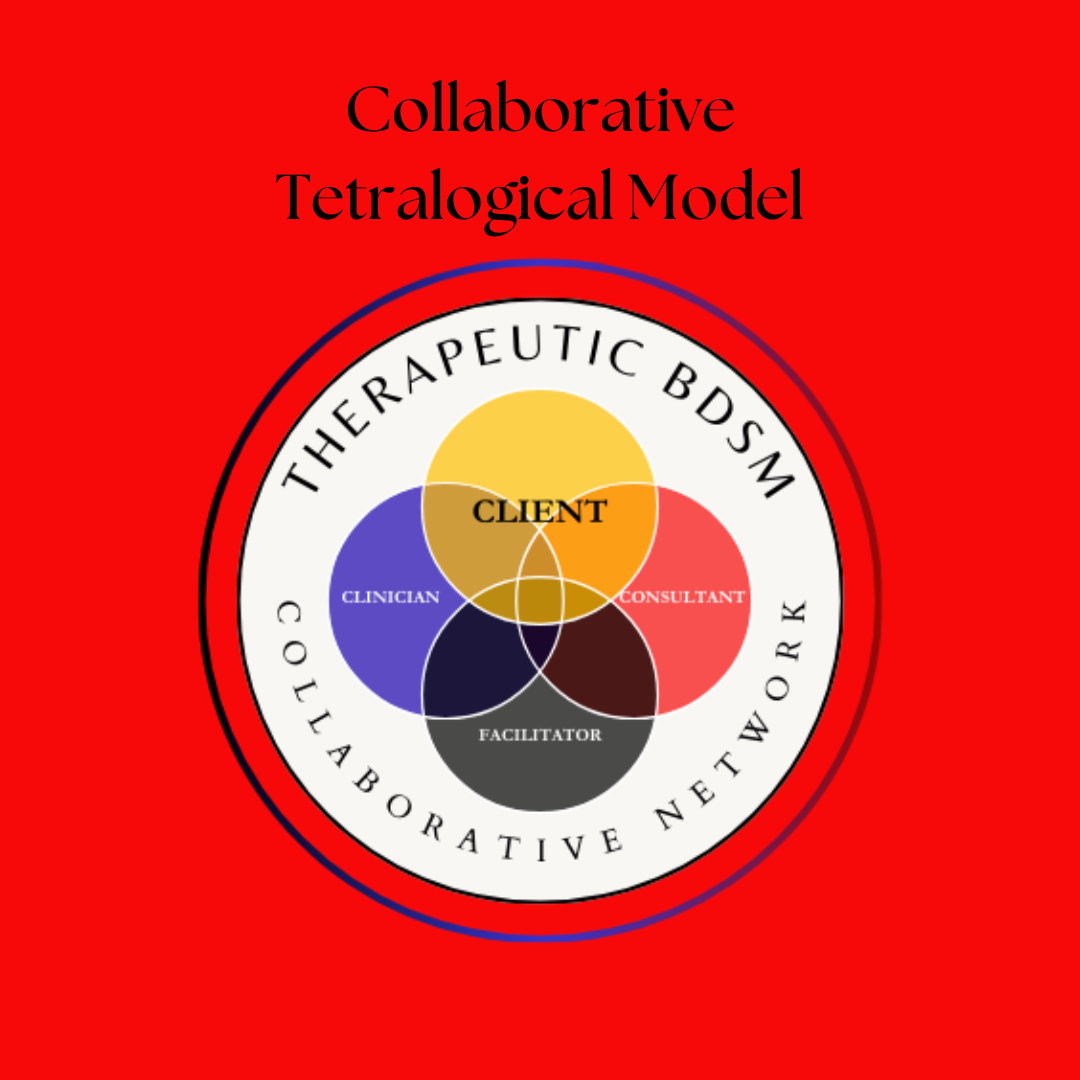
In this model, your work as an "efficiency expert" and "relationship analyser" fits squarely in the Consultant and Facilitator roles.
- As a Consultant, you provide specialized knowledge, data analysis, and strategic frameworks to solve specific problems (e.g., logistical challenges, understanding motivational patterns).
- As a Facilitator, you guide conversations and help clients build skills to achieve their own goals.
- The Clinician role (therapist) is distinct; it involves diagnosing and treating psychological conditions, a service you are not qualified to provide and must refer out for.
Clearly positioning yourself as a consultant who uses quantitative insights to improve relationship dynamics is a powerful way to define your scope.
2. The Problem of Dual Relationships
A dual relationship occurs when you have a connection with a client outside of the coaching context—for example, as a friend, business partner, or family member. These relationships must be avoided because they compromise your objectivity, create potential conflicts of interest, and blur the professional lines essential for effective coaching.
The article "How to Set Clear Professional Boundaries" includes an excellent table with practical scripts for handling common boundary tests, including those that can lead to dual relationships.
How to Set Clear Professional Boundaries With Coaching Clients
This article from the Association of Professional Coaches (ANHCO) provides a playbook for common boundary situations.
In the table provided, review the following specific scenarios and the sample scripts: Client gifts Friend asks for coaching Client social invitations Notice how the scripts are polite, firm, and reinforce the professional nature of the relationship. Adopting and adapting these scripts is a key part of your toolkit.
3. Systematizing Your Boundary Communication
Boundaries are most effective when they are communicated proactively and integrated into your workflow, rather than being deployed defensively when a line has already been crossed.
How to Set Clear Professional Boundaries With Coaching Clients
This article also outlines a systematic approach to communicating boundaries from the very first interaction.
Read the section "Systems and scripts." The key idea is to build boundaries into every client touchpoint. Following that, review the section on "What to do when clients test" to understand the process of responding: name the behavior, restate the agreement, and offer a boundary-aligned solution.
This proactive approach makes your boundaries feel like a standard feature of your professional service, not a restrictive rule. The following video reinforces the mindset required to do this effectively.
How To Set Boundaries With Your Coaching Clients
This video from Mindvalley Coach, "How To Set Boundaries With Your Coaching Clients," offers practical advice on the mindset behind setting and maintaining boundaries.
Watch the following four key segments: Know your triggers: This emphasizes that clear boundaries begin with your own self-awareness. Caring has a limit: This is crucial for avoiding the "rescuer" trap and preventing a slide into a dual relationship. Remember your role: This reinforces the need to avoid becoming a "good friend" and maintain your professional coaching stance. Don't feel guilty: This is a final, important reminder that professional boundaries are a sign of credibility and respect, not hostility.
4. Advanced Boundary Considerations for Your Niche
Your specific focus on the cuckold-hotwife lifestyle requires a more nuanced understanding of boundaries, particularly concerning consent and the line between consensual activity and abuse. The "Clinical Practice Guidelines for Working with People with Kink Interests" provides an invaluable, high-level perspective.
[PDF] Clinical Practice Guidelines for Working with People with Kink Interests
These guidelines, though written for clinicians, offer sophisticated principles that directly apply to your consulting work by defining professional competence and ethical engagement in kink-related contexts.
Please read the following three sections carefully: Guideline 2: Find this guideline near the beginning. Read the paragraph that starts "Guideline 2". This reinforces the ethical mandate to practice within your scope and competence. Guideline 17: Locate this guideline further in the document. Read the text beginning with Guideline 17. Pay close attention to the definitions of "kink-friendly," "kink-aware," and "kink-knowledgeable." This framework allows you to more precisely define your level of expertise and communicate it to clients. Your goal is to operate as a "kink-knowledgeable" consultant. Guideline 19: Find this guideline and read the section that starts "Guideline 19". This is perhaps the most critical boundary for your practice. It explicitly addresses how to discern intimate partner violence (IPV) from consensual kink. Your role is not to be a domestic violence counselor, but you have an ethical responsibility to recognize the "red flags" mentioned (e.g., "bleed-through" of anger, refusal to listen to a partner's fears) and understand when a situation is beyond your scope and requires immediate referral to specialized services.
Understanding and being able to articulate these advanced concepts is what elevates your practice from informal advising to professional, ethical, and highly specialized consulting.
Conclusion
In this lesson, you've learned to translate the legal framework of your informed consent document into a set of active, communicated professional boundaries.
The key takeaways are:
- Scope is defined by role: You are a consultant and facilitator, not a clinician. Your work focuses on solving specific, situational problems with strategy and analysis, not treating diagnosable psychological disorders.
- Dual relationships are a critical risk: Avoid friendships, business partnerships, or other non-professional entanglements with clients to maintain objectivity and professionalism.
- Communication must be systematic: Integrate boundary discussions into your onboarding process and use clear, firm, and practiced scripts to reinforce them.
- Niche expertise requires specialized boundaries: For your practice, this includes a deep understanding of where consensual kink ends and abuse begins, and knowing when to refer clients to appropriate professional help.
By establishing these boundaries at the outset, you create the safe, professional, and structured container necessary to do your best work.
Now that we have defined the professional container for the engagement, our next lesson will focus on the first tool we use within it. We will begin Module 4 by addressing how to define the psychometric goals of a client intake process for a relationship coaching practice. This is the first step in designing the quantitative instruments that will set your practice apart.